


Cattle Hay Feeders and Bale Rings: Cutting Waste
Author: Elliott Garber, DVM
A good round bale feeder can take hay waste from roughly a third of the bale down to single digits, and because hay is usually the single largest cost of wintering cattle, the feeder pays for itself in a matter of months. Extension research is remarkably consistent on this point: feed round bales on the bare ground with no ring and cattle trample, foul, and bed down a huge share of every bale, while a well-designed feeder with a solid lower skirt holds most of that hay in front of the animal where it belongs. This guide walks through what the studies actually found, how the common feeder designs rank, the money math, and the placement and safety details that decide whether your feeder delivers on paper or just moves the waste around.
What the research says about feeding with no feeder
Start with the baseline, because it is worse than most people expect. When a round bale is rolled out or set on the ground with no ring, cattle pull hay out, walk on it, lie on it, and dung on it. Texas work with round bales found waste as high as 38 percent for coastal Bermudagrass and 31 percent for alfalfa fed with no feeder, dropping to single digits once a ring was added (Texas data summarized by Penn State Extension). Penn State’s review of outdoor round bale feeding cites up to 57 percent waste with no feeder compared with a 5 to 33 percent range once any commercial feeder is used, and a ring feeder specifically at about 5.5 percent versus roughly 35 percent without (Penn State Extension).
The exact number swings with forage type, stocking, and weather, but the direction never changes. Ground feeding throws away somewhere between a fifth and a half of the bale. That is not hay the cattle chose to leave; it is hay they never got a fair shot at.
How the feeder designs rank
The cleanest side-by-side comparison comes from a Michigan State University trial (Buskirk et al., 2003), which fed the same hay to mature cows through four feeder styles and measured dry matter loss (Illinois Extension summary, MSU Extension):
- Cone feeder (solid hay-saver panels): 3.5 percent
- Ring feeder: 6.1 percent
- Trailer feeder: 11.4 percent
- Cradle feeder: 14.6 percent
An Oklahoma State University trial (Lalman) run under different conditions ranked the designs the same way but with wider spreads, which is useful because it shows the ranking holds even when the absolute numbers move (Illinois Extension summary):
- Cone: 5.3 percent
- Sheeted-bottom ring: 13.0 percent
- Open ring: 20.5 percent
- Poly ring: 21.0 percent

Read those two trials together and the pattern is clear. The design that keeps the most hay is the one that puts a solid barrier around the lower part of the bale so dropped hay falls back toward the animal instead of onto the ground. Cone feeders and sheeted-bottom rings, which include a cone or a skirt that funnels loose hay inward, consistently land in the single digits to low teens. Open-bottom rings and older poly rings, which leave a gap at the base, let cattle drag hay out under the bars, and they sit near 20 percent. The cradle design ranked worst in the MSU trial, a reminder that not every enclosed-looking feeder controls waste well.
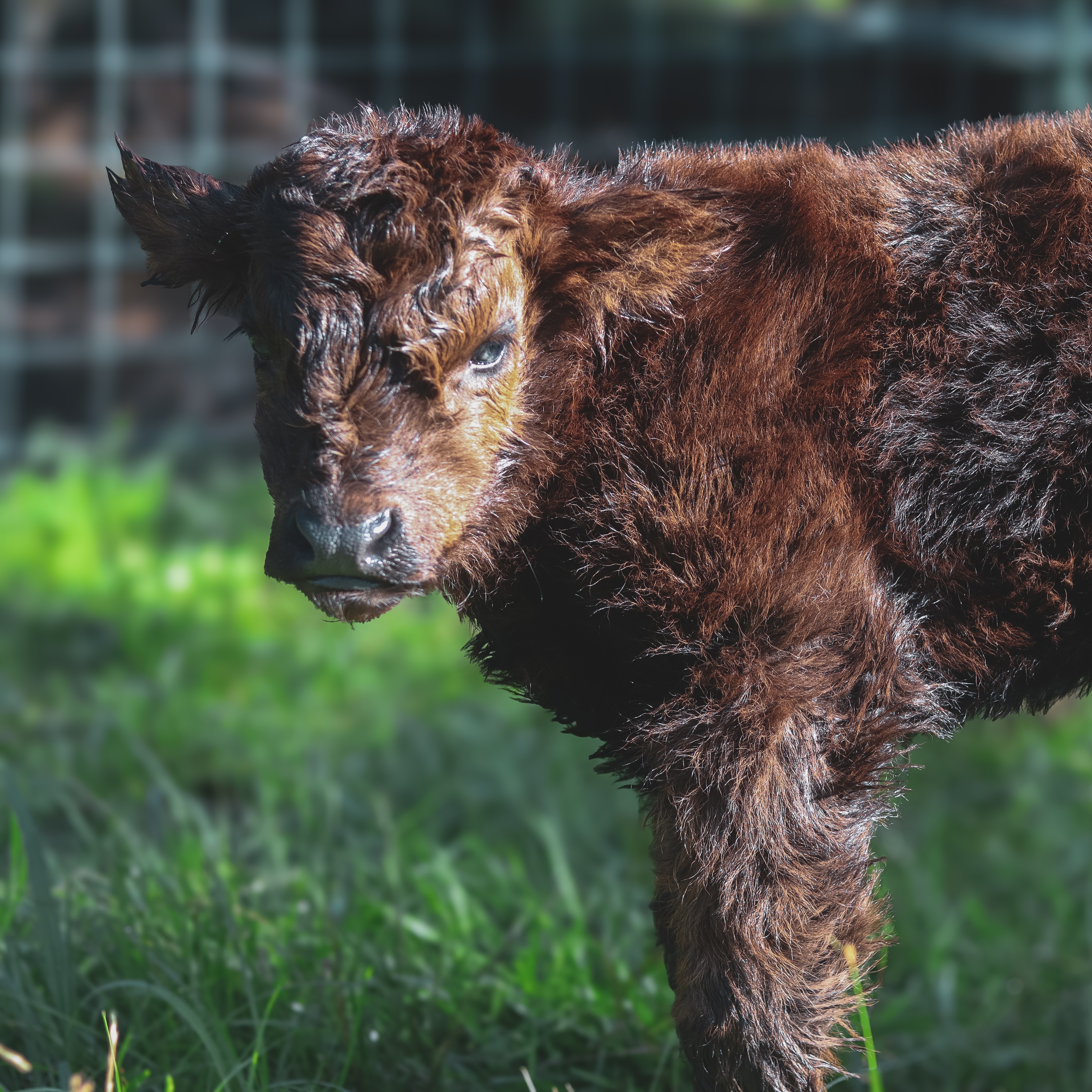
If you keep beef cattle across multiple breeds or want to see how different types manage on the same feeding setup, the cattle species hub on Creatures is a useful reference point, and hardy foragers such as Highland cattle are a common example of stock kept on round bales through hard winters.
The money math
Here is why a 10 to 30 point swing in waste is not a rounding error. Hay is typically the largest single expense in a cow-calf operation over winter, so every point of waste is real dollars burned. Using the Oklahoma trial’s own worked example, 30 cows fed 180 bales over a season at 70 dollars a bale, the seasonal cost of wasted hay ran about 667 dollars with a cone feeder, roughly 1,638 dollars with a sheeted ring, about 2,583 dollars with an open ring, and around 2,646 dollars with a poly ring (Illinois Extension summary).
That is nearly 2,000 dollars a season separating the best design from the worst, on a single group of 30 cows. Against that, a good feeder is cheap. Penn State reports that round bale feeders paid for themselves in about 1 to 20 months on hay savings alone, depending on herd size and hay price (Penn State Extension). The higher the hay price, the faster the payback, which means the years you least want to waste hay are exactly the years the better feeder returns your money quickest. You do not need to hit the single-digit cone number to come out ahead; even moving from no feeder to a basic ring captures most of the win.
Beyond the feeder: the factors that decide real-world waste
Feeder design sets the ceiling on how well you can do. Several other choices decide whether you actually hit it.
Capacity and stocking. A feeder that is too small for the group forces boss cows to guard it and timid cows to yank hay out and carry it off to eat in peace, which is exactly the trampling loss you are trying to prevent. Match feeder space to head count so every animal can settle in at the ring.
Restricting access time. When cattle have hay in front of them around the clock, they treat the feeder as a bed and sort through it for the best leaf. Limiting the hours cattle can reach the bale, or metering out only what the group will clean up, cuts both intake waste and trampling. This is one of the few levers that can push waste below what feeder design alone delivers, and it costs nothing but management.
Mud and placement. Hay ground into mud is hay gone, and a feeder parked in one spot all winter builds its own bog. Move feeders regularly to spread the traffic, or set them on a gravel pad, geotextile, or other firm surface at fixed feeding sites. Placement also protects your pasture: the churned, over-fertilized ring around a stationary feeder is slow to recover.
Animal safety. Some enclosed designs create pinch points where a cow or calf can trap a head or neck reaching through or backing out. Inspect any feeder for gaps that a curious animal can get caught in, and watch it in use for a few days after you introduce it.
Calf access. In cow-calf groups, make sure the design lets calves reach hay without squeezing under bars where they can be stepped on or wedged. Feeders sized only for mature cows can shut young stock out or put them at risk.

Larger operations: processors and unrollers
At scale, some operations skip the ring entirely and use bale processors or unrollers that shred or roll hay out in a windrow. Done well, with only as much hay as the group cleans up in a sitting, this can keep waste reasonable while speeding feeding and spreading manure and seed across the field. Done carelessly, unrolling a full bale onto wet ground for a group that will not finish it fast reproduces the ground-feeding waste you were trying to avoid. The tool is not magic; the discipline of matching hay out to what gets eaten is what controls loss, the same principle as a good ring.
Where Creatures fits
Creatures is not a feeder maker and not a breeder; it is the records, marketplace, and profile layer that sits under your operation. You can keep each animal’s profile and health records, track the herd through winter, and when you are buying or selling, work the cattle marketplace or find sellers through the breeder and seller directory. The feeding decisions in this guide are yours to make on the ground; Creatures keeps the paperwork and the pedigree straight while you make them.
Frequently asked questions
How much hay do cattle really waste with no feeder?
Extension trials commonly report 20 to 45 percent waste when round bales are fed on the ground with no ring, and Penn State cites figures as high as 57 percent in some outdoor conditions. The exact number depends on forage type, stocking, and weather, but it is always a large share of the bale.
Which feeder design wastes the least?
Cone feeders and sheeted-bottom rings that enclose the lower part of the bale rank lowest, often in the 3.5 to 6 percent range in the MSU and OSU trials. Open-bottom and poly rings run near 20 percent, and no feeder is worst of all.
How fast does a feeder pay for itself?
Penn State reports payback in roughly 1 to 20 months on hay savings alone for round bale feeders. Higher hay prices and larger herds shorten that further, so the feeder returns its cost fastest in the years hay is most expensive.
Can I cut waste below what the feeder gets on its own?
Yes. Restricting how long cattle can access the bale, matching feeder capacity to the group, and keeping feeders out of the mud all lower waste beyond design alone, at little or no added cost.
Are cone feeders safe for calves?
Most are, but check any design for gaps at the base or between bars where a calf can wedge a head or get stepped on, and confirm young stock can reach hay without squeezing under the frame. Watch the group for a few days after introducing a new feeder.
Do this next on Creatures
Whether you are managing the herd’s day-to-day care, planning a breeding, or buying and selling stock, Creatures is the records, marketplace, and directory layer to do it in one place.
Add your cattle. Create a free profile for each animal and store its tag, EID, and other identifiers on the profile. No account needed to start, and the walkthrough is in adding an animal to Creatures.
Track weights, calvings, and health. Keep weights, calvings, treatments, and vaccinations on each animal’s record. The record sheet opens for any visitor to look around, and a free account saves what you enter. See adding a record and health and medical records.
Stay ahead of routine work. Vaccination timing, preg checks, and calving dates are easy to lose track of. Set reminders so they do not slip. See reminders and upcoming care.
Buying or selling stock? Browse cattle on the marketplace and search trusted farms and ranches in the Creatures directory. Looking for something specific? Set a free listing alert and we will tell you when a match is posted. No account needed to start.
Run a ranch or farm? Add your operation so buyers can find you, then read getting listed in the breeder directory.