Highland Cows for Sale: How to Buy Highland and Mini Highland Cattle Responsibly
Author: Elliott Garber, DVM
If you are searching for Highland cows for sale, the short answer is that the good ones come from three places: registered fold breeders whose animals carry real herdbook papers, established farms selling quality unregistered stock they can fully document, and, with far more caution, livestock auctions. The mini Highland market sits alongside all of this with its own rules, because “mini” is a marketing label rather than a separate registered breed, and the label attracts both honest small-frame breeders and sellers counting on you not to ask questions. A Highland is a 15 to 20 year animal that needs pasture, strong fences, and at least one bovine companion, so the goal of this guide is not just to find a Highland for sale, but to find a healthy, honestly represented one from a seller you can hold accountable.
Below is how each buying channel works, what registration papers actually prove, how to vet a seller and the animal in person, the red flags that should end a conversation, and what your land needs before a cow ever steps off the trailer. For what a Highland should actually cost at each quality tier, keep the Highland cow cost guide open next to this page; it is the companion to this one, and the fastest way to recognize a price that is too good to be true is to know what real prices look like.
Where Highland cattle are actually sold
Registered fold breeders
A fold is what Highland people call a herd, and a registered fold breeder is the strongest starting point for most buyers. In the United States, the American Highland Cattle Association maintains the breed’s internationally recognized herdbook, which dates back to 1948. Registration papers from that herdbook trace an animal’s ancestry back three generations, registered bulls must be DNA typed, and the association’s rules exist precisely so that “purebred” means something you can verify rather than something a seller says. When a breeder hands you transferable registration papers, you are buying a documented animal, and you are also buying a relationship with someone who knows its dam, its sire, its temperament, and its quirks.
Regional Highland associations and breed shows are where these breeders congregate, and most of them expect you to visit the farm, walk the pasture, and meet the animals before any money moves. That expectation is a feature, not a hurdle. On Creatures, breeders who raise Highlands maintain profiles in the breeder directory, and current animals appear on the Highland marketplace, so you can compare folds, read histories, and start conversations in writing before you ever drive out.
Established farms selling unregistered stock
Plenty of good Highlands are sold without papers, at friendlier prices, by farms that simply never registered their animals. Unregistered is not a defect by itself. What matters is that the seller is honest about it: an unregistered Highland should be sold as an unregistered Highland, with its parentage, age, and health history laid out plainly, and priced accordingly. The problem channel is the seller who advertises “purebred” while having no papers and no interest in explaining why. If the word purebred is doing work in the listing, the herdbook paperwork should exist to back it up.
Sale barns and livestock auctions
Auctions move a lot of cattle, including some Highlands, and experienced cattle people buy there with their eyes open. For a first-time Highland buyer, the sale barn is the riskiest route. You get minutes to evaluate an animal with no history, no health records, no view of the farm it came from, and no seller to call when something goes wrong. Commingled livestock also carry real biosecurity risk, which is why university extension veterinarians consistently advise testing and quarantining any purchased animal before it joins your herd. If you do buy at auction, budget for a veterinary exam, a BVD PI test, and several weeks of quarantine as part of the purchase price, and treat any “registered” claim as unverified until you hold transferable papers.

The mini Highland question, answered honestly
Mini Highland cows are the most searched, most marketed, and most misrepresented corner of this breed. Here is the honest version. There is no separate miniature Highland breed with its own established herdbook standard the way the full-size breed has. Animals sold as minis are usually one of three things: crosses between Highlands and a naturally small breed (Highland and Dexter crosses are common, and some carry the Dexter chondrodysplasia dwarfism gene), small-frame purebred Highlands selected over generations from the short end of the breed’s normal range, or ordinary young Highlands that are simply not done growing.
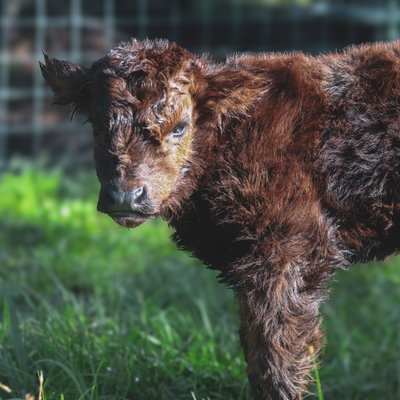
None of those categories is automatically bad. A well-bred small-frame Highland or an honest, health-tested cross can be a wonderful animal for a small acreage. But the label commands a premium, and that premium attracts sellers who advertise a fluffy calf as a “micro mini” with no explanation of its genetics, no photos of the parents, and no answer to the only question that matters: how big were the sire and dam? A cross is by definition not a purebred Highland, so “purebred mini” claims paired with a dwarfism gene are contradictory on their face. And a calf photo proves nothing about mature size, because every Highland calf looks tiny and adorable. Ask for the parents’ height and weight, ask what cross or line produced the small size, and expect a clear answer. The truth about mini Highland cows covers the genetics in more depth, and if part of the appeal is a small home milk cow, read can you milk a mini Highland cow before you commit, because the honest answer has caveats.
One more honesty check: some “mini Highlands” are better described as Highland crosses, and that can be exactly what you want. Highland genetics cross well, and crossbred animals are often hardier and cheaper. The difference between a good buy and a bad one is whether the seller calls it what it is. The Highland cross guide explains what common crosses look like and what they are worth.
How to vet a Highland seller
Whichever channel you buy through, the same standard applies. A seller worth your money will do most of the following without being pushed.
- Welcome a farm visit. You should be able to see the animal, its herd mates, and the conditions it lives in. A seller who will only meet in a parking lot, or who pushes delivery sight-unseen, is removing your best protection.
- Produce real paperwork. Transferable registration papers if the animal is sold as registered, vaccination and treatment records either way, and the name of the veterinarian who works with the herd.
- Show health testing, not just assurances. BVD persistent infection is the classic purchased-with-the-animal disease in cattle. The ear-notch PI test is inexpensive and definitive for that animal, and extension veterinarians recommend testing before purchase or before commingling, then quarantining new arrivals for roughly a month. Ask whether the herd has a known status for BVD and Johne’s disease. A good seller has answers; a great one has documents.
- Demonstrate temperament. Highlands are famously docile for a horned breed when they are handled regularly. Ask to walk among the fold. Ask whether the animal leads on a halter, and if the listing claimed halter trained, ask to see it caught and led. An animal that cannot be approached in its home pasture will not become gentler when it is stressed and standing on your land.
- Explain any “mini” claim in plain genetic terms. Parents’ sizes, the cross or line involved, and whether a dwarfism gene is present. Honest small-frame breeders volunteer this. Evasive ones change the subject to how cute the calf is.
- Put the deal in writing. Price, what papers and records transfer, any guarantee, and what happens if the animal fails a vet check. On Creatures, listing conversations and offers happen in writing on the platform, and the help article on making an offer on a listing shows how terms get agreed before money changes hands.

Red flags that should end the conversation
- “Purebred” with no papers and no explanation. Unregistered can be fine. Unverifiable claims are not.
- A mini priced far below the market. Genuine small-frame Highlands are scarce and expensive to produce. A bargain micro mini advertised online, especially one that can be “shipped right away” after a deposit, is the signature of the standard livestock scam. Check the going rates in how much is a Highland cow and treat steep discounts as a warning, not a win.
- No farm visit allowed. There is no acceptable version of this from a private seller.
- Deposit pressure and manufactured urgency. “Three other buyers are asking” is a sales tactic. Real breeders keep waitlists; they do not need you to wire money tonight. Prefer payment methods with recourse and keep the agreement in writing.
- Reused or stolen photos. Reverse-image-search the listing photos. Scammers recycle the same fluffy calf pictures across many fake ads.
- Unweaned calves sold to beginners. Bottle calves are a demanding project with real mortality risk, not a starter animal. A responsible seller does not ship a days-old calf to a first-time owner because the buyer found it cute.
- No questions asked of you. Good breeders interview buyers about land, fencing, and experience. A seller with no curiosity about where the animal is going is telling you what they care about.
Before you buy: land, fences, and a friend
Highlands are among the most forgiving cattle for small farms, but they are still cattle. Three things need to be true before pickup day.
Enough pasture. A common working figure is 1 to 2 acres of decent pasture per animal, and more where grazing is thin or seasonal. Highlands are efficient foragers that do well on rough ground where other breeds struggle, but no cow thrives on a bare lot, and hay costs through winter are a real budget line. The Highland pillar guide covers day-to-day care, feeding, and climate in full.
Real fences. Highlands generally respect fences well, but they are strong, curious, and equipped with impressive horns. Four-foot woven wire with a top strand, or multi-strand high-tensile with electric, is the standard advice. Fence the property line before the animals arrive, not after the first escape.
At least two animals. Cattle are herd animals, full stop. A single Highland kept alone is prone to stress, fence-walking, and bellowing for company, and no amount of human attention substitutes for a bovine companion. Plan your purchase, your acreage, and your budget around a minimum of two, whether that is a pair of steers, a cow and her calf, or a heifer with a companion.
After the sale, protect your new fold the way good herds protect themselves: quarantine new arrivals away from existing cattle for about four weeks, get your own veterinarian’s exam early, and start records from day one.
Frequently asked questions
Where is the best place to buy a Highland cow?
For most buyers, a registered fold breeder you can visit in person. You get documented ancestry, known temperament, health history, and a breeder you can call for advice later. Established farms selling honest unregistered stock are a good second route. Auctions are for experienced cattle buyers who can absorb the risk.
How much do Highland cows sell for?
It varies widely with registration, age, quality, and region, from modest prices for unregistered steers to several times that for registered breeding females, with marketed minis often commanding a premium on top. The Highland cow cost guide breaks down realistic ranges by tier, plus the setup and yearly costs that follow the purchase.
Are mini Highland cows a real breed?
No. There is no separate miniature Highland breed standard in the breed’s established herdbook. Minis are crosses with smaller breeds, small-frame selections from the normal Highland range, or young animals that have not finished growing. That does not make them bad animals; it makes honest genetics questions essential before you pay a mini premium.
What health tests should I ask for when buying cattle?
At minimum, ask about the herd’s history and request a BVD PI ear-notch test for the animal you are buying; extension veterinarians recommend testing before purchase or commingling. Ask about vaccination records and Johne’s disease status, then quarantine the new arrival for about a month and have your own vet examine it. Your veterinarian should guide the specifics for your state and situation.
Can I keep just one Highland cow?
You should not. Cattle are herd animals, and a lone cow is a stressed cow. Plan for at least two animals with pasture to match.
Do this next on Creatures
Whether you are months from buying or ready to visit a farm this weekend, Creatures is the marketplace, breeder directory, and records layer for doing it in one place, with the conversation and the agreement in writing instead of a wire transfer to a stranger.
Get alerted when a Highland is listed. Good Highlands, and especially honest minis, sell fast and are scarce in many regions. Set a free Highland listing alert and Creatures will tell you the moment a matching animal is posted. No account needed to start, and the how-to is in saving searches and using your watchlist.
Browse what is for sale now. See current Highland cattle on the marketplace and find trusted folds and farms in the Creatures breeder directory. When you find the right animal, making an offer on a listing walks through agreeing terms with the seller in writing.
Add your Highland. Already have one, or bringing one home soon? Create a free animal profile with its photos, parentage, and story. No account needed to start; see adding an animal to Creatures.
Start records on day one. Quarantine dates, the BVD test result, vaccinations, and vet visits belong in one place from the first week. Add a health record on Creatures. The record sheet opens for any visitor to explore, and a free account saves what you enter; the full how-to is in adding a record.
Raise and sell Highlands? Create a free farm or breeder profile so buyers searching for Highland cattle can find your fold, and see getting listed in the breeder directory. No account needed to start.