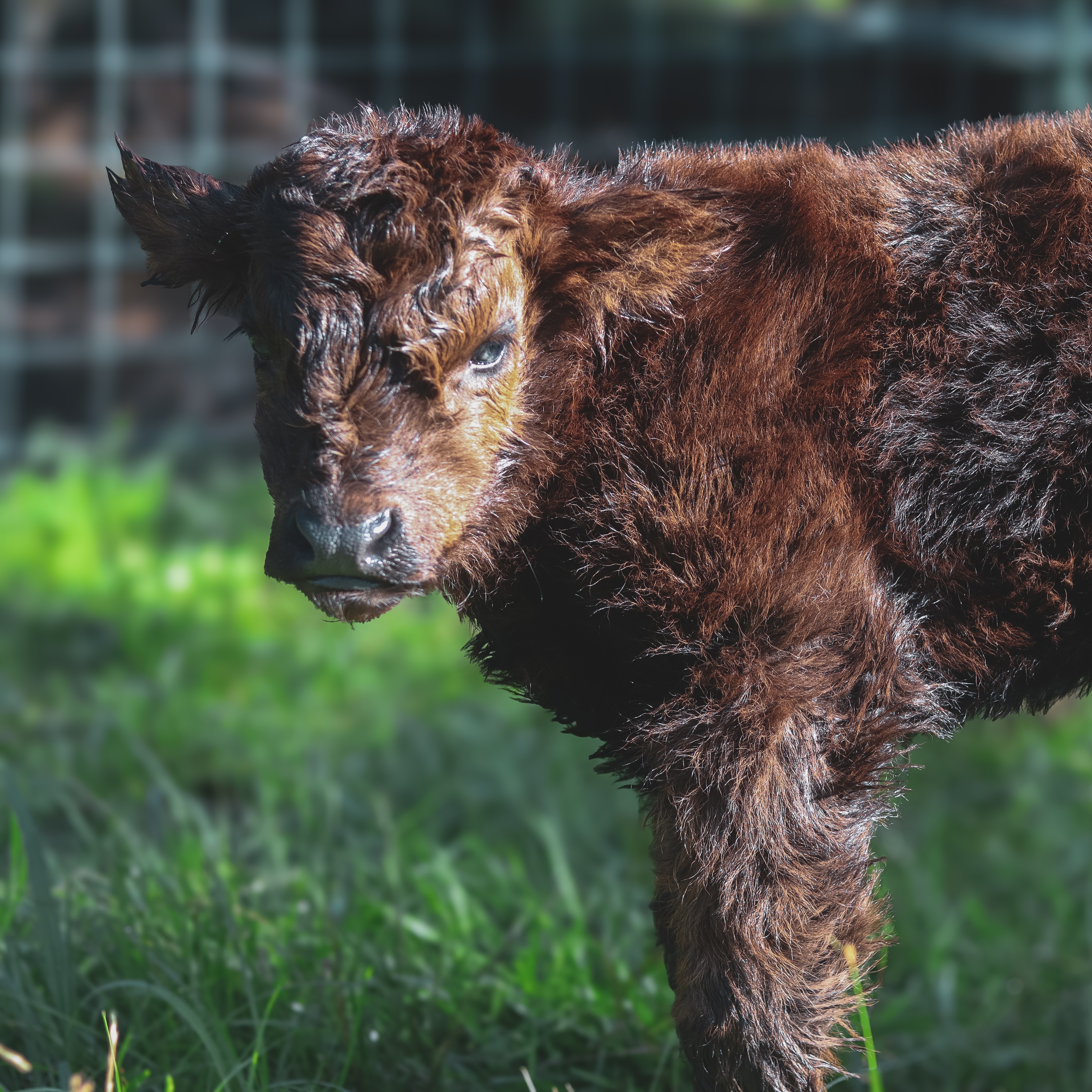
Weaning Calves: Methods, Timing, and Low-Stress Options
Author: Elliott Garber, DVM
Wean beef calves at around 6 to 8 months of age, use a low-stress method like fenceline or two-stage weaning rather than abrupt separation, and precondition the calves before weaning day so you are not stacking stressors on top of each other. Weaning is one of the most stressful events in a calf’s life, and stress is what opens the door to sickness. The producers who lose the fewest calves are the ones who plan weaning as a process over weeks, not a single hard cut on a single morning. This guide walks through timing, the main methods ranked from lowest to highest stress, how to precondition, and how to feed and watch calves through the transition.
When to wean
For most spring-calving beef herds, calves are weaned somewhere around 6 to 8 months of age. That range is a convention, not a biological switch. The real question is whether the calf’s rumen is developed enough to keep growing on forage and feed once milk is gone. Rumen development follows solid-feed intake, not the calendar: once a calf is reliably eating forage and grain, it takes roughly three weeks of steady intake to build the rumen papillae and microbial population needed to thrive without the cow (Penn State Extension). By six months on good pasture, most calves are well past that point, which is why the 6-to-8-month window is where the industry lands.
Earlier weaning is a legitimate tool, not a failure. Under drought, on short forage, or when cows are in poor body condition, producers wean earlier to take the nursing load off the cow so she can rebreed and recover. Beef calves can be weaned successfully as young as 45 days when conditions demand it, though early-weaned calves need a higher-quality ration to make up for what the rumen is not yet ready to extract from forage (UNL Beef). Weight and rumen readiness still govern the outcome; pulling a calf early does not remove the rumen-development requirement, it just shifts more of the feeding job onto you.
If you run multiple species or breeds and want a baseline for what “normal” size and growth look like for your cattle, the cattle species guide and individual breed pages such as the Highland breed profile are a useful reference point, since mature size and maternal milk vary a lot from breed to breed and change what a market-ready weaning weight looks like.
Why weaning stress matters so much
Weaning combines several stressors at once: loss of the dam, loss of milk, a diet change, often a new pen or pasture, and sometimes commingling with strange calves. That stress suppresses the immune system right when calves are most exposed, and it is the direct on-ramp to bovine respiratory disease. BRD, the pneumonia complex long known as shipping fever, is the most prevalent cause of sickness and death in weaned calves (Oklahoma State University). Respiratory problems usually begin with stress at weaning, which is exactly why every serious preconditioning program starts by trying to minimize that stress.
The practical takeaway: lowering stress is not a comfort nicety, it is the health strategy. Everything below is oriented around keeping the calf eating, drinking, and calm through the transition, because a calf that keeps eating is a calf that usually stays healthy.
Weaning methods, lowest to highest stress
Fenceline weaning
Fenceline weaning separates calves and cows into adjacent pastures across a shared, secure fence, so they can still see, hear, and smell each other for the first several days. The pairs typically stay across the fence for at least three to four days before the cows are moved farther off. Because the calf is not facing total, sudden loss, it spends less time walking the fence and bawling and more time grazing.
The research behind this is strong. Work at the University of California’s Sierra Foothill Research and Extension Center found that fenceline-contact calves bawled and walked less and, critically, gained substantially more weight than totally separated calves in the first two weeks after weaning, on the order of 22 to 24 pounds per head (eXtension). More recent controlled work continues to show abruptly weaned calves are more stressed than fenceline-weaned calves, with the behavioral gap largest in the first three days (peer-reviewed study, 2024). The main requirement is a genuinely stout fence: net wire or multi-strand electric that a determined calf and an anxious cow cannot push through or reunite across.

Two-stage weaning with nose flaps
Two-stage weaning breaks weaning into two separate events. In stage one, an anti-suckling nose flap (a plastic paddle that clips into the nostrils) is fitted so the calf stays with the cow but physically cannot nurse. After roughly four to seven days, the flap is removed and the calf is separated. The idea is to decouple the loss of milk from the loss of the dam so the calf experiences one stressor at a time.
In practice it can lower bawling and pacing at separation, but the method has real welfare caveats worth weighing honestly. Some studies have documented nasal-septum wounds from the flaps and, in certain trials, reduced weight gain and worse chute behavior while the flaps were in (case report, 2022). If you use nose flaps, fit them correctly, keep the stage-one window short, and check nostrils. For many operations, fenceline weaning delivers most of the low-stress benefit without the hardware, which is why it is often the first method to reach for.
Abrupt separation and truck weaning
Abrupt separation removes the cows completely and immediately, and “truck weaning” (loading calves off the cow straight onto a trailer for sale or shipping) is the most stressful version of all. It stacks separation, diet change, transport, commingling, and a strange destination into a single day. Calves weaned this way are consistently the most stressed and the most likely to need treatment for BRD (Oklahoma State University). It remains common because it is simple and cheap up front, but the sickness, death loss, and lost gain often erase the apparent savings. If circumstances force abrupt weaning, preconditioning beforehand matters more than ever.
Preconditioning: spread the stressors out
Preconditioning is the set of health and management steps done before and around weaning so the calf enters the transition already vaccinated, healed, and eating from a bunk. Typical elements include vaccinating against the common respiratory viruses (IBR, BVD types 1 and 2, PI3, and BRSV) on a timeline your veterinarian sets, castrating and dehorning, deworming, and teaching calves to eat from a feed bunk and drink from a waterer they will see again after weaning (Oklahoma State University). Programs that keep calves on the ranch for 45 days or more after weaning, rather than shipping straight off the cow, consistently show fewer treatments and lower death loss.
The single most important principle is not to stack every stressor onto weaning day. Castrating, dehorning, vaccinating, changing the diet, and separating the calf all at once overwhelms the animal. Do the surgical and vaccination work well ahead of weaning so those wounds and immune responses are behind the calf, and let weaning itself be one clean event. Your veterinarian should set the specific vaccine products, timing, and any medical decisions; this article is general guidance, not a health protocol.
Bunk and water breaking deserves special emphasis. A weaned calf that already knows what a feed bunk and a water trough are will start eating and drinking hours sooner than one encountering both for the first time while stressed, and those early hours of intake are where BRD is won or lost.
Feeding and watching calves after weaning
Post-weaning nutrition should be simple, palatable, and familiar. Offer good-quality, palatable forage (long-stem grass hay is a reliable starting point) plus a starter or receiving ration so calves can maintain intake through the diet change. Keep clean water accessible and easy to find; a fresh weanling that cannot locate water quickly is a calf that goes off feed. Manage the pen for comfort: control dust, provide room to move without crowding at the bunk, and avoid unnecessary handling in the first days (Texas A&M AgriLife Extension).
Then watch closely for BRD. The early signs are subtle: a calf that hangs back from the bunk, droopy ears, a nasal or eye discharge, rapid or labored breathing, a soft cough, or a dull attitude. Fever usually precedes the obvious signs, so a calf “just looking off” is worth pulling and checking. Early detection and prompt treatment, on a plan you set with your veterinarian, is far more effective than waiting until an animal is visibly down.

Record weaning weights, they pay you twice
Weaning weight is one of the most valuable numbers you will capture all year. It is a core selection metric (it feeds ratios and expected progeny differences that tell you which cows are actually raising the best calves) and a core marketing metric (buyers pay for documented, preconditioned, known-weight calves). A weaning weight scribbled on a feed sack and lost by spring does neither job.
This is where a permanent record layer earns its keep. Logging weaning weights, vaccination dates, and weaning method against each animal’s profile keeps the data attached to the calf for its whole life, so next year’s selection decisions and this year’s sale listing both draw from the same trusted history rather than memory. Creatures is the records, pedigree, and profile layer for that work: you can keep each animal’s weights and health events in one place, and when calves are ready to move, list them on the cattle marketplace with their documented history attached, or use the breeder directory to find and be found by serious cattle buyers. The record you capture at weaning is the same record that helps a calf sell.
Frequently asked questions
What age should I wean beef calves?
Most beef calves are weaned around 6 to 8 months of age, but that is a convention rather than a hard rule. The real readiness signals are body weight and rumen development, meaning the calf is reliably eating forage and feed and can keep growing without milk. Under drought or on thin cows, producers wean earlier to relieve the cow, using a higher-quality ration to support the younger calf.
Is fenceline weaning really less stressful than separating them completely?
Yes, and the effect is measurable. University research has shown fenceline-weaned calves bawl and walk less and gain more weight in the first two weeks than totally separated calves, roughly 22 to 24 pounds per head in one well-known UC study. The key is a fence stout enough that anxious cows and calves cannot force a reunion.
Do nose flaps for two-stage weaning cause problems?
They can. Two-stage weaning with nose flaps is often marketed as low-stress, and it can reduce bawling at separation, but some studies have documented nasal-septum wounds and reduced weight gain while the flaps are in. If you use them, fit them correctly, keep the stage-one window short, and inspect the nostrils. Many producers get comparable low-stress results from fenceline weaning without the hardware.
How do I keep calves from getting sick at weaning?
Lower the stress and spread it out. Precondition ahead of time by vaccinating, castrating, dehorning, deworming, and bunk-and-water breaking calves before weaning day rather than all at once, then use a low-stress separation method and provide palatable feed and clean water. Watch closely for early signs of bovine respiratory disease and work with your veterinarian on the vaccination and treatment plan.
Why should I record weaning weights?
Weaning weight is both a selection tool and a marketing tool. It tells you which cows raise the heaviest calves and it gives buyers documented, trustworthy information at sale time. Keeping those weights on each animal’s permanent profile means the data is still there for next year’s decisions and for building a listing that stands out.
Do this next on Creatures
Whether you are managing the herd’s day-to-day care, planning a breeding, or buying and selling stock, Creatures is the records, marketplace, and directory layer to do it in one place.
Add your cattle. Create a free profile for each animal and store its tag, EID, and other identifiers on the profile. No account needed to start, and the walkthrough is in adding an animal to Creatures.
Track weights, calvings, and health. Keep weights, calvings, treatments, and vaccinations on each animal’s record. The record sheet opens for any visitor to look around, and a free account saves what you enter. See adding a record and health and medical records.
Stay ahead of routine work. Vaccination timing, preg checks, and calving dates are easy to lose track of. Set reminders so they do not slip. See reminders and upcoming care.
Buying or selling stock? Browse cattle on the marketplace and search trusted farms and ranches in the Creatures directory. Looking for something specific? Set a free listing alert and we will tell you when a match is posted. No account needed to start.
Run a ranch or farm? Add your operation so buyers can find you, then read getting listed in the breeder directory.