


How Much Does a Goat Weigh, and How to Weigh One
Author: Elliott Garber, DVM
A healthy adult goat can weigh anywhere from roughly 50 pounds to well over 300 pounds, so the honest answer is: it depends heavily on breed and sex. A Nigerian Dwarf doe might top out near 75 pounds, while a mature Boer buck can push past 300. Bucks (intact males) generally run heavier than does (females) of the same breed, and wethers (castrated males) fall somewhere in between depending on how they are raised. Below you will find verified rough ranges by breed, why an accurate weight matters more than most new owners expect (dewormer dosing, above all), and the practical ways to actually get a number, from a livestock scale to a weigh tape.
Treat every figure here as a range, not a target. Nutrition, genetics, age, climate, and management all move the number, and two goats of the same breed and sex can differ by 30 pounds and both be perfectly healthy.
How much goats weigh by breed and sex
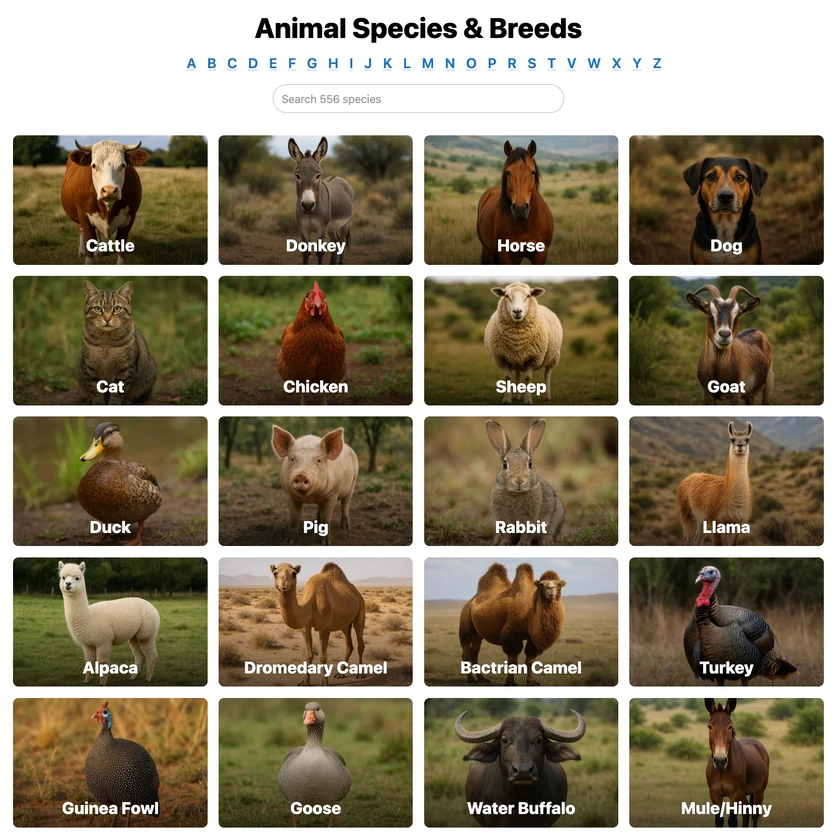
Breed is the single biggest driver of weight. Here are verified rough ranges for the breeds people ask about most. When you are comparing animals or shopping, breed pages like the Creatures goat species overview can help you keep these distinctions straight.
Miniature breeds
Nigerian Dwarf. A dairy breed in a small package. The American Dairy Goat Association standard puts an ideal weight near 75 pounds, and full-grown does generally run between about 50 and 75 pounds, with bucks somewhat heavier. Reported ranges vary because “miniature” covers a lot of individual variation.
Pygmy. A compact, stocky meat-type miniature. Adult weights are commonly cited around 50 to 75 pounds for does and 60 to 86 pounds for bucks, though some sources report lighter animals. Call it roughly 50 to 90 pounds across the breed and expect real spread.
Standard dairy breeds
Alpine, Nubian, Saanen, LaMancha, Toggenburg, and Oberhasli are the familiar full-size dairy goats. Breed standards set floors, not averages: mature Alpine and Saanen does should weigh at least 135 pounds and bucks at least 160 pounds, and Nubian bucks carry a similar minimum. In practice, well-grown does often land in the 140 to 160+ pound range, and bucks heavier still.
Meat breeds
Boer. The heavyweight of common goat breeds, selected hard for growth and muscle. Mature Boer does run roughly 190 to 230 pounds, and mature bucks roughly 200 to 340 pounds. Boer kids can gain in excess of 0.4 pounds per day under good feedlot conditions, which is part of why weighing them regularly is worthwhile.
If you are evaluating breeding stock or market animals, weight ranges are one of the first specs to sanity-check against the breed. You can browse animals and their recorded details in the goat marketplace or find sellers through the breeder directory.
Why an accurate weight actually matters
Weight is not trivia. Several routine decisions depend on getting it reasonably right.
Dosing dewormers and medications. This is the big one. Most goat products, especially dewormers, are dosed by body weight, and goats are notoriously heavier than owners guess. Underdosing is not a harmless miss: it leaves surviving parasites and contributes directly to anthelmintic (dewormer) resistance, which is already a serious, widespread problem in goats. Overdosing carries its own toxicity risks. The veterinary press has put it bluntly in coverage of dewormer-resistance research: invest in a way to know real body weight and dose to it. Always confirm the specific product, dose, and route with your veterinarian; our goat deworming guide covers how weight feeds into that decision, but the dose itself is a vet call.
Body condition monitoring. Weight over time tells you whether an animal is holding, gaining, or slipping. A sudden or unexplained drop is one of the earliest, most reliable flags that something is wrong, often before other symptoms show.
Breeding readiness. Doelings are typically bred by weight, not age. A common rule of thumb is to wait until a doeling reaches roughly 60 to 70 percent of her expected mature weight, with many producers taking a more conservative 70 to 80 percent. Breeding an underweight doeling risks her health and her kids.
Tracking kid growth. Regular weights let you spot a kid that is falling behind the group early, when a nutrition or health intervention still helps.
How to weigh a goat
There is a clear accuracy hierarchy here. Pick the method that matches how much precision the decision needs.

Livestock scale (most accurate)
A platform or livestock scale gives you a true number and is the gold standard, especially for medication dosing. If you keep more than a few goats, or dose dewormers regularly, a scale pays for itself in avoided under- and over-dosing. Walk the goat on, let the reading settle, record it.
Hanging scale and sling (good for kids)
For newborns and young kids, a hanging scale with a sling or a sturdy bag works well and is inexpensive. It is accurate for small animals and makes tracking early growth easy. It stops being practical once a goat is too big to comfortably lift.
Weigh tape or heart-girth measurement (an estimate)
When you have no scale, you can estimate weight from the heart girth, the circumference of the chest measured just behind the front legs, at the point in line with the elbow. Some tapes are printed to read out pounds directly; others pair a girth measurement with a formula.
Be honest with yourself about what this is: an estimate, not a measurement. Girth-to-weight relationships vary by breed, age, body type, and even how tightly you pull the tape, and studies of these formulas show real error that grows in some age and sex groups. Research on girth-based estimation has found that relying on the formula alone would leave a large share of goats treated for less than their true body weight. That is fine for watching trends over time and for a rough sanity check, but it is the wrong tool for precise medication dosing. If a tape estimate is all you have and you must dose, talk to your vet about how to build in a safety margin rather than guessing low.
A few tips for a cleaner girth reading: use a soft cloth or sewing tape, measure the same way every time (same spot, same snugness), and keep the goat standing square and calm.
Weight is not the whole story: body condition
A goat can hit the “right” number on the scale and still be over- or under-conditioned, because muscle, fat, frame, and even a full rumen or pregnancy all move weight around. That is why experienced owners pair weight with body condition scoring (BCS).

BCS is a hands-on assessment, usually on a 1 (emaciated) to 5 (obese) scale, done by feeling three areas: the lumbar spine behind the ribcage, the ribs, and the sternum between the front legs. You are feeling how much muscle and fat cover the bones, because a fluffy coat hides a lot. Most goats should sit in the middle of the range; extension and welfare guidance commonly points to keeping animals between about 2.0 and 4.0, with the sweet spot near the center. Score by hand every few weeks and you will catch problems the scale alone can miss.
Keep a weight record for every goat
A single weight is a data point. A series of weights is a health tool. Tracking each animal’s weight over time is how you catch a slow decline early, confirm that a kid is growing on curve, time breeding correctly, and dose accurately without re-guessing every season.
However you record it, keep it per animal and keep it consistent (same method, roughly the same intervals). On Creatures, weight fits naturally into an animal’s records and profile, so growth and condition trends live alongside the rest of that goat’s history rather than scattered across notebooks. When you later sell, transfer, or evaluate an animal, that documented history travels with the profile.
Frequently asked questions
How much does an average goat weigh?
There is no single average that is useful, because breeds span from about 50 pounds (miniatures like Nigerian Dwarf and Pygmy) to well over 300 pounds (a mature Boer buck). Standard dairy does commonly land around 135 to 160+ pounds. Always think in terms of breed and sex, not one universal figure.
Are weigh tapes accurate for goats?
They give a useful estimate, not a precise weight. Heart-girth tapes and formulas carry real error that varies by breed and body type, so they are good for tracking trends and rough checks but not reliable enough on their own for exact medication dosing. Use a scale when the dose has to be right, and confirm dosing with your vet.
At what weight can a doe be bred?
Breeding is guided by weight, not age. A common guideline is to wait until a doeling reaches roughly 60 to 70 percent of her expected mature weight, and many producers wait a bit longer. Because “mature weight” differs by breed, the target pounds differ too.
Why do goats always seem heavier than I guess?
Coat, frame, and muscle hide weight, and people consistently underestimate it. That underestimation is exactly how goats end up underdosed on dewormers, which drives resistance. Weighing removes the guesswork.
How often should I weigh my goats?
Weigh kids frequently to confirm growth, and weigh adults at least around key events (before breeding, before deworming, when body condition looks off). Pairing weight with hands-on body condition scoring every few weeks gives the clearest picture.
Do this next on Creatures
Whether you are dialing in day-to-day care, planning a breeding, or shopping for your next goat, Creatures is the records, marketplace, and directory layer to do it in one place.
Add your goats. Keeping goats already? Create a free animal profile for each one in a few minutes. No account needed to start, and the walkthrough is in adding an animal to Creatures.
Keep the records that matter. Log health treatments, weights, breedings, and routine care. The record sheet opens for any visitor to look around, and a free account saves what you enter. See adding a record and health and medical records.
Never miss routine care. Hoof trims, vaccinations, deworming checks, and kidding dates are easy to forget. Set reminders so they do not slip. See reminders and upcoming care.
Shopping for goats? Browse goats on the marketplace and search trusted farms and breeders in the Creatures directory. Waiting on the right one? Set a free listing alert and we will tell you when a match is posted. No account needed to start. New to this? See saving searches and using your watchlist.
Run a herd or farm? Add your operation so buyers can find you, then read getting listed in the breeder directory.