


Hereford Hog: Breed Profile, Markings, and Buying Guide
Author: Elliott Garber, DVM
The Hereford hog is a medium-sized American heritage pig named for the way it looks like a Hereford cow: a deep rust-red body with a white face, white feet, and a white underline. It was developed in the American Midwest in the 1920s from Duroc, Poland China, and Chester White bloodlines, and a registry was formed in 1934. Prized for a calm, docile temperament, good mothering, and the ability to do well on pasture, it is a favorite for small farms, homesteads, and youth livestock projects. This page covers what the breed is, where it came from, how to recognize it, how it performs, what it costs, and what to check before you buy one.
What is a Hereford hog?
The Hereford hog is a breed of domestic pig developed in the United States and named for its resemblance to Hereford cattle, the familiar red beef animals with white faces. According to The Livestock Conservancy, the breed description calls for a hog that is primarily red with a white face and two or more white feet, so the color pattern is the whole reason the breed carries the Hereford name.
It is a medium-sized hog and, unlike many pig breeds that trace to Europe or Asia, it is genuinely American in origin. It was put together in the Corn Belt in the 1920s from established American breeds and registered in 1934. From the start it was bred not only for the striking color but for practical traits: sound conformation, efficient growth, a quiet disposition, and sows that raise their litters well.
Today the Hereford is valued mainly as a heritage meat pig that suits pasture and small-farm systems. It is a common pick for families raising a few pigs, for direct-to-consumer pork, and for youth showing at fairs, in part because of that easygoing temperament. If you are still comparing breeds, the broader Creatures pig species page is a good place to weigh the Hereford against other heritage hogs.
Origin and history
The Hereford hog is a Corn Belt creation. The Livestock Conservancy traces the earliest work to R.U. Weber of La Plata, Missouri, who bred for the red-and-white Hereford color pattern in the early 1900s. From roughly 1902 to 1925 a group of farmers in Nebraska and Iowa, John Schulte of Norway, Iowa among them, worked to fix that coloration while also selecting for conformation and performance. The principal foundation breeds were the Duroc (a red pig) and the Poland China, with some accounts noting possible Chester White or Hampshire influence.
In 1934 the effort was formalized. Roughly 100 selected animals from a handful of Iowa and Nebraska herds, including those of John Schulte (Norway, Iowa), A.J. Way (New Sharon, Iowa), Henry Weimers (Diller, Nebraska), G.P. Rue (Nickerson, Nebraska), and P.W. Mitchell (Van Meter, Iowa), were chosen as foundation stock. That same year, the National Hereford Hog Record (now the National Hereford Hog Association) was organized to promote the new breed and keep its herdbook. The registry attracted several hundred members within its first decade, and the breed spread across the Midwest.
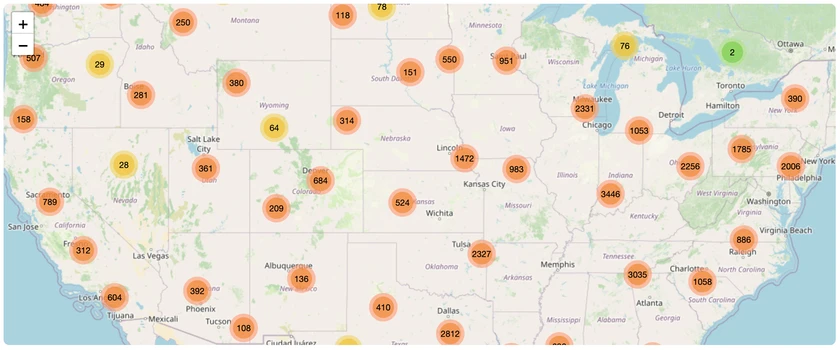
Numbers fell during the 1960s. As The Livestock Conservancy explains, commercial pork production moved away from purebred hogs and toward a standardized three-way cross (commonly Duroc, Hampshire, and Yorkshire), and less colorful, less specialized purebreds like the Hereford lost commercial ground. The breed became rare enough to draw conservation attention. The good news is more recent: driven by renewed interest in heritage and pasture pork, the Hereford population has been rebuilding, and in 2024 the breed graduated off The Livestock Conservancy’s conservation priority list. It remains most concentrated in the Midwest and Plains states.

What a Hereford hog looks like
The Hereford is easy to recognize once you know the pattern, because it is deliberately borrowed from Hereford cattle.
- Deep red body. The body is predominantly red, and a rich, deep red is preferred. The breed standard calls for the animal to be primarily red with white points.
- White face. A white face is the signature feature and the single most diagnostic marking. Registry rules from the Hereford association require that the majority of the face be white, alongside a body that is at least two-thirds red.
- White feet and underline. The standard calls for white feet (breeders typically look for white encircling the legs above the hoof) and a white underbelly. In practice you want a red pig wearing white socks, a white face, and a white belly.
- Drooping ears that break forward. The Hereford carries medium-sized ears that droop and break forward over the face, rather than standing erect. The face is medium in length with a slight dish. This is a lop-eared type, not a prick-eared one.
- Medium frame. This is a moderate, well-muscled hog rather than a giant. Mature boars run about 800 lb (roughly 360 kg) and mature sows about 600 lb (roughly 270 kg), per The Livestock Conservancy.
One point worth understanding if you plan to register or show: the color pattern is not just cosmetic to the breed association. Historically the registry has treated markings strictly. White that touches the topline along the back, a white belt, or more than about one-third white on the body (excluding the head and ears) can disqualify an animal from registration. So when a breeder talks about a pig being “correctly marked,” they mean it fits these rules, not just that it looks broadly red-and-white.
How does the breed perform?
The Hereford earned its following on practical merit, not just color.
Growth and meat. Herefords are an efficient, medium-sized meat hog. The Livestock Conservancy notes that market pigs commonly reach roughly 200 to 250 lb by about five to six months of age, and that the breed is grain-efficient while also doing well on pasture. The pork is used for the full range of fresh and cured cuts, from chops and loin to ham, bacon, and sausage, which makes the breed a good fit for whole-hog and direct-to-consumer sales.
Mothering and litters. Sows are known for producing and weaning good litters and for being attentive, calm mothers. Litters commonly run in the range of 8 to 10 piglets, and the sow’s steadiness is part of why the breed is recommended for beginners and young handlers. As with any pig, litter size varies with the individual sow, her age, nutrition, and management, so treat those numbers as typical rather than guaranteed.
Temperament. Across breed sources the Hereford is consistently described as quiet and docile, which is exactly why it is a popular 4-H and youth project animal. A calm pig is safer and easier to handle, halter-train, and load. Temperament still varies with the individual and with handling, and a mature boar is always a different proposition from a gilt or a barrow, so this is a breed known for good disposition, not a promise that any given animal will be gentle.

Husbandry and care
A Hereford is a hardy, adaptable pig, but like any pig it has real needs. The notes below cover the shape of good management. For medical decisions and a herd health plan, work with a veterinarian who can see your animals and knows the diseases in your area.
Housing and space
Pigs need dry, draft-free shelter with clean bedding, shade, and protection from both cold wind and summer heat. Pigs cannot sweat effectively, so in warm weather they rely on shade and a wallow or misting to cool down. Herefords do well on pasture or in a well-managed dry lot, but they are strong, determined rooters and escape artists, so sound fencing (many keepers use woven wire, hog panels, or electric fence) is essential from day one. Give them enough space to root, dung away from their bed, and avoid crowding.
Feeding and water
Pigs are omnivores with simple stomachs, and a productive pig needs a balanced ration that supplies enough energy, protein, vitamins, and minerals for its stage of life, whether that is a growing market pig, a pregnant sow, or a lactating sow raising a litter. Pasture and forage are a genuine part of the Hereford’s appeal and can supply part of the diet, but pasture alone will not finish a market hog or fully support a milking sow, so most keepers feed a formulated hog ration alongside any forage. Constant access to clean, fresh water matters year round and is critical in hot weather. Do not feed raw garbage or uncooked meat scraps: feeding untreated food waste to pigs is regulated in the United States and can transmit serious diseases, so follow federal and state rules and your veterinarian’s guidance.
Breeding and young stock
Gilts and boars reach breeding maturity in the first several months of life, and pig gestation is famously consistent at about 114 days, often remembered as three months, three weeks, and three days. Around farrowing, sows need a clean, draft-free space and, ideally, some protection so they do not lie on newborn piglets. Newborns are typically given attention for warmth, colostrum within the first hours, iron, and the routine processing your veterinarian recommends, with weaning commonly at about six to eight weeks. If you intend to register offspring, plan matings between correctly marked, registered parents and keep good birth records.
Health
Routine pig health management applies: a parasite plan suited to your setup, clean housing, biosecurity to keep new diseases off the farm, and the vaccinations your veterinarian recommends for your region. Light-skinned areas such as the white face can sunburn, so shade and wallows do double duty. Keep clear records of farrowings, litter sizes, weights, treatments, and health events so you can make breeding and culling decisions on evidence instead of memory. Defer all medical decisions to a veterinarian who can examine the animal.
Climate and pasture
The Hereford is an adaptable American farm breed that handles a range of Midwestern and Plains conditions and is well-regarded as a pasture pig. Provide wind protection and deep bedding in cold weather and shade, water, and wallows in the heat. Rotating pigs across pasture and giving them room to root are the kinds of practices that keep a pasture system healthy and the pigs content.
Size, weight, and lifespan
Mature Hereford boars weigh in the neighborhood of 800 lb (about 360 kg) and mature sows around 600 lb (about 270 kg), according to The Livestock Conservancy, which makes this a medium-sized hog rather than one of the giant breeds. Market pigs are usually harvested well before full size, commonly at about 200 to 250 lb.
On lifespan, be careful with numbers. Most Herefords are raised as market animals and are harvested young, so a long lifespan is not what the breed is selected or documented for. Breeding pigs kept as pets or long-term herd animals can live many years, on the order of a common domestic pig lifespan rather than any breed-specific figure. There is no authoritative Hereford-specific longevity number, so treat any single figure you see with caution.
Cost and availability
Because the Hereford is a recovering heritage breed rather than a mass-market commercial hog, pricing follows the heritage-livestock pattern rather than commodity prices.
There is no single reliable public price for a Hereford hog, and we will not invent one. What you pay depends on the animal’s age and purpose (a weaner pig headed for the freezer is one thing, a registered, correctly marked breeding gilt or boar is another), its pedigree and registration status, its conformation and markings, and simple local supply and demand. Registered breeding stock from a reputable herd generally commands a premium over an unregistered feeder pig, and prices vary widely by region and season. If you want a working budget, ask several breeders in your area directly rather than trusting a viral figure.
Availability is better than it was, but this is still not a hog you will find at every sale barn. The breed graduated from The Livestock Conservancy priority list in 2024 as its population recovered, and it is most common in the Midwest and Plains states, so buyers elsewhere may have to travel or wait for the right litter. Because supply is patchy, a saved listing alert (below) is often the most practical way to catch correctly marked stock when it appears.

Buying considerations
Because the Hereford is defined by its markings and is often sold as breeding or show stock, buy on evidence and on the breed standard, not just on a pretty face.
- Match the animal to your goal. A feeder pig for pork can be judged on health, growth, and thrift. A breeding or show prospect needs correct markings, sound structure, and paperwork. Decide which you are buying before you shop.
- Check the markings against the standard. For registration or the show ring, the pig should be primarily red with a white face, white feet, and no disqualifying white on the topline or a white belt. If registration matters to you, confirm the animal actually qualifies rather than assuming any red-and-white pig will.
- Ask for records and registration. Litter history, weights, health treatments, and registration papers with the National Hereford Hog Association tell you far more than looks alone. A breeding animal should come with a pedigree you can verify.
- See the pig and the herd in person when you can. Look for good feet and legs, a sound bite, clear eyes and breathing, and an even temperament. A healthy, calm pig from a clean operation is worth more than a bargain from a herd you cannot assess.
- Confirm biosecurity and health status. Ask what the herd is vaccinated for and tested for, and quarantine new arrivals before mixing them with animals you already own.
You can browse current Hereford hog listings on the Creatures marketplace and look for breeders and farms in the Creatures breeder directory. If you are weighing other heritage American hogs, our pillars on the Poland China, Spotted (Spotted Poland China), and Camborough pigs are useful comparisons, and the Hereford sits alongside other heritage livestock like Maine-Anjou cattle and the Montadale sheep on small diversified farms.
Frequently asked questions
Why is it called a Hereford hog?
Because it is colored like a Hereford cow: a deep red body with a white face and white points. The breed was deliberately selected for that pattern in the early 1900s, and the registry standard requires a white face and a body that is at least two-thirds red.
What is a Hereford hog used for?
Primarily for meat. It is a medium-sized heritage pork breed that finishes well on grain and does well on pasture, and it is also a popular 4-H and youth show pig because of its calm temperament.
How big does a Hereford hog get?
Mature boars reach roughly 800 lb and mature sows about 600 lb, per The Livestock Conservancy. Market pigs are usually harvested much earlier, commonly around 200 to 250 lb at five to six months.
Are Hereford hogs rare?
They were rare enough to sit on The Livestock Conservancy’s conservation priority list for years, but the population has recovered, and the breed graduated off that list in 2024. It is still most common in the Midwest and Plains and is not found at every sale barn.
Are Hereford hogs good for beginners?
They are one of the more beginner-friendly pig breeds, thanks to a docile disposition, good mothering, and adaptability to pasture. As with any livestock, success still depends on sound fencing, shelter, a balanced diet, clean water, and a veterinarian relationship.
Do Hereford hogs have floppy ears?
Yes. They carry medium-sized drooping ears that break forward over the face, along with a face of medium length with a slight dish. They are a lop-eared type rather than a prick-eared one.
Do this next on Creatures
Whether you are researching the breed, hunting for correctly marked stock, or already raising Herefords, Creatures is the records, marketplace, and directory layer to do it in one place.
Find stock. Browse Hereford hogs on the marketplace and search trusted breeders and farms in the Creatures directory. New to buying on Creatures? Read making an offer on a listing.
Get alerted. Correctly marked Herefords are not at every sale barn, so set a free Hereford hog listing alert and we will tell you when one is posted. No account needed to start. See saving searches and using your watchlist.
Add your pig. Already raising Herefords? Create a free animal profile in a few minutes. No account needed to start, and the walkthrough is in adding an animal to Creatures.
Track litters and health. Track farrowings, weights, and health records on Creatures. The record sheet opens for any visitor to look around, and you will need a free account to save what you enter. See adding a record for the full how-to.
List your farm. Run a herd or farm? Add your breeder or farm profile so buyers looking for this heritage breed can reach you. No account needed to start. Read getting listed in the breeder directory and creating an organization and adding your team if you manage your operation with others.
Sell with confidence. Planning to sell weaners or breeding stock? Learn how seller payout works before you list.