


African Forest Elephant
Loxodonta cyclotis
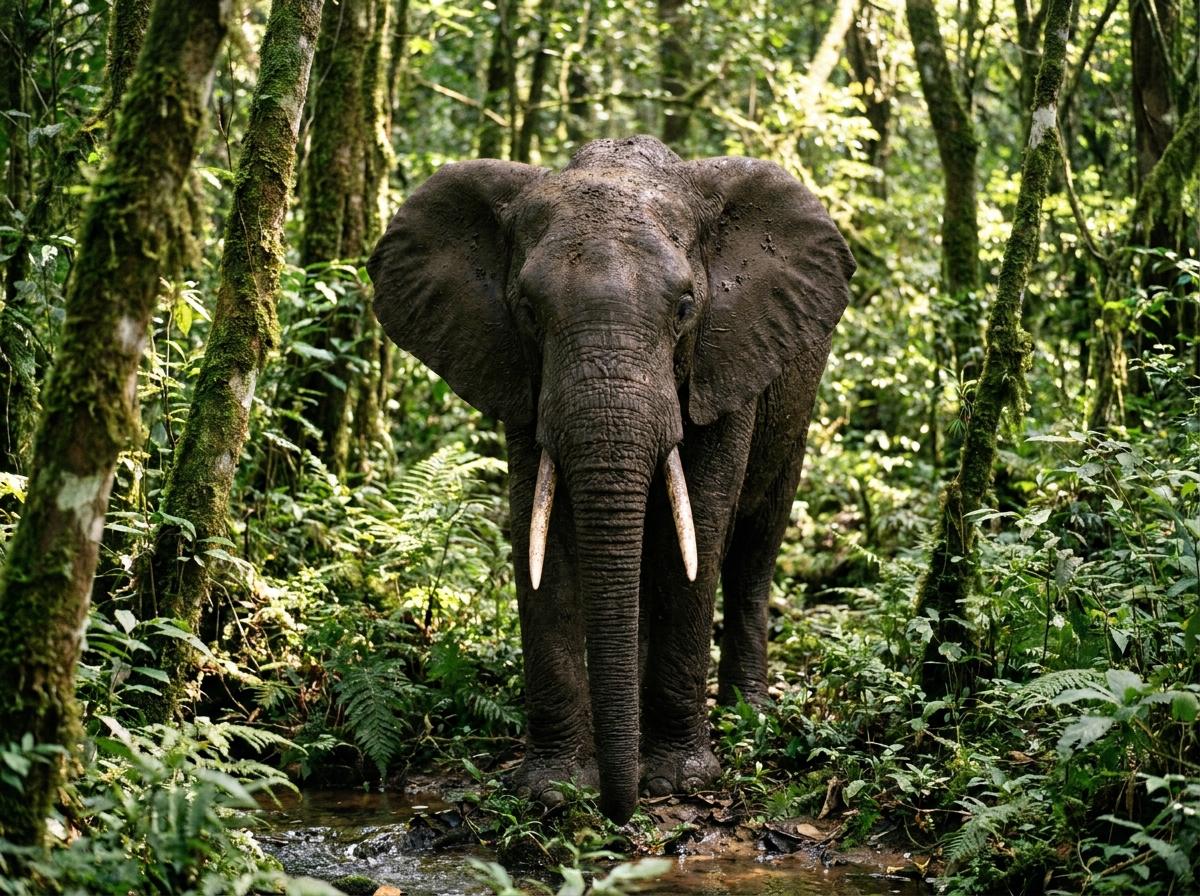
The African forest elephant (Loxodonta cyclotis) is the smaller, rainforest-adapted African elephant found mainly in the Congo Basin and remaining forests of West and Central Africa. It is now treated as a species distinct from the African bush elephant. Forest elephants have more rounded ears, a narrower body, and straighter, downward-pointing tusks that help them move through dense vegetation and dig for minerals. They travel along forest paths to fruiting trees, rivers, and clearings known as bais, where groups may gather and researchers can observe animals that are otherwise difficult to see.
Human work with forest elephants is centered on in-place conservation rather than ordinary captive management. Field teams rely on dung DNA, acoustic monitoring, camera traps, bai observation, and ranger patrols to estimate numbers and protect animals from ivory poaching. Because they reproduce slowly and depend on large intact forests, populations recover poorly after heavy hunting or fragmentation. Reserve planning must also address roads, mining, logging, and crop conflict with communities at forest edges. The species is listed as critically endangered, and separating it from savanna elephants matters for law enforcement, population targets, and conservation funding.
Colors: Wild Type