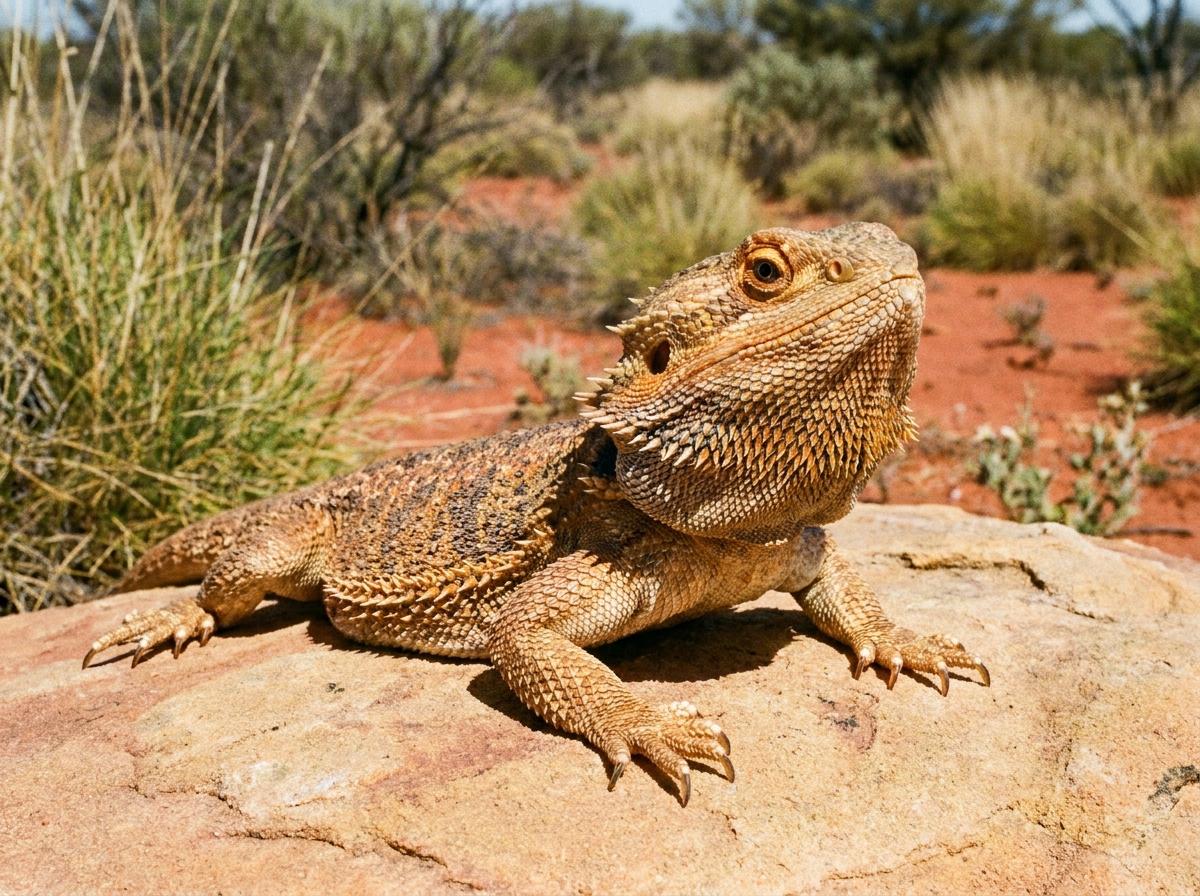
German Giant
The “German Giant” is a size line of the central bearded dragon (Pogona vitticeps), the same familiar lizard kept as a pet worldwide, selectively bred in Germany to grow larger and bulkier than a typical dragon. It is not a separate species, and it is not a formally recognized breed with a registry or a standard. That distinction matters more than it sounds, because the German Giant is surrounded by more marketing than almost any other beardie label. This page separates what is genuinely documentable about these animals from the exaggerated sizing you will see on sales listings, and it walks through the care a large bearded dragon actually needs, drawn from veterinary and herpetological sources rather than breeder folklore.

Browse listings, public profiles, breeders, or add your animal.
What is a German Giant bearded dragon?
A German Giant is a central bearded dragon (Pogona vitticeps) from a bloodline that was bred for size. The species itself is the standard pet bearded dragon, an Australian agamid lizard that has been captive bred for decades. Sometime in the late 1990s, keepers in Germany began selecting the largest animals they could find and breeding them together, generation after generation, aiming to produce a consistently oversized dragon. The animals that came out of that program picked up the informal name “German Giant.”
Two things are worth being clear about from the start. First, this is a line or a “type,” not a species and not a breed in any formal sense. There is no German Giant registry, no breed standard, and no genetic test that certifies an animal as a German Giant. Second, “German Giant” is often used more as a sales label than as a verifiable pedigree. Because there is no governing body, anyone can attach the term to a dragon, and many sellers do precisely that to justify a higher price.
If you are comparing reptiles and want to see where a large bearded dragon sits next to other beginner-friendly lizards, the broader Creatures bearded dragon species page is a useful starting point, and for a very different reptile temperament and difficulty level it is worth reading about the Senegal chameleon before deciding.
How big do German Giant bearded dragons really get?
This is the question the label exists to answer, so it deserves an honest answer.
A normal adult central bearded dragon reaches roughly 16 to 24 inches in total length, including the tail, according to veterinary references such as the Merck Veterinary Manual. Sales pages for German Giants routinely claim 24 to 30 inches, and you will see individual animals advertised at 26 inches or more. The problem is that these larger figures are almost never backed by documentation, and the very top of that range sits well outside what veterinary sources describe as typical for the species.
Here is the more accurate picture that experienced keepers describe. The original German Giant project did produce noticeably larger, heavier animals. But over the years those lines were crossed extensively with ordinary bearded dragons, often deliberately, because breeders wanted the giants’ hardiness and larger clutch sizes in their stock. The result is that in most animals sold as German Giants today, the “large” genetics are heavily diluted. On average such a dragon may end up an inch or so bigger than a standard beardie, or it may not stand out at all. Some longtime keepers go further and argue that a truly distinct German Giant line no longer exists in a meaningful way.

So what should you take from this?
- A German Giant is likely to be a large, robust bearded dragon, but “guaranteed 30 inches” is a marketing claim, not a biological fact. Do not pay a premium on the promise of a specific adult size.
- The single biggest driver of how large any bearded dragon grows is husbandry, especially correct temperatures, proper UVB, and adequate food during the fast juvenile growth period. Genetics set a ceiling; care determines whether the animal ever reaches it.
- You cannot reliably verify “German Giant genetics” by looking at a juvenile. Hatchlings and young dragons from giant lines do not look obviously different, and final size only becomes clear well into adulthood. Treat any size guarantee on a baby with healthy skepticism.
If size genuinely matters to you, the practical move is to ask the seller for photographs and weights of the actual parent animals as adults, and to buy from someone willing to be specific and honest about their line rather than someone leaning on the label alone.
Appearance
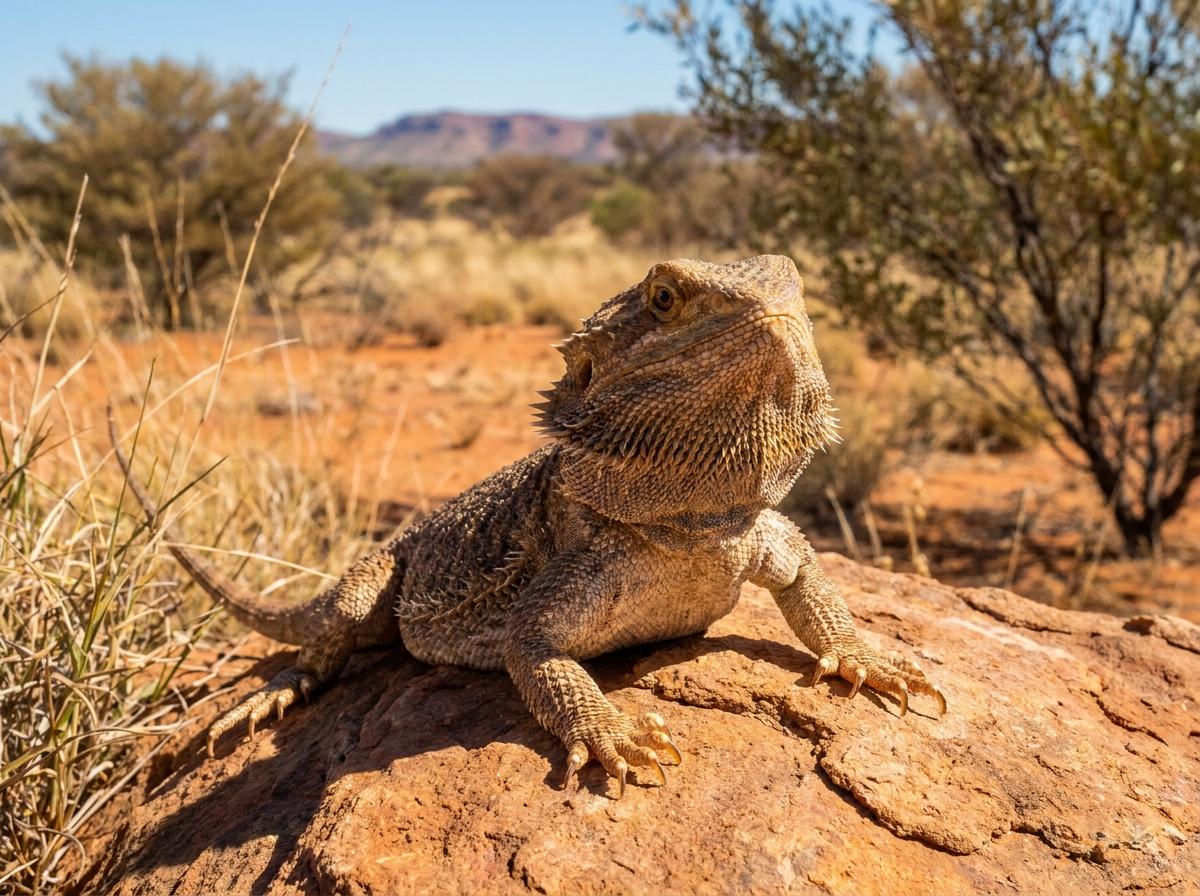
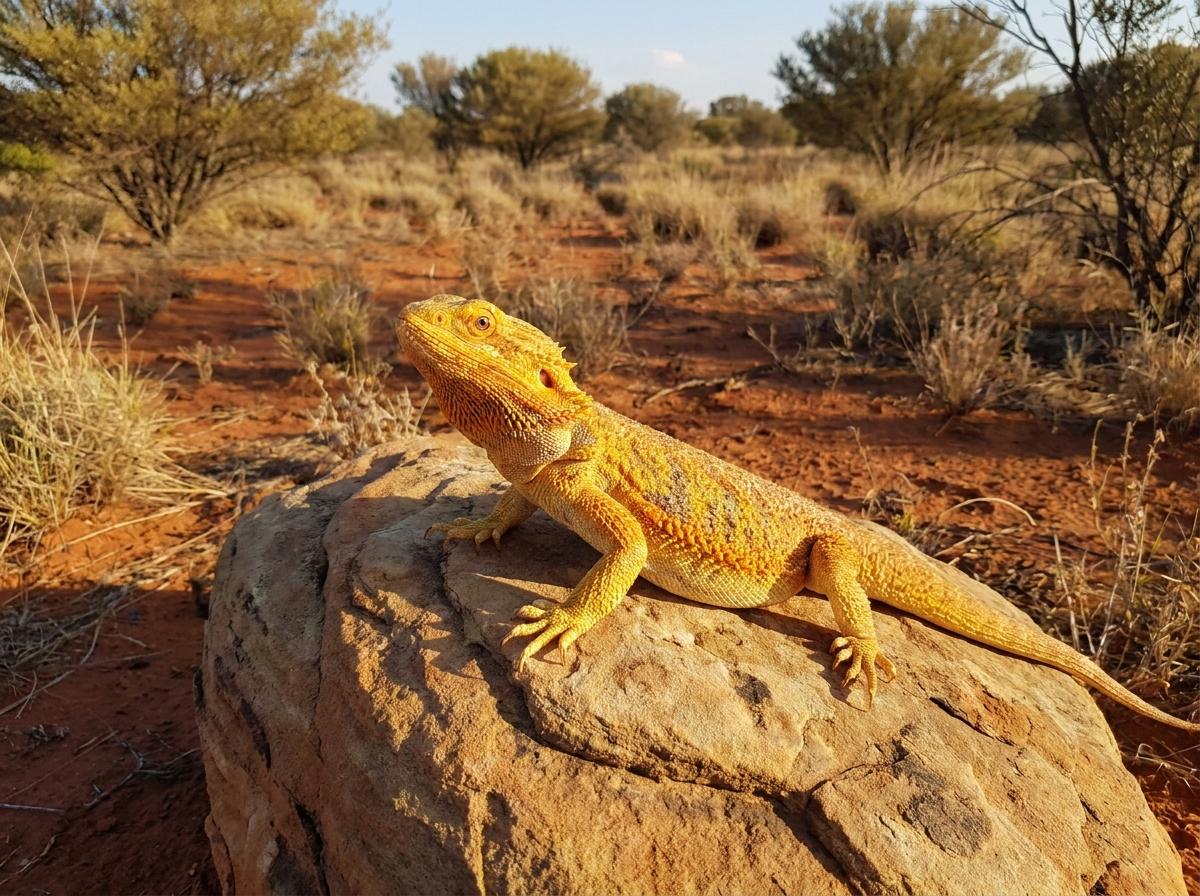
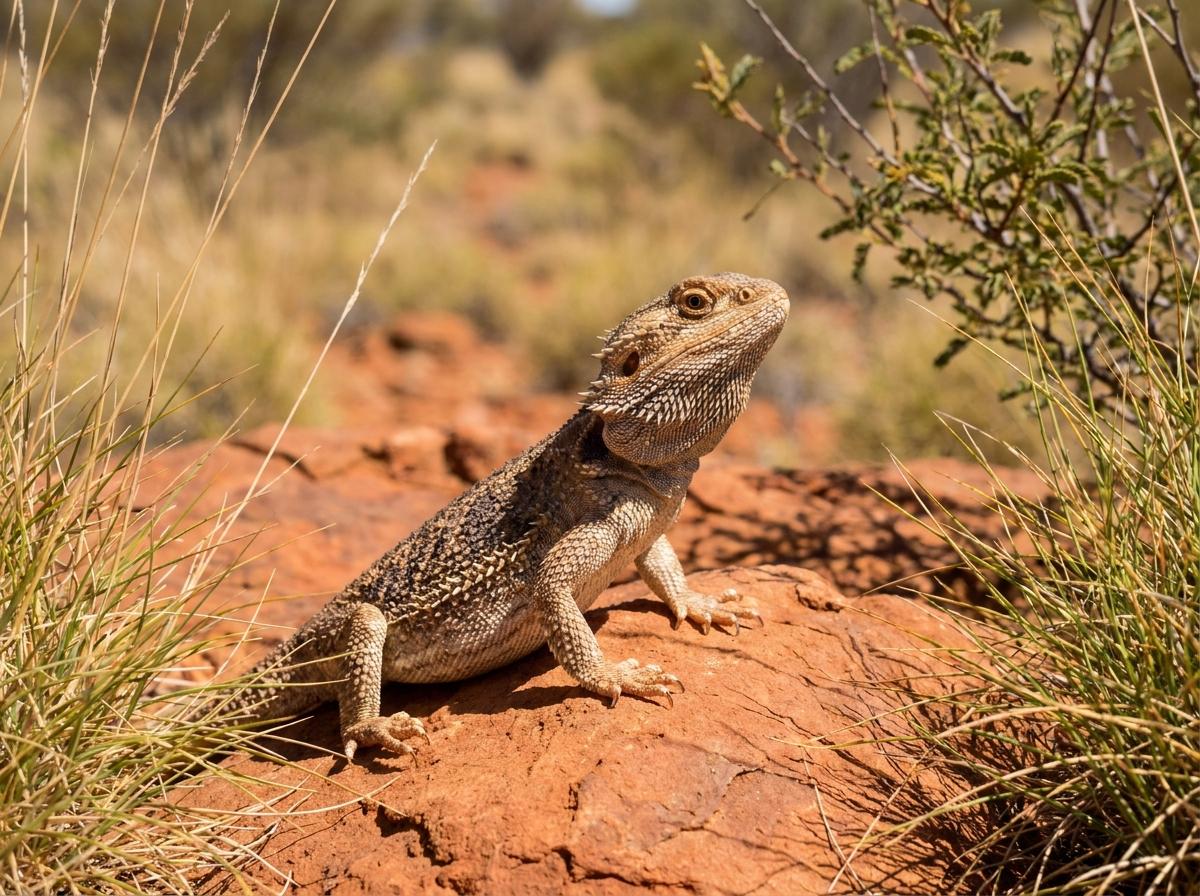
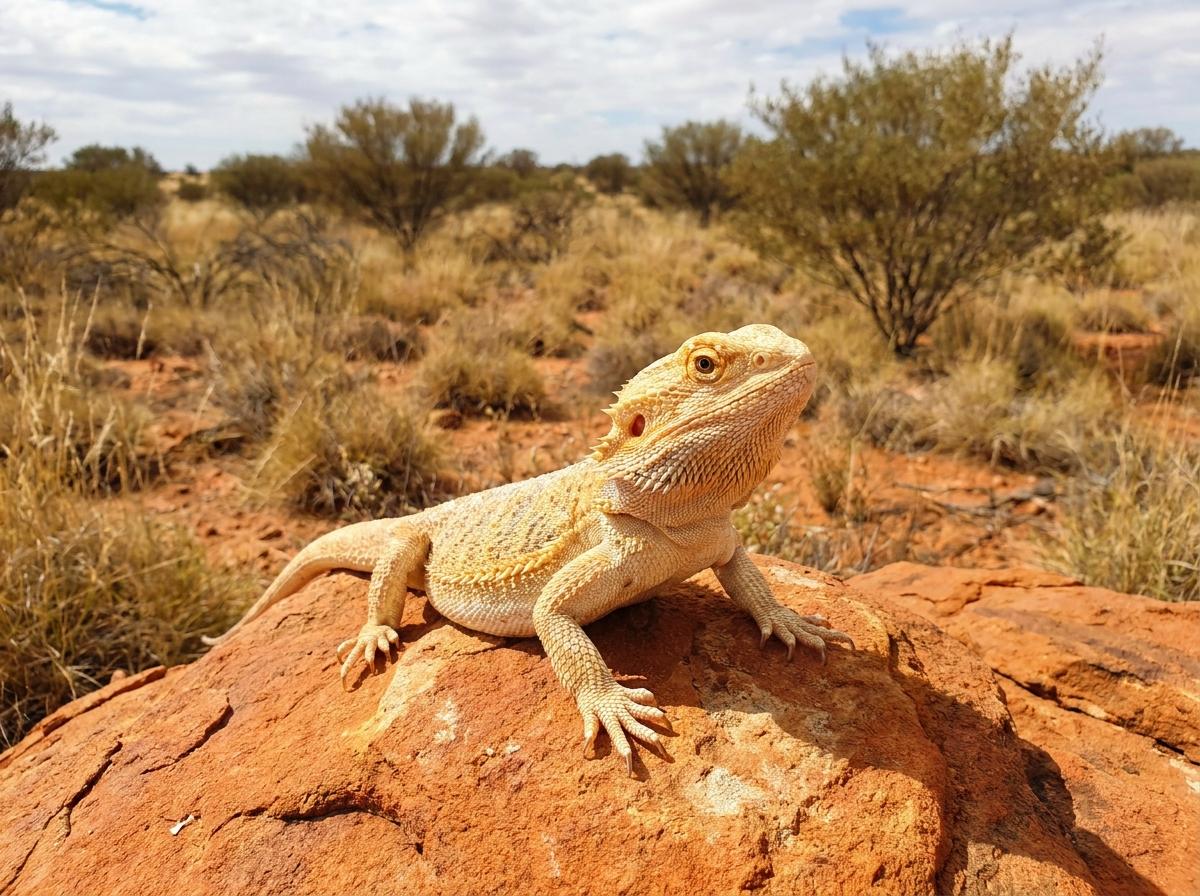
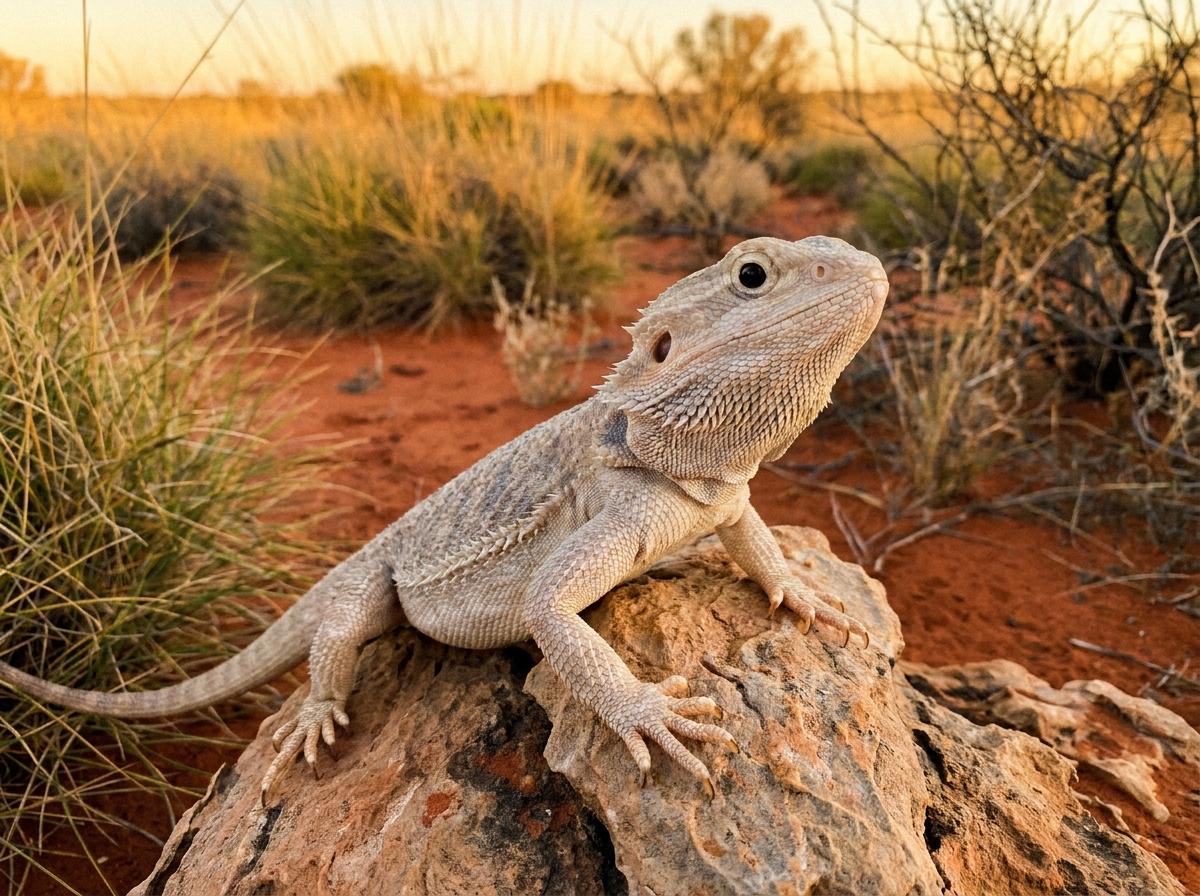
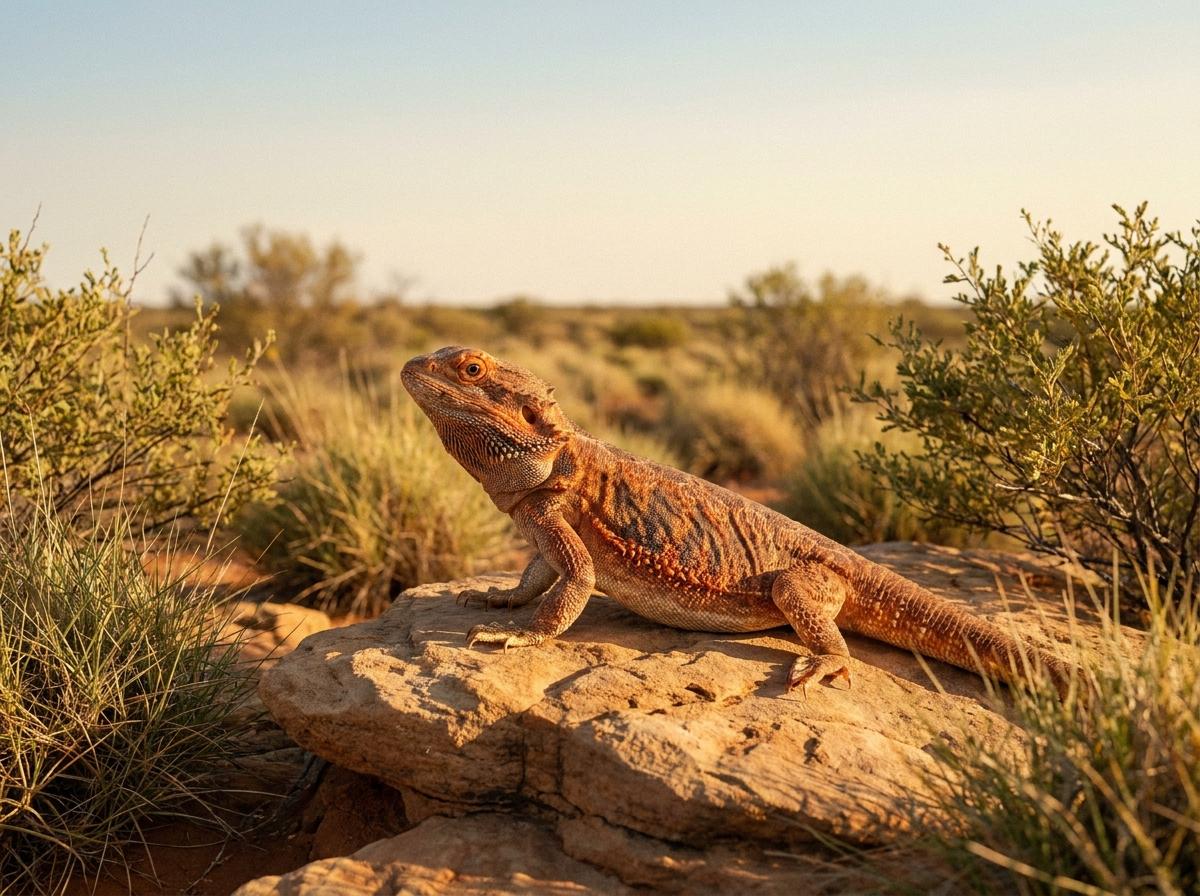
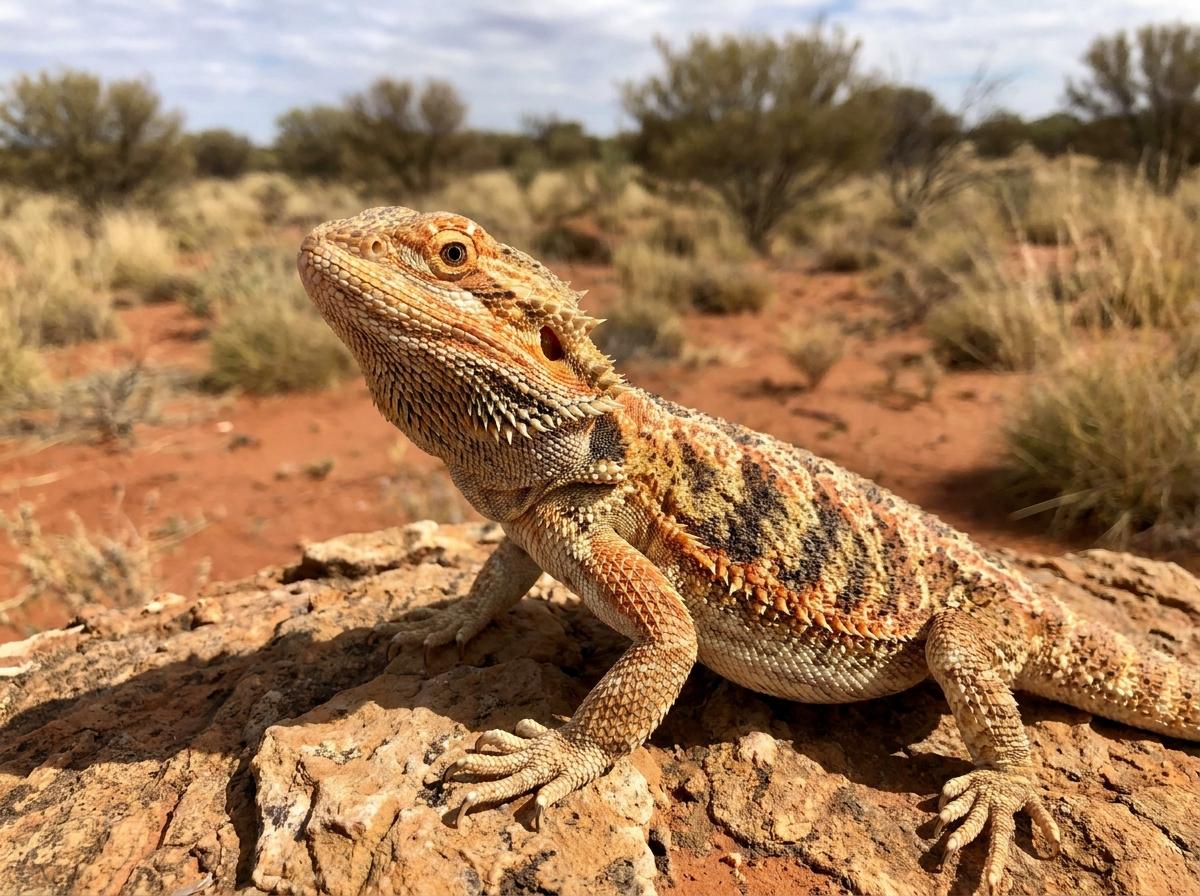
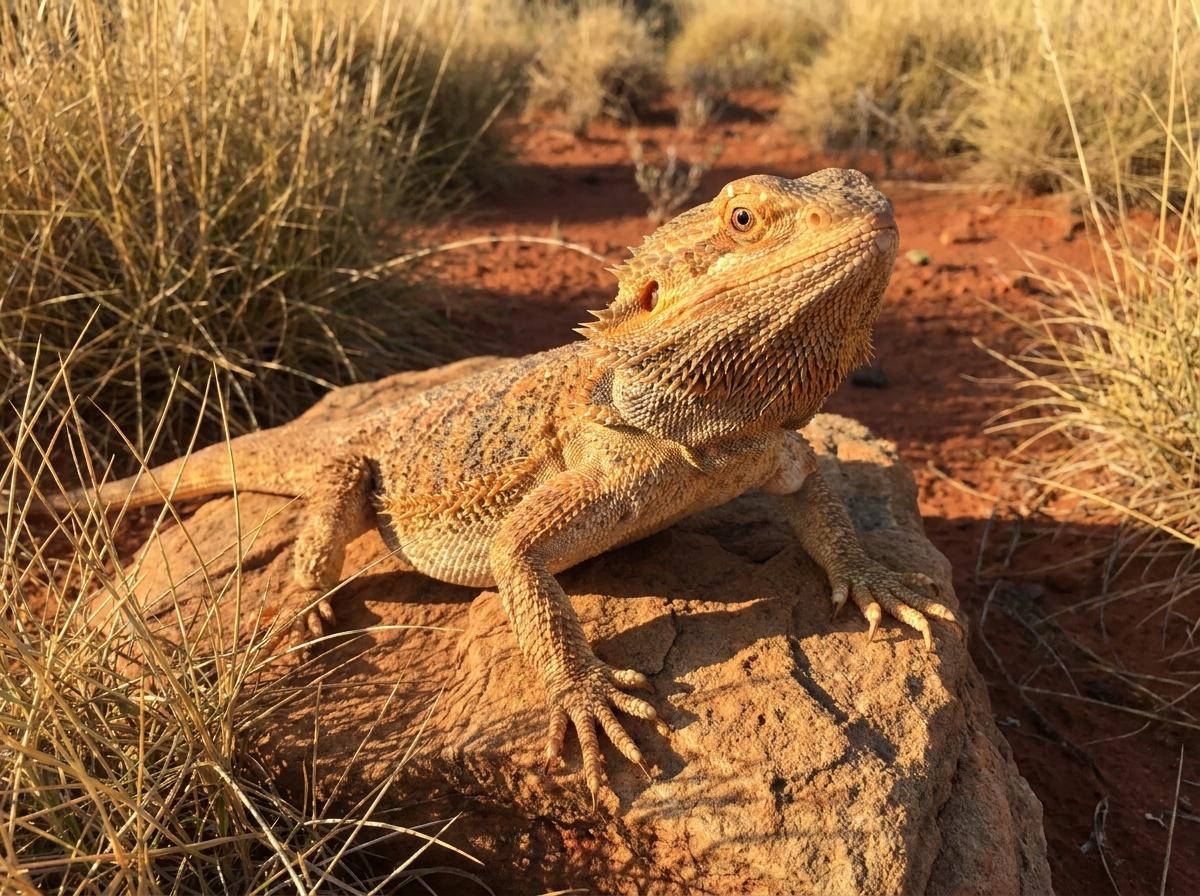
Set the size question aside and a German Giant looks like what it is: a central bearded dragon. The diagnostic features are the ones the species is named for.
- The beard. Under the throat is a pouch of spiny, pointed scales that the dragon can puff out and darken, especially in males, during displays, stress, or territorial behavior. This is where the common name comes from.
- Spiny lateral scales. Rows of soft spikes run along each flank and around the head, giving the animal its rugged, armored outline. They are flexible rather than sharp.
- Broad, flattened body. Bearded dragons are wide and low slung, built to soak up heat while basking. A giant-line animal reads as especially deep and heavy through the body.
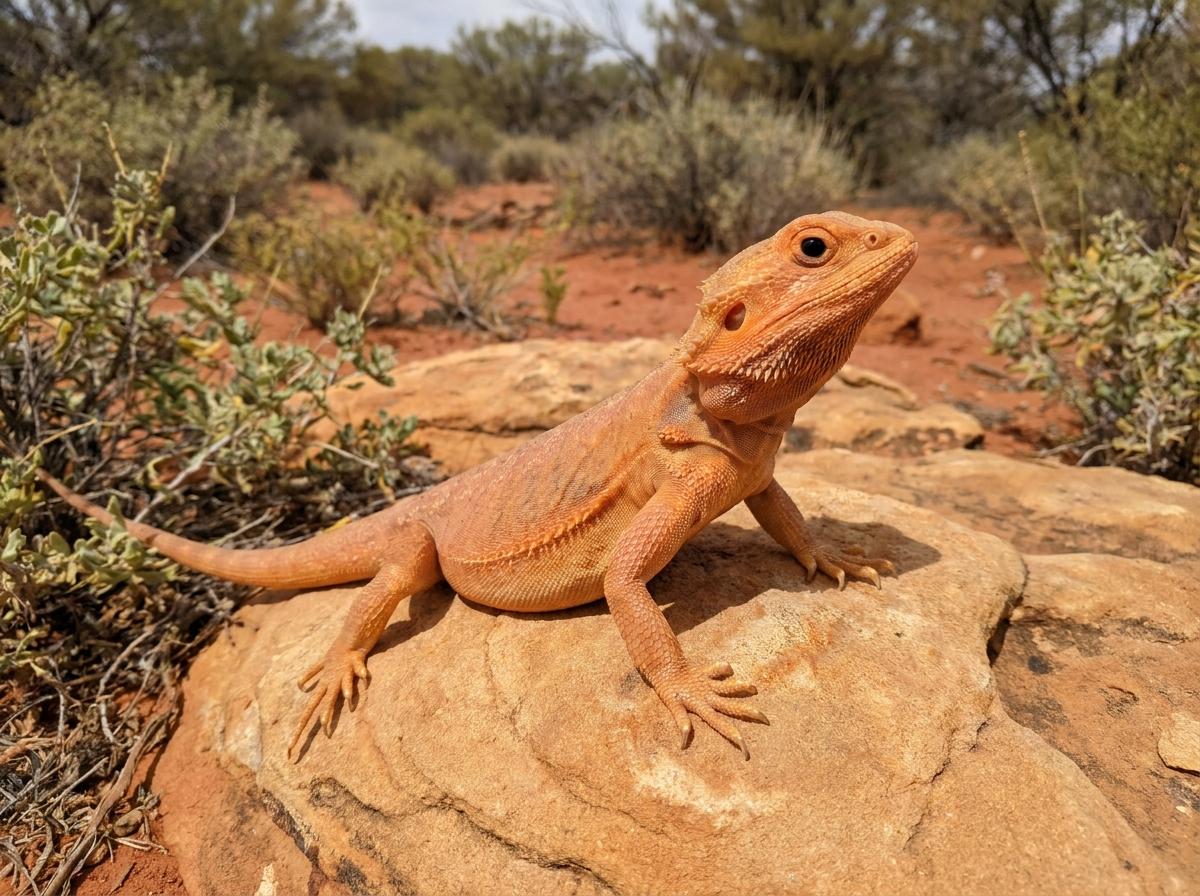
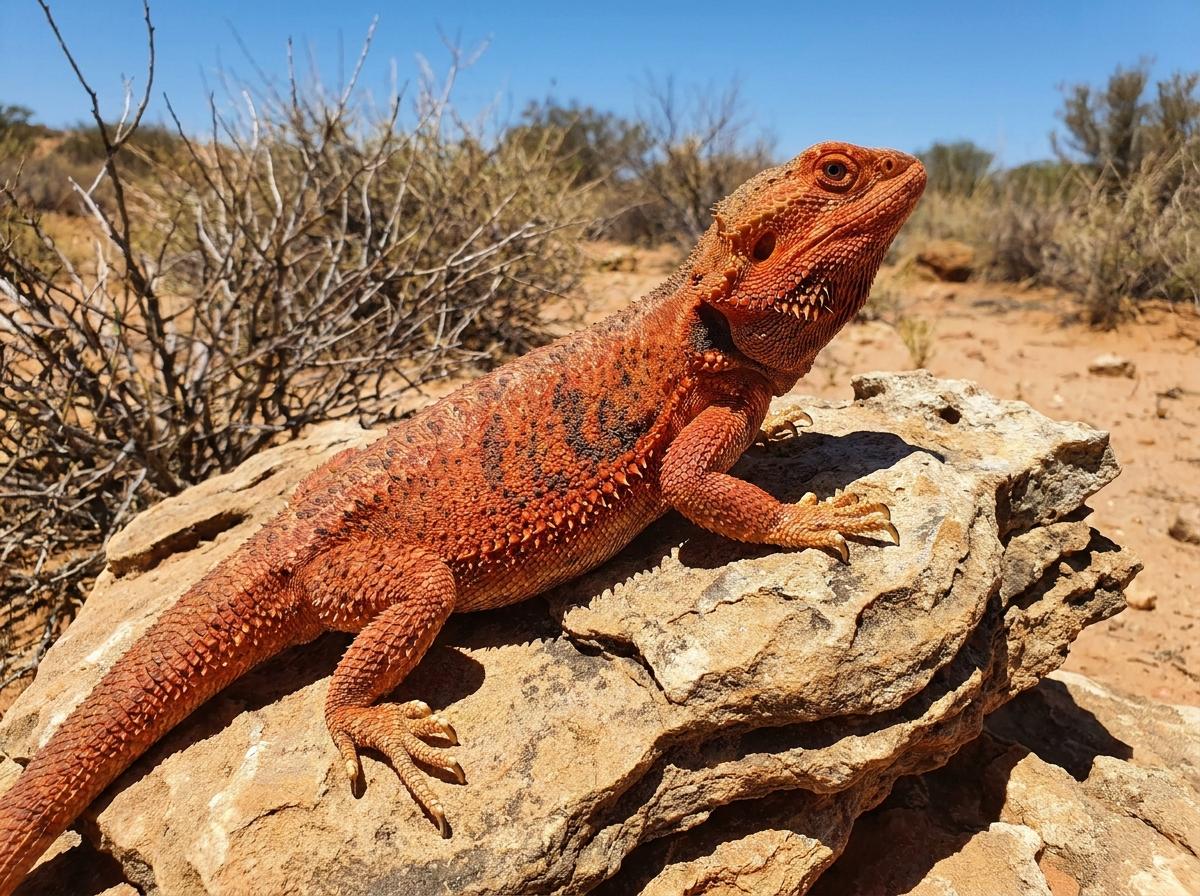
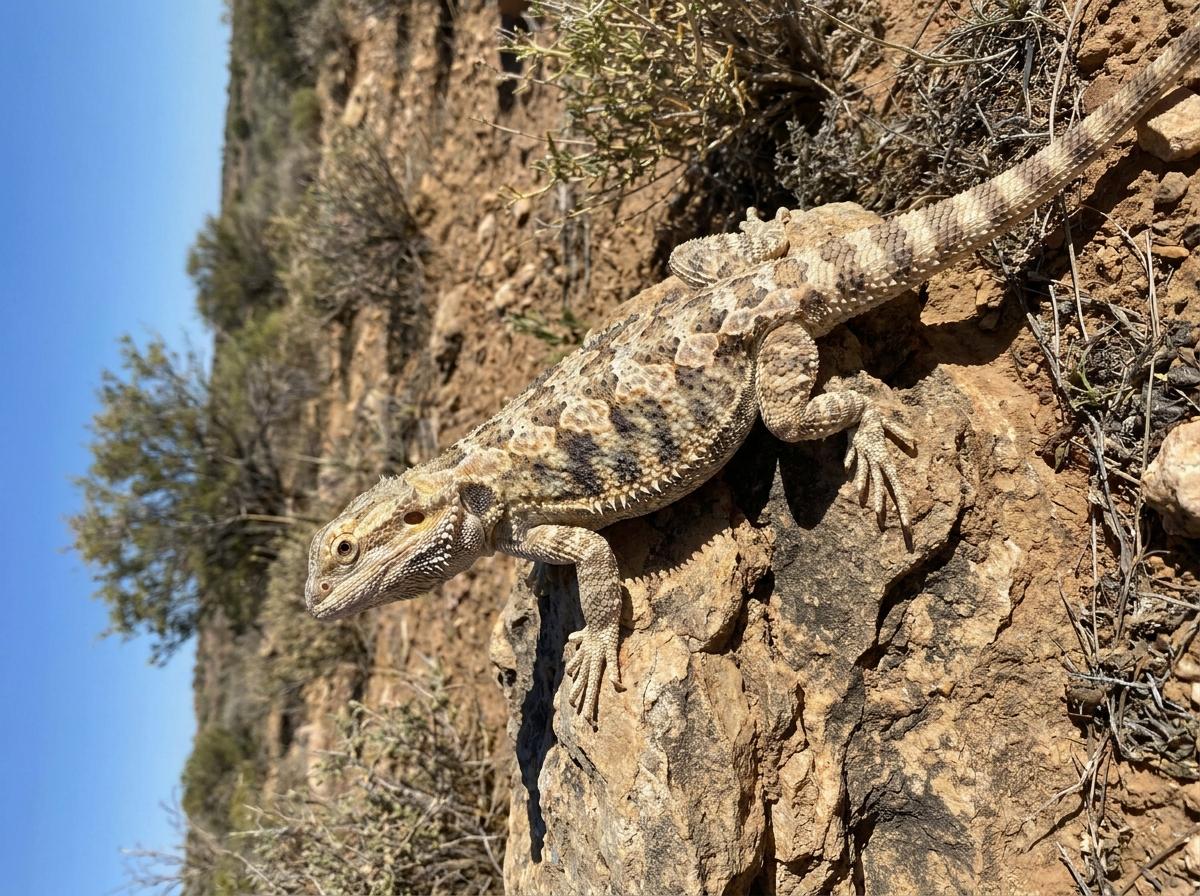
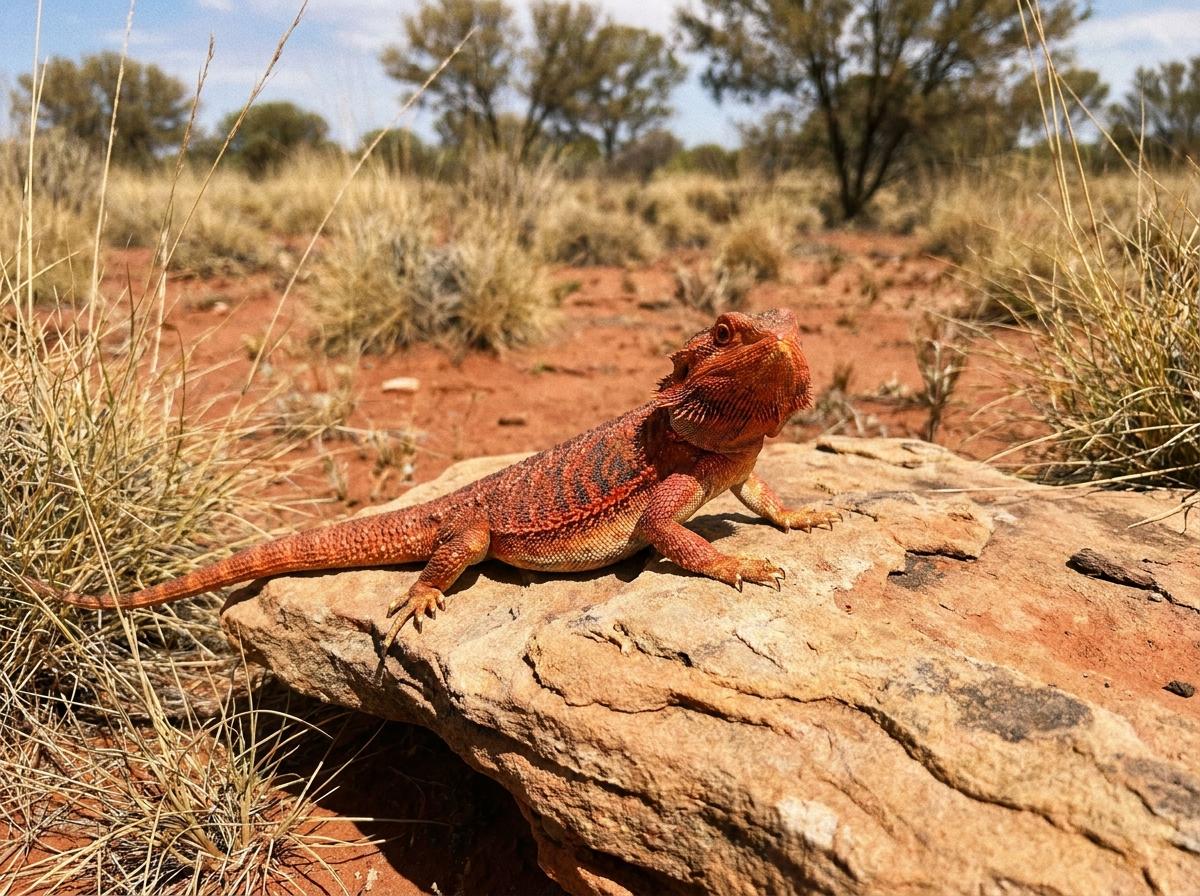
- Coloration. Wild-type and standard captive dragons are typically sandy tan to light brown, often with faint banding across the back and tail. Giant lines usually show this ordinary coloration rather than the vivid reds and oranges of dedicated color morphs, since the breeding goal was size rather than color.
- Head and jaw. The head is broad and wedge shaped, noticeably chunky in large males.
Males tend to be larger headed and broader than females, and they show the most dramatic beard displays. None of these traits are unique to the German Giant. They simply belong to a well-grown Pogona vitticeps.
Temperament and handling
Bearded dragons earned their popularity honestly. As a species they are generally calm, tolerant of gentle handling, and active during the day, which makes them one of the more interactive and beginner-appropriate pet lizards. German Giant lines are often described as especially docile, and larger individuals can feel steadier and less flighty in the hand than a tiny hatchling. That said, temperament in any individual depends heavily on regular, gentle handling and on the animal feeling secure, warm, and well fed. There is no formal study establishing that giant-line dragons are calmer than standard ones, so treat that as keeper observation rather than an established breed trait.
A word on the trade-off that comes with size. A bigger dragon is a bigger animal to house, feed, and clean up after, and it needs a larger enclosure to move and thermoregulate properly. If you are drawn to the German Giant specifically because it is large, plan the habitat around a big adult from the start.
Housing and enclosure
A large bearded dragon needs a large, dry, well-ventilated enclosure with a proper thermal gradient. Veterinary guidance is consistent that you should provide the biggest enclosure you reasonably can, and that a small starter tank is a common cause of stress and poor health.
For an adult, a footprint on the order of 4 feet long by 2 feet wide by 2 feet high is a widely cited practical minimum from veterinary care sources, and bigger is genuinely better for a giant-line animal. The enclosure should offer a warm basking end and a distinctly cooler end so the dragon can move between temperatures to regulate its own body heat.
Substrate deserves special care. Loose, small-particle substrates such as sand, including calcium sands sold as “digestible,” as well as wood chips and gravel, are best avoided, because a dragon can ingest them while feeding and develop a dangerous gut blockage called impaction. Solid or easily cleaned surfaces such as reptile carpet, tile, or newspaper are safer, especially for young animals. Provide a basking platform close to the heat source, a hide, and sturdy branches or ledges to climb.

Heat, light, and UVB
Getting temperature and lighting right is the single most important part of keeping a bearded dragon healthy, and it is where new keepers most often go wrong.
Basking heat. Bearded dragons are desert reptiles that need a hot basking spot to digest food and stay well. Veterinary care sources put the basking surface in the region of 92 to 100 F, with the cooler end of the enclosure considerably lower, often in the low to mid 80s F during the day, dropping into the 70s F at night. Use a good thermometer at the basking site rather than guessing, and put heat sources on a thermostat and out of the animal’s direct reach.
UVB. This is not optional. Bearded dragons need ultraviolet B light to make vitamin D3 in their skin, and they need D3 to absorb dietary calcium. Without adequate UVB, calcium is not absorbed properly no matter how much is in the diet, which leads directly to metabolic bone disease. Use a quality reptile UVB source rated for desert species, positioned at the distance the manufacturer specifies (too far away and the output is useless, too close and it can harm the eyes and skin). UVB bulbs lose output long before they stop emitting visible light, so they must be replaced on the manufacturer’s schedule, commonly every 6 to 12 months, even though they still look like they are working. Provide roughly a 12 to 14 hour day length in the warm season, shorter in winter.
Natural unfiltered sunlight is an excellent UVB source, but ordinary window glass blocks most UVB, so a dragon basking behind a closed window is not getting the benefit.
Diet and feeding
Bearded dragons are omnivores, and the balance of their diet shifts as they grow. Young, fast-growing dragons need more protein, and adults need more plant matter.
A commonly cited veterinary breakdown is roughly half insects and half plants for juveniles, shifting to a majority of leafy greens and vegetables with a smaller share of insects for adults. Practical feeding looks like this:
- Insects. Appropriately sized feeders such as crickets and dubia roaches provide protein. A useful rule is to feed insects no larger than the space between the dragon’s eyes to reduce impaction and choking risk. Juveniles eat insects daily and in larger amounts; adults need them less often.
- Greens and vegetables. Offer calcium-rich, low-oxalate leafy greens such as collard, mustard, turnip, and dandelion greens as the staple plant matter. Avoid making oxalate-heavy greens like spinach, chard, and beet greens a large part of the diet, because oxalates bind calcium and reduce how much the dragon can absorb.
- Supplements. Insects are usually dusted with a phosphorus-free calcium supplement, and many keepers add a vitamin and D3 supplement on a schedule appropriate to the animal’s age and UVB setup. Because supplementation needs vary with diet and lighting, confirm a specific schedule with a reptile veterinarian rather than copying a generic figure.
- Water. Provide clean water and mist or offer greens with some moisture. Bearded dragons come from dry country, so humidity should be kept low, but they still need to stay hydrated.
Keeping a simple feeding and weight log is genuinely useful for a growing dragon, both to catch a dropping appetite early and to track healthy growth. You can track feeding and weight records on Creatures so the pattern is easy to see over months.
Brumation
Many bearded dragons go through brumation, a reptile version of dormancy, usually in the cooler, shorter days of winter. A brumating dragon becomes sluggish, hides, and eats little or nothing for weeks. In an otherwise healthy adult with good body condition this is normal, and many keepers allow it by providing the seasonal cues of shorter daylight and slightly cooler temperatures.
The important caveat is that lethargy and loss of appetite are also symptoms of illness, and a sick dragon can look superficially like a brumating one. Young, underweight, or unwell animals should not be pushed into brumation. If you are unsure whether your dragon is brumating or ill, especially if it is losing weight or a juvenile, have a reptile veterinarian check it rather than assuming.
Health and common problems
Most bearded dragon health problems in captivity are preventable and trace back to husbandry.
Metabolic bone disease (MBD) is the big one, and it is one of the most common conditions veterinarians see in pet bearded dragons. It is caused by some combination of inadequate UVB, insufficient dietary calcium, and an unbalanced calcium-to-phosphorus ratio, all of which leave the animal unable to maintain healthy bone. Signs include weakness, tremors, difficulty walking, a soft or swollen “rubber” jaw, bent or bowed limbs, and in advanced cases fractures and seizures. Juveniles are especially vulnerable because they are growing fast. The prevention is the care described above: correct UVB, a proper thermal gradient, calcium supplementation, and a high-calcium diet.
Impaction is a gut blockage, often from swallowing loose substrate or from feeding prey that is too large. It is a good reason to avoid small-particle substrates and to size feeders sensibly.
Salmonella is a genuine public-health point rather than a disease of the dragon itself. Bearded dragons can carry Salmonella bacteria in their droppings while appearing perfectly healthy, and the US Centers for Disease Control and Prevention has repeatedly linked human Salmonella outbreaks to pet bearded dragons. Wash your hands thoroughly with soap and water after handling the animal or anything in its enclosure, keep it out of kitchens and food areas, and note that the CDC does not recommend reptiles for households with children under 5, adults over 65, or people with weakened immune systems.

Whatever the label on the animal, an annual check with a veterinarian experienced in reptiles is one of the most reliable ways to catch these problems early. Defer any medical decision to that veterinarian, who can actually examine the dragon.
What a German Giant costs and where to find one
There is no single reliable published price for a German Giant bearded dragon, and prices vary widely with age, the seller’s reputation, and how genuinely large the parent stock is. Standard bearded dragons are among the more affordable pet lizards, and animals marketed as German Giants generally command a premium above that, partly for real size potential and partly for the label itself.
Because “German Giant” is unregulated, the buying advice is straightforward: pay for evidence, not for a word. A seller who can show you the adult parents, their weights and sizes, and a clear account of their line is worth far more than one who simply lists a hatchling as a “giant.” Ask to see the animal feeding, check that its eyes are clear, its limbs are straight, its jaw is firm, and it is alert, and be cautious of any guarantee about a baby’s eventual adult size, which no honest seller can actually promise.
You can browse bearded dragons on the Creatures marketplace and look for keepers and reptile breeders in the Creatures directory. Because well-documented large lines are not always in stock, a saved listing alert (below) is often the most practical way to catch one from a seller who describes their animals honestly.
Frequently asked questions
Is a German Giant a different species from a normal bearded dragon?
No. It is a central bearded dragon (Pogona vitticeps), the same species as the standard pet beardie. “German Giant” refers to a size-selected bloodline, not a separate species or a formally recognized breed.
How big will a German Giant actually get?
The species normally reaches about 16 to 24 inches total length. Giant lines can run at the larger end or somewhat beyond, but the 30-inch claims common on sales listings are usually unverified. Diluted genetics mean many “German Giants” end up only marginally larger than standard dragons, and husbandry has a huge effect on final size.
Can I tell if a baby is a real German Giant?
Not reliably. Young dragons from giant lines do not look distinctly different, and adult size only becomes clear much later. The best you can do is ask to see the actual adult parents and their measurements, and treat any size guarantee on a hatchling with skepticism.
Are German Giants good pets for beginners?
Bearded dragons in general are among the more beginner-friendly pet lizards because they are calm and diurnal. A giant-line animal simply needs a larger enclosure and more food. The care is the same, just scaled up, and it still demands correct heat, UVB, diet, and an exotics veterinarian.
What is the most common health problem?
Metabolic bone disease, caused by inadequate UVB, calcium, or diet, is the most common and most preventable. Impaction and, for the household, salmonella exposure are the other key concerns.
Do German Giants need UVB if the room is bright?
Yes. Ordinary room light and light through window glass do not supply usable UVB. A dedicated reptile UVB source is essential to prevent metabolic bone disease, and it must be replaced on schedule even while it still emits visible light.
Do this next on Creatures
Whether you are researching the German Giant label, shopping for a well-documented large dragon, or already keeping one, Creatures is the records, marketplace, and directory layer to do it in one place. Start with the parent bearded dragon species page, and if you are weighing a very different reptile, compare it against the Senegal chameleon.
Add your dragon. Already keeping a bearded dragon? Create a free animal profile in a few minutes, no account needed to start. The walkthrough is in adding an animal to Creatures, and the profile page tabs guide explains what each section does.
Track growth and health. Log feeding, weight, shed, and vet records so you can watch growth and catch problems like a dropping appetite early. The record sheet opens for any visitor to look around, and a free account saves what you enter. See adding a record and health and medical records for the how-to.
Stay on top of care. Set gentle nudges for UVB bulb replacement, vet checks, and supplement schedules with reminders and upcoming care.
Find one honestly described. Browse bearded dragons on the marketplace and search trusted keepers and breeders in the Creatures directory.
Get alerted. Well-documented large lines are not always in stock, so set a free bearded dragon listing alert and we will tell you when one is posted. No account needed to start, and saving searches and using your watchlist shows how it works.
List your animals. Breed or rehome bearded dragons? Create a free breeder or organization profile so buyers can find you.