


Bongo
Tragelaphus eurycerus
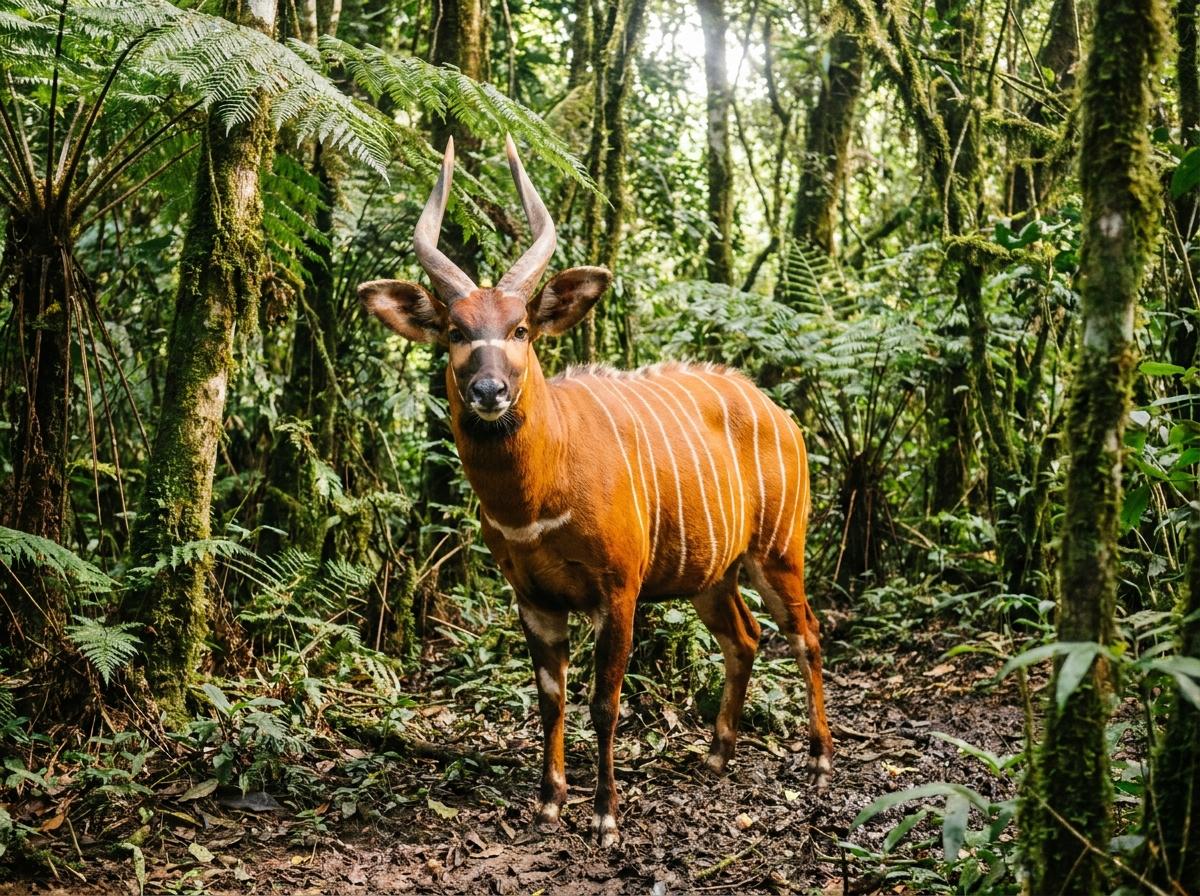
The bongo (Tragelaphus eurycerus) is a large forest antelope of Africa, recognized by a deep chestnut coat crossed with narrow white stripes. Both males and females carry spiral horns, and the body is built for moving through dense vegetation rather than open plains. Western or lowland bongos are found in forested regions of central and western Africa, while the eastern bongo of Kenya is much rarer. Their quiet habits, large ears, and strong sense of smell suit shaded forest edges and clearings.
Zoos and conservation programs manage bongos with attention to cover, calm handling, hoof health, and browse-heavy diets. They can be shy, so exhibit design often includes planted retreats and non-slip paths rather than only open paddock space. Breeding programs track ancestry and transfers carefully, especially for eastern bongos, where captive and field conservation are closely linked. In the wild, management concerns include forest loss, hunting pressure, disease exposure from livestock, and maintaining enough connected habitat for small populations to remain viable.
Colors: Bright Chestnut with White Stripes