




Border Canary
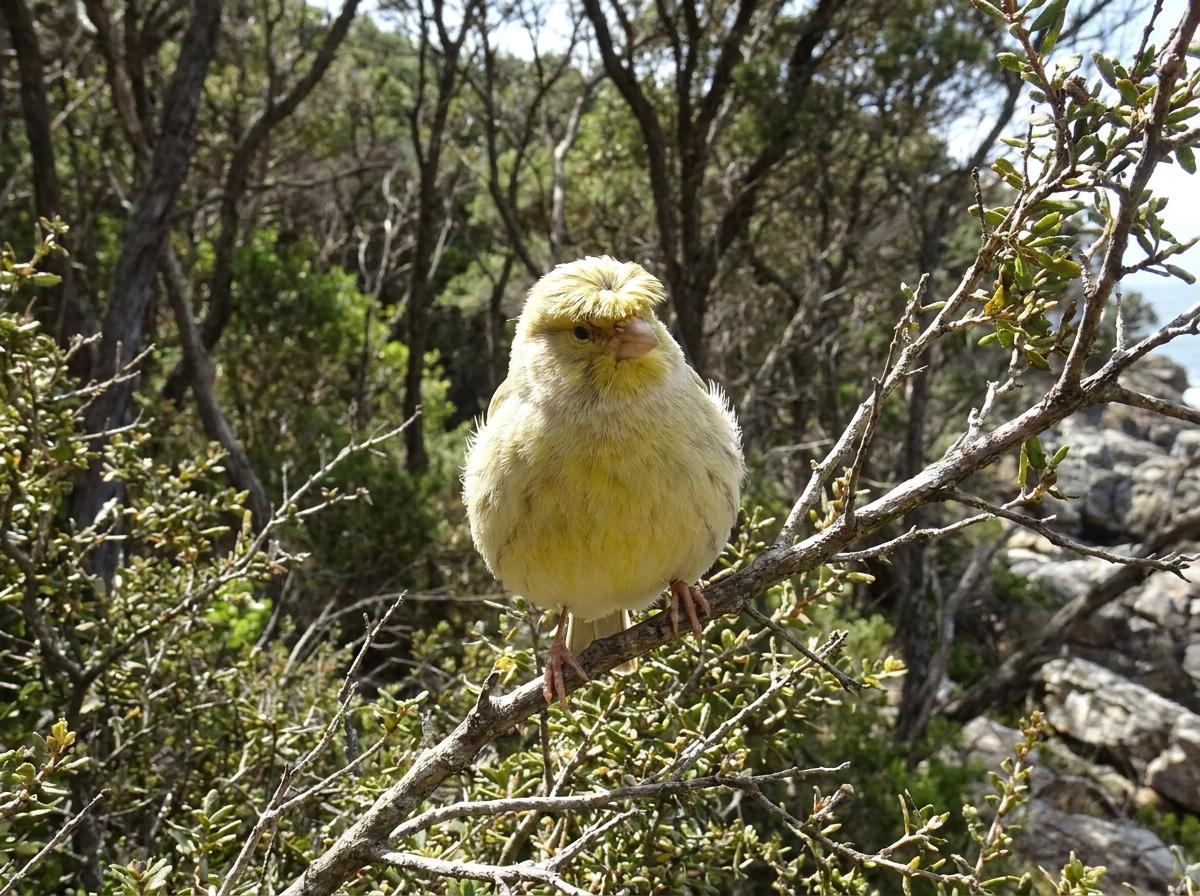
The Border canary, properly the Border Fancy canary, is a small to medium type canary bred in the border country between England and Scotland for a neat, well-rounded shape and a jaunty, semi-upright stance rather than for song or a single flashy color. It is compact and full-bodied with a gently arched back, a smooth close-fitting coat, and a lively, sprightly carriage, and for generations it was so admired for its tidy good looks that fanciers called it the “Wee Gem.” If you have arrived here trying to work out what makes a Border different from other canaries, the short answer is this: it is a posture or type breed judged on shape and quality, it is one of the most popular and widely kept show canaries in the world, and it is the neat, rounded, everyday canary that many people picture when they think of the bird. Below you will find where the breed comes from, the story behind the Wee Gem name, what it actually looks like, how it differs from the taller Yorkshire and the crested Gloster, how to keep one, what it costs, and what to check before you buy.

Browse listings, public profiles, breeders, or add your animal.
What is a Border canary?
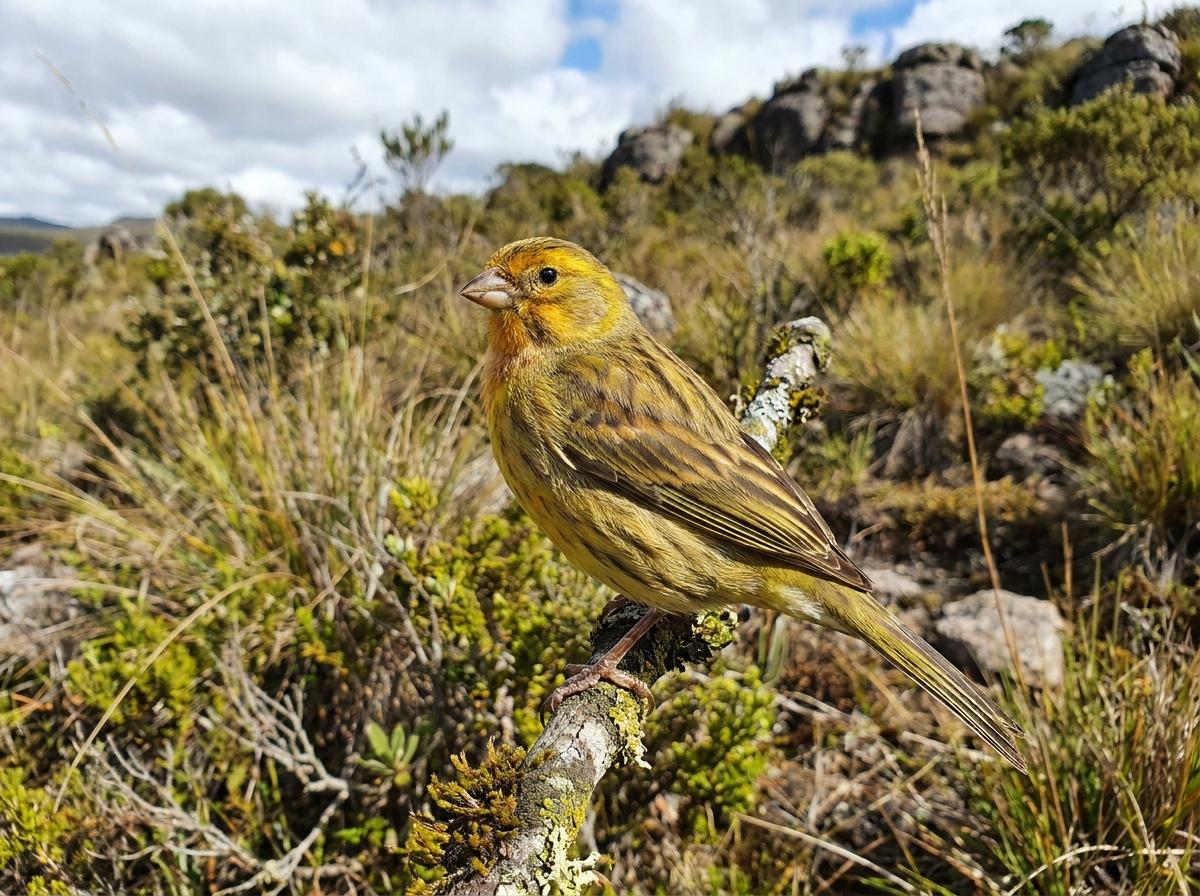
The Border is a breed of domestic canary developed for its shape, quality, and posture. All domestic canaries descend from the wild Atlantic canary (Serinus canaria), and over generations breeders sorted them into three broad groups: song canaries selected for a defined voice, color canaries selected for plumage color, and type or posture canaries selected for body shape and stance. The Border sits firmly in that last group. It is bred and judged on how it is built and how it carries itself, so its value is in its neat, balanced outline and the quality of its feather rather than in its song. If you want to compare it against the other canaries first, the broader Creatures canary species page is a good place to start.
What sets the Border apart within the type group is that it is not an extreme. Where some type breeds push one feature to an eye-catching degree, the Border is prized for being clean cut, compact, and beautifully proportioned, a bird that looks right all over rather than exaggerated in any one part. The written standard describes the ideal as a lightly made, close-feathered canary that gives an impression of fine quality and symmetry throughout, with no tendency to heaviness, roughness, or dullness. That balance, plus a lively and cheerful manner, is exactly why the breed became so popular and why it is often called the most widely kept type canary.
It is worth being clear about one thing up front. The Border is not a song breed. Males do sing, and they can be pleasant, chattery birds, but the breed was never selected for a defined, judged song the way a German Roller or a Belgian Waterslager was. If you specifically want a trained singer assessed on its voice, those song canaries are the tradition to look at. If you want a tidy, cheerful, good-looking bird that is easy to admire and widely available, the Border is a classic first choice.
Origin and history
The Border canary was developed in the border country between England and Scotland, and it takes its name directly from that region. Canaries became widely popular across the north of England and the Scottish Borders through the 1700s, and from that ordinary stock, often just called the “common canary,” local fanciers gradually shaped a small, neat, cheerful bird that stood out for its tidy good looks. By the middle of the 19th century that little bird had earned an affectionate nickname across the border counties: the “Wee Gem,” a small jewel of a canary prized for its quality and charm rather than its size.
The breed was formally recognized and given its lasting name on July 5, 1890, when it became the “Border Fancy Canary.” That date matters, because it marks the point at which an informal regional favorite became a standardized show breed with an agreed ideal to breed toward. From then on the Border was bred to a written standard and judged against it, which is why the breed you see today is the product of well over a century of deliberate selection for shape, balance, and feather quality.
The Border did not stay exactly the same, though. Through the 20th century, and especially after the Second World War, the show bird grew noticeably larger and fuller in body, a change usually attributed to crossing in the larger Norwich canary. The result is that the modern Border is a bigger, rounder bird than the tiny original Wee Gem, to the point that the old nickname now describes the breed’s history more than its present size. That shift eventually helped prompt a separate, deliberately smaller offshoot, the Fife Fancy, created to preserve the compact scale of the earlier Border. Today the Border is overseen internationally by the Border Convention, the governing body of the Border fancy, which administers the standard and the network of affiliated clubs and shows in the United Kingdom, Europe, and overseas.
Where the “Wee Gem” name comes from

If you read anything about the Border, you will meet the “Wee Gem” nickname very quickly, and it is worth understanding what it does and does not mean.
The name is genuine breed history, not marketing. In the border counties in the mid-19th century, the little canary that would become the Border was admired for being a small, jewel-like bird, tidy, bright, and full of quality, and “Wee Gem” was the affectionate label that stuck. It captures two things at once: the breed’s small original size, and the emphasis on refinement and quality that still defines the standard today. When the breed was formally named the Border Fancy in 1890, that older nickname carried on as a fond reminder of where it came from.
The one caveat is size. The Wee Gem name describes the breed’s small original form, and the modern show Border is a larger, fuller bird than that early type. So think of “Wee Gem” as a historical note about the breed’s origins and its enduring focus on neat quality, rather than a precise description of how small a show Border is today. The spirit of the name, a compact, well-made bird prized for looking right all over, still fits perfectly.
What a Border canary looks like
The Border is defined by balance and neatness rather than by any single extreme feature, which is part of why it can be harder for a newcomer to pick out than a very tall or crested breed. Once you know the outline, though, it is recognizable.
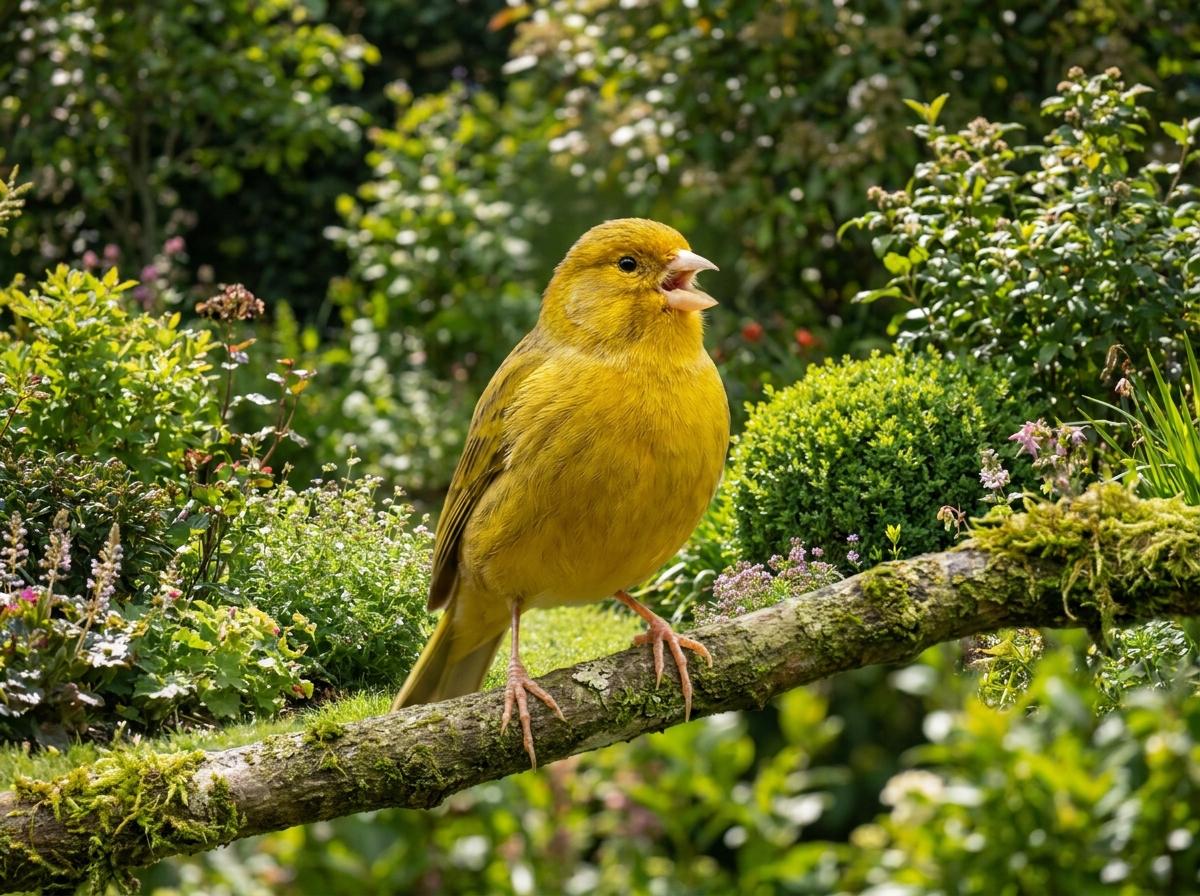
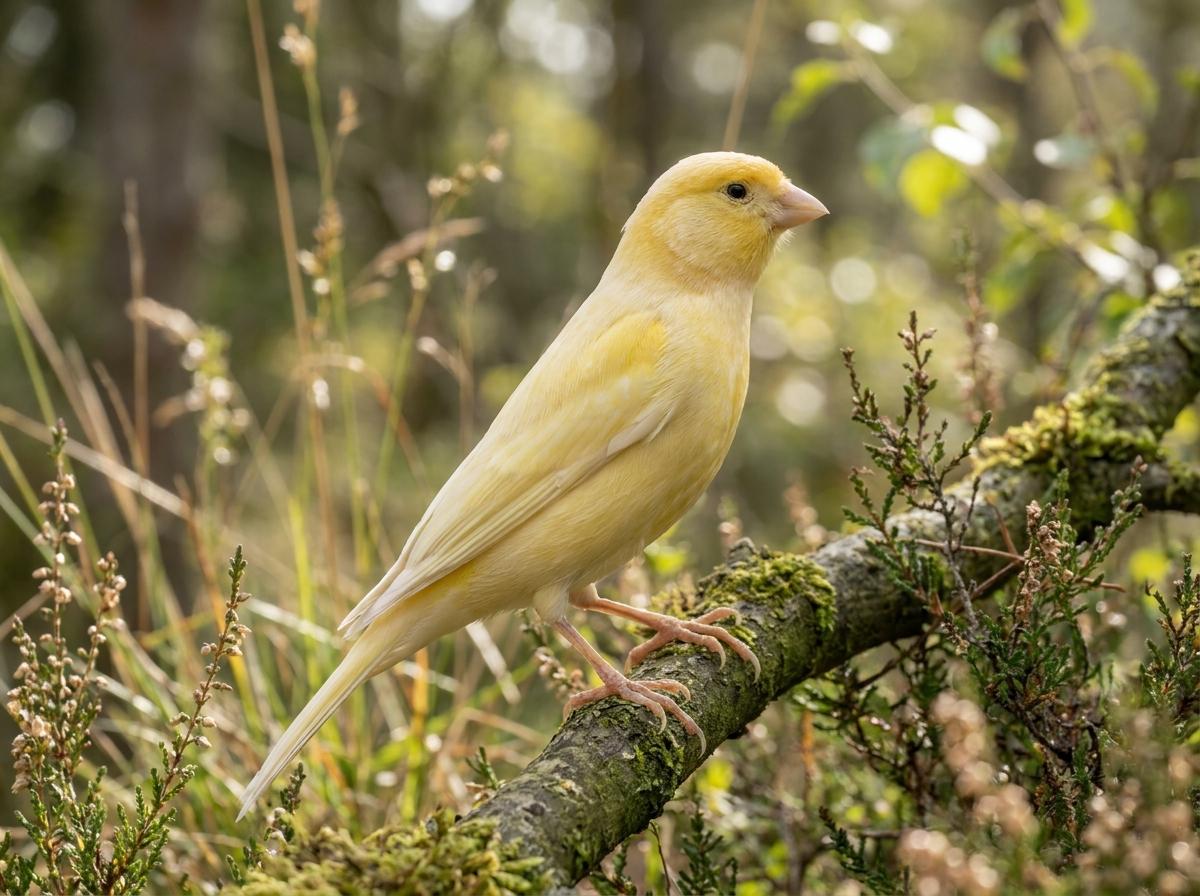
- Small to medium, well-rounded body. The Border is a compact, full-bodied little canary. The modern show ideal is a length of about 5.75 inches (roughly 14.5 cm) from the top of the head to the tip of the tail, small to medium among canaries, with a rounded, well-filled shape and no heaviness or coarseness.
- A gentle arched back. A signature of the breed is the smooth, gently rounded back, rising softly over the shoulders and curving down in one clean line to the tail. This gives the Border its characteristic rounded, balanced silhouette.
- A jaunty, semi-upright stance. The bird stands at roughly a 60 degree angle to the perch, more upright than a relaxed pet canary but well short of the near-vertical pose of a Yorkshire. Its neck flows smoothly into the body and gives the head a free, sprightly, jaunty carriage. A Border in good condition looks alert, gay, and vivacious.
- A neat, rounded head and smooth close feather. The head is small, neat, and rounded, with no crest. The plumage is close and silky, lying tight to the body, which is central to the breed’s clean cut, high quality look.
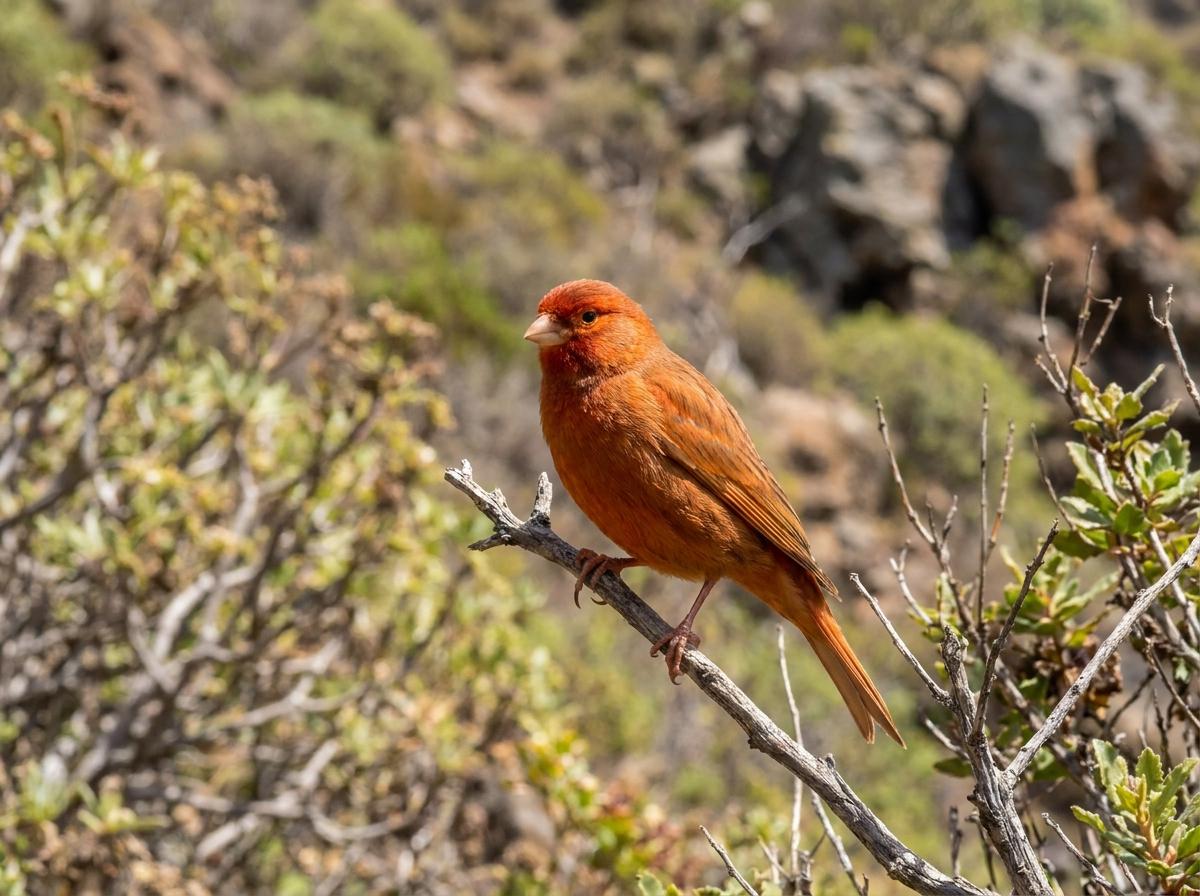
The Border also comes in a wide range of colors. Clear bright yellow is the most familiar and the color many people picture, but the breed is bred in buff, white, green, cinnamon, and variegated (patched) forms as well, in both clear and variegated patterns. As in canary breeding generally, you will also hear the words yellow and buff used to describe feather quality rather than color alone: a yellow-feathered bird has finer, more intense, tighter feathering, while a buff-feathered bird has denser, frostier feathering, and breeders often pair the two feather types together to keep the plumage smooth and sound.
How the Border differs from the Yorkshire and the Gloster
Because canaries can look alike to a newcomer, it helps to place the Border next to two other well-known type breeds it is often confused with.
- Versus the Yorkshire. The Yorkshire canary is one of the largest canaries and stands tall and nearly vertical in a proud guardsman pose, with a full chest tapering to a slim waist. The Border is smaller, rounder, and only semi-upright, prized for compact balance rather than size and height. If a canary is notably large and standing to attention, it is far more likely a Yorkshire than a Border.
- Versus the Gloster. The Gloster canary comes in a crested form (the Corona) with a neat mop-like crest of feathers over the head, and a plainhead form (the Consort). The Border always has a plain, smooth, rounded head with no crest. If a small canary has a distinct crest, it is a Gloster or another crested breed, not a Border.
The shorthand is that the Border is the neat, rounded, smooth-headed, semi-upright type canary of moderate size, distinct from the tall upright Yorkshire and from the crested Gloster.
Do Border canaries sing?
Yes, but with the same caveat that applies to any type breed. Border males sing, and they are often lively, chatty birds whose song many keepers enjoy as part of the pleasure of the bird. As in all canaries, the full song is a male trait; hens make calls and quieter sounds but do not perform a male’s song, and males typically go quiet during the annual molt and pick up again afterward.
The caveat is that the Border is a type breed, not a song breed. It was never selected for a specific, standardized, judged song the way the song canaries were, so you should treat a Border’s song as a welcome bonus on top of a bird kept mainly for its shape, quality, and cheerful presence, not as the reason to choose the breed. If a defined, competition-style song is your priority, a dedicated song canary such as a Roller is the tradition to look at, and you can compare the sister German Roller to see the difference in emphasis.
Keeping a Border canary
A Border has the same core needs as any pet canary, and its moderate size makes it a straightforward, rewarding bird to keep. The headlines below cover good day-to-day management. Defer any medical questions to an avian veterinarian who can examine the bird.
Housing
Give a single canary a roomy cage with horizontal space for short flights, since canaries fly side to side rather than climb. Bigger is better, and a wider cage matters more than a tall one. Cage bar spacing should be close, around three-eighths of an inch or less, so a bird cannot catch its head between the bars. Provide several perches of varying thickness to keep the feet healthy, keep the cage out of direct draughts and out of harsh direct sun, and give the bird a calm, well-lit spot with a regular day and night routine. Canaries are generally comfortable at normal indoor room temperatures and dislike sudden chills and drafts, and most enjoy a shallow dish of clean water to bathe in.
Feeding
A good canary diet is built on a quality staple, either a formulated pelleted canary food or a good canary seed mix, supplemented with fresh greens and vegetables and a little fruit. Many avian sources recommend that a complete pelleted food make up a large share of the diet, because an all-seed diet on its own tends to be low in important vitamins, minerals, and protein. Provide clean fresh water every day, and offer grit or cuttlebone as advised for your bird. Extra protein is commonly offered during the annual molt, when the bird replaces its feathers. Ask an avian veterinarian about the right diet and any supplements for your individual bird.
The molt and light
Canaries go through an annual molt, usually in late summer, when they drop and regrow their feathers. During the molt males typically go quiet and stop singing, which is normal and not a sign of illness, and song generally returns once the molt finishes. Molting birds benefit from good nutrition and enough uninterrupted dark rest, so a sensible day length and quiet nights help the process along. For a show Border, the molt is also when the season’s feather quality and color are largely set, so keepers pay close attention to condition and diet through this period.
Health and records
Routine pet-bird care applies: a clean cage, fresh food and water daily, and watching for any change in droppings, breathing, weight, appetite, or singing as an early warning that something is wrong. Birds hide illness well, so an annual check with an avian veterinarian is worth booking, and anything that looks off should be seen promptly. Keeping simple records of molts, diet changes, breeding, and any health events makes it far easier to spot a pattern early and to manage a bird or a small stud over the years. On Creatures you can keep those records in one place, which is especially handy if you keep several birds or plan to breed.
Showing and breeding

Because the Border is a long-established exhibition breed, a large part of its world revolves around the show bench and the breeding pen. Show birds are assessed against the written standard for type and quality first, meaning the neat rounded shape, the gentle arched back, the jaunty semi-upright stance, the smooth close feather, and the overall balance and symmetry of the bird. A Border that is clean cut, well proportioned, and stands bright and lively in the show cage is doing exactly what the breed was made to do. The breed’s own governing body, the Border Convention, maintains that standard and coordinates the shows where the birds are judged.
Serious breeders select their pairs to hold and improve that type and quality, and one common practice is to pair a yellow-feathered bird with a buff-feathered bird to keep the plumage smooth and sound rather than doubling up on one feather type. Breeding, rearing, and conditioning a show-quality Border is a real undertaking, and the best birds usually come from breeders who have worked a line for years. Even if you only want a pet, that background is useful to understand, because a Border from a good exhibition line, bred to the standard, is a different proposition from a random small yellow canary that merely resembles one.
Cost and availability
The Border is one of the most popular and widely kept type canaries in the world, so it is generally obtainable rather than rare, but quality and price still vary a great deal.
There is no single reliable public price for a Border canary, and we will not invent one. As a rough guide, an ordinary pet canary is commonly an inexpensive bird, while a Border from a serious exhibition line, with correct type, quality feather, and known breeding, can command considerably more, because you are paying for generations of selection toward the standard and the breeder’s rearing and conditioning work, not just the bird itself. A good show Border and a plain small yellow canary can look broadly similar to a newcomer and yet be very different animals in the ring.
Availability is uneven by region and often runs through the canary fancy rather than general pet outlets. Because the Border is a specialist show breed as well as a popular pet, the best birds tend to move between breeders and specialist canary shows and clubs, so a genuine exhibition-line Border is easiest to find by connecting with breeders directly. You can browse current canary listings on the Creatures marketplace and look for breeders in the Creatures directory. Because good birds are not always in stock, a saved listing alert (below) is a practical way to be told when one appears.
Buying considerations

Because the Border is defined by neat shape and feather quality and can look like an ordinary small yellow canary to an untrained eye, buy on the right evidence.
- Buy the type and quality, not just the color. A small yellow canary in a shop is not necessarily a good Border. If breed type matters to you, look for the compact well-rounded body, the gentle arched back, the jaunty semi-upright stance, the smooth close feather, and the neat plain head, and ask about the bird’s breeding.
- Ask about the line and its purpose. A bird from an established exhibition line, bred to the standard, is more likely to show correct Border type than a random small canary. If you want a pet rather than a show bird, that is perfectly fine, just know what you are getting and pay accordingly.
- See the stance and manner for yourself. A Border in condition stands bright, lively, and jaunty, with a free head carriage. A calm, alert, well-carried bird tells you more than any description.
- Do not choose it as a song bird. If you want a canary specifically for a soft, trained, judged song, the Border is not that breed. Choose a song canary instead, and let the Border be your choice for neat looks and cheerful character.
- Check basic health. Bright eyes, smooth plumage, steady breathing, a clean vent, and an active, alert bird are the baseline, the same as for any canary. Defer anything that looks off to an avian vet.
Frequently asked questions
Why is the Border canary called the “Wee Gem”?
Because in the border counties in the mid-19th century it was admired as a small, jewel-like bird prized for its quality and charm. The nickname stuck even after the breed was formally named the Border Fancy in 1890. It describes the breed’s small original size and its lasting focus on neat quality, though the modern show Border is a larger, fuller bird than that early type.
Is the Border a song canary or a type canary?
It is a type or posture canary, bred and judged on shape and quality rather than on song. Males do sing and can be pleasant, chatty birds, but the Border was never selected for a defined, judged song the way song canaries such as the Roller were. Treat its song as a bonus.
How big is a Border canary?
It is a small to medium canary. The modern show ideal is a length of about 5.75 inches (roughly 14.5 cm) from the top of the head to the tip of the tail, with a compact, well-rounded body.
What is the difference between a Border and a Yorkshire canary?
The Yorkshire is one of the largest canaries and stands tall and nearly vertical in a proud guardsman pose. The Border is smaller, rounder, and only semi-upright, valued for compact balance and quality rather than for size and height.
What is the difference between a Border and a Gloster canary?
The Gloster comes in a crested form with a neat mop-like crest over the head, as well as a plainhead form. The Border always has a plain, smooth, rounded head with no crest, so a distinct crest points to a Gloster rather than a Border.
What colors do Border canaries come in?
Clear bright yellow is the most familiar, but Borders are also bred in buff, white, green, cinnamon, and variegated (patched) forms, in both clear and variegated patterns.
Are Border canaries good pets for beginners?
Yes. Their care is standard pet-canary care, they are a manageable moderate size, and they are cheerful, good-looking birds, which is a large part of why the breed is so widely kept. Just remember they are chosen for looks and character rather than for a trained, competition-style song.
How long do Border canaries live?
With good care, canaries commonly live in the range of about 7 to 12 years, and sometimes longer. A clean environment, a varied diet beyond seed alone, and prompt veterinary attention all help.
Do this next on Creatures
Whether you are choosing your first Border, hunting for a genuine exhibition-line bird, or already keeping one, Creatures is the records, marketplace, and directory layer to do it in one place.
Find a bird. Browse Border canaries on the marketplace and search trusted breeders in the Creatures directory. New to the marketplace? See saving searches and using your watchlist. If you are still comparing breeds, look at the sister Norwich canary, the taller Yorkshire canary, and the crested Gloster canary.
Get alerted. Good exhibition-line Borders are not always in stock, so set a free Border canary listing alert and we will tell you when one is posted. No account needed to start.
Add your canary. Already keeping a Border? Create a free animal profile in a few minutes, no account needed to start. The walkthrough is in adding an animal to Creatures, and you can see what the profile holds in your animal’s profile page: the tabs and what each one does.
Track molts and health. Track molt, diet, and health records on Creatures. The record sheet opens for any visitor to look around, and a free account saves what you enter. See adding a record and health and medical records for the full how-to.
Never miss care. Set reminders and upcoming care so molt-season feeding changes and annual vet checks do not slip.
Breed or show? If you raise Borders, create a breeder profile so buyers looking for genuine exhibition birds can reach you, and read getting listed in the breeder directory.
If you breed Borders or other canaries, you can also list your aviary in the Creatures directory so buyers looking for a genuine exhibition bird can find you.