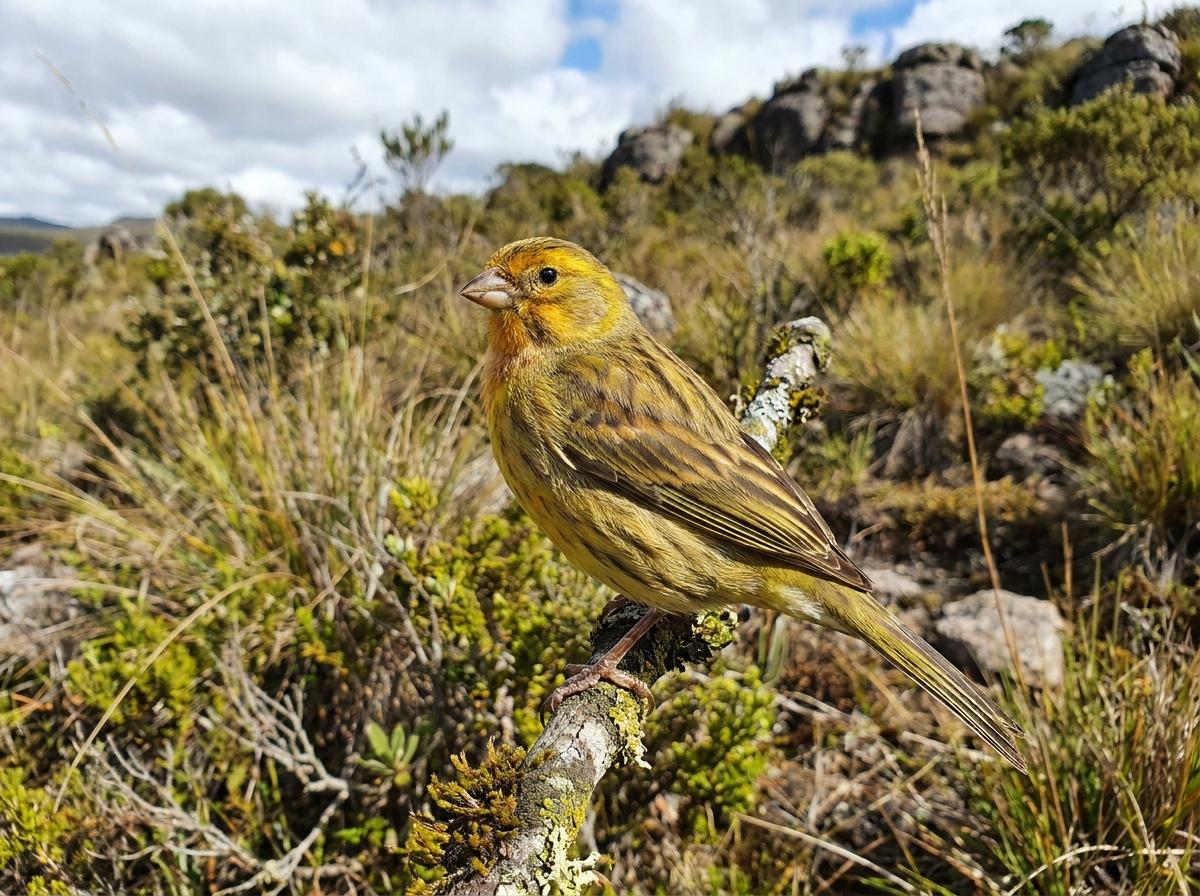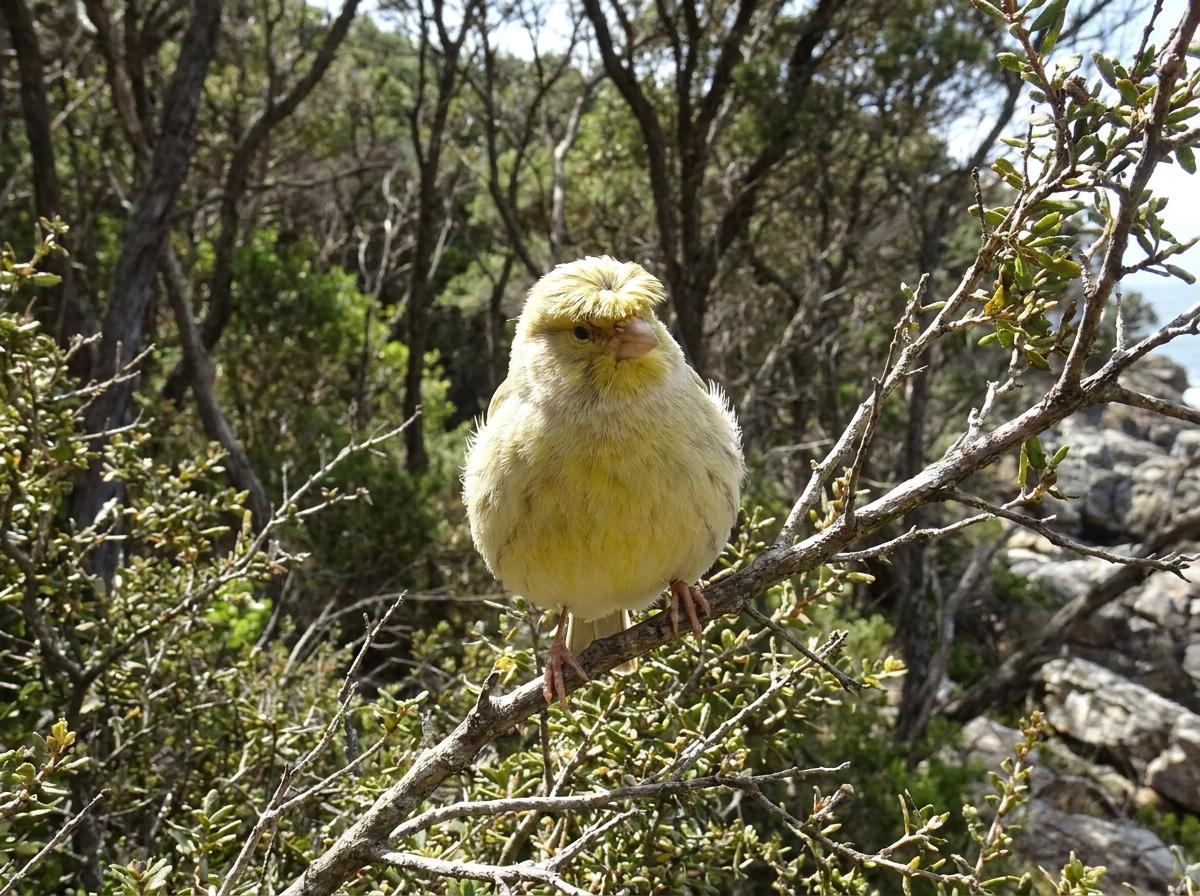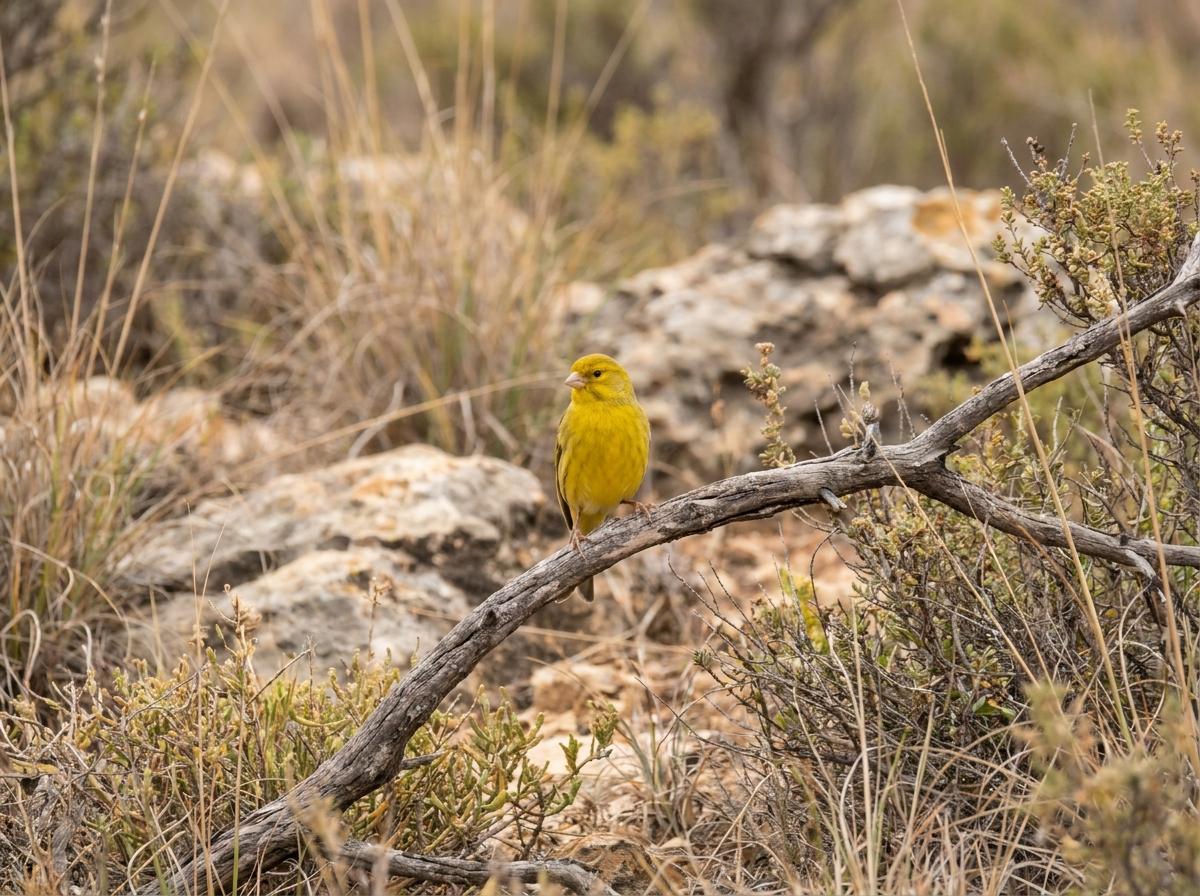
Yorkshire Canary
The Yorkshire canary is the tall, upright “gentleman of the fancy,” a large posture-type canary bred in Victorian England for size, stance, and elegant shape rather than for song or color. It stands almost vertically on long legs in a proud, erect carriage that fanciers nicknamed the guardsman, with a broad full chest and shoulders that taper to a slim waist. If you have arrived here trying to work out what makes a Yorkshire different from other canaries, the short answer is this: it is a show bird judged on its body and posture, one of the largest canary breeds you can keep, and it is the type most people picture when they imagine a canary “standing to attention.” Below you will find where the breed comes from, the truth behind the famous “through a wedding ring” story, what the bird actually looks like, how to keep one, what it costs, and what to check before you buy, with the differences from other canaries drawn out along the way.

Browse listings, public profiles, breeders, or add your animal.
What is a Yorkshire canary?
The Yorkshire is a breed of domestic canary developed for its shape and posture. Domestic canaries all descend from the wild Atlantic canary (Serinus canaria), and over generations breeders split them into three broad groups: song canaries selected for voice, color canaries selected for plumage color, and type or posture canaries selected for body shape and stance. The Yorkshire sits firmly in that last group. It is bred and judged on how it is built and how it carries itself, so its value is in its outline rather than its song. If you want to compare it against the other canaries first, the broader Creatures canary species page is a good place to start.
What sets the Yorkshire apart is scale and bearing. It is one of the largest of the canary breeds, and it stands tall and nearly upright in a way no ordinary pet canary does. That erect, chest-out carriage earned it two enduring nicknames in the fancy: the Guardsman, for its soldierly posture, and the Gentleman of the Fancy, for its tall, elegant presence. When people describe a canary “standing to attention,” they are usually describing the look the Yorkshire was bred to perfect.
It is worth being clear about one thing up front. The Yorkshire is not a song breed. Males do sing, and their song is described as loud, bright, and pleasant, but the breed was never selected for a defined song the way a German Roller or a Belgian Waterslager was. If you specifically want a trained singer judged on its voice, those song canaries are the tradition to look at. If you want a striking, sizeable bird with a commanding shape, the Yorkshire is the classic choice.
Origin and history
The Yorkshire canary was developed in the county of Yorkshire, in the north of England, and it takes its name directly from where it was first shown. The breed came together around the middle of the 19th century, with much of the early work centered on Bradford. The goal of those Victorian breeders was to refine the older Lancashire canary, then the largest British canary, into something taller, sleeker, and more elegant.
To do it they crossed several breeds. The Yorkshire is generally described as the product of blending the large Lancashire with the Norwich canary and the tall, long Belgian canary (the Belgian being a posture breed prized for length and an upright hunched carriage). The aim was to combine the size of the Lancashire, the substance of the Norwich, and the length and stance of the Belgian into one bird that was big, long, and beautifully upright. The result was a new type canary that quickly became a fixture of the British show bench.
That show-ring origin matters, because the Yorkshire has been an exhibition bird from the start. It was bred to a written standard and judged against it, and the breed you see today is the outcome of well over a century of selection toward an ideal shape rather than toward song or utility.
The “through a wedding ring” story, told honestly

If you have read anything about the Yorkshire, you have probably met the famous claim that the early birds were “so slim they could pass through a wedding ring.” It is a great line, and it points at something real, but it needs a little care.
The story describes the breed’s original Victorian form, not the bird kept today. The earliest Yorkshires were bred to be very slender and needle-shaped, and that extreme slimness is what the wedding-ring image captures. As the fancy developed, tastes changed. Breeders moved away from that wispy early type toward a much larger, fuller, more substantial bird with a rounder head and a broad chest. The modern show Yorkshire is a big, heavy-shouldered canary, and it would certainly not slip through a ring. So the wedding-ring line is best understood as a historical note about the breed’s slim original type, not a description of the stout, imposing bird a breeder shows in the ring now.
Told that way, the story is actually a useful shorthand for the whole history of the breed: it started slim and elegant, and over time the fancy selected for size and presence until the Yorkshire became the large, upright “gentleman” it is today.
What a Yorkshire canary looks like
The Yorkshire is defined by its shape, and once you know what to look for it is one of the easier canaries to recognize.
- Large size. The Yorkshire is one of the largest canary breeds. The show standard sets a target minimum length of around 6.75 inches (roughly 17 cm), which is noticeably longer than an ordinary pet canary, and gives the breed real physical presence.
- Tall, erect stance. The bird stands almost vertically. Its carriage is held at roughly an 80 degree angle, close to upright, which is where the guardsman nickname comes from. A Yorkshire in show condition looks proud and to attention rather than relaxed and horizontal.
- Full chest, slim waist. The classic outline is a broad, full, rounded chest and shoulders tapering smoothly down to a slim waist, sometimes likened to a carrot or a bottle shape. That taper is a key breed trait.
- Long legs and a full head. Long, fairly straight legs help lift the body into the tall stance, and the breed carries a full, rounded head and a long folded tail that completes the elegant line.
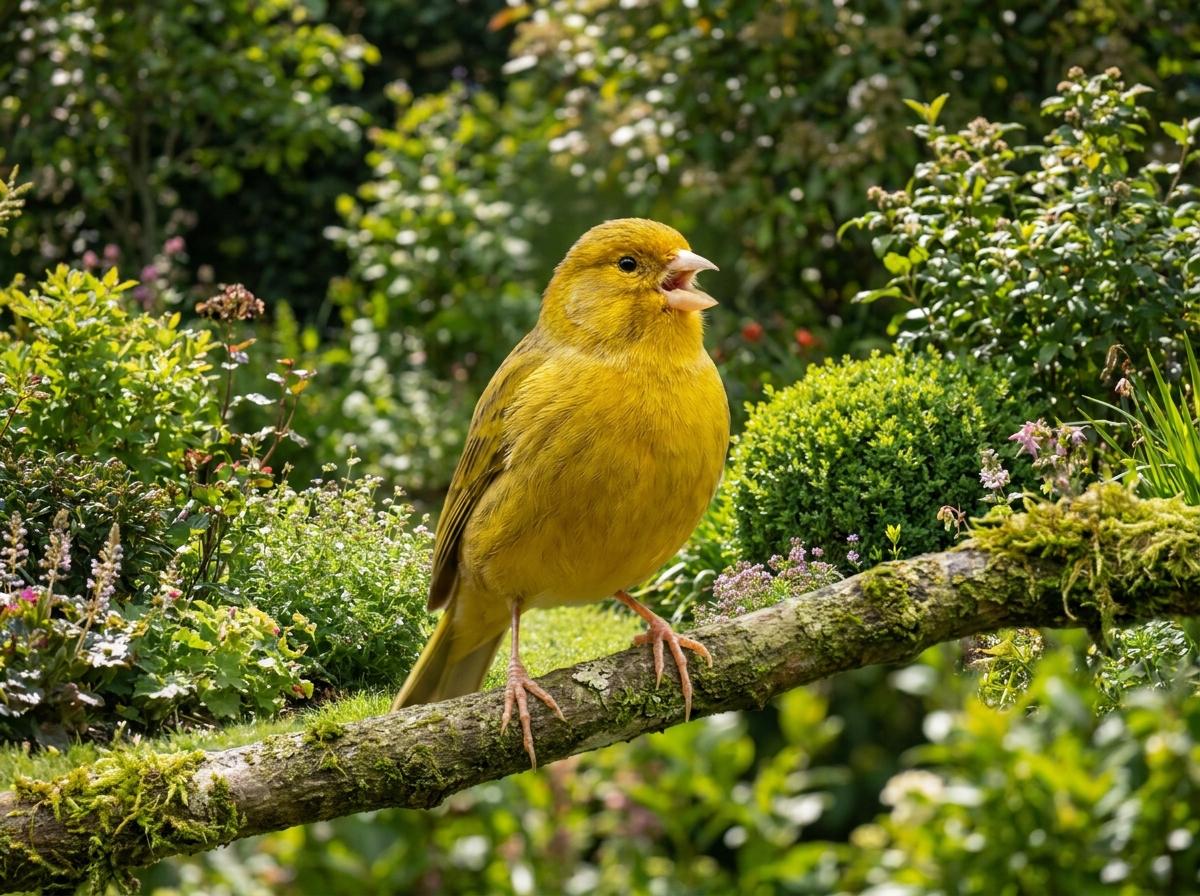
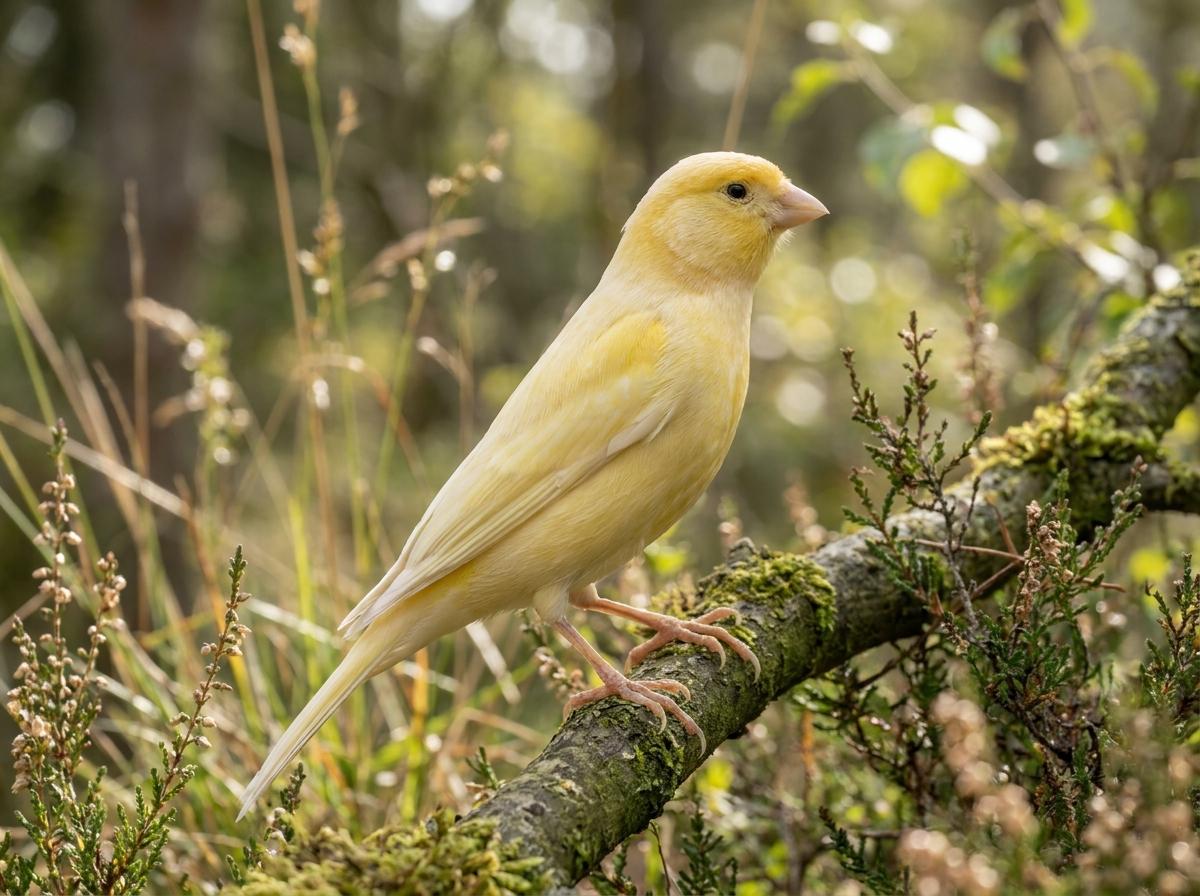
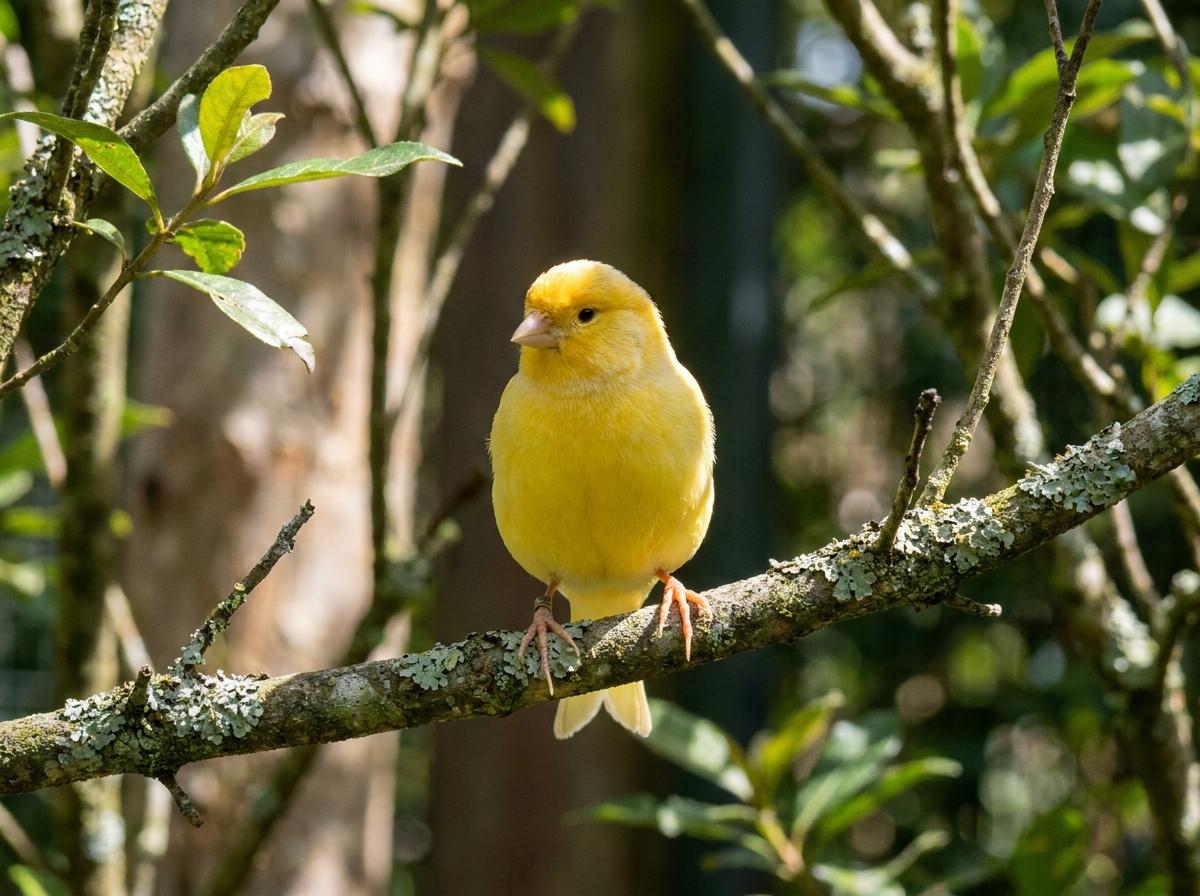
The Yorkshire also comes in a wide range of colors. Clear yellow is the most familiar and the color many people picture, but the breed is bred in buff, white, cinnamon, green, and variegated (patched) forms, in both self (solid) and variegated patterns. White is among the less common colors. In canary breeding you will also hear the terms yellow and buff used to describe feather quality rather than color alone: a yellow-feathered bird has finer, smoother, more intense feathering, while a buff-feathered bird has denser, frostier feathering, and breeders often pair the two feather types to keep plumage sound.
Do Yorkshire canaries sing?
Yes, but with a caveat that matters if song is your priority. Yorkshire males sing, and their song is generally described as loud, energetic, and pleasant, often delivered with the bird in its formal upright pose. As in all canaries, the full song is a male trait; hens make calls and quieter sounds but do not perform a male’s song.
The caveat is that the Yorkshire is a type breed, not a song breed. It was never selected for a specific, standardized song, so you should not expect the trained, judged song of a Roller or a Waterslager. Think of the Yorkshire’s song as a welcome bonus on top of a bird kept mainly for its looks and size, not as the reason to choose the breed. If a soft, defined, competition-style song is what you are after, a dedicated song canary is the better fit.
Keeping a Yorkshire canary
A Yorkshire has the same core needs as any pet canary, with the practical note that it is a larger, longer bird, so it benefits from a roomier cage than a small canary would. The headlines below cover good day-to-day management. Defer any medical questions to an avian veterinarian who can examine the bird.
Housing
Give a single canary a roomy cage with horizontal space for short flights, since canaries fly side to side rather than climb. General guidance for a single bird is a cage of at least around 18 to 20 inches wide and 24 inches long, and bigger is better, especially for a large breed like the Yorkshire. Cage bar spacing should be close, around three-eighths of an inch or less, so a bird cannot catch its head. Provide several perches of varying thickness to keep feet healthy, keep the cage out of direct draughts and out of harsh direct sun, and give the bird a calm, well-lit spot with a regular day and night routine. Canaries are typically comfortable at normal indoor room temperatures, and they enjoy a shallow dish of water to bathe in.
Feeding
A good canary diet is built on a quality staple, either a formulated pelleted canary food or a good canary seed mix, supplemented with fresh greens and vegetables and a little fruit. Many avian sources recommend that a complete pelleted food make up the majority of the diet, because an all-seed diet alone tends to be low in important vitamins, minerals, and protein. Provide clean fresh water daily, and offer grit or cuttlebone as advised for your bird. Extra protein is commonly offered during the annual molt, when the bird replaces its feathers. Talk to an avian veterinarian about the right diet and any supplements for your individual bird.
The molt and light
Canaries go through an annual molt, usually in late summer, when they drop and regrow their feathers. During the molt males typically go quiet and stop singing, which is normal and not a sign of illness, and song generally returns once the molt finishes. Molting birds benefit from good nutrition and enough uninterrupted dark rest, so a sensible day length and quiet nights help the process. For a show Yorkshire, the molt is also when the season’s feather quality is set, so keepers pay close attention to condition through this period.
Health and records
Routine pet-bird care applies: a clean cage, fresh food and water daily, and watching for any change in droppings, breathing, weight, appetite, or singing as an early warning that something is wrong. Birds hide illness well, so an annual check with an avian veterinarian is worth booking, and anything that looks off should be seen promptly. Keeping simple records of molts, diet changes, breeding, and any health events makes it far easier to spot a pattern early and to manage a bird or a small stud over the years.
Showing and breeding
Because the Yorkshire is an exhibition breed, a large part of its world revolves around the show bench and the breeding pen. Show birds are assessed against the written breed standard for the length, the tall upright carriage, the full chest tapering to a slim waist, the head, the feather quality, and the overall balance and presence of the bird. A canary that hits the size and shape and stands proud and steady in the show cage is doing what the breed was made to do.
Serious breeders select their pairs to hold and improve that type, commonly pairing a yellow-feathered bird with a buff-feathered bird to keep the plumage smooth and dense rather than doubling up on one feather type. Breeding, rearing, and conditioning a show-quality Yorkshire is a real undertaking, and the best birds usually come from breeders who have worked a line for years. Even if you only want a pet, that background is useful to understand, because a Yorkshire from a good exhibition line is a different proposition from a random large yellow canary.
Cost and availability

The Yorkshire is a long-established, widely kept show canary rather than a rare exotic, so it is generally obtainable, but quality and price vary a great deal.
There is no single reliable public price for a Yorkshire canary, and we will not invent one. As a rough guide, an ordinary pet canary is commonly an inexpensive bird, while a Yorkshire from a serious exhibition line, with good type, size, and known breeding, can command considerably more, because you are paying for generations of selection toward the standard and the breeder’s rearing and conditioning work, not just the bird itself. A show-quality Yorkshire and a plain large yellow canary can look superficially similar to a newcomer and yet be very different animals in the ring.
Availability is uneven by region and tends to run through the canary fancy rather than general pet outlets. Because the Yorkshire is a specialist show breed, the best birds usually move between breeders and specialist canary shows and clubs, so a genuine exhibition-line Yorkshire is easiest to find by connecting with breeders directly. You can browse current canary listings on the Creatures marketplace and look for breeders in the Creatures directory. Because good birds are not always in stock, a saved listing alert (below) is a practical way to be told when one appears.
Buying considerations
Because the Yorkshire is defined by size and shape and can look like an ordinary yellow canary to an untrained eye, buy on the right evidence.
- Buy the type, not just the color. A large yellow canary in a shop is not necessarily a good Yorkshire. If breed type matters to you, look for the real size, the tall upright stance, the full chest to slim waist taper, and the long legs, and ask about the bird’s breeding.
- Ask about the line and its purpose. A bird from an established exhibition line, bred to the standard, is more likely to show the correct size and posture than a random large canary. If you want a pet rather than a show bird, that is fine, just know what you are getting and pay accordingly.
- See the stance for yourself. A Yorkshire in condition stands tall and steady. A calm, alert bird that carries itself well tells you more than any description.
- Do not choose it as a song bird. If you want a canary specifically for a soft, trained, judged song, the Yorkshire is not that breed. Choose a song canary instead and let the Yorkshire be your choice for size and presence.
- Check basic health. Bright eyes, smooth plumage, steady breathing, a clean vent, and an active, alert bird are the baseline, the same as for any canary. Defer anything that looks off to an avian vet.
Frequently asked questions
Why is the Yorkshire canary called the gentleman of the fancy?
Because of its tall, upright, elegant carriage. The breed stands almost vertically with a full chest and a proud bearing, which also earned it the nickname the Guardsman. It is one of the largest canary breeds and was developed as an exhibition bird judged on that size and shape.
How big is a Yorkshire canary?
It is one of the largest canaries. The show standard aims for a minimum length of around 6.75 inches (roughly 17 cm), noticeably longer than a typical pet canary.
Could a Yorkshire canary really fit through a wedding ring?
That describes the breed’s original slim Victorian type, not the bird kept today. Early Yorkshires were bred to be very slender, which is where the wedding-ring line comes from. Over time the fancy selected for a much larger, fuller bird, and the modern show Yorkshire is far too substantial to pass through a ring.
Do Yorkshire canaries sing well?
Males sing, and the song is often described as loud and pleasant, but the Yorkshire is a type breed selected for shape and size, not a song breed with a defined, judged song. Treat the song as a bonus. For a competition-quality song, a Roller or Waterslager is the tradition to look at.
What colors do Yorkshire canaries come in?
Clear yellow is the most familiar, but the breed is bred in buff, white, cinnamon, green, and variegated forms, in both solid and patched patterns. White is among the less common colors.
Are Yorkshire canaries good pets for beginners?
Yes, with realistic expectations. Their care is standard pet-canary care, they are generally calm compared with some flightier canaries, and they make a striking pet. Just remember they are a larger bird that appreciates a roomy cage, and they are kept for looks rather than for a trained song.
How long do Yorkshire canaries live?
With good care, canaries commonly live in the range of about 7 to 12 years, and sometimes longer. A clean environment, a varied diet beyond seed alone, and prompt veterinary attention all help.
Do this next on Creatures
Whether you are choosing your first Yorkshire, hunting for a genuine exhibition-line bird, or already keeping one, Creatures is the records, marketplace, and directory layer to do it in one place.
Find a bird. Browse Yorkshire canaries on the marketplace and search trusted breeders in the Creatures directory. New to the marketplace? See saving searches and using your watchlist. If you want a defined song instead, compare the sister Gloster canary and the song-bred German Roller.
Get alerted. Good exhibition-line Yorkshires are not always in stock, so set a free Yorkshire canary listing alert and we will tell you when one is posted. No account needed to start.
Add your canary. Already keeping a Yorkshire? Create a free animal profile in a few minutes, no account needed to start. The walkthrough is in adding an animal to Creatures, and you can see what the profile holds in your animal’s profile page: the tabs and what each one does.
Track molts and health. Track molt, diet, and health records on Creatures. The record sheet opens for any visitor to look around, and a free account saves what you enter. See adding a record and health and medical records for the full how-to.
Never miss care. Set reminders and upcoming care so molt-season feeding changes and annual vet checks do not slip.
Breed or show? If you raise Yorkshires, create a breeder profile so buyers looking for genuine exhibition birds can reach you, and read getting listed in the breeder directory.

If you breed Yorkshires or other canaries, you can also list your aviary in the Creatures directory so buyers looking for a genuine exhibition bird can find you.