

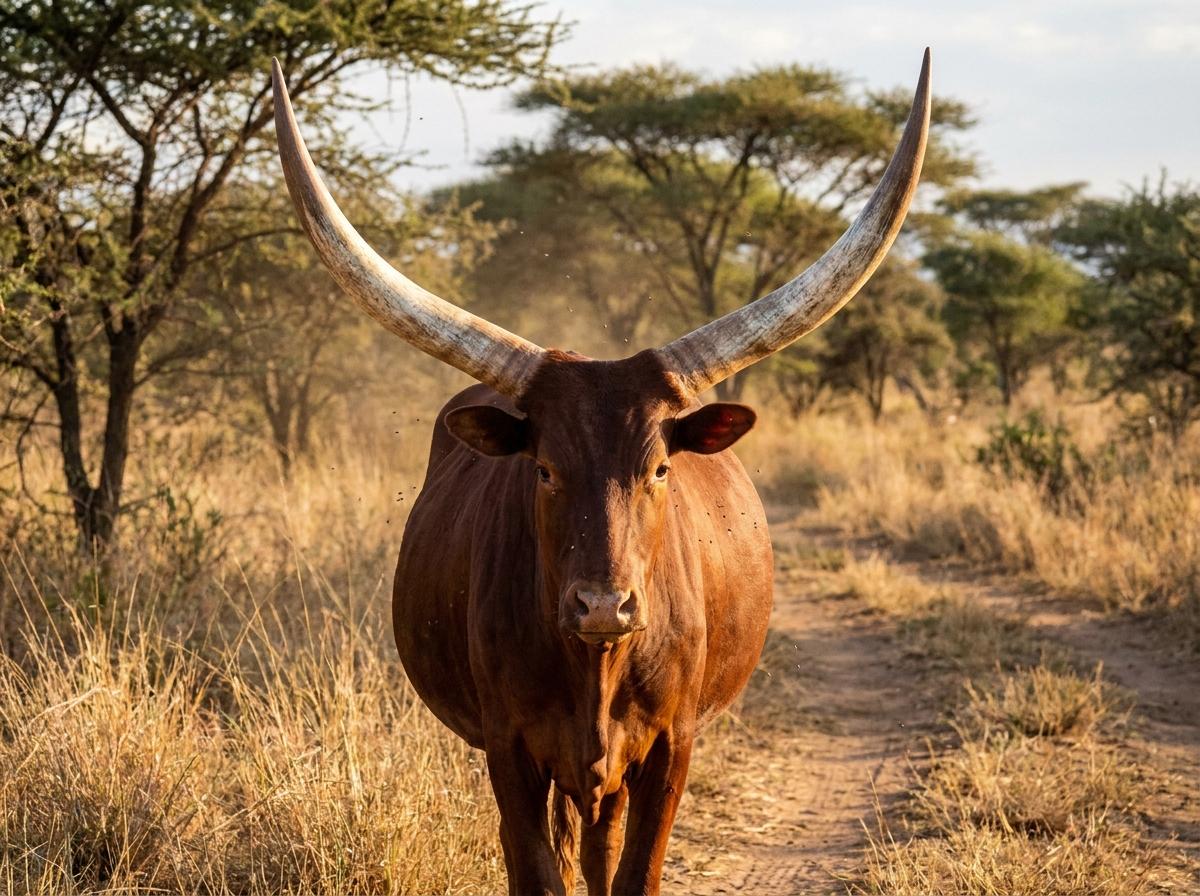
Ankole
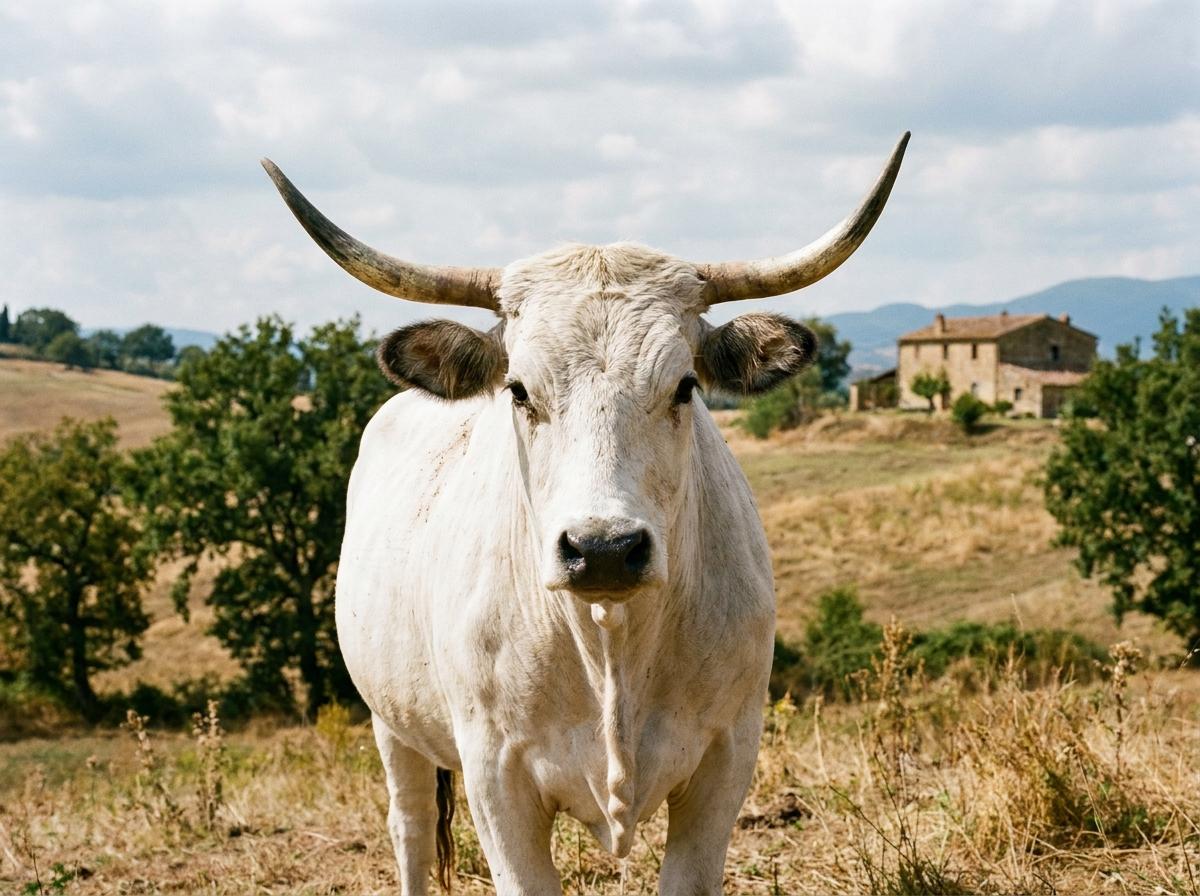
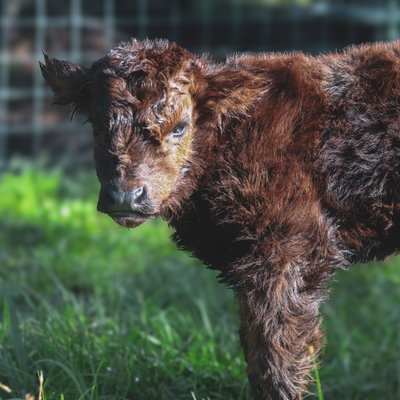
Ankole cattle are East African longhorn cattle from the Great Lakes region, especially Uganda, Rwanda, Burundi, Tanzania, and surrounding areas. They belong to the broader African Sanga group, which carries both taurine and zebu ancestry, and they have very large horns, lean bodies, hard feet, and tolerance of heat and seasonal grazing. Coat color varies, though red, brown, black, and spotted animals are common. In pastoral communities, Ankole cattle are tied to milk, wealth, ceremony, and herd identity as much as to meat.
Traditional management relies on movement, grazing knowledge, and selection for cows that breed regularly and raise calves in demanding conditions. Milk yield is modest compared with specialized dairy breeds, but the cattle can be productive where feed quality, disease pressure, and climate would challenge less adapted animals. In zoos, conservation herds, and farms outside Africa, Ankole require handling systems that account for horn width and social behavior. Breeding decisions should distinguish African Ankole populations from the related but separately developed Ankole-Watusi breed found in North America and elsewhere.
Colors: Belted, Black, Black and White, Blaze Faced, Blue Roan, Brindle, Brockle Faced, Brown, Brown and White, Dun, Gray, Grey, Highbelt, Highpark, Lineback, Mottled, Pied, Red, Red and White, Red Roan, Riggit, Roan, Silver, Solid Black, Solid Red, Solid White, Speckled, Spotted, White, White Faced, Yellow