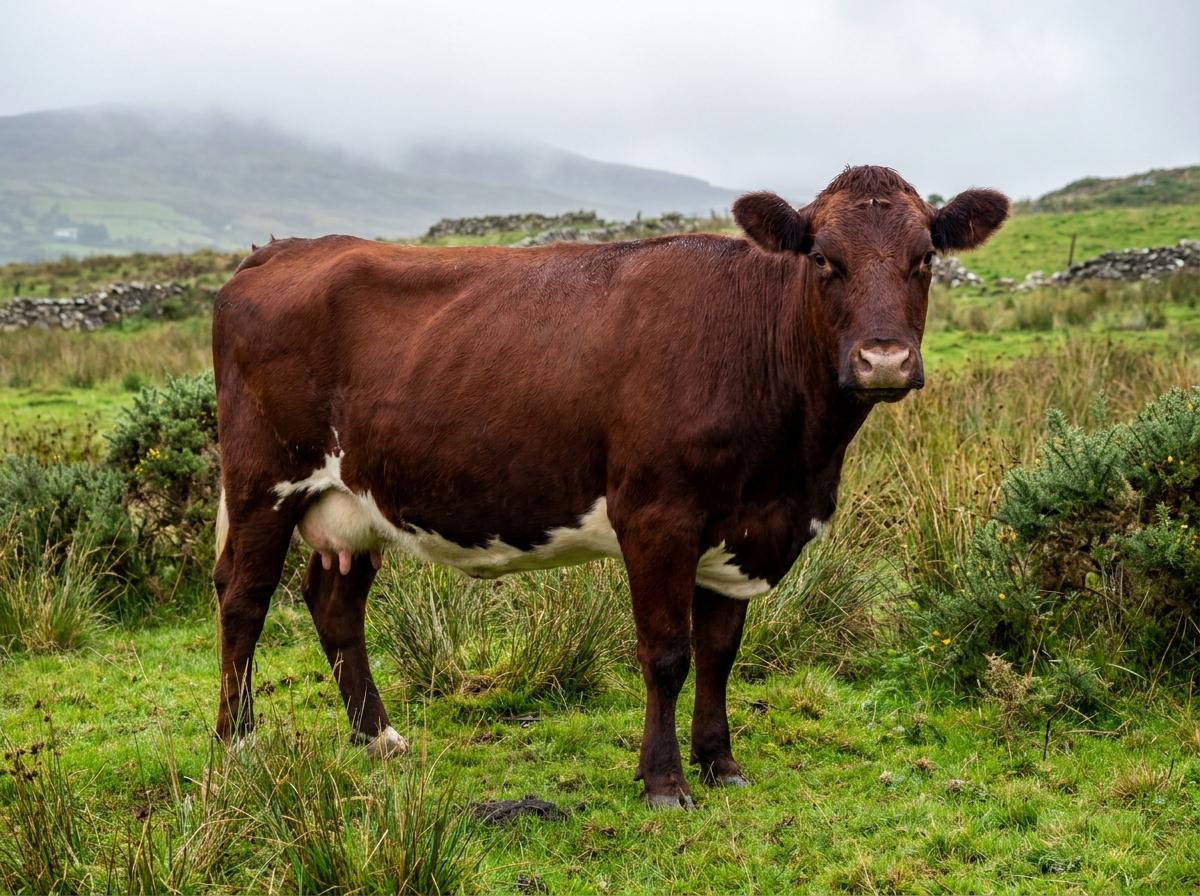
Belfair
The Belfair is a modern American homestead cow: a small, dual-purpose composite that is half Dexter and half Jersey, bred to give a family enough rich milk while still raising a beef calf every year on very little land. It is not an old landrace with centuries of history behind it. It is a recent, purpose-built cross first named by a Washington state breeder, and most of what is written about it comes from its registry and from the homesteading community rather than from a national herdbook or an agricultural university. This page lays out what a Belfair actually is, where the name came from, how big it gets, what it produces, what it costs, and the honest cautions to keep in mind before you buy one, with the two parent breeds explained so you know exactly what you are getting.

Browse listings, public profiles, breeders, or add your animal.
What is a Belfair cow?
A Belfair is a composite (crossbred) homestead cow that is 50 percent Dexter and 50 percent Jersey. The idea behind it is simple and practical. The Dexter is one of the smallest cattle breeds in the world, hardy and efficient, but a modest milker. The Jersey is a small dairy breed famous for rich, high butterfat milk. Cross the two and the goal is a compact cow that keeps the Dexter’s small size, thriftiness, and easy keeping while borrowing the Jersey’s dairy quality, giving a family cow that fits on a small acreage.
Because it is a cross rather than a fixed old breed, the exact recipe matters. Registries generally reserve the “Belfair” name for the straight half-and-half Dexter to Jersey cross, and use the related label “Irish Jersey” for animals with other ratios of the same two breeds. If you are weighing a Belfair against other small or dual-purpose cattle, the broader Creatures cattle species page is a good place to compare it with breeds like the Dexter, the Highland, and other homestead types.
It is worth being clear up front about what this page can and cannot promise. The Belfair is a young, American composite, so it does not appear in the FAO’s global breed database or carry a long, formally documented breed history. Much of the published information comes from the breed’s own registry and from the homesteading press. Where a figure is well grounded in the two parent breeds we say so, and where a claim rests only on breeder and keeper reports we flag it as such rather than dressing it up as settled science.
Where the Belfair name comes from
The Belfair name was coined by Tracy Teed of Washington state, who is generally credited with developing the cross and describing it as the first dual-purpose miniature cattle developed in America. Belfair is the name of a small community in Mason County, Washington, which is where the label traces back to.
Since then, other breeders have carried the project forward. The Belfair and the closely associated Irish Jersey have been bred and selected for decades by keepers in several states, and the effort to standardize and register them is part of the broader miniature and homestead cattle movement in the United States. That movement grew out of demand from small landholders who wanted a manageable, productive family cow rather than a full-size commercial animal.
Two things follow from this recent, community-driven origin. First, “Belfair” describes a defined cross more than a closed, centuries-old breed, so the animals behind the name can vary. Second, there is no single dominant national breed association the way there is for long-established breeds; registration happens through homestead and miniature-cattle registries, and the details of who registers what have shifted over the years. Buy on the individual animal and its verified pedigree, not on the name alone.

The two parent breeds, so you know what you are getting
Because a Belfair is a fifty-fifty cross, understanding it really means understanding its two parents. Both are small, both are well documented, and between them they explain almost everything the Belfair is trying to be.
The Dexter side
The Dexter is a small cattle breed that originated in Ireland, in the mountainous districts of the south and southwest, and takes its name from a man named Dexter who managed estates on Valentia Island; the breed was brought to England around 1882. It is genuinely small. Mature Dexter cows typically weigh in the range of 600 to 700 pounds and bulls around 1,000 pounds, standing roughly 36 to 44 inches at the shoulder, which is about half the height of a large beef cow. Dexters are prized as an efficient, hardy, dual-purpose animal that does well on modest pasture, which is exactly the thriftiness the Belfair is built to keep.
There is one important genetic caution that comes from the Dexter side. Some Dexters carry a gene for chondrodysplasia, a form of dwarfism that shortens the legs. The American Dexter Cattle Association notes that a DNA test is available for it, and that mating two carriers together carries a risk that an affected fetus can be lost. This matters for Belfair breeders because that gene can travel with Dexter genetics. Responsible breeding means knowing the carrier status of your Dexter-derived stock and not making high-risk carrier-to-carrier matings. Ask any seller about testing.
The Jersey side
The Jersey is a small British dairy breed from the island of Jersey in the Channel Islands, first recorded as a distinct breed around 1700. It is the dairy engine of the cross. Jersey milk is famous for its high butterfat, commonly in the range of about 4.5 to 6 percent, noticeably richer than the milk of larger dairy breeds, and Jerseys are efficient converters that produce a lot of milk for their body size. That richness and dairy efficiency is what the Belfair is reaching for when it adds Jersey to the smaller, beefier Dexter.
The Jersey side also carries a temperament caution worth naming honestly. Jersey cows are widely regarded as docile, but Jersey bulls have a reputation as some of the least trustworthy of the common dairy breeds. Standard advice is to never fully trust any dairy bull past about eighteen months of age. Belfair breeders have specifically worked to select for calmer bulls, often using gentle miniature Jersey lines, but the underlying caution about dairy-bull temperament is real and applies to any cattle keeper.
What a Belfair looks like
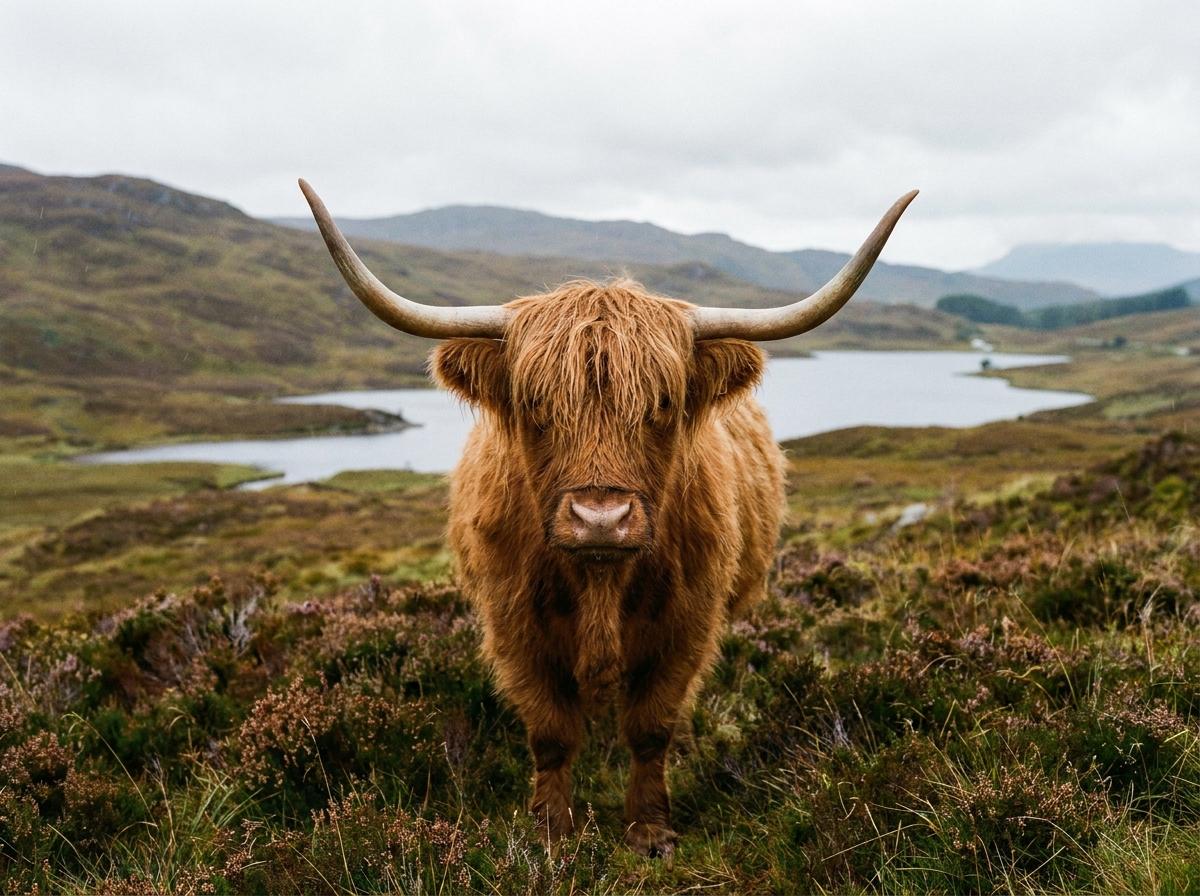
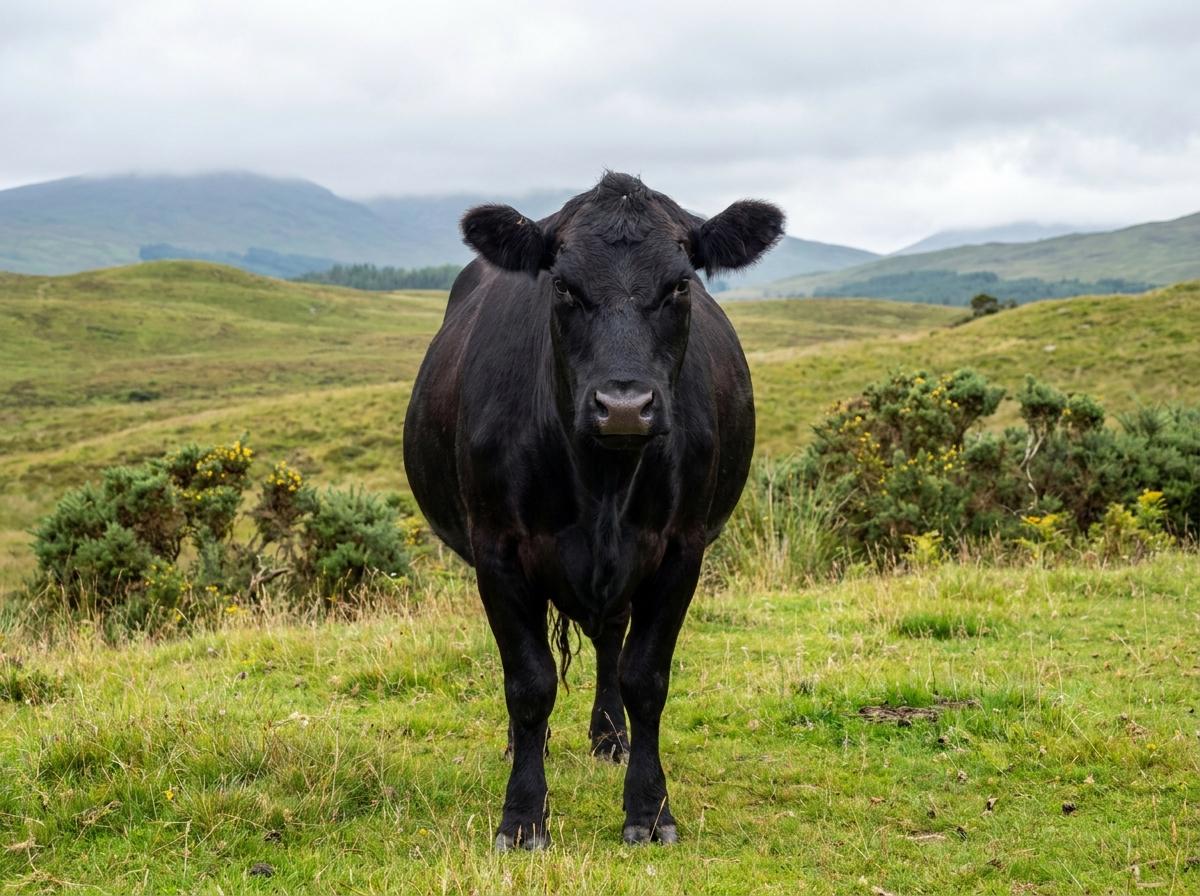
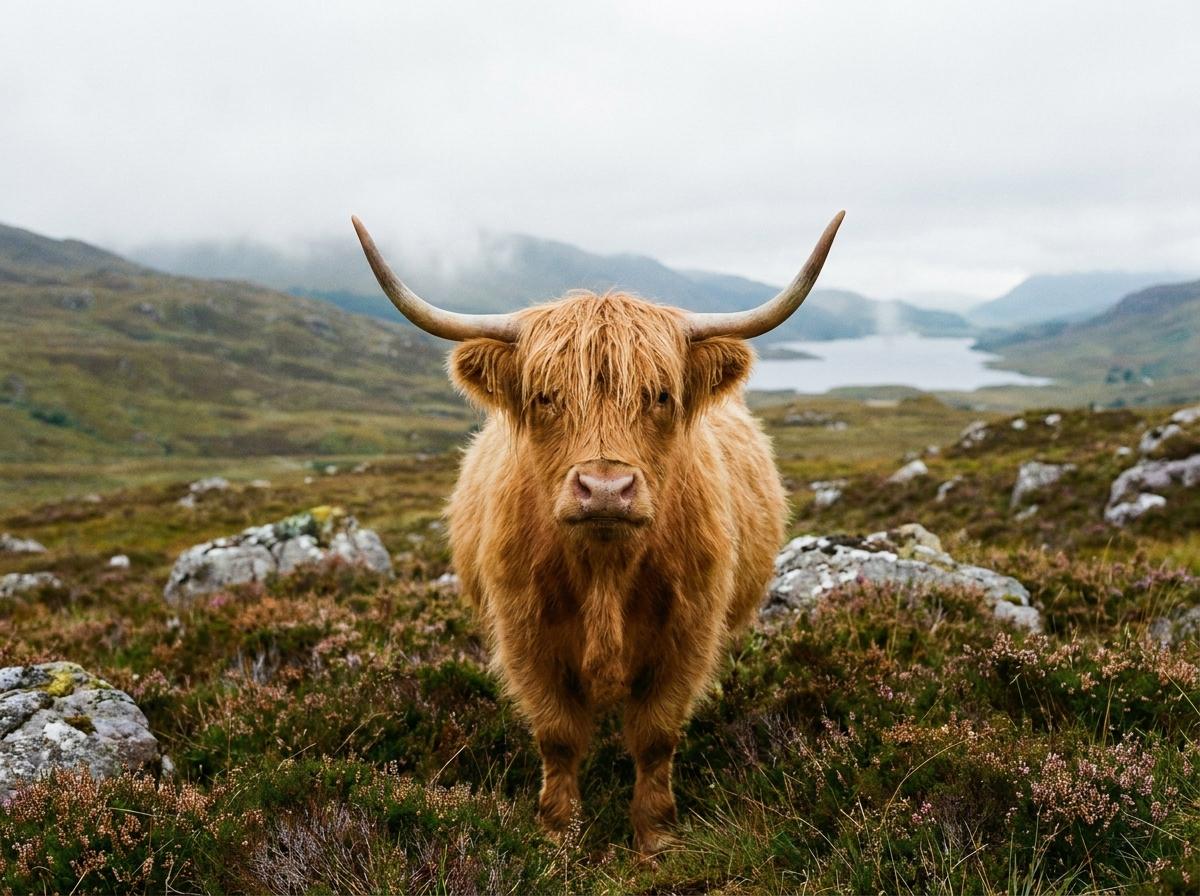
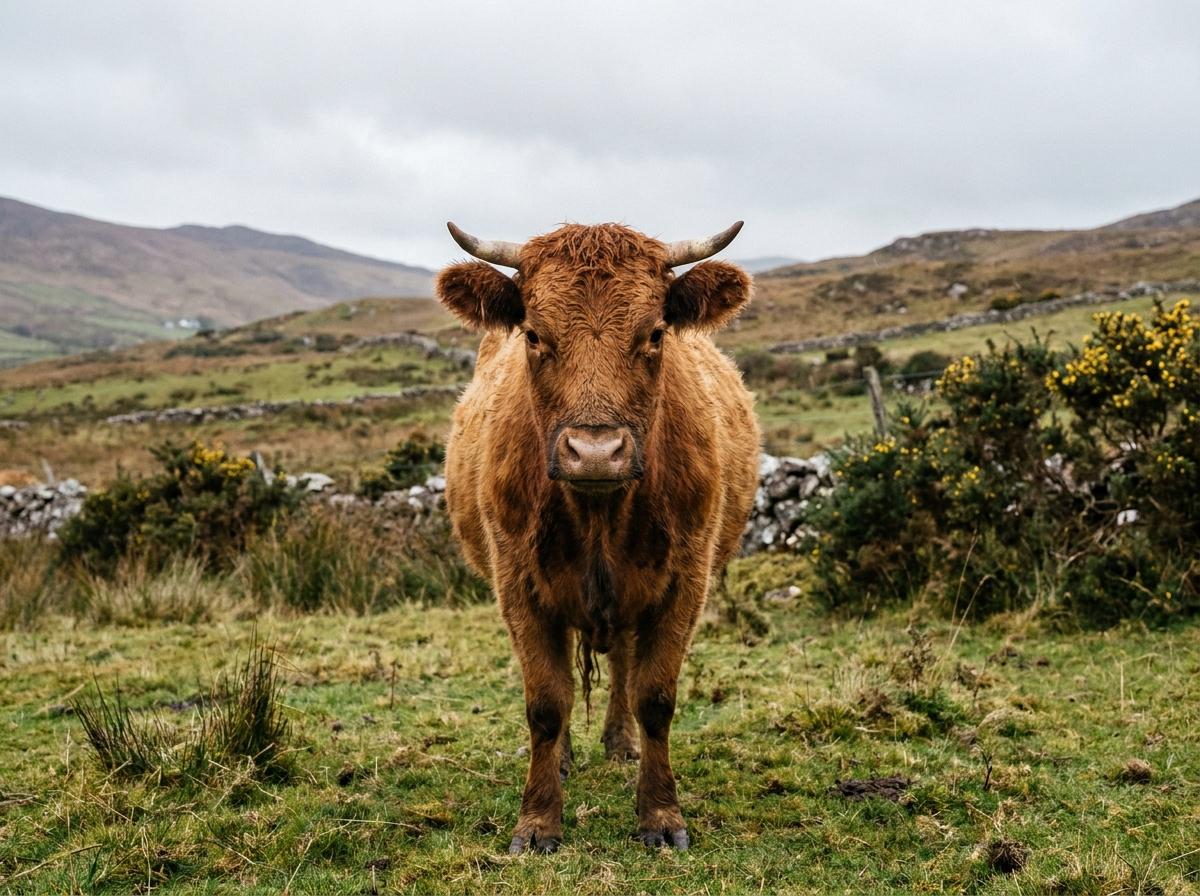
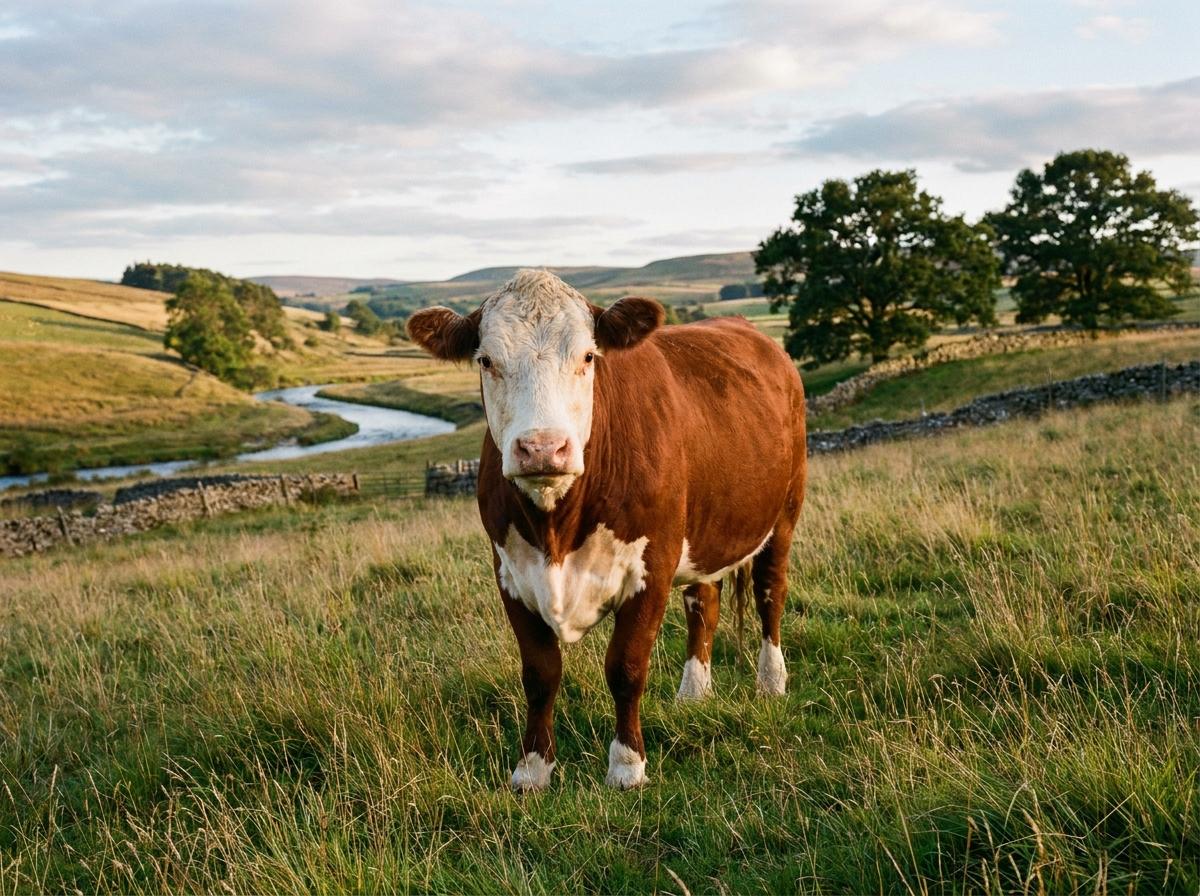
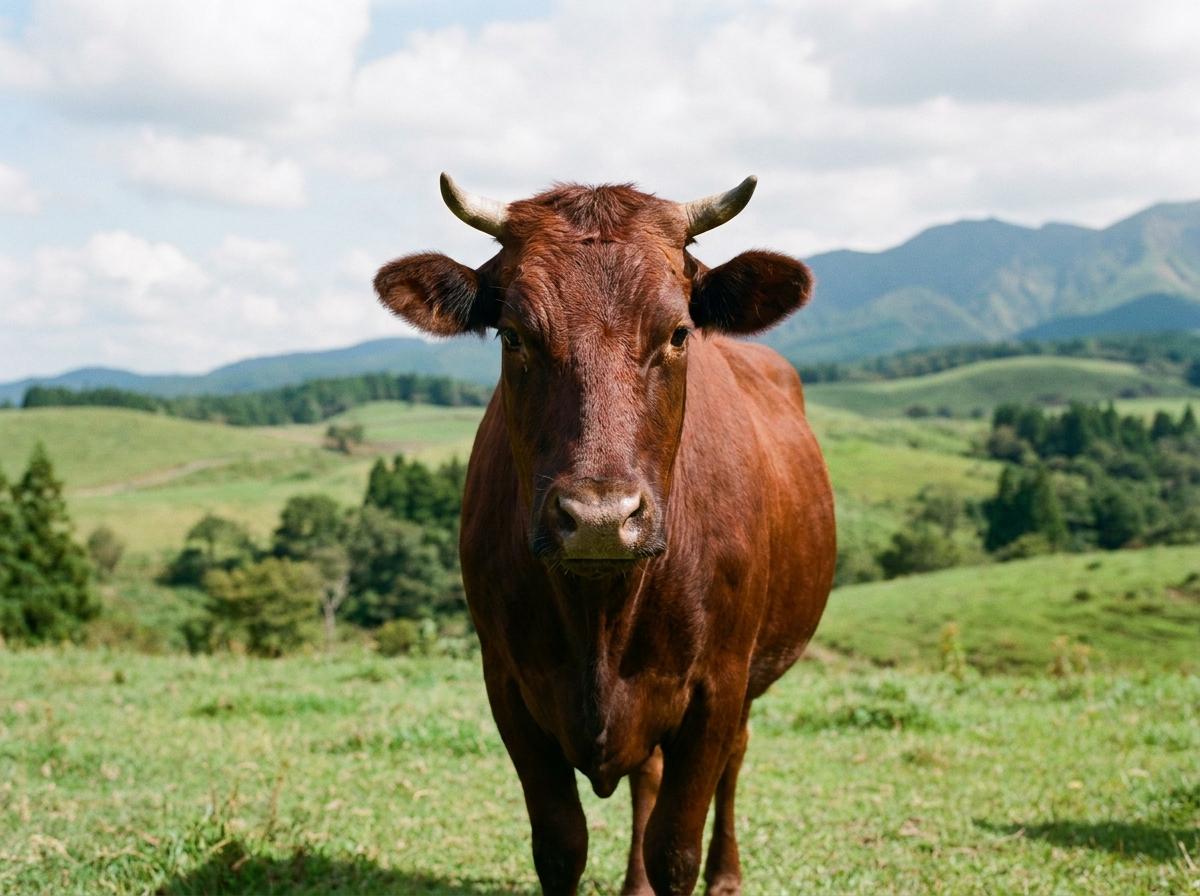
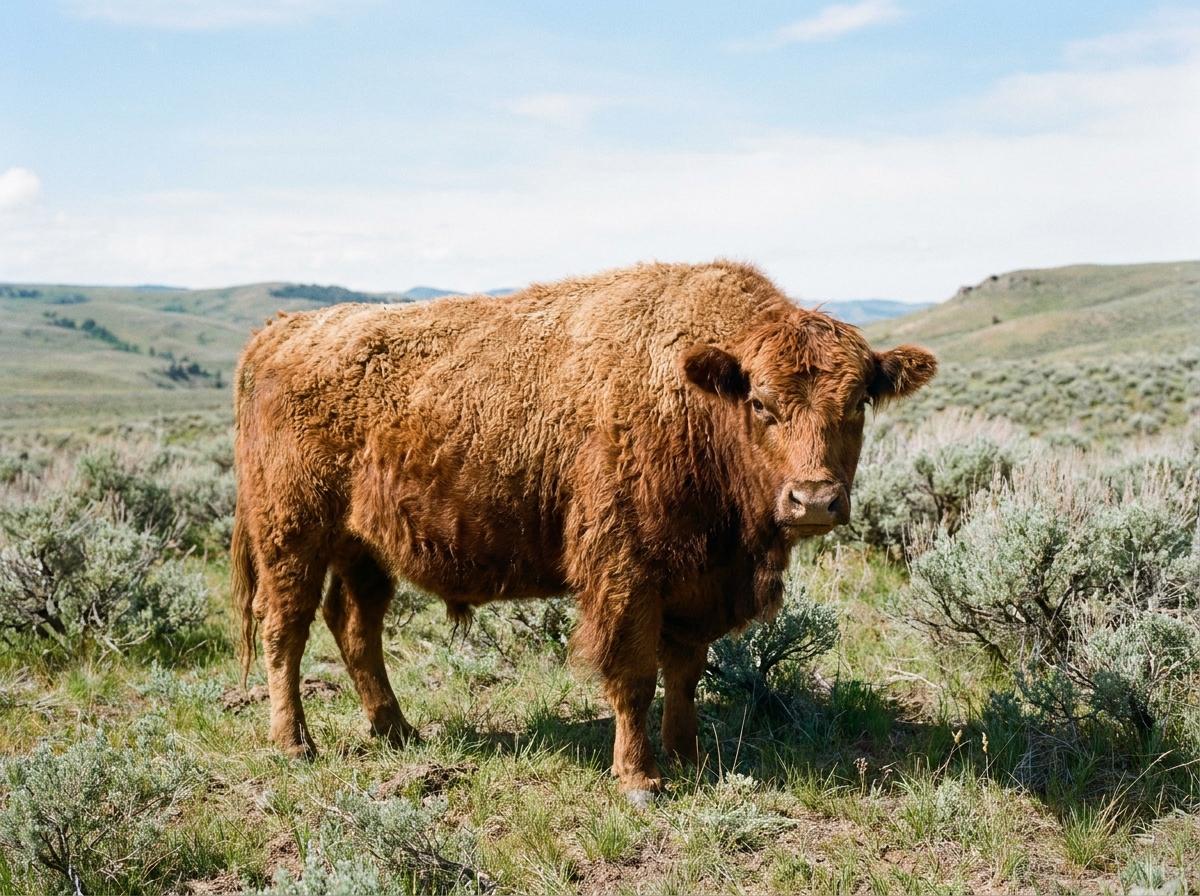
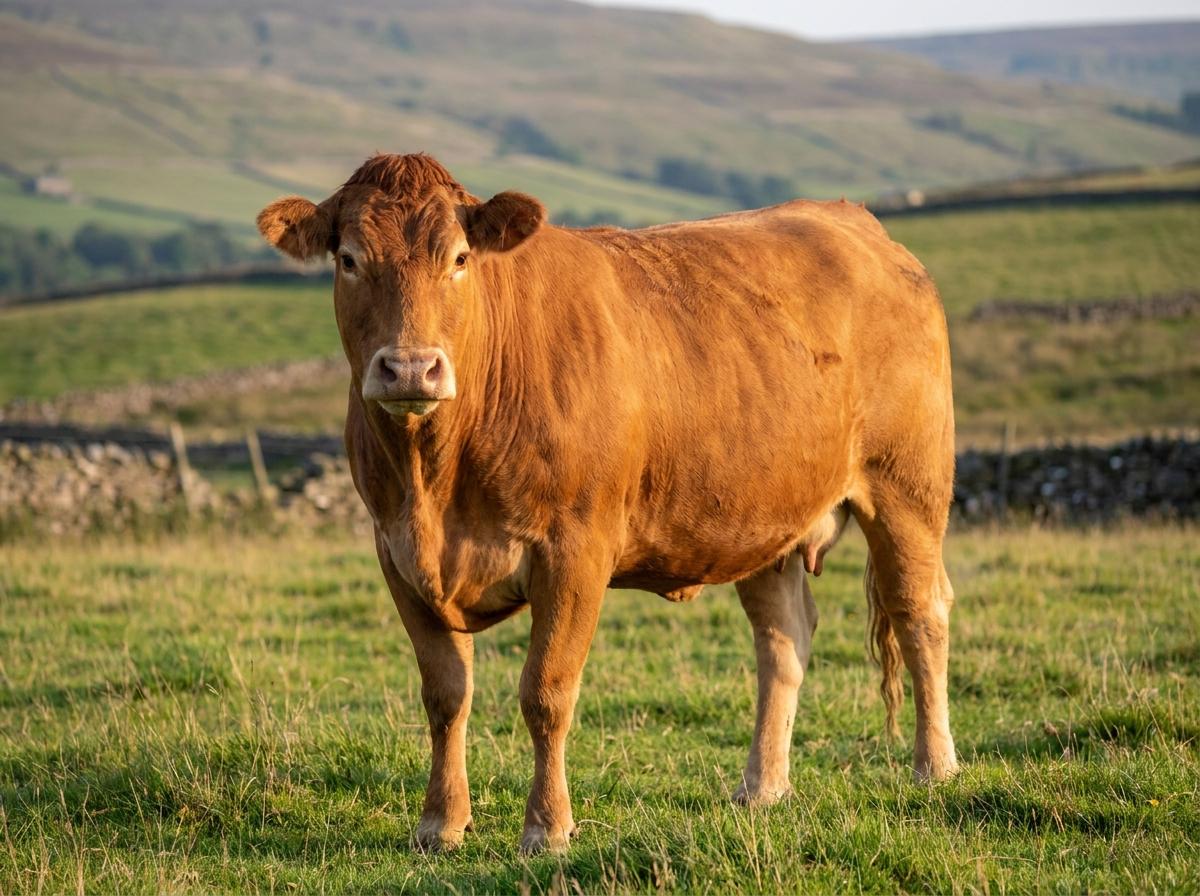
A Belfair looks like what it is: a small, deep-bodied little cow that reads as a scaled-down mix of its two parents. It is compact and low to the ground, with the rounded, dairy-influenced body you would expect from Jersey blood on a Dexter frame.
- Small size. Belfairs are miniature to midsize cattle. The registry describes most as roughly Frame Score 00 to 2, with all frame sizes allowed, and keeper accounts commonly put mature animals somewhere in the region of 36 to 42 inches at the hip. Frame score is a standardized way to describe cattle size from hip height and age, used across the beef industry by the Beef Improvement Federation, so a low frame score is a meaningful shorthand for “small.”
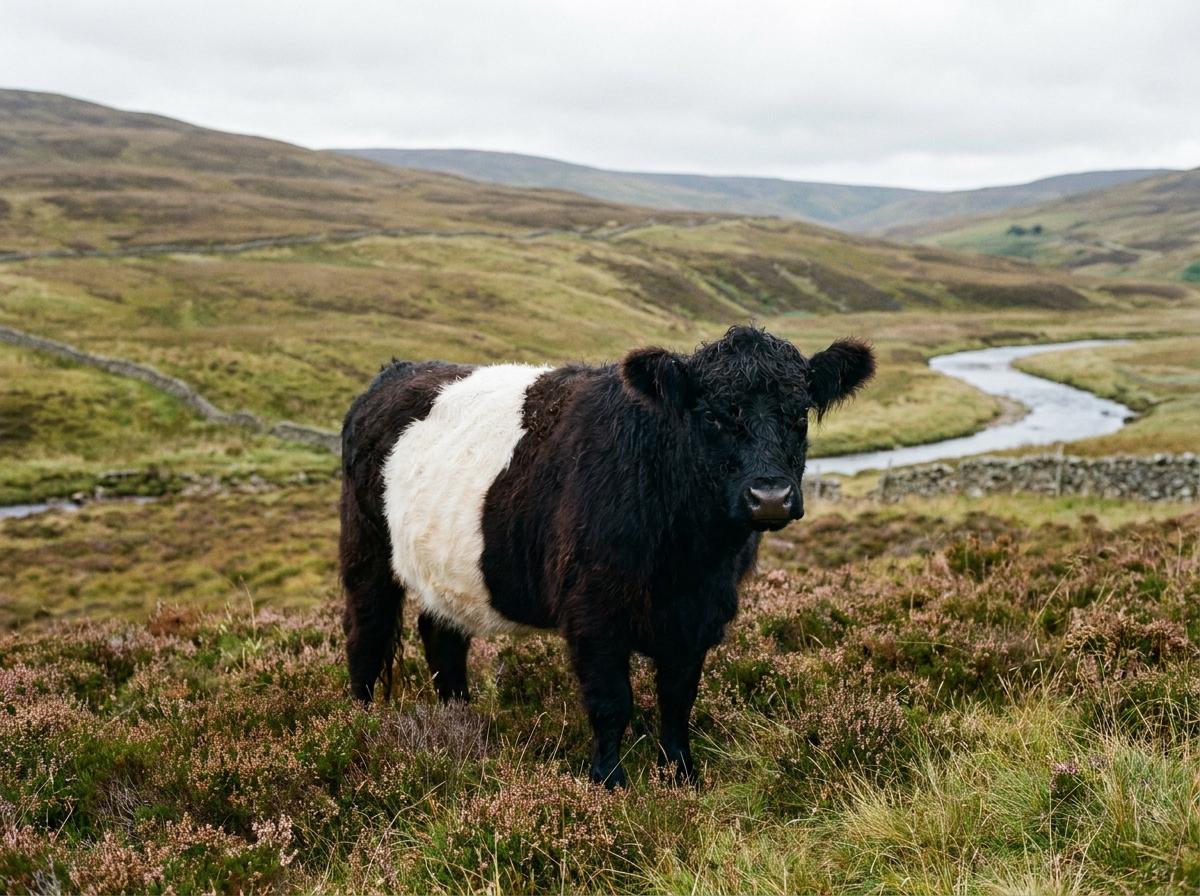
- Color. The most common color is black, with a wide range of browns from mahogany to dun, and occasional animals show white markings or a pinto pattern. This tracks with the color range of the parent breeds rather than a single fixed breed color.
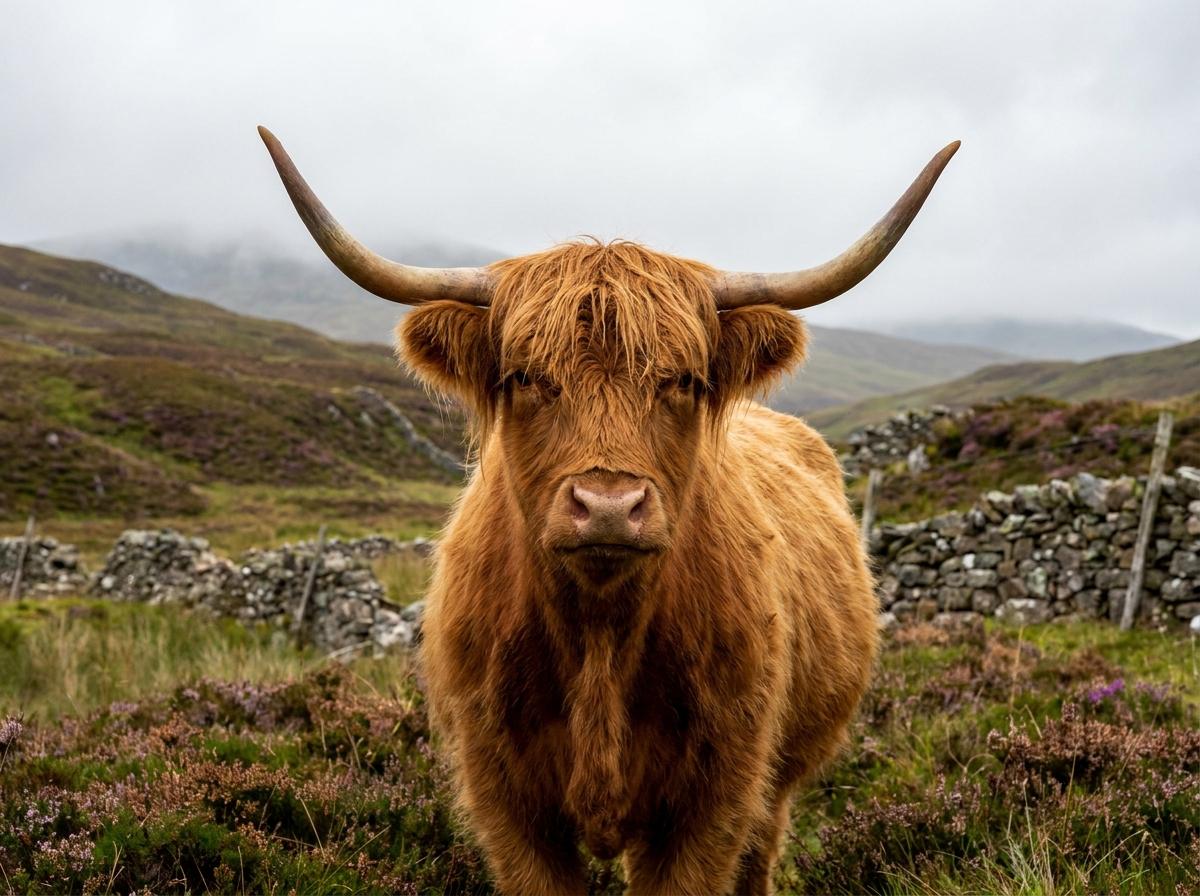
- Horns. Belfairs are frequently horned. Both Dexters and Jerseys can carry horns, so a Belfair may have short horns unless it has been bred for the polled (naturally hornless) trait or has been dehorned.
- Dairy character. Because milk is half the point, good Belfairs are selected for a sound, well-attached udder and correct teat placement, the udder conformation that makes a small family cow easy to hand milk and gives her a long working life.

What a Belfair produces
The whole reason to cross a Dexter with a Jersey is production: rich milk from a small, easy-keeping cow, plus a beef calf. Here is where the honest sourcing caveat matters most, because unlike the well-studied parent breeds, the Belfair does not have peer-reviewed production records.
Milk. The Belfair is bred to give more and richer milk than a plain Dexter by adding Jersey dairy genetics. Homestead and registry accounts commonly describe a Belfair as a family milk cow that produces a few gallons a day at peak, well short of a full-size commercial dairy cow but plenty for a household plus a nursing calf. The milk carries the Jersey character: high in butterfat, rich, and well suited to cream, butter, and cheese. Treat specific daily gallon figures you see online as keeper reports rather than standardized lactation records, and expect real output to depend heavily on the individual cow, her Jersey influence, her feed, and her stage of lactation.
Beef. As a dual-purpose animal, the Belfair is also meant to raise a usable beef calf each year. The Dexter contributes muscling and thrift to what would otherwise be a lean dairy frame, and small-breed beef appeals to homesteaders who want a manageable amount of meat from a single animal rather than a full-size steer.
Efficiency and land. Small cattle need less. A miniature cow can often be kept on roughly half an acre per head with good rotational grazing and management, though your actual stocking rate depends entirely on your climate, forage, and how you manage the pasture. The Dexter reputation for doing well on modest ground is part of the Belfair’s appeal to people with limited acreage, but “efficient” does not mean “no inputs.” A lactating cow still needs adequate nutrition, clean water, and minerals to milk well and stay in condition.
Temperament
Belfairs are consistently described by their breeders and keepers as docile and easy to handle, and the breeding project has specifically selected for calm animals, including bulls gentler than a typical dairy bull. That is a genuine selling point for a family cow that will be handled and milked regularly. We flag this as breeder and keeper observation rather than a formally studied trait, since there is no independent behavioral research on this recent composite. As with all cattle, temperament varies by individual and by handling, and the standard caution about never fully trusting an intact dairy bull still applies no matter how calm the line is bred to be.
Husbandry and care
A Belfair is a small cow, but it is still a cow, and a lactating family milk cow is a daily commitment. The headlines below cover the shape of good management. For medical decisions, always work with a veterinarian who can see the animal.
Housing and land
Belfairs need dry, draft-free shelter, clean footing, and safe fencing. Their small size makes them easier to house and handle than full-size cattle, and their modest land needs suit small acreages, but shelter from weather extremes and secure fencing are still essential. Some keepers report that these calm little cattle adapt to tethering, which can help on farms with limited fencing, but tethering demands daily attention to water, shade, and safety and is not a substitute for proper containment.
Feeding
Belfairs are efficient grazers that do well on good pasture, reflecting their Dexter heritage. That efficiency does not mean they can milk heavily on poor ground alone. A lactating cow needs enough energy and protein to support milk production and body condition, plus constant clean water and appropriate cattle minerals. Underfeeding a milk cow is the fastest way to lose condition and depress production. Match the ration to the animal’s stage: a dry cow, a heavily lactating cow, and a growing calf all have different needs.
Breeding and health
Two breed-specific points deserve attention. First, the chondrodysplasia (dwarfism) gene that can come from the Dexter side is worth managing deliberately: know the carrier status of your stock and avoid carrier-to-carrier matings, using the available DNA test. Second, udder health matters in any milk cow, so select for good udder conformation and practice clean milking hygiene. Beyond that, routine cattle health management applies: a parasite control plan suited to your area, hoof care, clean calving, and the vaccinations your veterinarian recommends locally. Keeping clear records of calvings, milk output, breeding, and treatments lets you make culling and breeding decisions on evidence rather than memory. You can track those records on Creatures as you go.

Cost and availability
Belfairs are a niche, homestead-focused animal produced by a relatively small community of breeders, so there is no single reliable published market price, and we will not invent one. As a general pattern, small and miniature dairy-type cattle usually cost more per head than commodity beef cattle because they are sold as family cows to small buyers rather than by the truckload, and price tracks the individual animal: its pedigree, its confirmed Dexter and Jersey makeup, its milk potential, its temperament, its udder, and whether it is a proven milker or an unproven calf. Expect to pay a premium for a registered, well-documented animal from a reputable breeder over an unregistered cross of uncertain background.
Availability is limited and concentrated. Because the Belfair is a recent American composite kept mostly by homesteaders, the pool of sellers is small and often regional, and you may need patience to find the right animal near you. That scarcity, more than the headline price of any one cow, is the practical challenge for most buyers. A saved listing alert (in the hub below) is often the most efficient way to catch a suitable Belfair when one becomes available. You can also browse Corriente cattle, the Maine-Anjou, and other cattle breeds on Creatures if you are still comparing your options.
Buying considerations
Because “Belfair” describes a cross rather than a tightly closed breed, and because much of the online information is enthusiast-driven, buy on documented evidence about the specific animal in front of you.
- Verify the makeup and pedigree. A standard Belfair is a true fifty-fifty Dexter to Jersey cross. Ask for the pedigree and registration paperwork and confirm the ratio, rather than trusting the label alone.
- Ask about the dwarfism gene. Given the Dexter side, ask whether the animal and its parents have been tested for chondrodysplasia, and factor carrier status into any breeding plans.
- Judge the udder and dairy character in person. If you want a milk cow, a sound, well-attached udder and good teat placement matter more than color. Ask for any milk records the breeder keeps.
- Meet the animal and assess temperament. Docility is a core selling point of the cross, so spend time with the animal, and treat any intact bull with the standard dairy-bull caution regardless of the line’s reputation.
- Confirm health and provenance. Ask about vaccinations, parasite management, calving history for a cow, and the seller’s overall herd health.
You can look for current listings on the Creatures cattle marketplace and search trusted breeders and farms in the Creatures directory.
Frequently asked questions
What is a Belfair cow?
A Belfair is a modern American homestead cow that is a fifty-fifty composite of Dexter and Jersey. It is bred to be a small, efficient family cow that gives rich Jersey-style milk while still raising a beef calf on limited land.
Is the Belfair a recognized breed?
It is a recent composite rather than an old, established breed. It is registered through homestead and miniature-cattle registries rather than a single long-standing national breed association, and it does not appear in the FAO global breed database. Because of that, verify each animal’s pedigree and makeup individually.
How is a Belfair different from an Irish Jersey?
Registries generally reserve “Belfair” for the straight half-Dexter, half-Jersey cross and use “Irish Jersey” for other ratios of the same two breeds. In everyday use the two labels overlap, so ask the breeder for the exact Dexter to Jersey percentage.
How big is a Belfair?
It is a miniature to midsize cow. Many are described as roughly Frame Score 00 to 2, often somewhere around 36 to 42 inches at the hip, considerably smaller than a full-size dairy or beef cow.
How much milk does a Belfair give?
It gives rich, high butterfat Jersey-type milk, and homestead keepers commonly describe a few gallons a day at peak, far less than a full-size dairy cow but ample for a family plus a nursing calf. There are no standardized lactation records for the composite, so treat specific figures as keeper reports and expect wide variation by individual and feeding.
Do Belfairs carry the Dexter dwarfism gene?
They can, because they are part Dexter. Chondrodysplasia is a known Dexter trait with a DNA test available, and mating two carriers is risky. Ask any seller about testing before you buy for breeding.
Do this next on Creatures
Whether you are researching the breed, hunting for a genuine Belfair, or already keeping one, Creatures is the records, marketplace, and directory layer to do it all in one place.
Find stock. Browse Belfair cattle on the marketplace and search trusted breeders and farms in the Creatures directory. New to buying on Creatures? Read making an offer on a listing.
Get alerted. Belfairs are scarce and regional, so set a free Belfair listing alert and we will tell you when one is posted. No account needed to start. See saving searches and using your watchlist for how it works.
Add your cow. Already keeping a Belfair? Create a free animal profile in a few minutes. No account needed to start. The walkthrough is in adding an animal to Creatures.
Track milk, breeding, and health. Keep milk, calving, and health records on Creatures. The record sheet opens for any visitor to look around, and a free account saves what you enter. See adding a record for the full how-to.
List your farm. Breed or sell Belfairs? Create a free breeder or farm profile so buyers searching for this hard-to-find cross can reach you. No account needed to start, and getting listed in the breeder directory walks through it.
Sell with confidence. Planning to sell stock? Learn how seller payout works before you list.
If you run a farm or homestead, you can also list your operation in the Creatures directory so buyers searching for this hard-to-find cross can find you.