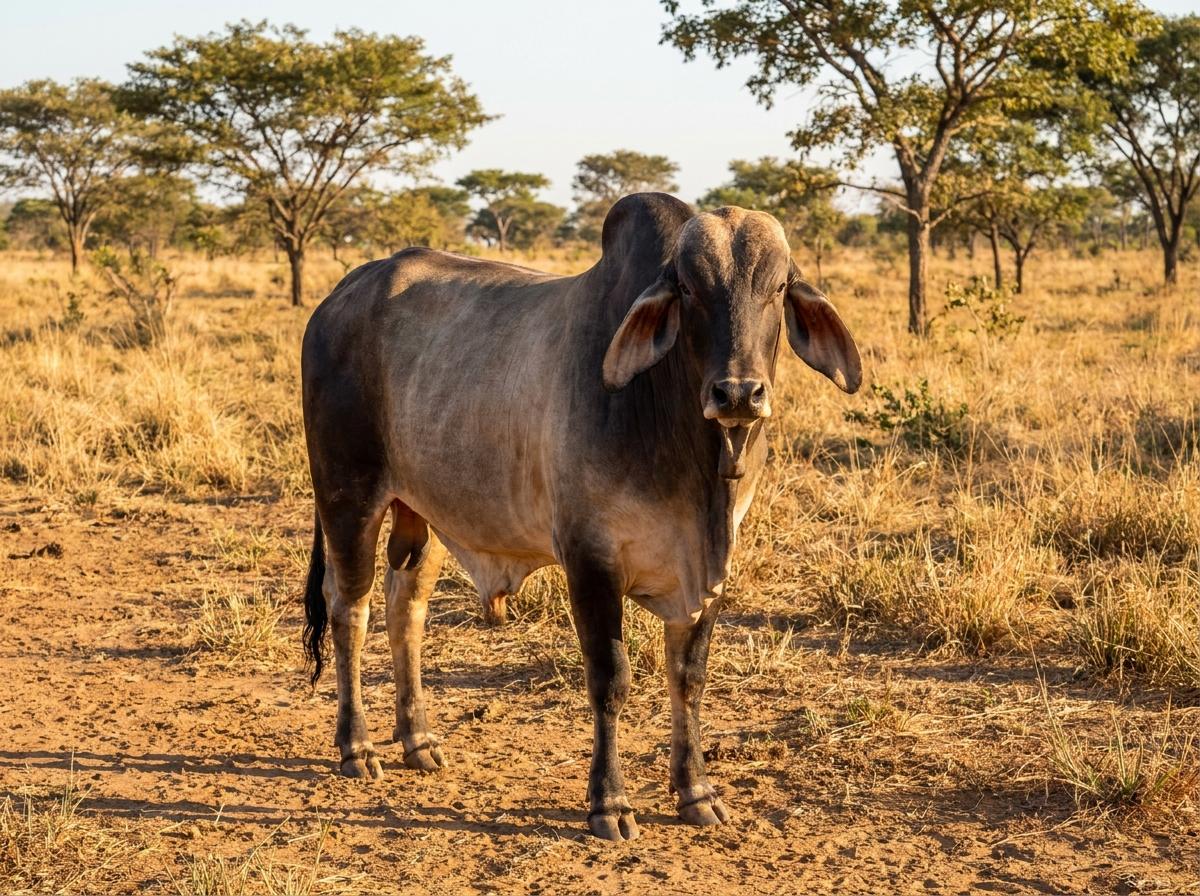
Indo-Brazilian
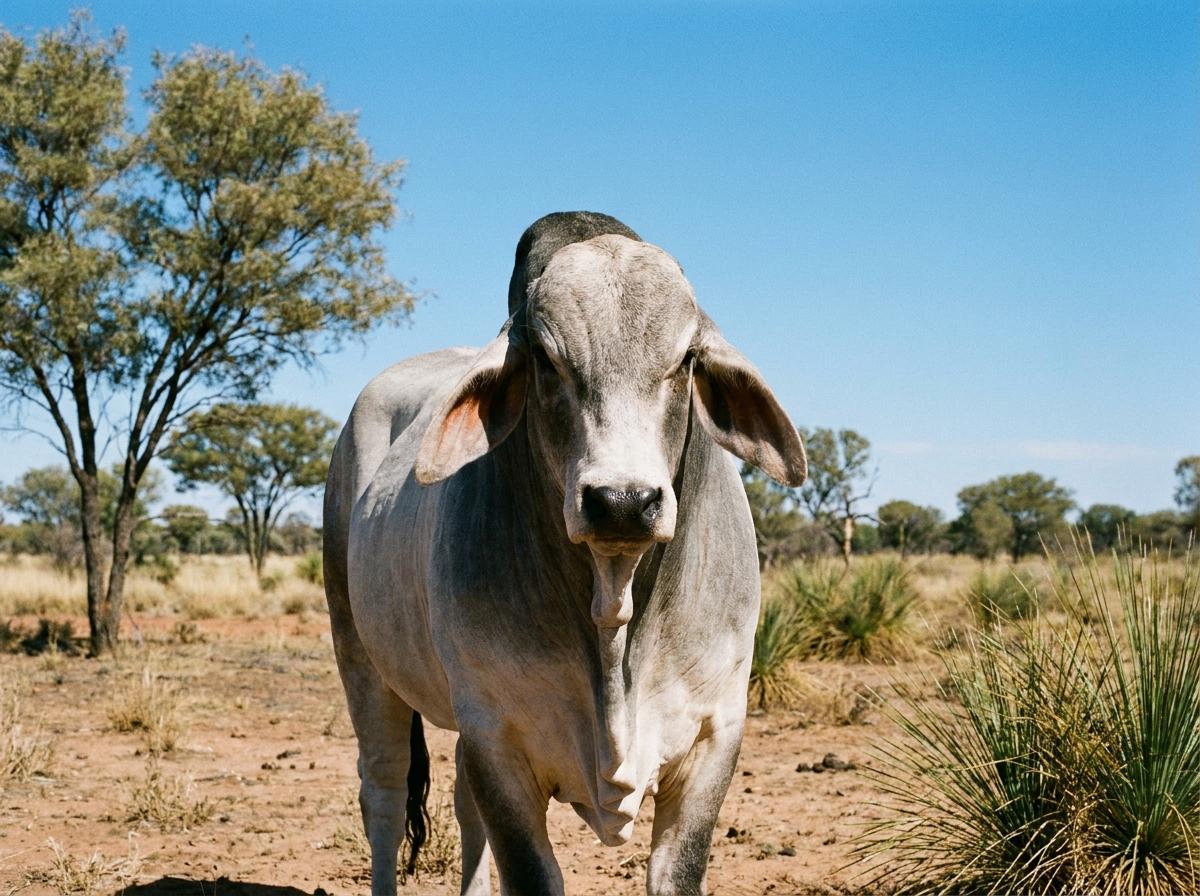
Indo-Brazilian cattle, more often called Indubrasil in Brazil, are a zebu breed developed in the early twentieth century from imported Indian cattle, especially Gir, Guzerá, and Ongole or Nelore-type ancestry. They are tall, humped cattle with loose skin, a strong dewlap, and very long pendulous ears, traits that make them easy to distinguish from European beef and dairy breeds. Coat color may be grey, white, red, or speckled. The breed was created for tropical ranching and has been used for beef production, crossbreeding, and some milk-oriented zebu composites.
Indubrasil cattle are best suited to warm-climate pasture systems where heat tolerance and ability to use coarse forage are useful. They still need shade, water, mineral supplementation, parasite control, and handling facilities sized for horned, heavy animals; mature bulls can be powerful and should not be treated casually. When selecting breeding stock, fertility, leg soundness, udder quality in cows, and temperament deserve as much attention as ear length or show-ring type. In cooler or more confined systems, managers may need to watch hoof condition, body condition, and shelter from prolonged wet cold.
Colors: Belted, Black, Black and White, Blaze Faced, Blue Roan, Brindle, Brockle Faced, Brown, Brown and White, Dun, Gray, Grey, Highbelt, Highpark, Lineback, Mottled, Pied, Red, Red and White, Red Roan, Riggit, Roan, Silver, Solid Black, Solid Red, Solid White, Speckled, Spotted, White, White Faced, Yellow