

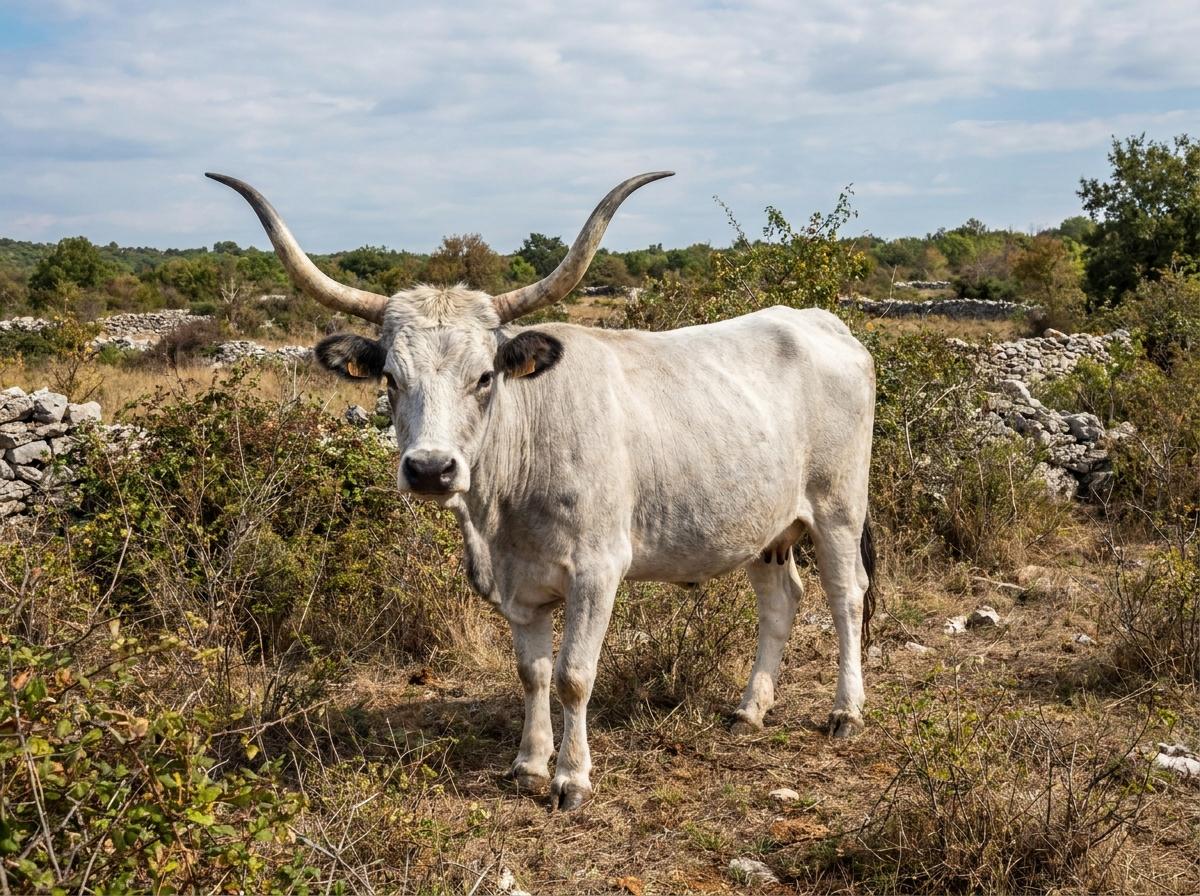
Istrian
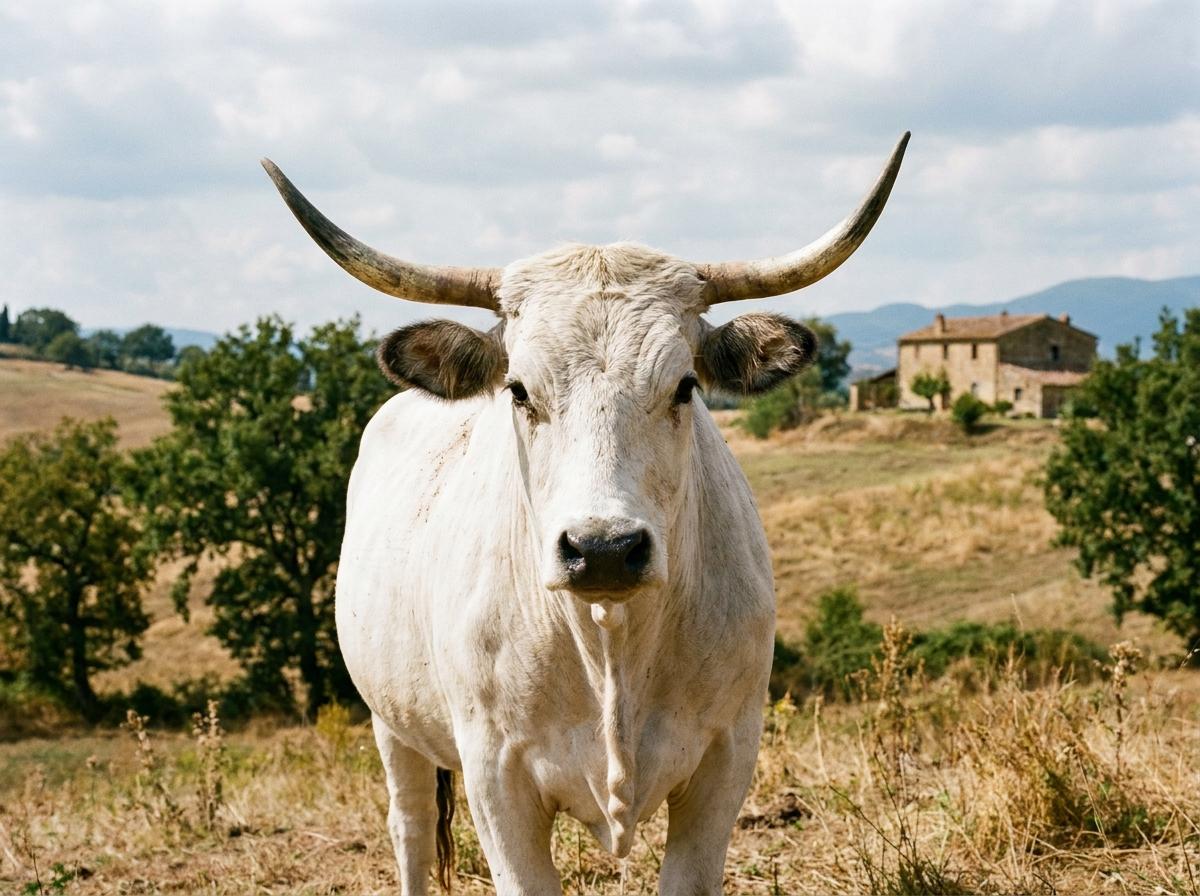
Istrian cattle are an indigenous grey cattle breed of the Istrian peninsula, known in Croatia as istarsko govedo and widely recognized by the traditional name boskarin. They belong to the Podolian type: tall, strong-framed animals with pale grey to whitish coats, darker shading around the muzzle and eyes, and long lyre-shaped horns. Historically, Istrian oxen were essential draught animals for plowing stony karst soils, hauling timber, and working vineyards and olive groves. As tractors replaced work cattle, the breed declined sharply, but it remains a strong regional symbol.
Today Istrian cattle are kept mainly for conservation, specialty beef, landscape grazing, and cultural demonstration rather than heavy farm work. They are slow-maturing compared with commercial beef breeds, so producers need patient finishing programs and access to rough pasture or hay suited to their traditional management. Horn size requires thoughtful fencing, handling facilities, and space, especially in mixed herds or visitor settings. Breed associations and conservation programs in Croatia, Slovenia, and nearby areas help maintain identity, record pedigrees, and connect farmers with markets that support this rare local cattle breed.
Colors: Belted, Black, Black and White, Blaze Faced, Blue Roan, Brindle, Brockle Faced, Brown, Brown and White, Dun, Gray, Grey, Highbelt, Highpark, Lineback, Mottled, Pied, Red, Red and White, Red Roan, Riggit, Roan, Silver, Solid Black, Solid Red, Solid White, Speckled, Spotted, White, White Faced, Yellow