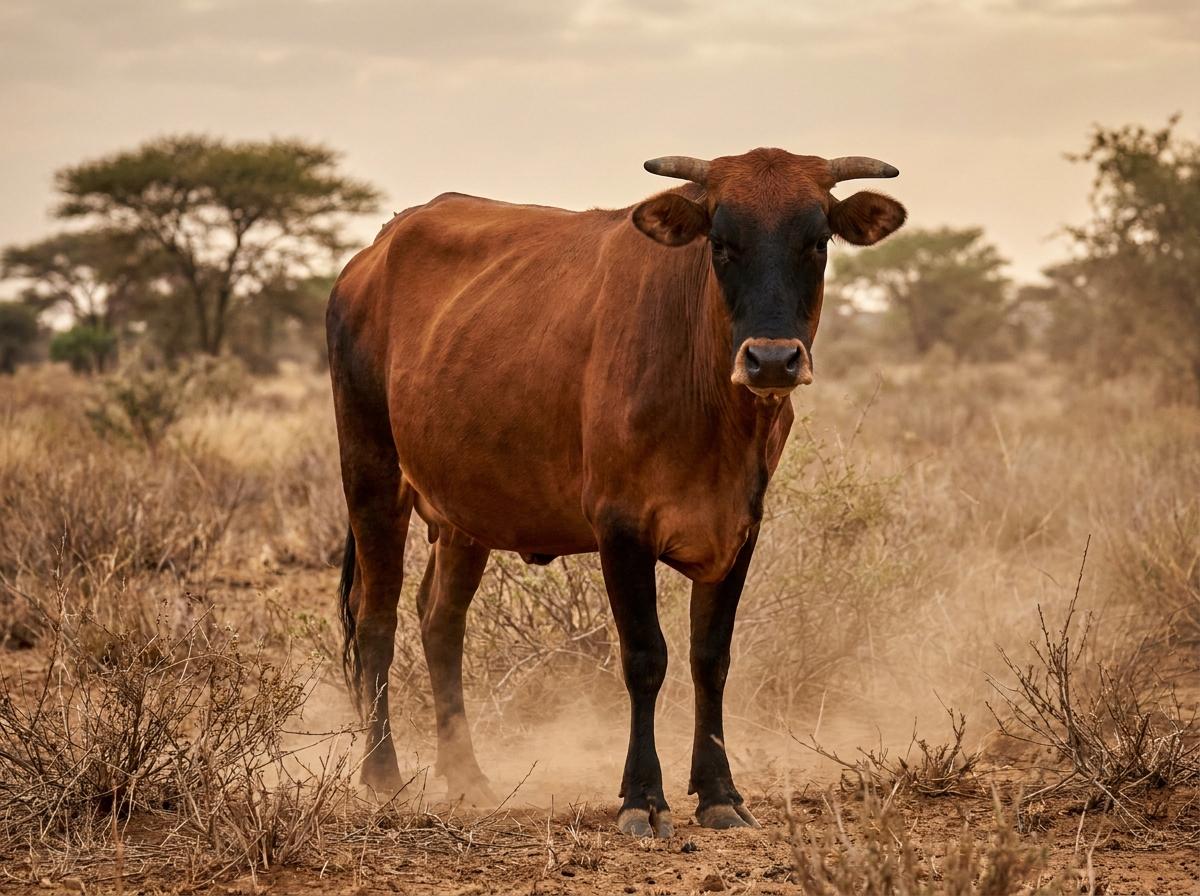
Kenana
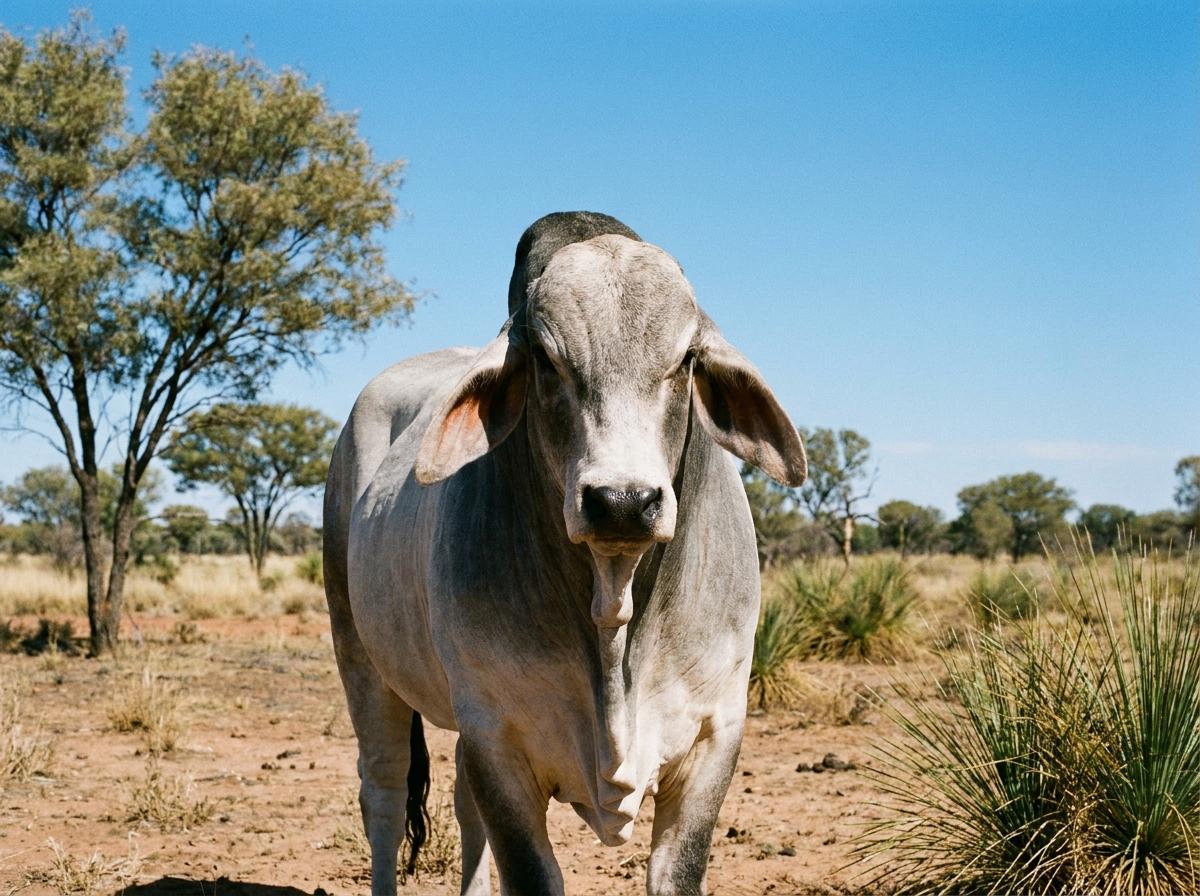
In Sudan, Kenana cattle form one of the important indigenous dairy zebu populations, especially in central areas between the Blue Nile and White Nile and adjoining grazing lands. They are large, humped cattle, commonly white to light grey, with loose skin, a prominent dewlap and the heat tolerance expected of indicine stock. Kenana cows have long been valued by pastoral and agro-pastoral communities because they can produce useful milk in hot dry country where imported dairy breeds often struggle. The name refers to a recognizable local population shaped by home-area selection, not just to any white Sudanese zebu.
Management usually combines grazing with crop residues, stored fodder and strategic concentrates for lactating cows. Reliable water is important, and shade, tick control and vaccination programs help protect production in high-temperature systems. Kenana cattle can suit smallholder dairies as well as larger tropical milk projects, although yields vary widely with feed and milking routine. Conservation and breeding work in Sudan has focused on preserving adaptation while improving milk performance, so buyers should distinguish well-bred Kenana cattle from general local zebu or indiscriminate crossbreds.
Colors: Belted, Black, Black and White, Blaze Faced, Blue Roan, Brindle, Brockle Faced, Brown, Brown and White, Dun, Gray, Grey, Highbelt, Highpark, Lineback, Mottled, Pied, Red, Red and White, Red Roan, Riggit, Roan, Silver, Solid Black, Solid Red, Solid White, Speckled, Spotted, White, White Faced, Yellow