

Maine-Anjou
Maine-Anjou is a French beef breed that reached North America in 1969 and became two different animals. In France it is registered as Rouge des Prés and finished slowly on grass for a protected beef designation. In the United States it is mostly a black, polled, percentage animal registered by the American Maine-Anjou Association, sitting underneath a large share of the club calf and jackpot show business. Both are honestly Maine-Anjou, and which one you are buying decides nearly everything else.
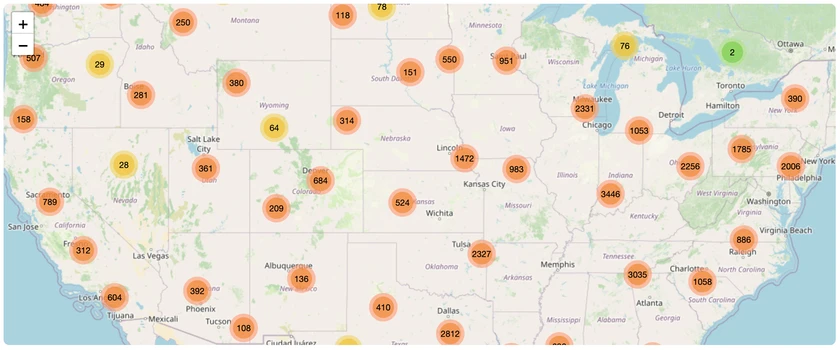
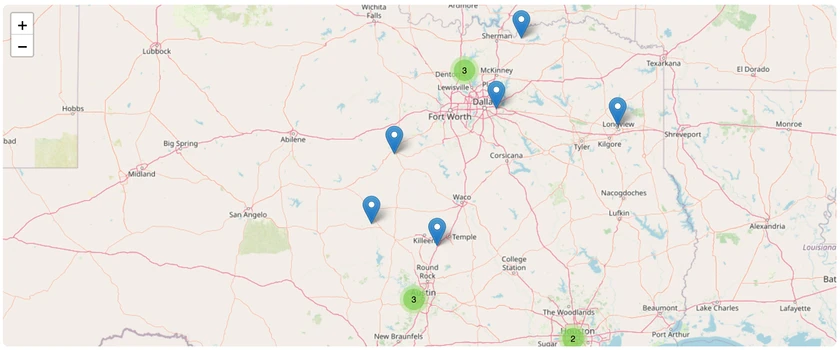
To see who raises them near you first, the Creatures breeder directory carries more than a thousand Maine-Anjou profiles across 43 states, heaviest in Iowa, Ohio, Indiana, Oklahoma and Texas.
One note on the name. Nobody in a show barn says the whole thing: the cattle are Maines, a lower percentage animal is a MaineTainer, and a Maine crossed onto Angus is a Maine Angus. Those are registration categories, not slang, each with its own colored papers.

Browse listings, public profiles, breeders, or add your animal.
What a Maine-Anjou actually is today
Start with the honest version, because it saves arguments later. A registered American Maine-Anjou is not necessarily a purebred anything. The association’s upgrading chart sets the floor at one quarter Maine-Anjou blood, and its registration rules state plainly that all beef and dairy breeds, or any crosses of them, may be used as foundation cows. The herdbook was built to absorb outside genetics and grade them up, and that is what breeders here did with it.
So the modern US animal is a composite on a French base, and most of the black cattle in a Maine show ring carry a substantial slug of Angus. None of that is a criticism: a percentage herdbook is a legitimate tool and it produced cattle that win, feed well and sell. It does mean a set of papers gives you a fraction, not a phenotype.
Origin: Mancelle cattle and a Durham bull
At the start of the nineteenth century the cattle of northwestern France were the Mancelle: large, well muscled, light red spotted with white, and known for fattening easily. The association quotes the agriculturist Laclere-Thouin writing in 1843 that on the community pastures of the Auge Valley the Mancelle “were the last to be put onto the grass, but were the first to be picked out to go to the markets in the capital city.”
In 1839 the Count de Falloux imported Durham cattle, the English Shorthorn, and crossed them onto Mancelle cows. By 1850 Durham-Mancelle cattle were taking championships at French agricultural fairs. The breeders organized in 1908 at Château-Gontier in the Mayenne and renamed themselves the Society of Maine-Anjou Cattle Breeders in 1909, after the two river valleys. That comes from the association’s own breed history.
The French breed grew up dual purpose on small farms, and the association notes that on many French farms half the cows are still milked while the other half raise two calves each. That is a very different starting point from a terminal sire breed, and it is why the old type carries more middle, more milk and a heavier mature frame than a modern American show animal.
The first Maine-Anjou reached Canada in 1969 and entered the United States largely through artificial insemination. The registry was incorporated in Nebraska that year and took its present name in 1976.
The French breed is now called Rouge des Prés
If you searched for why the name changed in France, the beef itself became the protected thing. “Maine-Anjou” is now a European protected designation of origin for meat, and the live cattle are registered as Rouge des Prés so the food name and the breed name do not collide.
The specification is public and specific. In the product specification published in the Official Journal of the European Union, the animals must be Rouge des Prés, the sire has to be a bull entered in the Rouge des Prés herdbook, and animals showing muscular hypertrophy, the double muscling gene, are excluded outright. Eligible carcasses come from cows under ten that have calved at least once, or castrated males over 30 months, at 380 kg minimum for cows and 400 kg for males, all born, raised and slaughtered inside a defined zone across eight French departments.
Set that beside the American picture. France protects a heavy, slow-finished, well-marbled grass animal and legally shuts double muscling out of it. The United States registers a percentage composite selected largely for muscle expression and show ring type. Same breed name, opposite ends of the same idea.
Size, color and the black question
The association publishes mature weights of 2,200 to 3,100 pounds for bulls and 1,500 to 1,900 pounds for cows. Treat those as what a high percentage animal can reach, not a promise about the half-blood heifer in the sale barn. Frame is the breed’s most consistent trait: long bodied, deep ribbed, big hipped, tall, heavy boned.
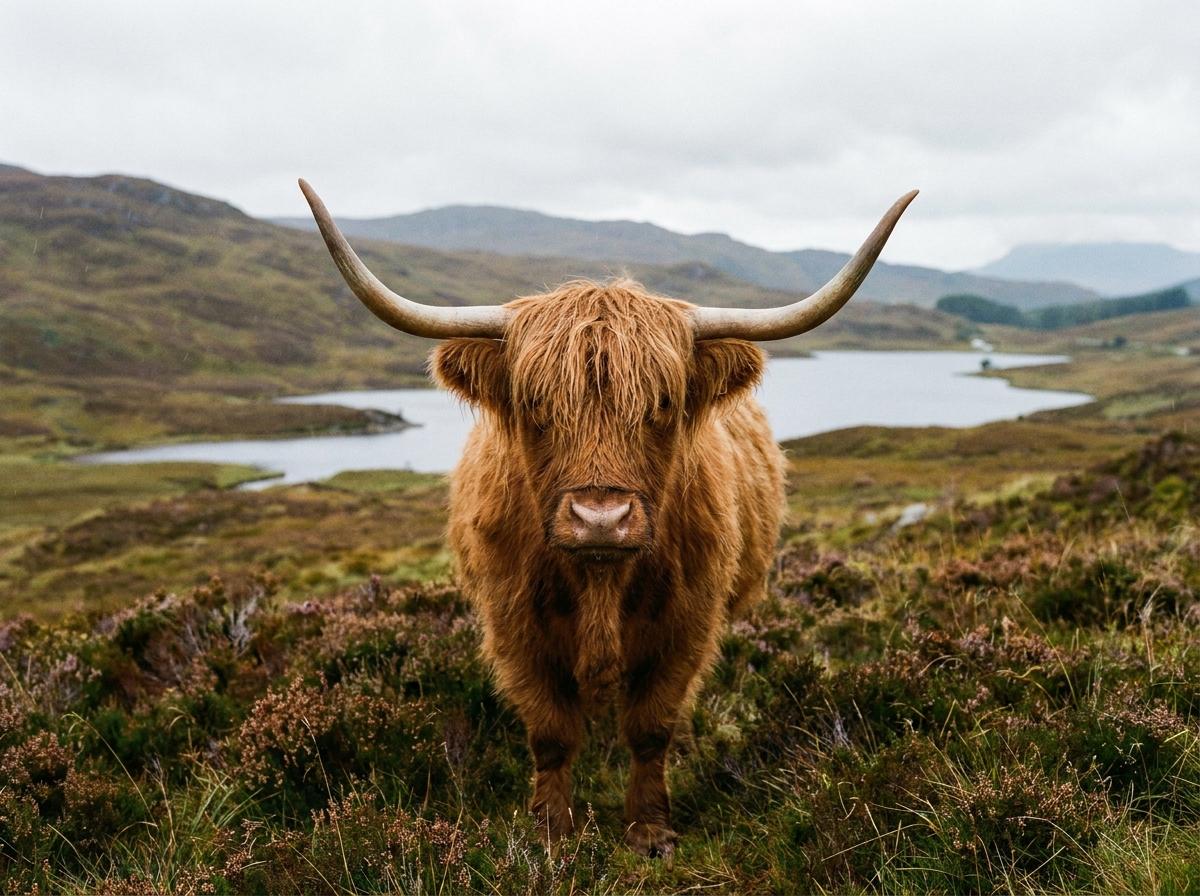
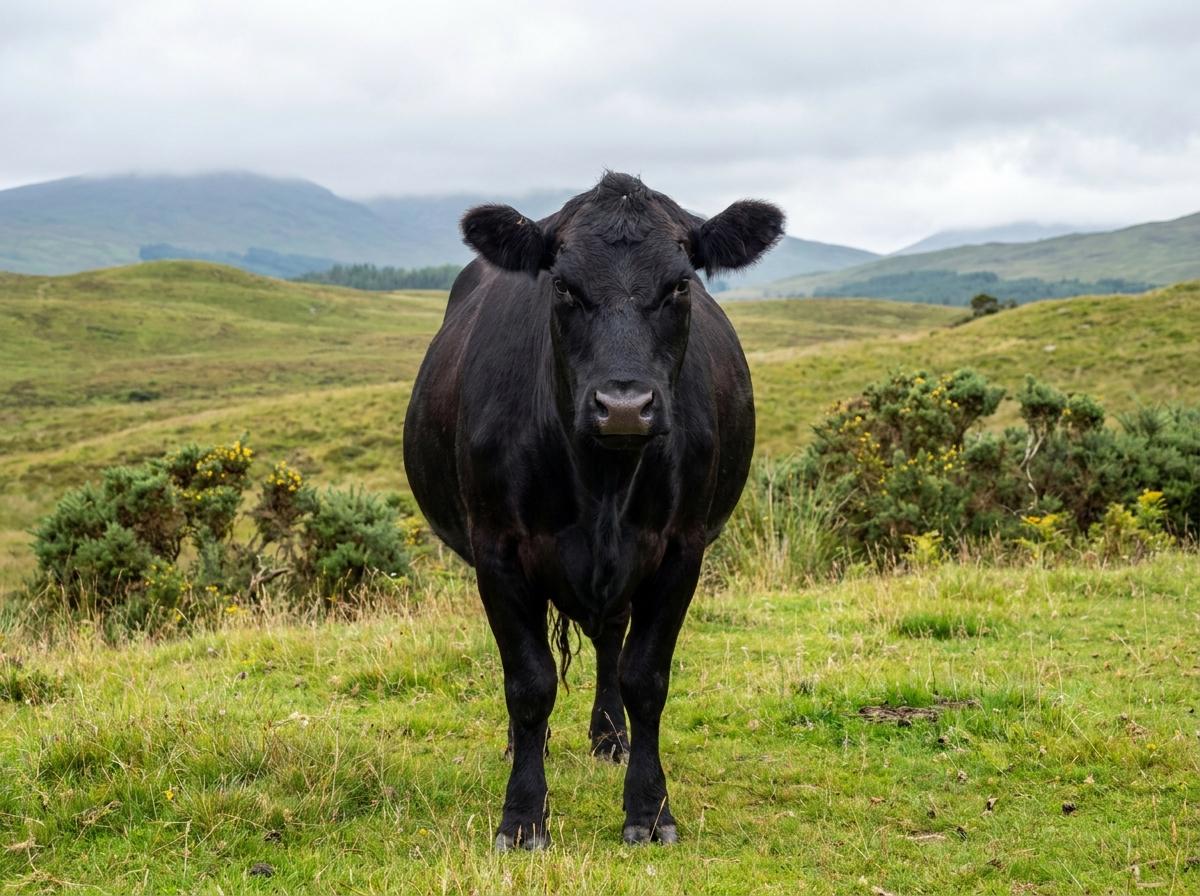
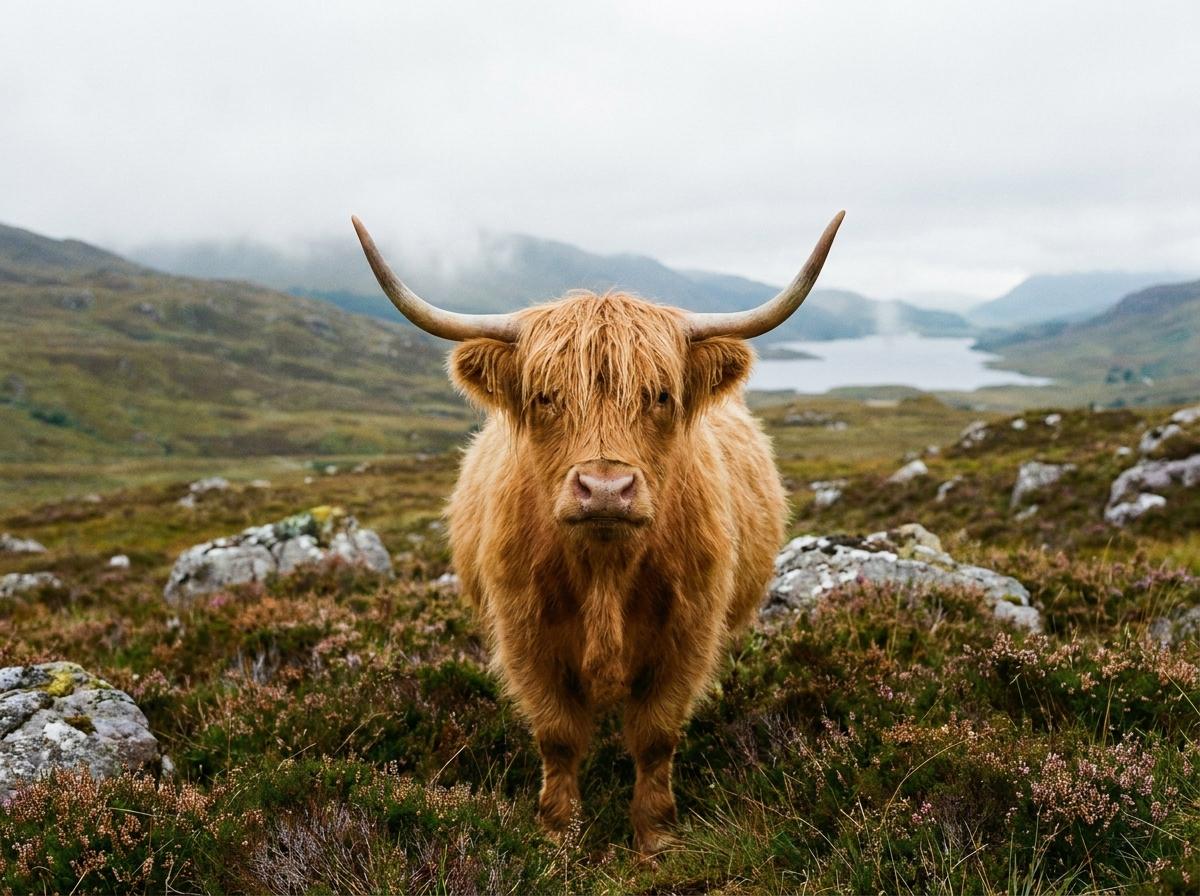
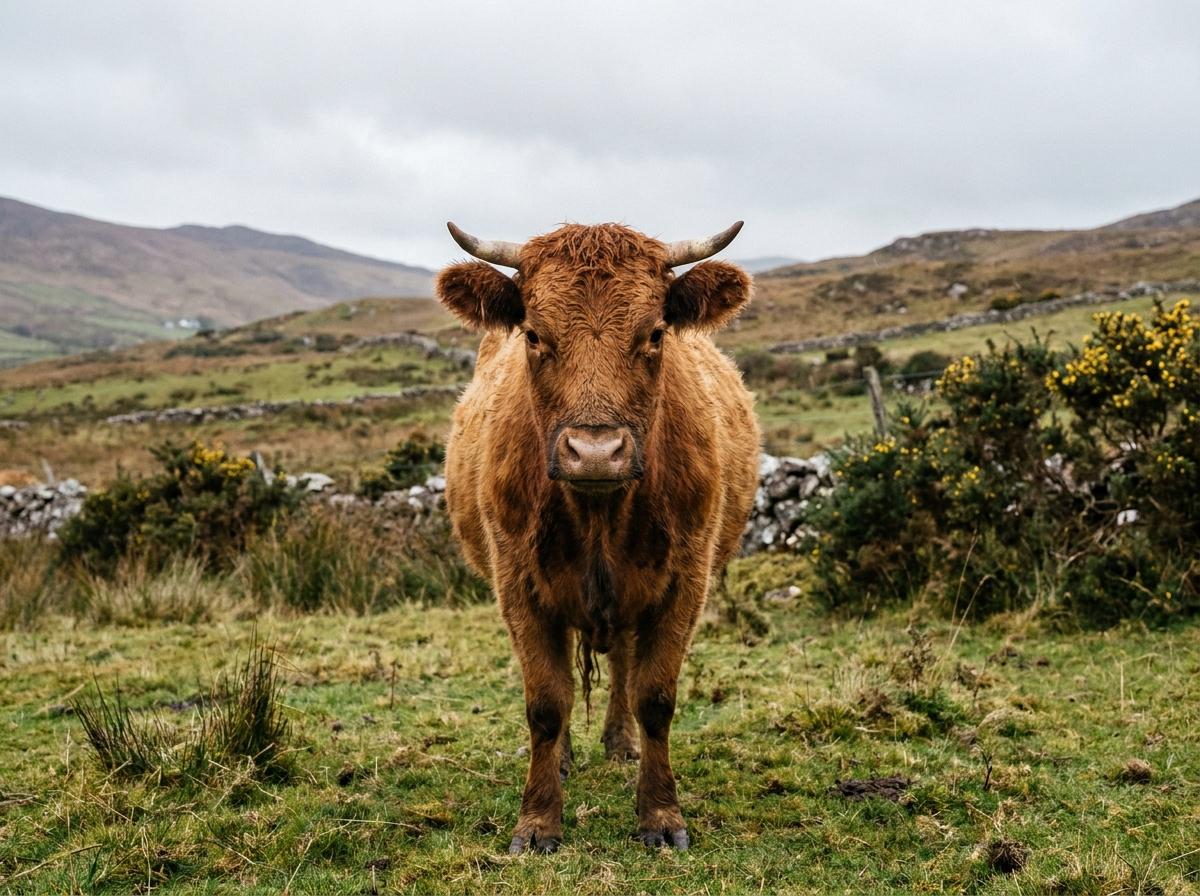
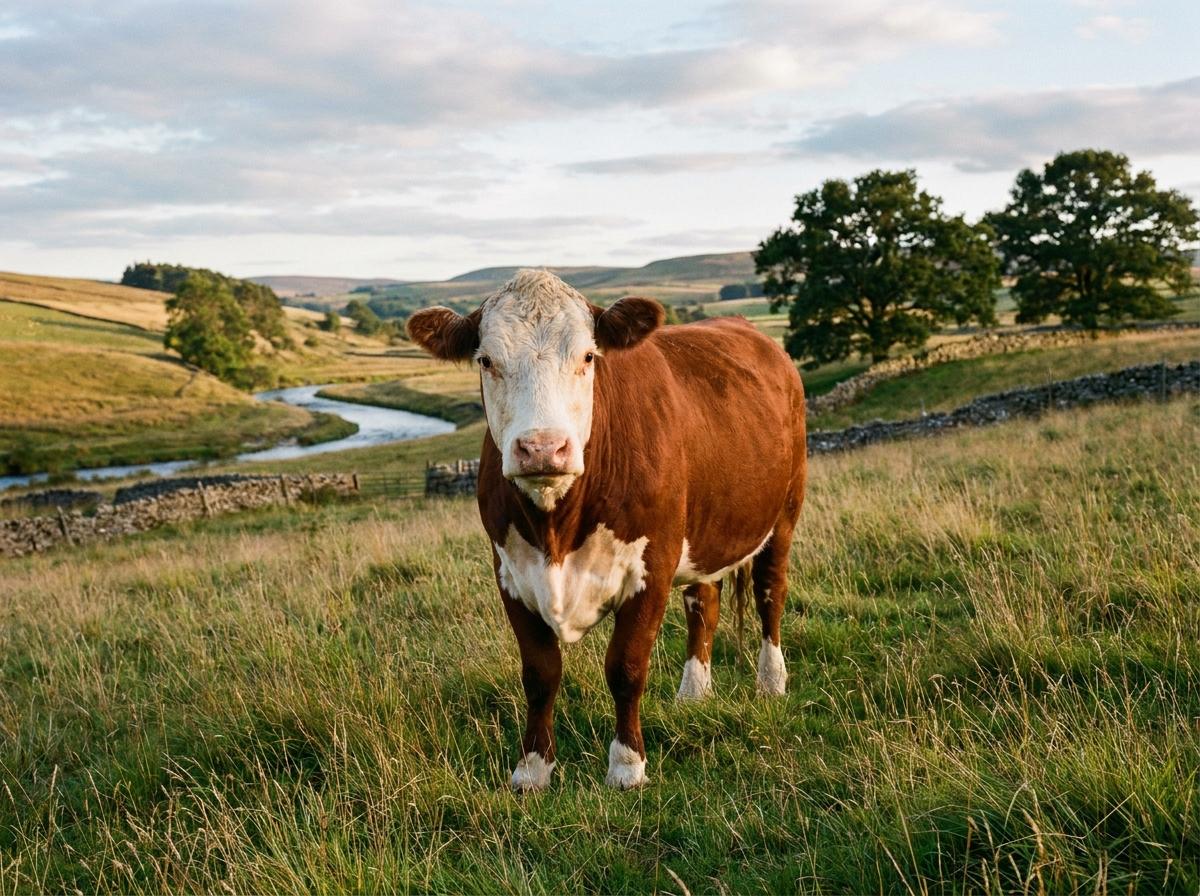
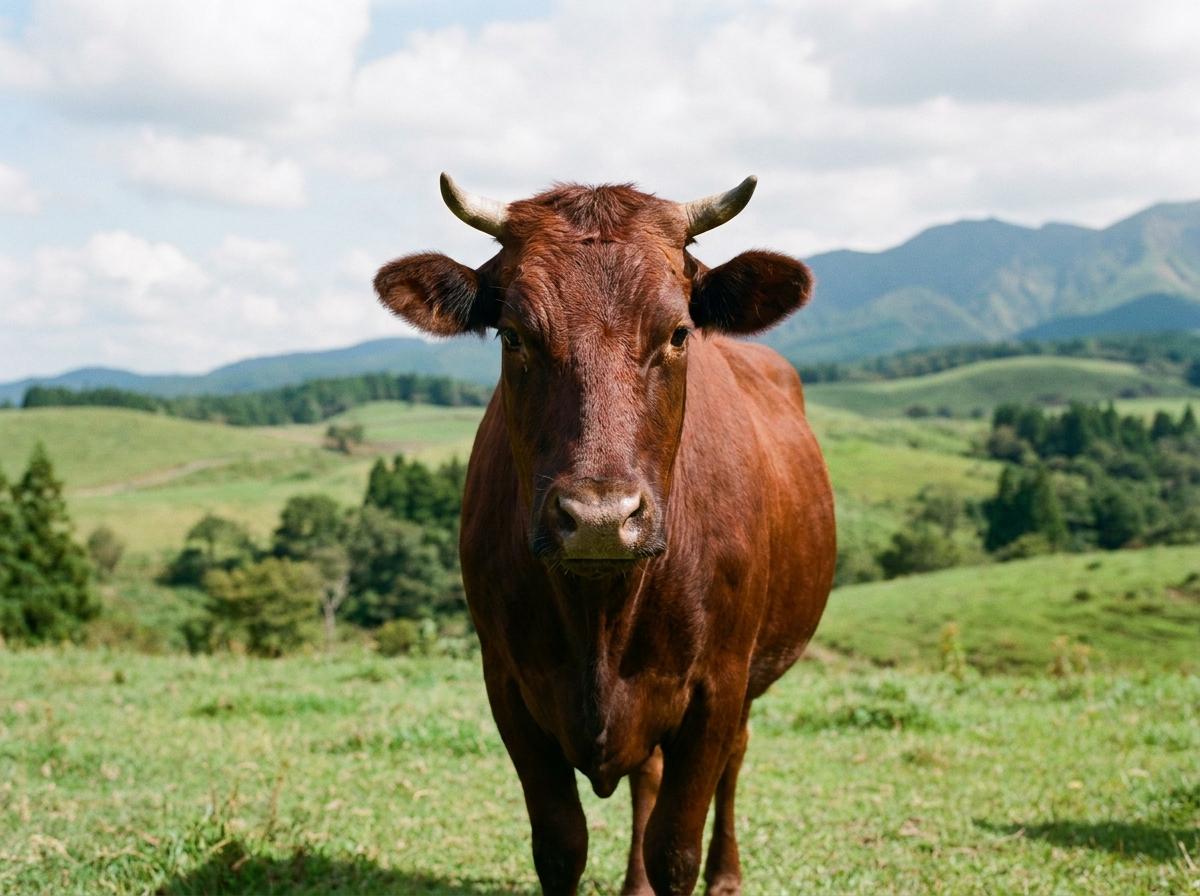
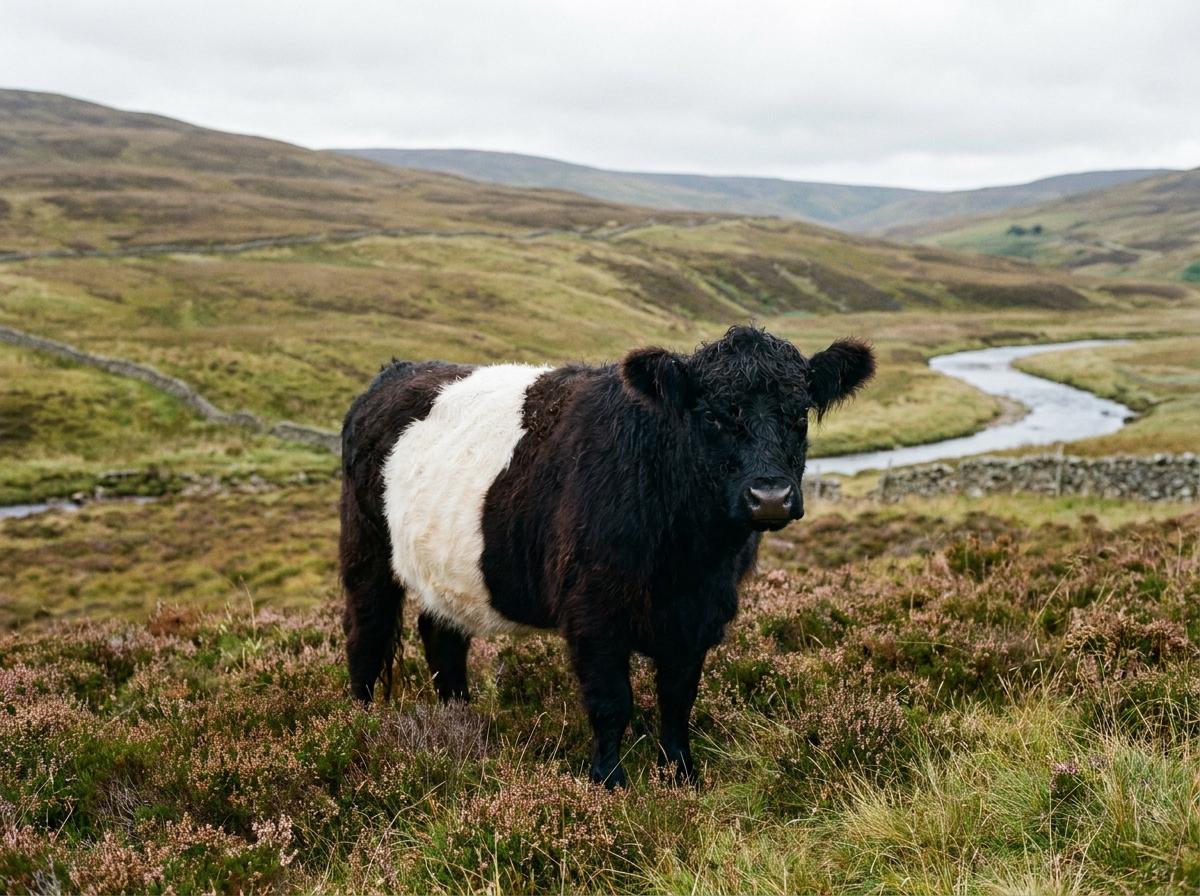
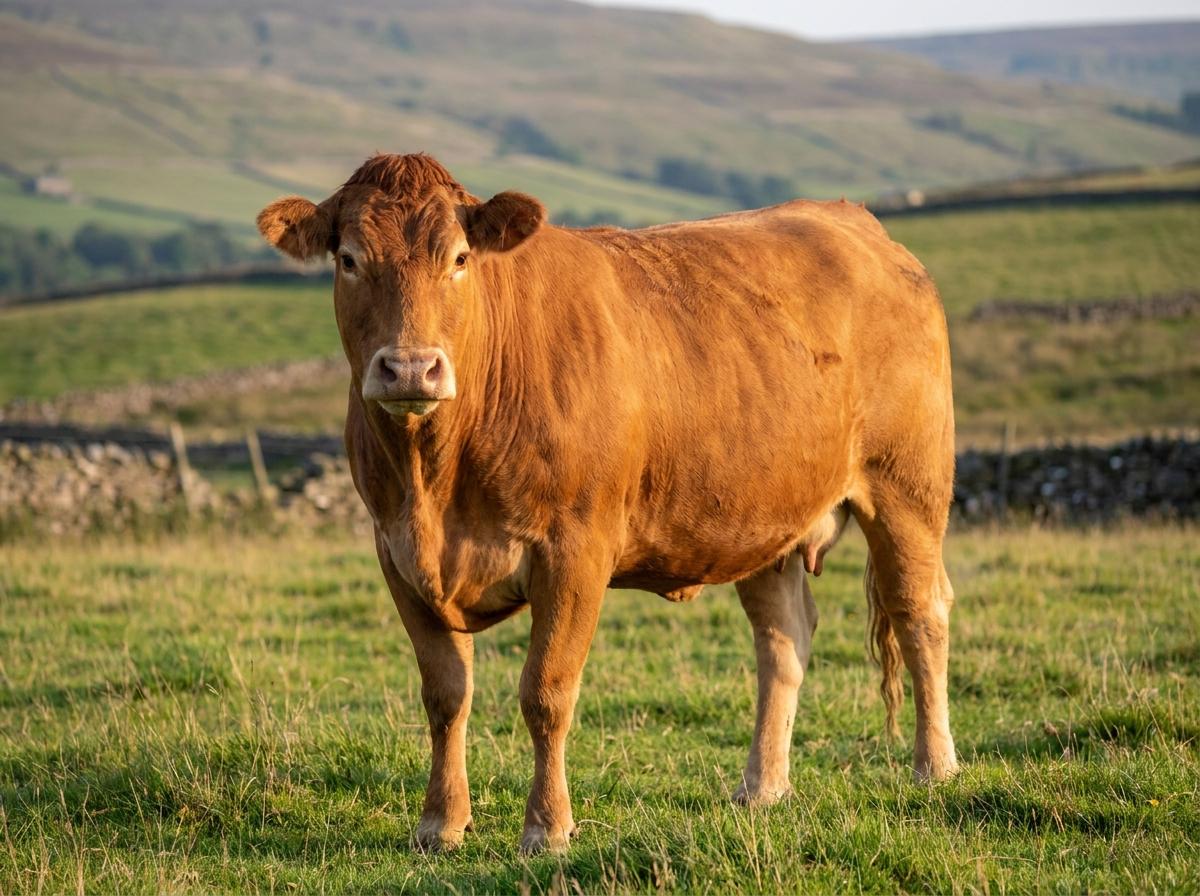
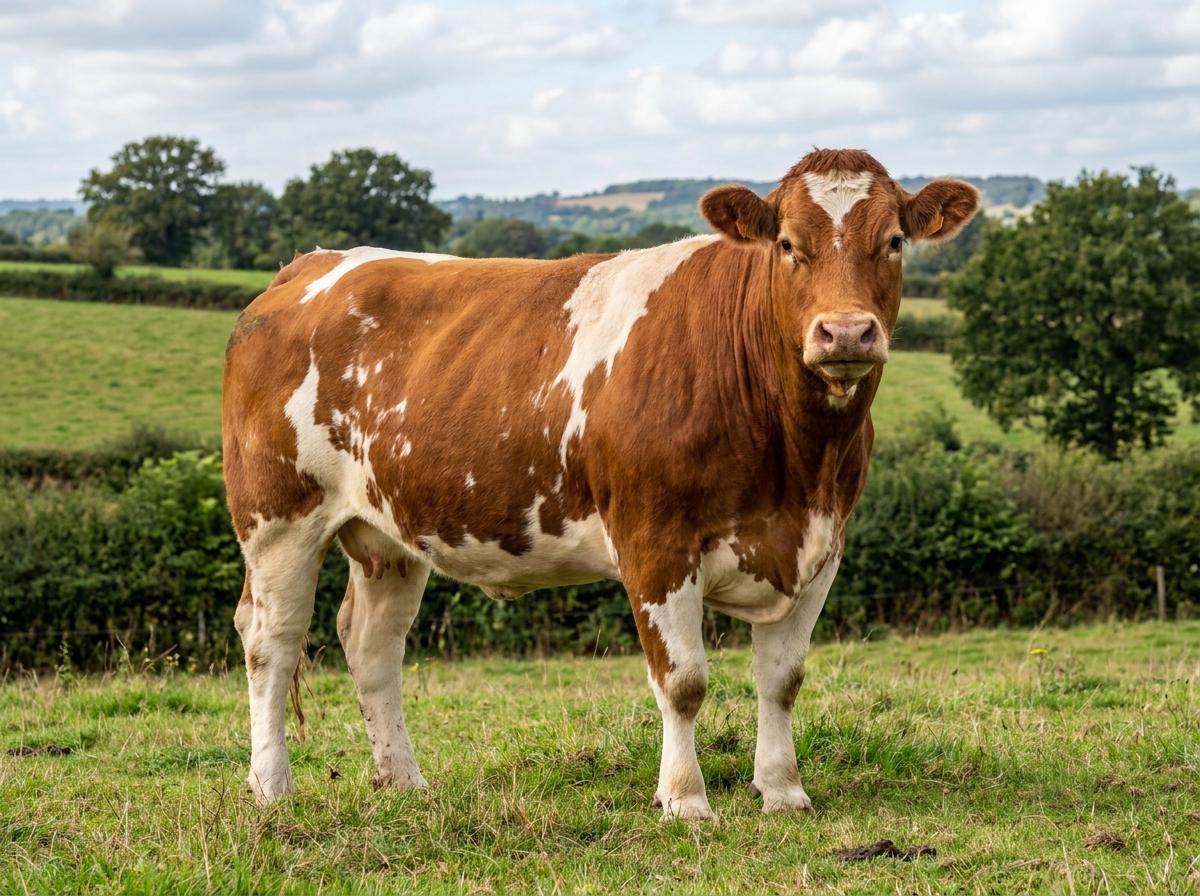
Color changed most, and the association describes the change without dressing it up. The original pattern is very dark red with white on the head, belly, rear legs and tail. The AMAA’s own FAQ says those markings still show in full blood cattle today, and that modern Maine-Anjou are primarily black.
“Primarily” is understating it. We counted the association’s Fall 2025 proven sire list, the bulls with enough progeny to carry real accuracy. Of 179 distinct bulls, 176 are recorded black or black with white markings. Exactly two are red or red with white markings, and both are the only two full bloods in the list. Horn status runs the same way: 149 polled, 26 scurred, 4 horned.
The shift is not mysterious. Black hides and polled heads carry a premium in American cattle feeding, so Maine breeders crossed to Angus, kept the muscle and the frame, and let the horns and the white face go. The registry never required a color and still does not for Maine-Anjou or MaineTainer papers.

How the percentage herdbook works
This is the section most buyers need and few pages explain. The AMAA’s current upgrading chart sorts registered animals into three paper types, and the color of the certificate tells you the fraction at a glance.
- High Maine, brown papers. Three quarters (75 percent), seven eighths (87.5 percent, which the rules define as purebred), and 100 percent, full blood. Full blood means the animal traces completely to Maine-Anjou ancestors with no fraction of any other breed.
- MaineTainer, green papers. One quarter (25 percent), three eighths, one half and five eighths (62.5 percent). This is the working middle of the breed and where most club calf genetics live.
- Maine Angus, blue papers. Three eighths to five eighths Maine-Anjou with three eighths to five eighths registered Angus or Red Angus. Both parents must be registered with the AMAA, the American Angus Association or the Red Angus Association of America, and the animal can carry no more than one eighth unregistered or other-breed blood. Maine Angus is not a fourth rung on the percentage ladder. It is a branded overlay on the MaineTainer fractions, which is why the chart says the blue certificate is still marked “MaineTainer” in the center, with a Maine Angus logo in the top right corner.
Some rules underneath that matter before you write a check. Twenty five percent is the floor to register anything, but it is not a floor you can reach from any two parents. To register a 25 percent animal, either the sire or the dam must be a registered Maine at 50 percent or higher, or both parents must be registered Maine-Anjou at 25 percent or higher each. The association also states plainly that it does not recognize Maine-Anjou percentages issued by any other association, which is a live trap if you are bringing in cattle from another continental herdbook: the fraction on their papers does not carry over. Any animal not registered with the AMAA counts as commercial. Steers get an easier path than breeding stock: they can be registered at 25 percent and out of a commercial sire, which is precisely why so much Maine blood turns up in show steers whose dams were never papered.
Maine Angus is the one category with a real color rule: predominantly solid black or red, white only on the underline and the switch of the tail, feet and legs solid. An animal registered Maine Angus that fails that standard is reverted to a MaineTainer registration.
So ask what color the papers are and what the fraction is, before you look at the animal. A 25 percent MaineTainer and a full blood are both correctly called Maine-Anjou, and they will not do the same job in your herd.
Calving ease and birth weight, honestly
Continental beef breeds carry a reputation for hard calvings and Maine-Anjou inherited it, but the current data does not really support it.
The most useful number is not an EPD but the breed of sire mean from the USDA’s Meat Animal Research Center at Clay Center, Nebraska, which mates sires of every major breed to common cow herds and weighs the resulting calves. In the 2026 across-breed table, Maine-Anjou sired calves born in 2024 averaged 86.6 pounds at birth, against 84.9 for Angus and 84.2 for Red Angus. Maine-Anjou came in lighter than Hereford at 87.0, Simmental at 87.2, Shorthorn at 89.0 and Charolais at 89.7, seventh lightest of the eighteen breeds in that table. The modern American Maine-Anjou sire is a moderate birth weight animal, roughly a pound and a half over Angus, and the reputation is a generation out of date.
There is real range to select inside. The association’s breed average EPDs for non-parents, as of December 2024, put Maine-Anjou at a calving ease direct value of 6 with a birth weight EPD of 1.6, and MaineTainers easier at 9 and 1.3. Bulls at the top of the Fall 2025 proven sire list run calving ease direct in the teens with birth weight EPDs from about minus 6.5 to plus 2.9.
Three cautions before you use any of those numbers.
- EPDs are within-breed. The AMAA runs its own national cattle evaluation, so a Maine-Anjou birth weight EPD and an Angus one sit on different bases and cannot be read side by side. To compare them you add the USMARC across-breed adjustment factor, which for 2026 is 1.6 pounds of birth weight for Maine-Anjou against an Angus base of zero. The USDA-ARS fact sheet for the 2024 edition explains the method, which has not changed. Its tables carry 2024 numbers rather than the 2026 ones quoted here, so read it for the method and take the figures from the current table.
- Accuracy matters more than the number. A yearling bull with a flattering birth weight EPD and low accuracy is a guess. A proven sire with hundreds of progeny behind him is a measurement.
- Heifers are their own decision. Use calving ease direct rather than birth weight on first calf heifers, and nothing on a web page substitutes for your veterinarian’s read of your own heifers.
The association asks members to report birth weights and calving scores on every calf, registered or not, which is how these numbers stay honest.

Growth, carcass and what the data shows
The same USMARC table carries a second story, less flattering than the marketing.
For 2024 born calves, Maine-Anjou sired progeny averaged 488.5 pounds at weaning and 884.2 pounds at yearling, both the lowest of the eighteen breeds in the table. Those two have been lowest for several runs. Maternal milk at 507.6 pounds is also lowest in the 2026 table, but only by a single pound, and only since this year: in the 2025 table Maine-Anjou milk was 509.9 and sat third from bottom. Treat weaning and yearling as a standing fact and the milk ranking as a figure that moves. Carcass weight at 848.1 pounds sits near the bottom. The carcass profile is where the breed earns its keep: ribeye area at 14.22 square inches is fourth largest of the eighteen, behind only Charolais, Limousin and Simmental, and backfat at 0.477 inches is the leanest figure in the table. Marbling at 5.16 is near the bottom.
That describes a lean, heavily muscled, moderate growth animal: a red meat yield breed rather than a growth curve or marbling breed. Crossing it for pounds of saleable lean on a British-based cow herd is genuine complementarity, and it is the case the association makes for Maine Angus. If you are chasing weaning weight or a Prime grid, this is not the tool.
One qualification: USMARC evaluates the sires breed associations nominate, so this describes the American bulls actually in use, shaped by show ring selection. It does not describe the French Rouge des Prés.
Maternal traits and temperament
Maine-Anjou females carry a good working reputation: milky by British standards, plenty of capacity, long productive lives, enough frame to raise a big calf. Some of that traces to the dual purpose era, when these cows were milked. Hold the caveat above, though: in the 2026 USMARC table the maternal milk figure for Maine-Anjou sired daughters is the lowest of the eighteen breeds, by one pound. Temperament is not measured in the across-breed program at all, so the calm disposition the association names as a breed strength is practitioner observation. It generally holds up, and bloodline and handling matter far more than breed does.
Frame is the maternal trade-off nobody mentions in a sale catalog. A 1,700 pound cow eats like a 1,700 pound cow. If your forage base was built around 1,200 pound females, a high percentage cow herd will find the bottom of your hay pile sooner than you expect, and percentage females are often the better fit for that reason alone. Whichever you buy, feed to the frame you bought: underfeeding a large framed female does not turn her into a small framed one, it turns her into a thin one that breeds back late. There is also no reliable breed-specific lifespan figure: productive life turns on feet, udder, fertility and management long before breed.
Genetic conditions to ask about
Two recessive defects are closely associated with this breed, both testable, so there is no excuse for buying blind. Pulmonary hypoplasia with anasarca (PHA) produces a stillborn calf with severe fluid swelling and undeveloped lungs, and can put the cow at risk during delivery. Tibial hemimelia (TH) produces severe skeletal deformity of the hind limbs. Both are simple recessives, so two clean-looking carrier parents can produce an affected calf.
The AMAA has run a formal abnormality policy since February 2006 requiring AI sires, donor dams and cloned animals to be tested, and the policy names PHA and TH as its initial focus. The current registration requirements go further: any bull calf registered after 1 January 2014 must be free by pedigree or tested free of TH and PHA to register at all, animals neither tested nor clear by pedigree are flagged as possible carriers in the association’s online herdbook, and an animal that exhibits a genetic defect cannot be registered. Note that the rule turns on the registration date rather than the birth date, so an older bull being papered now is caught by it.
So check it yourself before you bid. Get the registration number, look the animal up in the searchable herdbook, and check both parents. If a seller will not produce that, treat it as your answer.
Show cattle, junior programs and the jackpot circuit
The AMAA runs four separate breed divisions: Full blood, Maine-Anjou, Maine Angus and MaineTainer. Points are tallied separately for each, so an animal shown as a Maine Angus at one show and a MaineTainer at another accumulates two separate totals. Qualifying shows start at state fairs hosting a Maine-Anjou division, with double points at the majors. The American Junior Maine-Anjou Association runs a week-long National Junior Heifer Show that moves location each year.
One thing follows for anyone buying a show prospect. Decide up front whether you want a female who will still work in a commercial herd in four years or one built for a summer of jackpots, because those are different animals from different people.
Day to day management
Most of what these cattle need is ordinary husbandry for a big continental breed, and the Creatures cattle species page covers it. Two points belong to this breed in particular.
- Heat. A black hide in an Oklahoma July absorbs far more heat than a red one, and clipped show cattle lose some of their own defense. Shade, moving air and clean water are not optional in the southern half of the range. That is the running cost of the color change the breed made.
- Records. Percentage, paper color, defect status, birth weights and calving scores all matter more on this breed than on most, and none of them survives in memory.

Cost, availability and what to check
Maine-Anjou is not rare in North America. Price varies enormously, because the label covers everything from a quarter-blood club calf to a proven full blood herd sire, and we will not invent a figure. Two structural points hold: traditional red-and-white full blood genetics are scarcer and dearer here than black Angus-influenced cattle, and semen from proven AI sires is the cheapest route into the breed’s best genetics.
- Read the papers before the animal. Brown, green or blue, and what fraction.
- Check PHA and TH status on both parents, by test or pedigree, in the association’s herdbook rather than on the seller’s word.
- Match frame to feed. Be honest about your forage base before you buy females that need more than you have.
- Ask what the animal was bred for. A show-first program and a commercial terminal program produce different cattle.
Stock moves through private treaty, association sales and the show circuit more than through open listings, so it pays to be visible to sellers rather than only to browse. Check current cattle listings on Creatures, and set a free alert below so a listing finds you.
Frequently asked questions
Are Maine-Anjou cattle red or black, horned or polled?
Traditionally dark red with white on the head, belly, rear legs and tail switch, and horned. American cattle are now overwhelmingly black and polled. The counts off the association’s own proven sire list are in “Size, color and the black question” above.
What is a MaineTainer, and what percentage do you need to register?
A MaineTainer is a registered percentage animal between 25 and 62.5 percent, on green papers, unless it also qualifies for the Maine Angus program, which puts the same fractions on blue papers instead. Twenty five percent is the minimum to register anything, seven eighths or higher registers as purebred, and 100 percent with no other breed in the pedigree is full blood.
Do Maine-Anjou cattle have big birth weights?
Less than the reputation suggests, and calving ease sires with negative birth weight EPDs are readily available in the breed. The USMARC comparison against Angus, Hereford, Simmental, Shorthorn and Charolais is in “Calving ease and birth weight, honestly” above.
Why is the breed called Rouge des Prés in France?
Because “Maine-Anjou” became the protected designation of origin for the beef itself, so the live cattle are registered as Rouge des Prés instead. The EU specification is covered above.
Related reading on Creatures
Compare breeds on the Creatures cattle species page. For what a very different beef animal costs to keep, read the Highland cow cost guide, and for the same size-versus-efficiency argument in another species, the Poland China pig breed guide.
Do this next on Creatures
Researching the breed, hunting a show prospect, or already running Maine-Anjou females, Creatures is the records, marketplace and directory layer for it.
Find breeders. Search trusted farms in the Creatures breeder directory, more than a thousand Maine-Anjou profiles across 43 states.
See what is for sale. Browse Maine-Anjou cattle on the marketplace, and learn saving searches and using your watchlist.
Get told when one is posted. Set a free Maine-Anjou listing alert and we will email you when a listing goes up. No account needed to start.
Add your cattle. Create a free animal profile and record the percentage, paper color and pedigree in one place. Walkthrough: adding an animal to Creatures.
Keep the calving records. Log birth weights, calving scores, treatments and test results. The sheet opens for any visitor, and a free account saves what you enter. See adding a record.
List your operation. Selling bulls, bred heifers or club calves? Create a free breeder profile, then read getting listed in the breeder directory and creating an organization.
Sell with confidence. Before listing, read how seller payout works.