

Vosgienne
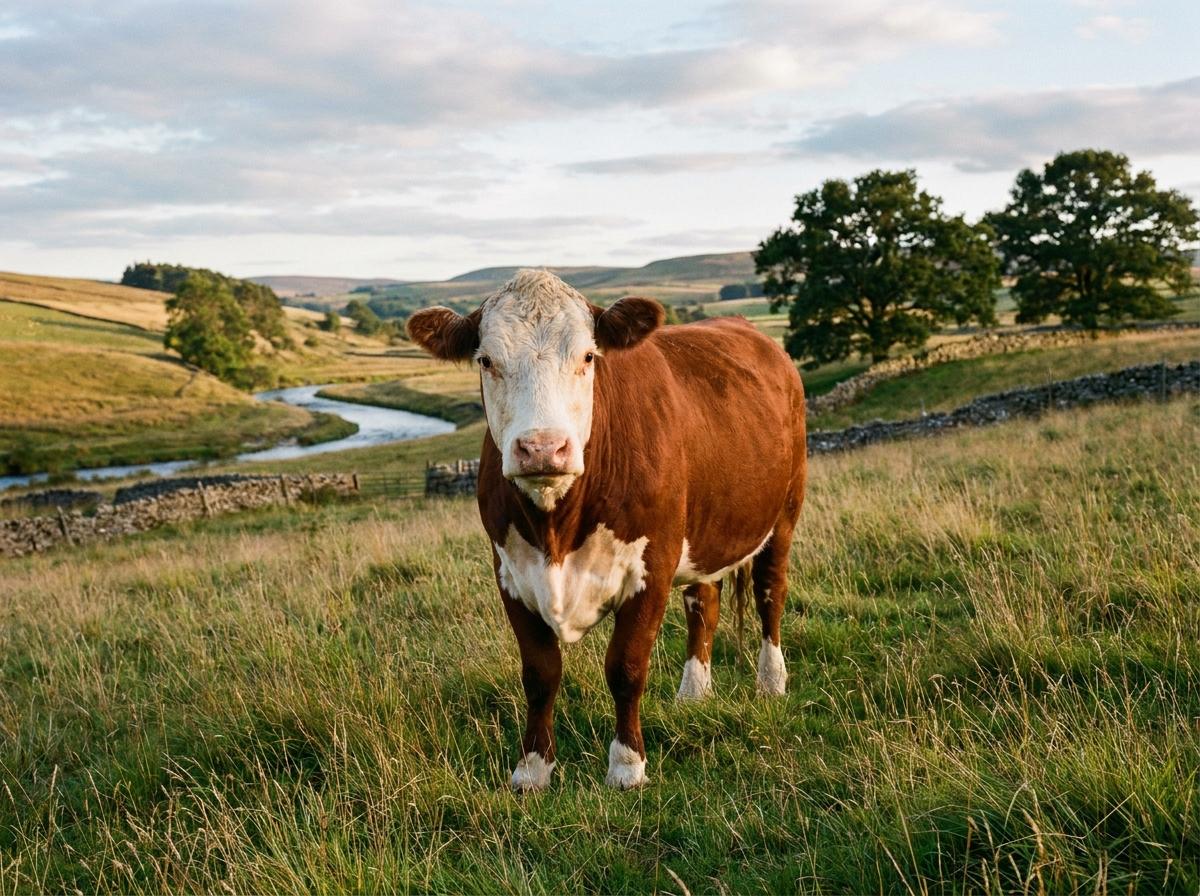
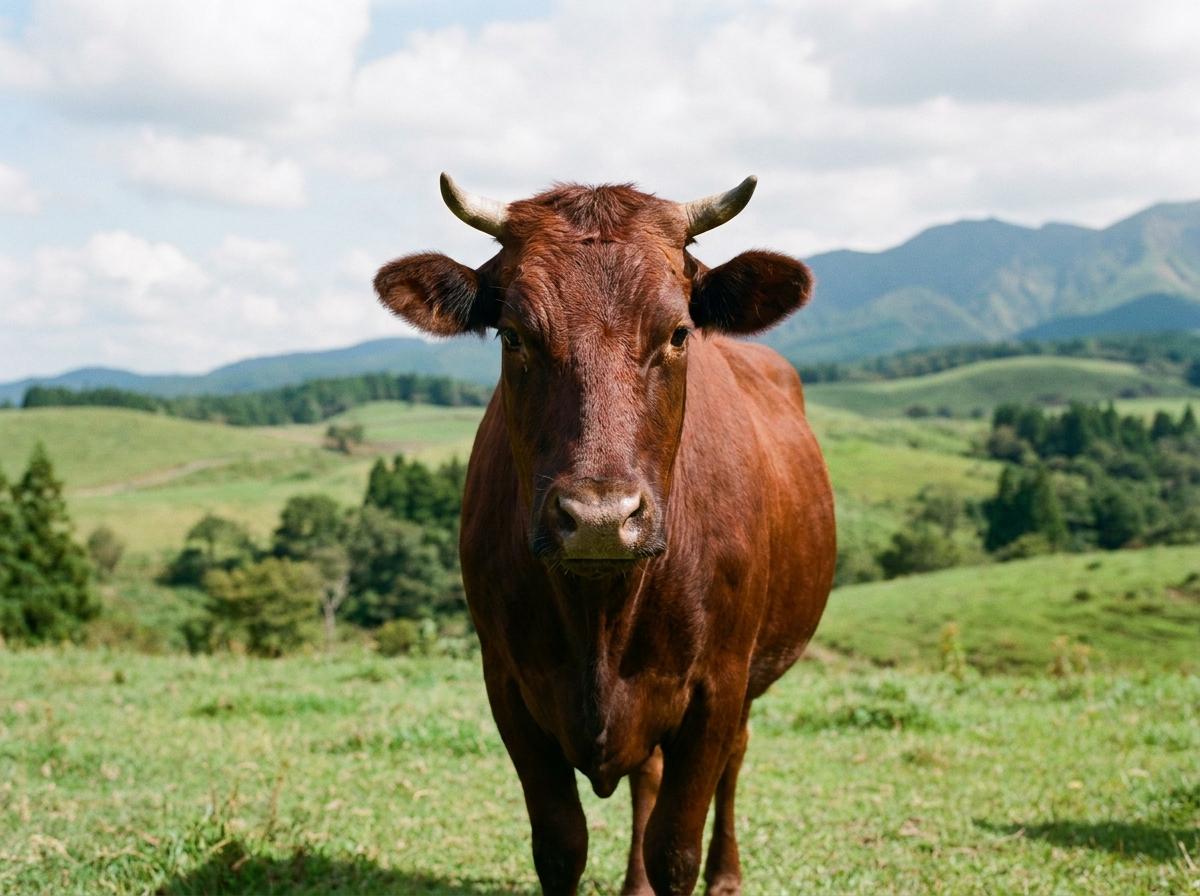
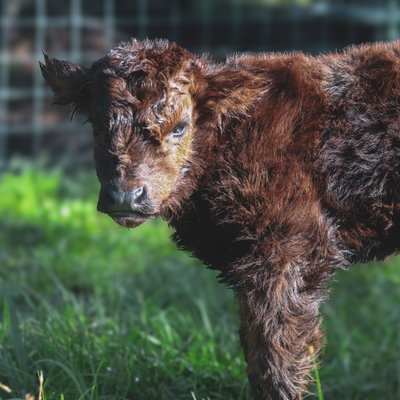
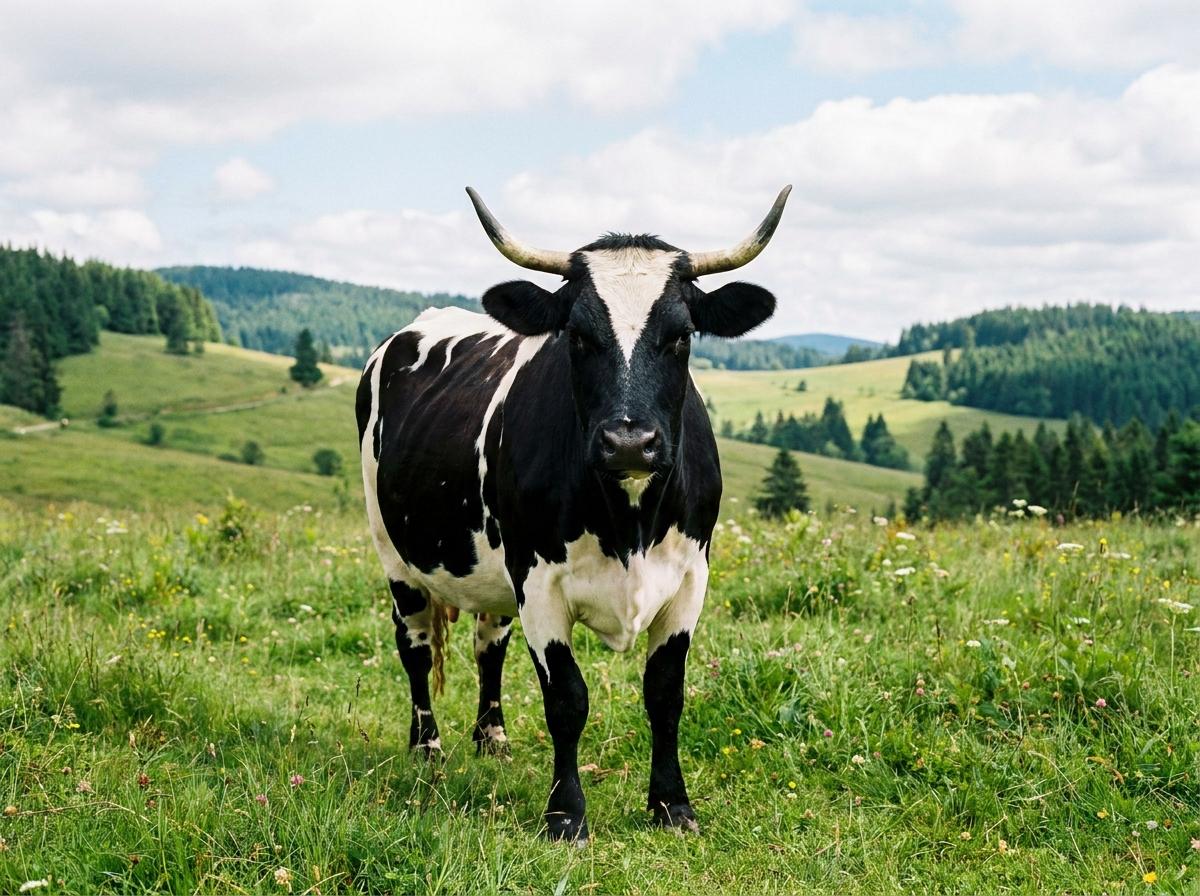
The Vosgienne, also called Vosges cattle, is a medium-sized French breed from the Vosges Mountains of eastern France, especially Alsace, Lorraine, and Franche-Comte. It developed as a dual-purpose mountain animal, able to give useful milk while producing a serviceable beef calf on steep, wet pasture. The coat is usually dark black or occasionally red on the sides, broken by a white topline, underline, legs, and variable speckling; many cattle have dark ears and a patterned face rather than the clean patches seen in Holsteins. Horns are traditional, though dehorning and polled genetics may be seen in modern herds.
On farms the Vosgienne is valued for grazing ability, sound feet, fertility, and milk suited to regional cheeses such as Munster and other mountain dairy products. Herds are commonly managed on seasonal pasture with winter forage, and the breed fits small or mixed farms where milk components, longevity, and hardiness matter more than maximum volume. Conservation programs in France have helped rebuild numbers after decline, so buyers of breeding stock usually look for documented parentage and avoid narrowing the gene pool through fashionable sires.
Colors: Belted, Black, Black and White, Blaze Faced, Blue Roan, Brindle, Brockle Faced, Brown, Brown and White, Dun, Gray, Grey, Highbelt, Highpark, Lineback, Mottled, Pied, Red, Red and White, Red Roan, Riggit, Roan, Silver, Solid Black, Solid Red, Solid White, Speckled, Spotted, White, White Faced, Yellow