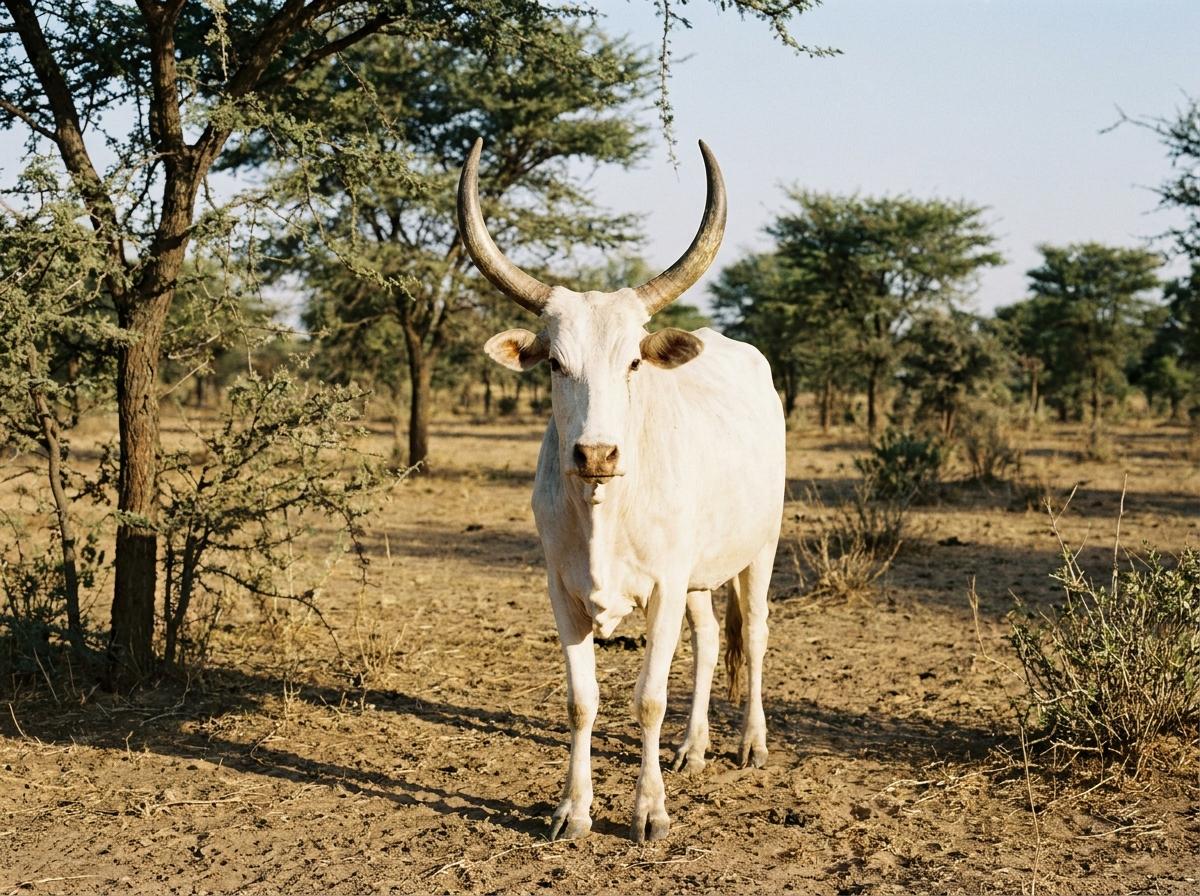
White Fulani
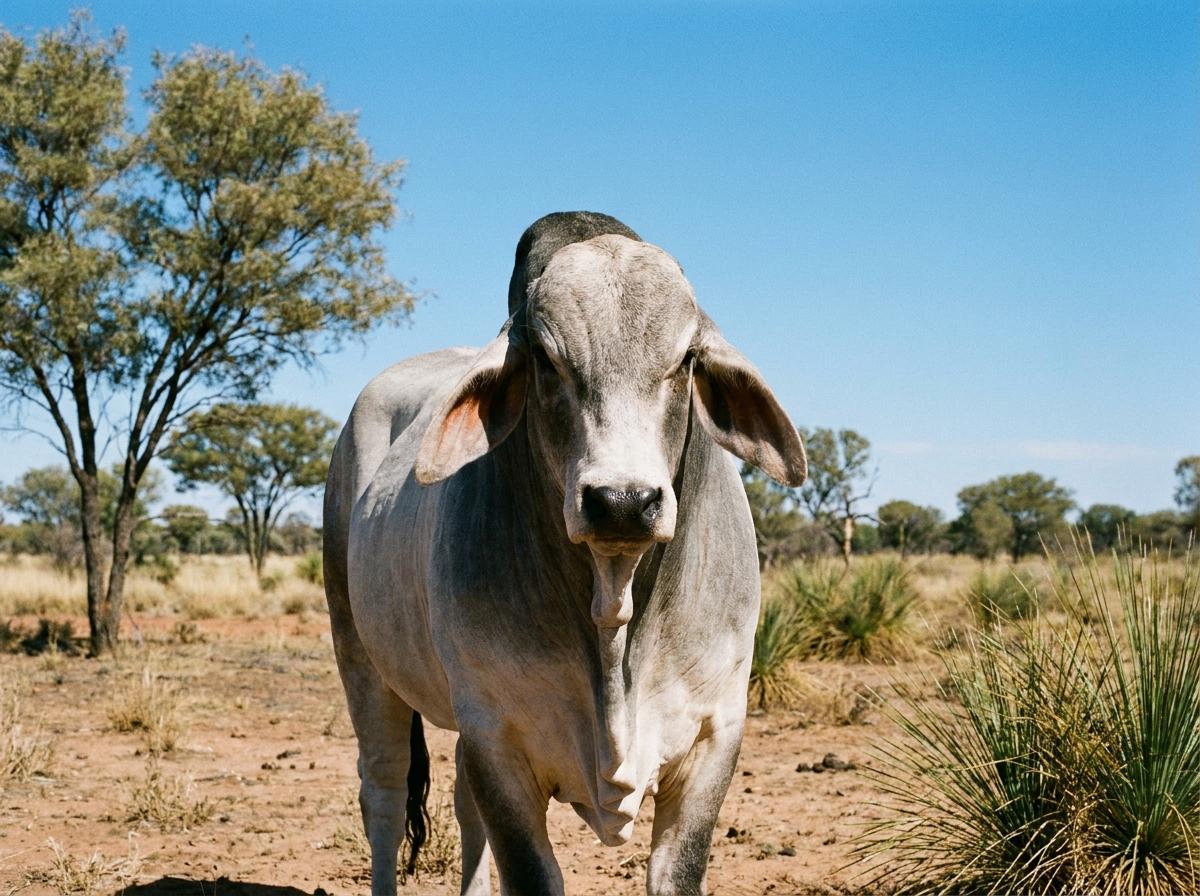
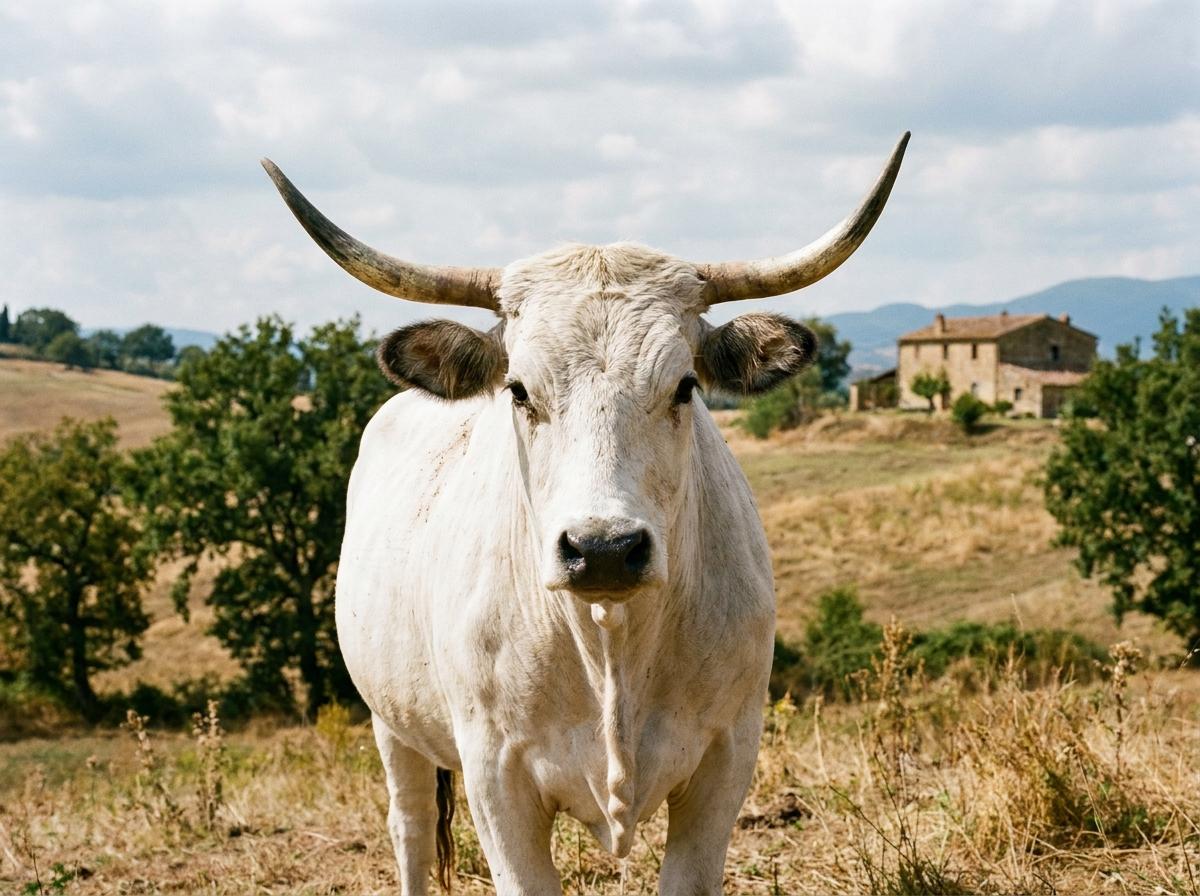
White Fulani cattle, often called Bunaji and sometimes Akou or Yakanaji in regional usage, are a West African zebu type associated with Fulani pastoralists and settled herds across Nigeria and neighboring countries. They are usually white or light gray, with black or dark markings on the ears, muzzle, eye area, tail switch, and lower legs. Like other zebus, they have a hump, loose skin, heat tolerance, and the ability to travel long distances between grazing and water. The breed is used for milk, meat, hides, and draught, and is one of the better-known cattle populations of the West African savanna.
Management ranges from transhumant pastoral systems to village dairying and ranch herds. White Fulani cattle can maintain themselves through heat and seasonal feed shortages better than many imported dairy breeds, but dry-season nutrition, parasites, tick-borne disease, and tsetse challenge in some zones still limit productivity. Milk yields are modest by commercial dairy standards, though valuable for household use and local markets. Crossbreeding with Friesian, Jersey, or other dairy cattle is common where more milk is desired, but retaining adapted purebred or high-zebu cows remains important for resilience.
Colors: Belted, Black, Black and White, Blaze Faced, Blue Roan, Brindle, Brockle Faced, Brown, Brown and White, Dun, Gray, Grey, Highbelt, Highpark, Lineback, Mottled, Pied, Red, Red and White, Red Roan, Riggit, Roan, Silver, Solid Black, Solid Red, Solid White, Speckled, Spotted, White, White Faced, Yellow