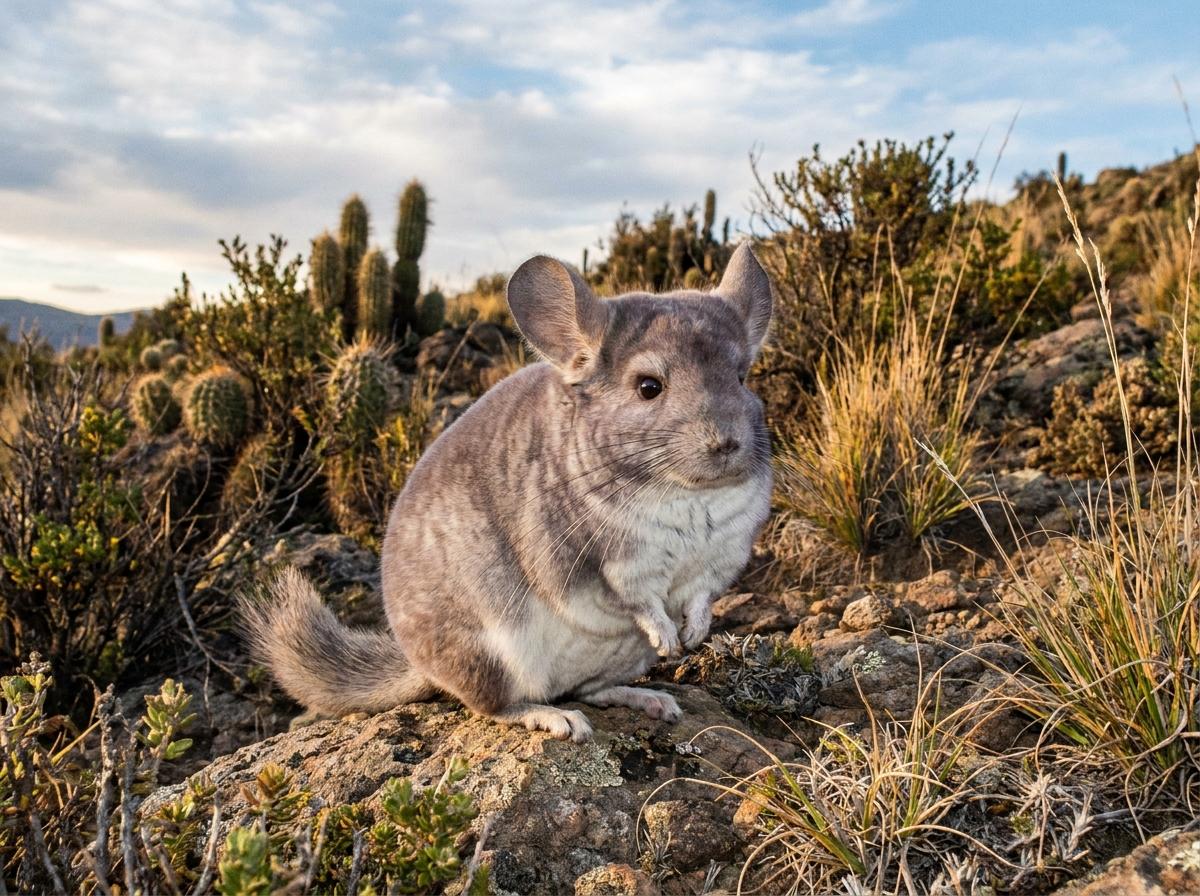
Violet
A violet chinchilla is not a separate breed or species. It is a recessive color mutation of the domestic long-tailed chinchilla (Chinchilla lanigera), the same animal most people keep as a pet. Where a standard chinchilla is a ticked blue-grey, a violet carries a soft bluish-grey coat washed with a gentle violet or lavender cast over the guard hairs, with the white belly kept. The color is the only thing that changes. A violet eats, behaves, lives, and needs to be cared for exactly like any other chinchilla.
This guide covers what the violet color actually is, where it came from (the Sullivan violet line), how the recessive gene is inherited and combined, how a violet looks next to a standard grey, temperament, and the full care a chinchilla needs (a large multi-level cage, cool temperatures, dust baths, a hay-based diet, dental and exercise needs, and gentle handling to avoid fur slip). It closes with health and lifespan, size, what a violet costs, buying considerations, and a short FAQ.

Browse listings, public profiles, breeders, or add your animal.
What is a violet chinchilla?
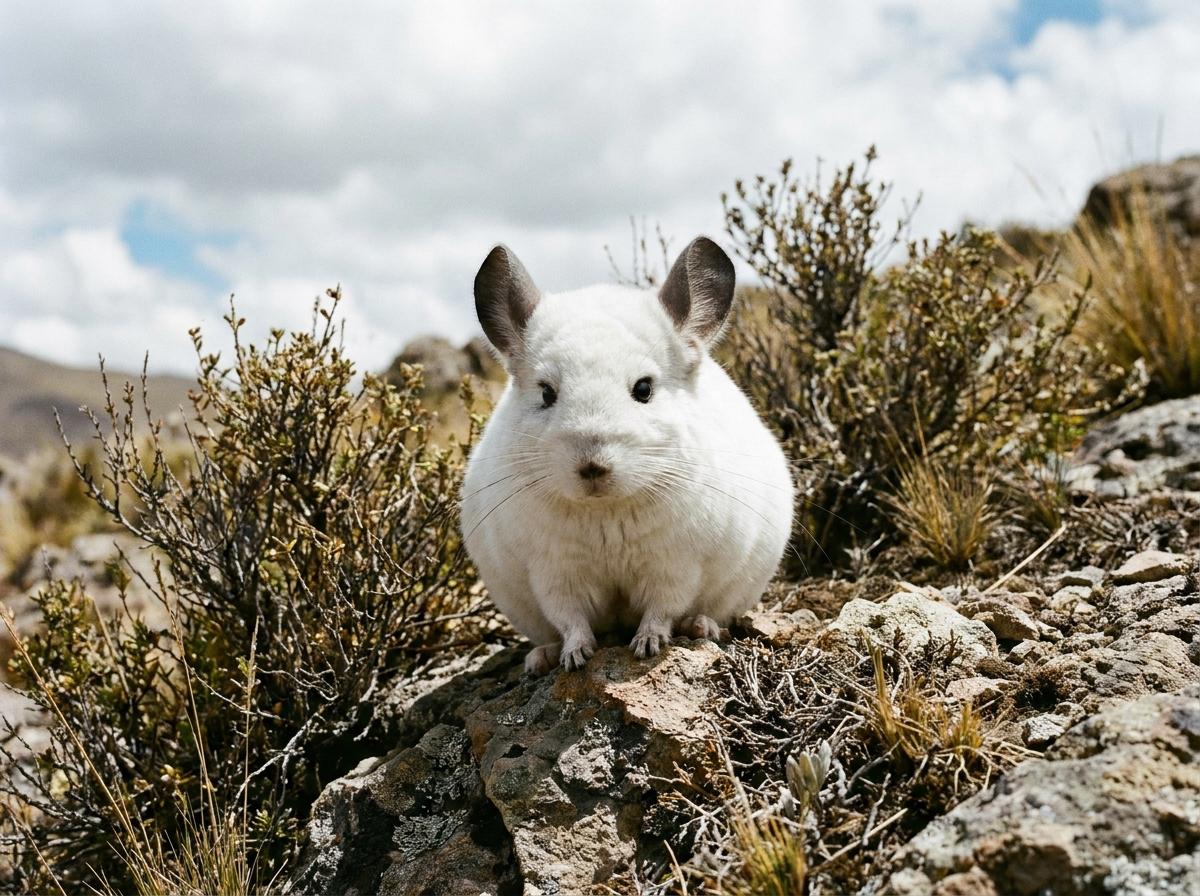
The violet is one of the color mutations that appear in domestic chinchillas. Standard (also called standard grey, naturel, or wild-type) is the original blue-grey with dark guard-hair ticking and a white belly. Over decades of ranch and pet breeding, a handful of color mutations were discovered and fixed, including beige, ebony, white, sapphire, and violet.
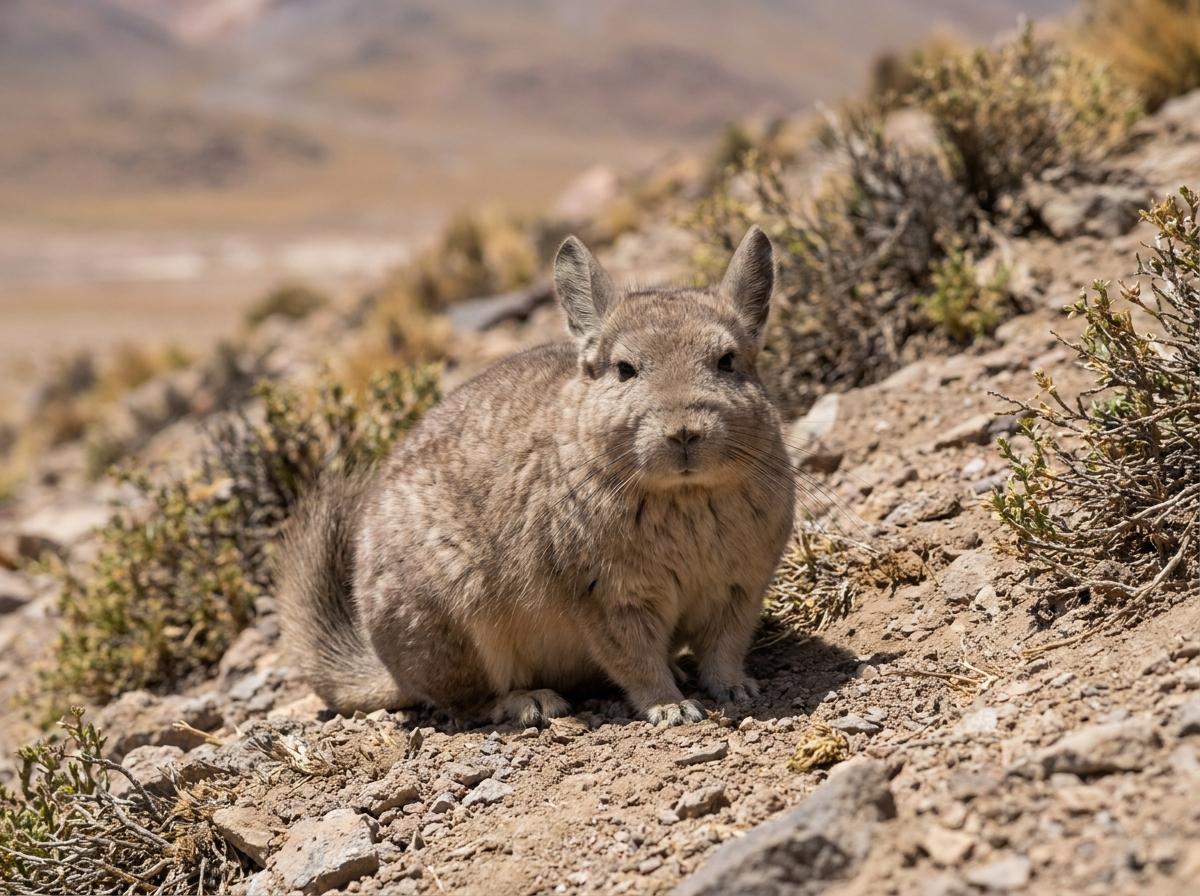
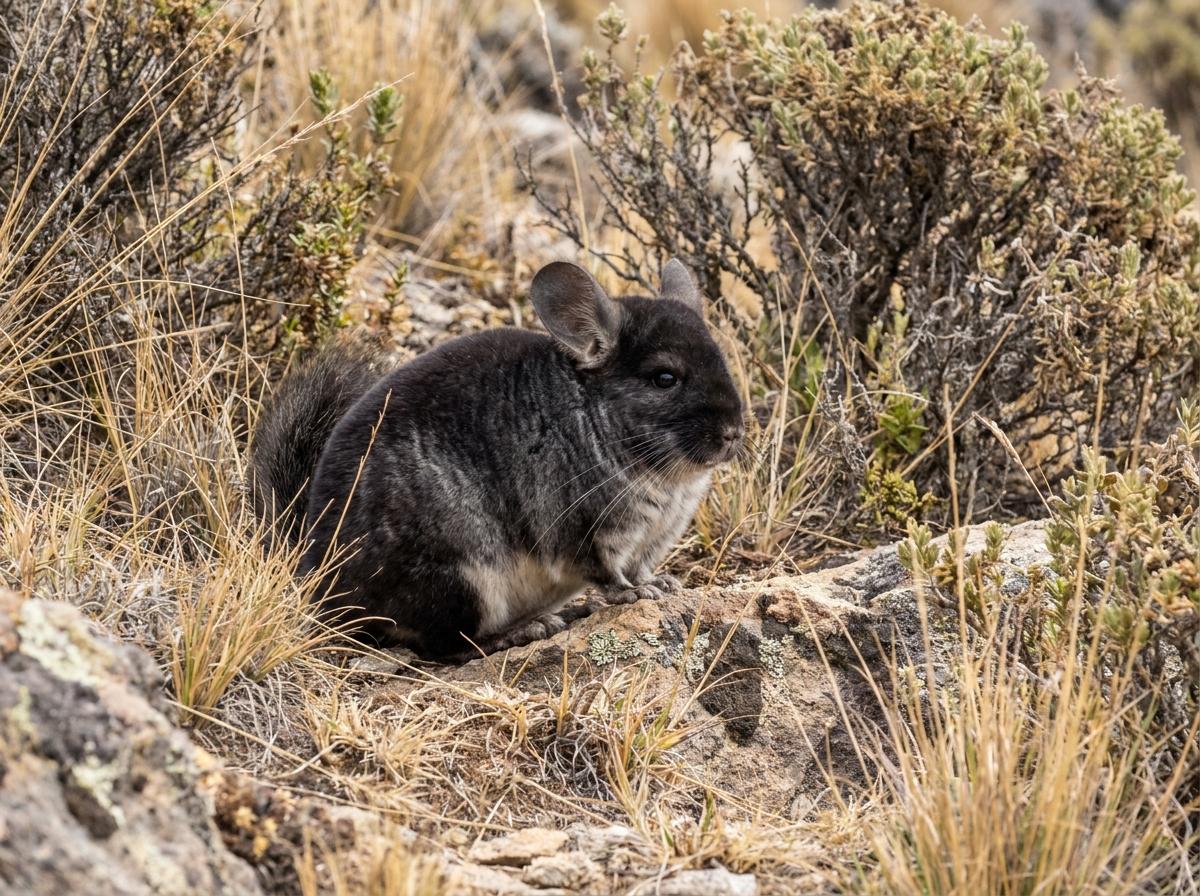
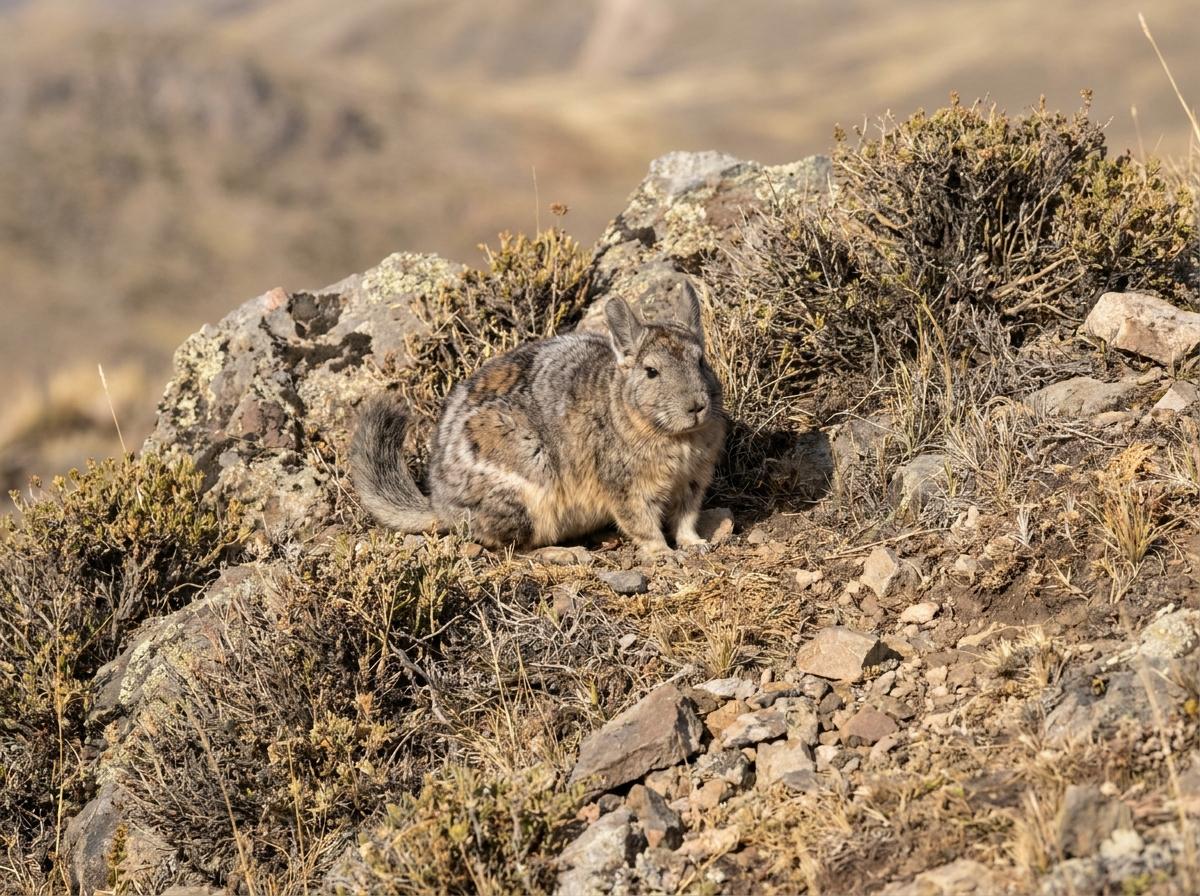
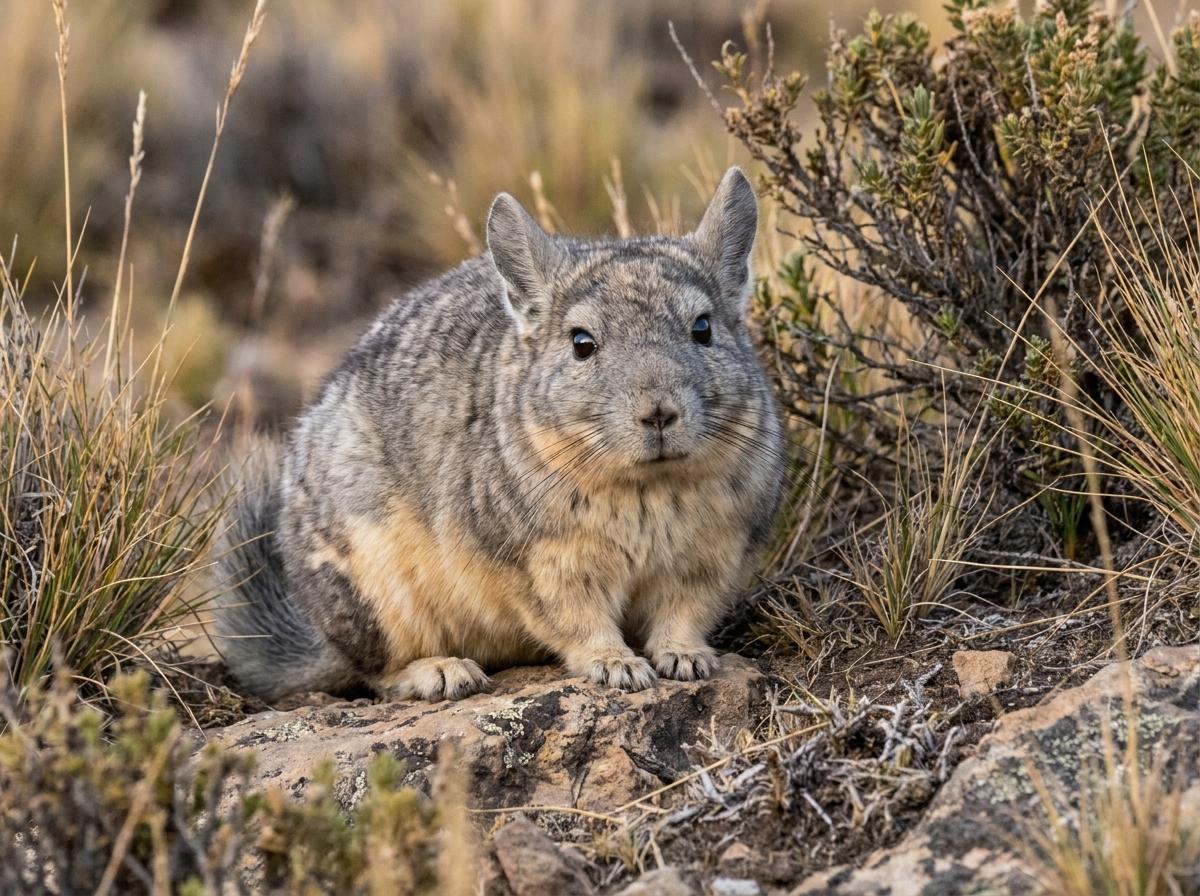
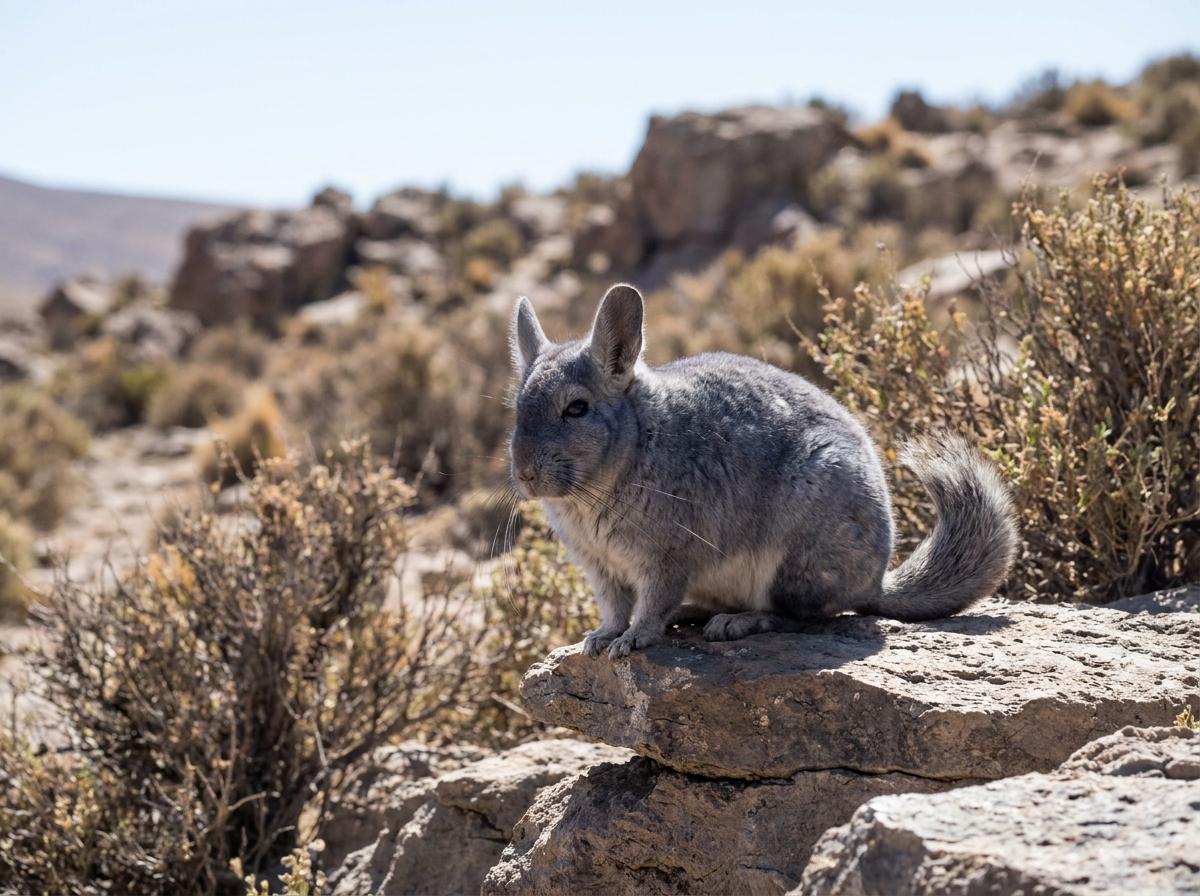
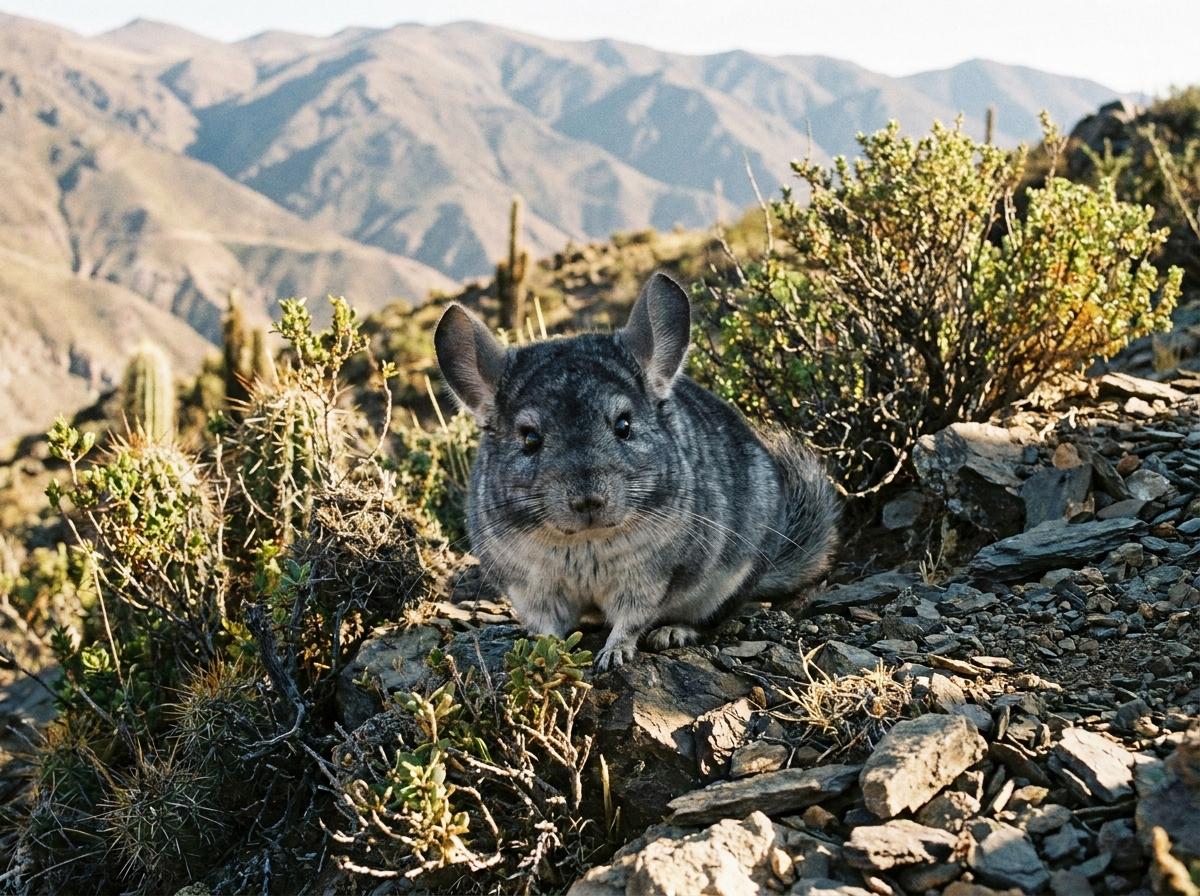
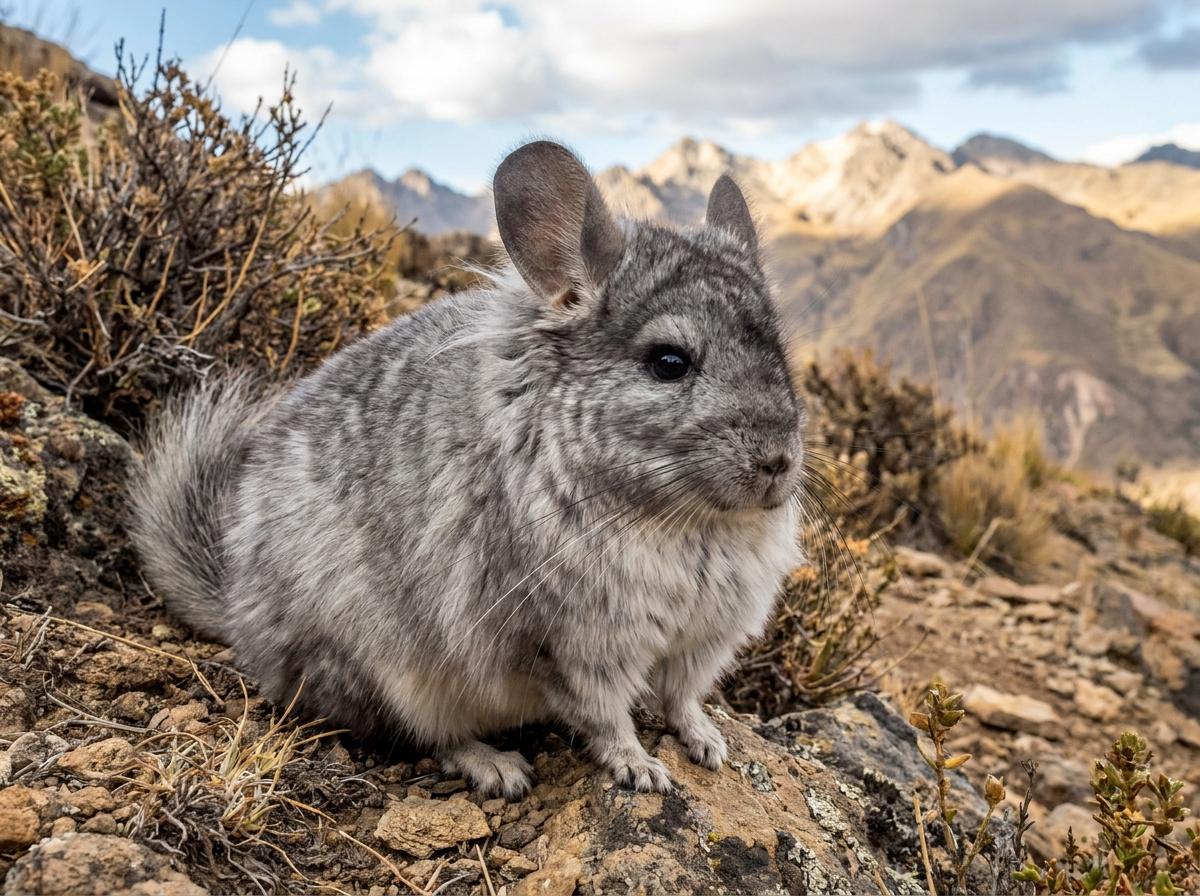
A violet chinchilla shows a bluish-grey coat with a lavender tone over the guard hairs, while the belly stays white like a standard grey. The effect is a soft, dusky, violet-tinged grey rather than a sharp purple. The depth of the color varies from pale to dark between individuals. The plush, fine fur that chinchillas are known for is unchanged. The mutation alters pigment, not coat structure, so a violet still has the same dense, soft coat as any chinchilla.
It is worth stating plainly, because the marketing around rarer colors can blur it: a violet is a pet chinchilla with a different coat color. There is no difference in its needs, its lifespan potential, its diet, or its temperament that comes from the color itself.
Where the violet came from: the Sullivan violet line
The violet mutation traces back to Rhodesia (now Zimbabwe), where it first appeared in the 1960s. Frank Gillingham of Salisbury bred the first violets in his herd. Animals from that line were later acquired and the color was promoted in the United States by Loyd Sullivan, which is why breeders often call it the Sullivan violet (and sometimes Afro-violet or Gillingham violet). The Sullivan line is the source most domestic violets descend from today.
Because the gene had to be carried out of a single founding herd and then bred up, violets took time to become widely available, and that history is part of why the color still tends to carry a premium.
How violet genetics work and how it is bred
Violet is inherited as a simple recessive. A chinchilla has two copies of the relevant gene, one from each parent. To actually appear violet, an animal needs two copies of the violet version of the gene. A chinchilla with only one copy looks like a standard grey but is a violet carrier, meaning it can pass the gene on without showing the color itself.
In practice this means:
- Two visible violets bred together produce violet offspring.
- A visible violet bred to a standard grey that is not a carrier produces standard-grey kits that all carry violet (no visible violets in that first generation).
- A violet carrier bred to a violet carrier can produce some visible violets, some carriers, and some non-carriers, in the proportions you would expect from a recessive cross.
This is why you will see breeders advertise standard greys as “violet carriers.” A carrier is valuable in a breeding program even though it does not look violet, because it holds the gene.
Violet combinations
Because color genes are inherited independently, violet can be stacked with other mutations to make combination colors. The best-known examples involve ebony, which darkens and saturates the coat. Crossing violet with ebony produces darker, more wrapped variants that breeders refer to with names like violet wrap (a violet carrying ebony so the color extends down toward the belly). Violet is also combined with white and other mutations to produce further varieties. The naming varies between breeders and registries, so when you are buying it is reasonable to ask exactly what genes an animal carries rather than relying on a color label alone.
Violet vs standard grey: how to tell them apart

Side by side, the difference is clearer than in a single photo. A standard grey has a crisper blue-grey body with visible dark ticking in the guard hairs and a defined transition to the white belly. A violet reads softer and warmer-cool at once, a hazy grey with a lavender or dusky-violet wash and less of the sharp ticking. Both keep the white belly.
A few honest caveats. Photographs of violets are notoriously unreliable, because lighting and camera white balance can push the lavender either toward an obvious purple or wash it out to plain grey. A genuine violet in normal light is subtle. If an online photo shows a vividly purple chinchilla, treat the saturation as a lighting or editing effect, not a true representation of the coat. The most reliable way to judge color is in person, in daylight, ideally next to a standard grey for comparison.
Temperament: what living with a chinchilla is like
Temperament is a chinchilla trait, not a violet trait, so everything here applies to any color.
Chinchillas are crepuscular, meaning they are most active around dawn and dusk. Expect bursts of intense activity in the evening, with running, leaping, and bouncing off cage walls, then long quiet rest periods during the day. That schedule suits people who are out during the day and home in the evening, and frustrates anyone hoping for a daytime cuddle pet.
They are intelligent, curious, and can become quite bonded to their people, but they are also fast, easily startled, and not naturally fond of being restrained. Many chinchillas prefer to interact on their own terms, climbing on you rather than being held tightly. They tend to do best when they have time to settle in and trust is built slowly. Because they are highly social in the wild, many owners keep them in same-sex pairs or compatible groups, with introductions done carefully.
One important handling note that ties to their biology is fur slip. When a chinchilla is grabbed roughly or frightened, it can release a clean patch of fur to escape, leaving you holding a tuft while the animal darts away. It is a natural anti-predator defense, it is not painful in the way a wound is, but the bald patch can take weeks to months to fully regrow. The practical lesson is to handle gently, support the whole body, and never grab at the coat or restrain by a handful of fur. This is the same for a violet as for any other chinchilla.
Full chinchilla care
Housing: a large, tall, multi-level cage
Chinchillas are athletic climbers and jumpers, so vertical space matters as much as floor space. A tall, multi-level wire cage with solid (not wire) shelves and safe ledges lets them climb, leap, and exercise. Wire flooring can cause foot problems, so provide solid surfaces or cover wire areas. Include a hide for security, a wooden ledge or two, and chew-safe items. Keep the cage out of direct sun and away from heat sources, and give daily supervised time out of the cage in a safe, chinchilla-proofed space for additional exercise.
Temperature: cool is not optional
This is the single most important environmental rule. Chinchillas evolved in the cool, dry high Andes and their extraordinarily dense fur (with dozens of hairs growing from each follicle) makes them very poor at shedding heat. They are highly prone to heatstroke. Keep them cool, ideally around 60 to 70 F (about 15 to 21 C), and do not let the environment climb above roughly 77 to 80 F (about 25 to 27 C). High humidity makes it worse, because it further reduces their ability to cool off. A common rule of thumb is that the temperature in Fahrenheit plus the relative humidity should stay well under 150. In summer, that often means air conditioning is a requirement, not a luxury. Signs of heat stress (lethargy, drooling, bright red ears, lying stretched out and panting) are an emergency, because heatstroke can lead to organ failure and death quickly.
Dust baths, never water

Chinchillas clean their dense coat by rolling in fine dust, not by getting wet. Offer a dust bath two to three times a week using dust made for chinchillas (regular sand is too coarse) in a bowl or enclosed bath house, for around ten to fifteen minutes, then remove it so the coat does not over-dry and the dust does not get soiled. Do not bathe a chinchilla in water. Their fur is so dense that it holds water against the skin, dries very slowly, and can lead to chilling and fungal skin problems. Keeping the environment dry overall is part of good chinchilla husbandry.
Diet: hay first
A chinchilla’s diet is built on grass hay. Provide unlimited timothy hay or another suitable grass hay at all times, because the constant chewing wears their teeth and the fiber keeps their gut moving. Add a measured amount of a plain, high-quality chinchilla pellet. Fresh water should always be available, usually from a bottle. Treats should be very limited. Sugary, fatty, or high-moisture foods (including many fruits and commercial yogurt drops) can cause digestive upset and are best avoided or given only in tiny amounts. Sudden diet changes can also cause problems, so transition foods gradually.
Dental health
Chinchillas have open-rooted teeth that grow continuously throughout life. A hay-based diet and safe chew items help wear the teeth naturally. When teeth do not wear evenly, they can develop painful overgrowth and malocclusion, sometimes affecting the molars where you cannot see the problem directly. Warning signs include drooling, dropping food, weight loss, reduced appetite, or watery eyes. Dental disease is one of the more common serious health issues in pet chinchillas and needs an exotic vet, so do not try to manage suspected tooth problems at home.
Exercise and enrichment
Beyond the cage, chinchillas need room to run and jump. Provide a safe, solid-surface exercise wheel sized for a chinchilla (large enough that the back is not arched, and without rungs that can catch a foot), supervised out-of-cage time in a chinchilla-proofed area, and plenty of safe wood and other chews to keep them busy and their teeth worn. A bored, under-exercised chinchilla is more prone to chewing fur and other stress behaviors.
Health and lifespan
Chinchillas are long-lived for a small pet. With good care they commonly reach 10 to 20 years, and many caresheets cite an average in the mid-teens. That longevity is a serious commitment: a violet chinchilla bought today may still be your responsibility well into the future, and may outlast other household pets.
The most common health concerns to watch for are heat stress, dental disease, and digestive problems (often diet-related, such as bloat or changes in droppings). Respiratory infections, fur chewing, and eye issues also occur. Because chinchillas hide illness well and decline can be fast, find an exotic veterinarian who treats chinchillas before you need one, weigh your animal regularly to catch early weight loss, and treat changes in appetite, droppings, or activity as reasons to call the vet promptly. None of this medical guidance is a substitute for an exam: defer to a qualified exotic vet for any health decision.
Size
A pet chinchilla (Chinchilla lanigera) is a small animal. Adults are roughly 25 to 35 cm from nose to tail tip and generally weigh somewhere around 400 to 800 g, with females usually larger than males. A violet is the same size as any other chinchilla. Despite the small body, the cage they need is large, because of their need to climb and jump.
Cost and availability
Two costs matter: the price of the animal and the ongoing cost of keeping it.
For the animal, chinchillas in general often run a few hundred dollars, varying widely by region, breeder, age, quality, and color. Violet sits toward the higher end because it is a recessive mutation that took decades to establish and is less common than standard grey, so it usually commands a premium. Combination colors involving violet (such as violet ebony or violet wrap) and show-quality or pedigreed lines can cost more again. Treat any specific number you see as a starting point and compare several current sources rather than assuming a fixed price.
The recurring costs are easy to underestimate. A large, tall cage, solid shelving, a chinchilla-safe wheel, hides, and chew items are the up-front setup. Ongoing you are buying grass hay, plain chinchilla pellets, chinchilla dust, and safe chews, plus the running cost of keeping a room cool in summer (air conditioning can be the biggest hidden expense for chinchilla owners in warm climates). Exotic vet care costs more than care for a common cat or dog, and over a 10 to 20 year life it adds up. Budget for the lifetime, not just the purchase.
Buying considerations
Buy on health and husbandry first, color second. A few practical points:
- See the animal in person if you can, in daylight, so you can judge the true color and assess condition. Look for a clean, dense coat, clear bright eyes, a dry nose, normal droppings, and an alert animal. Avoid any with bald patches (which can indicate fur chewing or stress), wet chins or drooling (a dental warning sign), or labored breathing.
- Ask about genetics. With violet specifically, ask what color genes the animal carries, whether it is a visible violet or a carrier, and what its parents are, since this affects both appearance and, if you ever breed, what it can produce.
- Ask about age and history. Knowing the chinchilla’s age, prior diet, and whether it is used to handling helps you plan and avoids surprises.
- Be wary of vivid purple marketing photos. As noted above, a real violet is a subtle lavender-grey, and oversaturated images are a red flag for hype rather than an accurate animal.
- Consider a pair. Because chinchillas are social, many owners do better starting with a compatible same-sex pair, but only if you can house and afford two.
- Look at rescues and rehomes too. Chinchillas are sometimes surrendered because owners underestimated the lifespan or the cooling needs, so adoptable adults (including violets and violet carriers) do come up.
Do this next on Creatures
Creatures is the records, profile, and marketplace layer that chinchilla owners and breeders use to find animals, follow available litters, and keep health and care records in one place. If a violet (or a violet carrier) is on your list, here are useful next steps. No account is needed to start the first three.
Frequently asked questions
Is a violet chinchilla a different breed?
No. It is a recessive color mutation of the domestic long-tailed chinchilla. The only difference from a standard grey is the lavender-grey coat color. Care, diet, temperament, and lifespan are the same.
Why is a violet chinchilla more expensive?
Violet is a recessive mutation that descended from a single founding line and took years to establish, so it is less common than standard grey and usually sells at a premium. Combination colors and show-quality lines can cost more again.
Are violet chinchillas actually purple?
Not vividly. A real violet is a soft bluish-grey with a subtle lavender or dusky-violet cast and a white belly. Intensely purple photos are usually the result of lighting, white balance, or editing, not the true coat.
How long do violet chinchillas live?
Like other chinchillas, commonly 10 to 20 years with good care. They are long-lived for a small pet, so plan for a long commitment.
What temperature do violet chinchillas need?
The same as any chinchilla: cool, ideally around 60 to 70 F (about 15 to 21 C), and never above roughly 77 to 80 F (about 25 to 27 C). They are very prone to heatstroke, so air conditioning is often needed in summer.
Can you bathe a chinchilla in water?
No. Chinchillas clean themselves by rolling in special chinchilla dust two to three times a week. Their dense fur holds water and dries very slowly, so water bathing risks chilling and skin problems.
Do you need two chinchillas?
Not strictly, but chinchillas are social and many do better in a compatible same-sex pair. Only get two if you can house, afford, and properly introduce them.
This guide is general information, not veterinary advice. For any health concern, or before making decisions about your chinchilla’s care, consult a qualified exotic veterinarian.