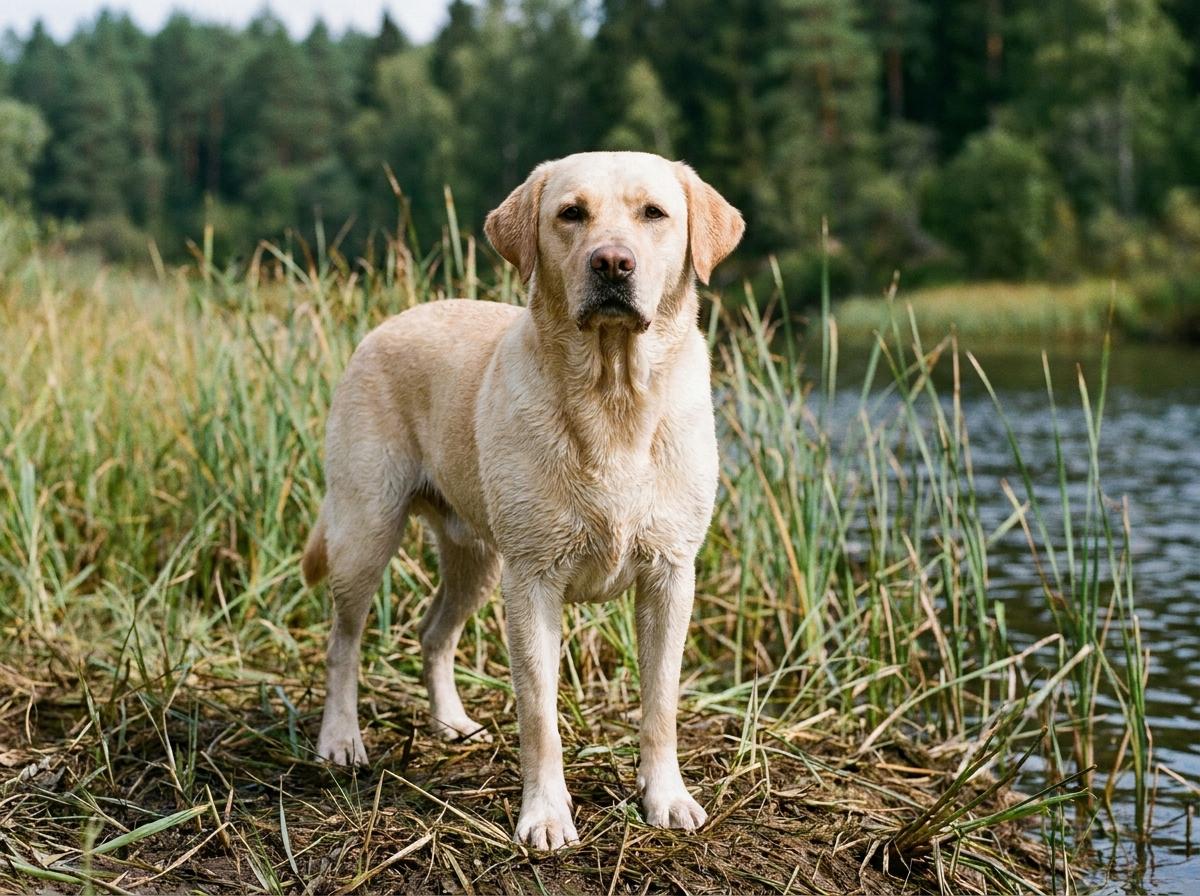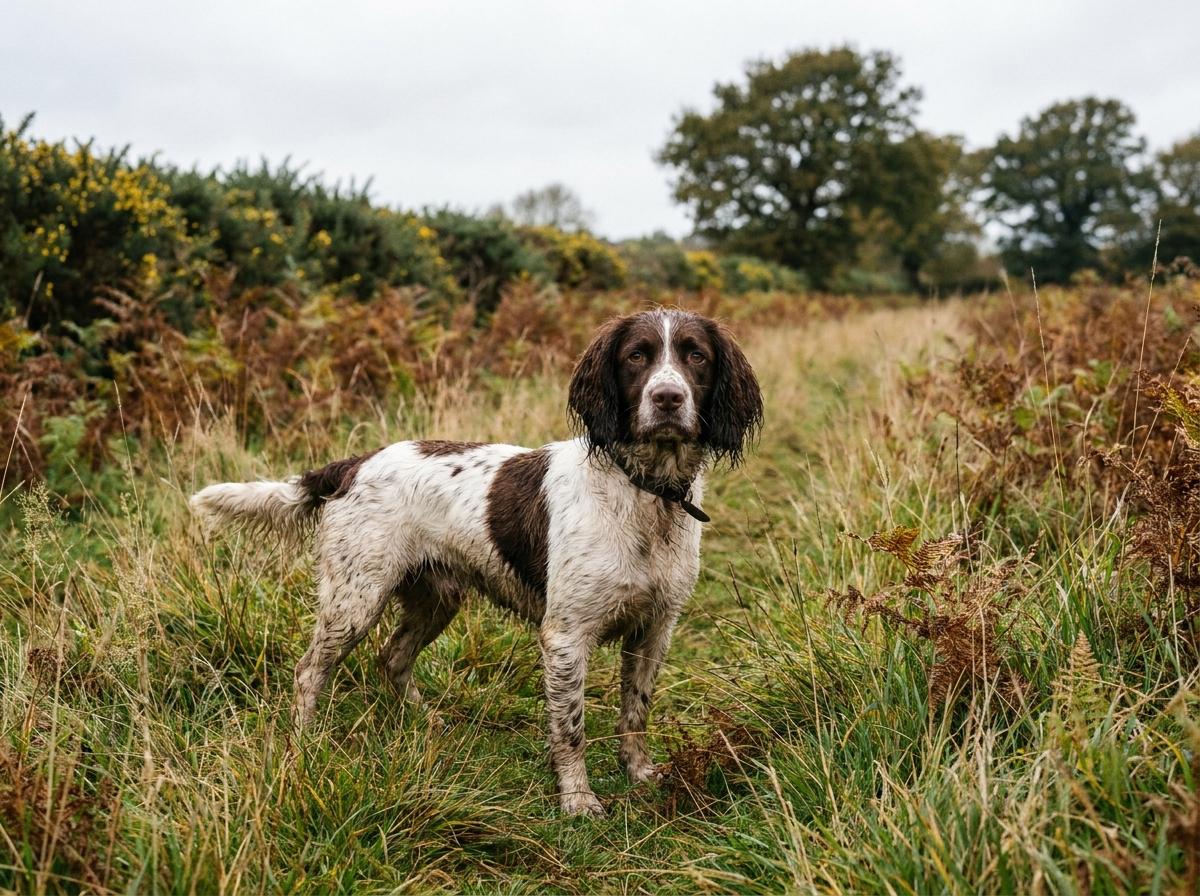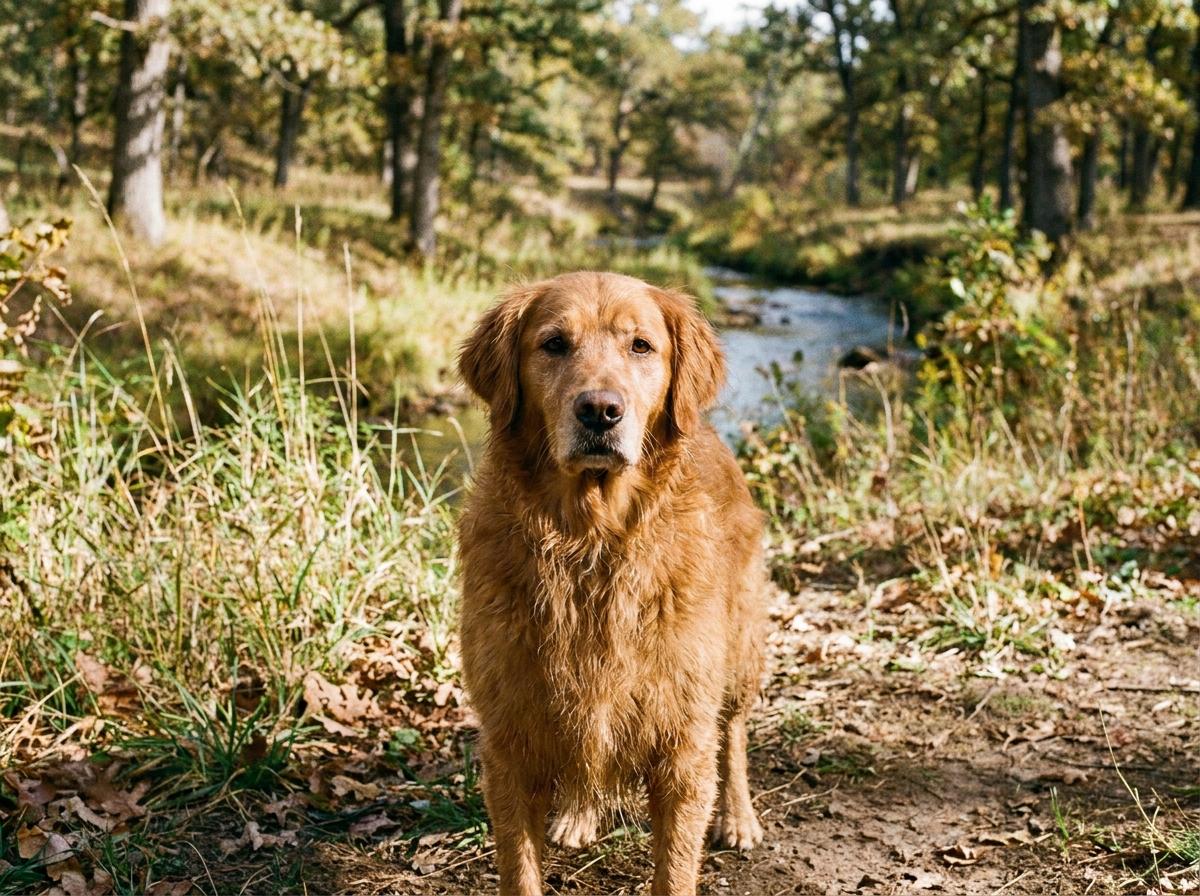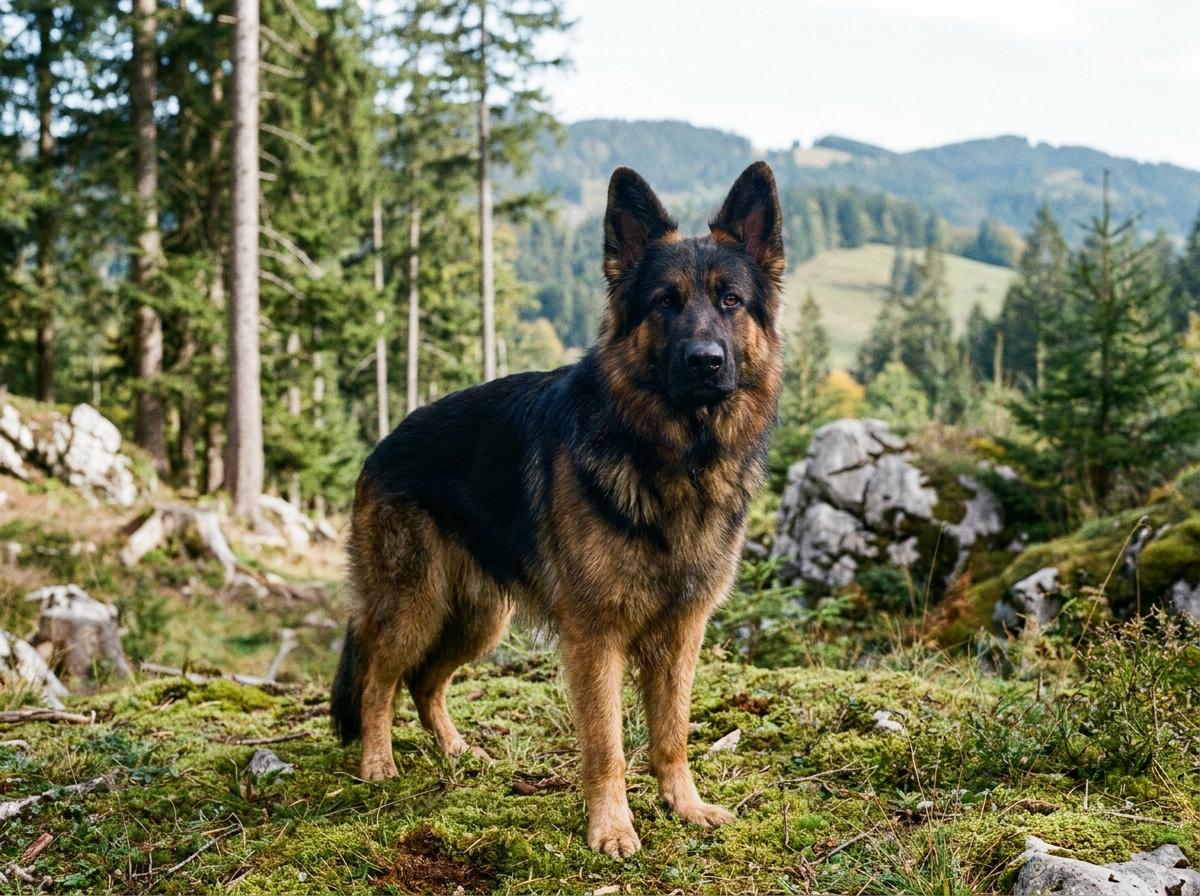
Boxador
A Boxador is a Boxer crossed with a Labrador Retriever. That sentence is the whole definition, and the most useful thing to take from it is what it does not say. A Boxador is a crossbreed, not a breed. There is no breed standard describing what one should look like, no major kennel club that recognizes it, and no governing body setting rules for how the cross is bred. Two popular purebred parents produce a crossbred dog, and that is the animal you are buying.
That is not an insult. Plenty of Boxadors are excellent family dogs, and the two parent breeds behind them are genuinely good at being companions. But a buyer deserves to know that this cross carries none of the predictability that a recognized breed sells. If you are still comparing options, the recognized breeds on the Creatures dog species page come with standards you can actually read, which a Boxador does not.
The rest of this page covers what a Boxador really is, why a first cross does not reliably average its parents, what each parent breed brings to the health picture, and the specific tests to ask a breeder for before you hand over money.

Browse listings, public profiles, breeders, or add your animal.
Is a Boxador a breed? No, and the difference is practical
A breed is a population with a written standard, a closed or managed studbook, and an organization that maintains both. The Boxer and the Labrador Retriever each have all three. The Boxador has none of them.
The American Kennel Club registers purebred dogs, and breeding two purebred dogs of different breeds produces a crossbred dog rather than a new purebred one. The AKC is explicit that mixed-breed dogs cannot receive full registration, though they can enroll in the Canine Partners program and compete in AKC sports and earn titles. That is a real and worthwhile route for a Boxador owner. It is also not breed recognition, and nobody should sell it as such. The FCI nomenclature, which lists the breeds recognized internationally, contains no Boxador either.
What does exist is a set of commercial registries that will register a crossbred dog and post you a certificate for a fee, typically a few tens of dollars per dog. Those registries record what the person filling in the form told them. They do not inspect the dogs, they do not verify parentage, and they do not require or check health testing. A “registered” Boxador puppy is therefore not evidence of anything a buyer should pay a premium for. Ask what the paperwork actually certifies, and if the answer is “we sent them the names,” you have your answer.
The practical consequence is simple. With a recognized breed you can read the standard, look up the parent club’s health screening scheme, and hold a breeder to both. With a Boxador you have to do that work yourself, breed by breed, on each parent.
Why a first cross does not reliably average its parents
This is the single most useful thing to understand before you buy, and it is where most Boxador marketing goes wrong. Crossing a Boxer with a Labrador does not produce a dog that is half of each in every respect. Traits are inherited as discrete units from each parent, and dominance means a puppy often shows one parent’s version rather than a midpoint between the two. Neither parent breed is genetically uniform to begin with, so littermates can differ substantially in size, coat, muzzle length and temperament.
Coat color is the cleanest illustration, because it is fully worked out at the gene level. Under the AKC Boxer standard a Boxer is fawn or brindle and nothing else, with any other color a disqualification. The Labrador standard allows black, yellow and chocolate only. So which of those five colors does the cross give you?
Often none of them in the way you would guess. Labrador color runs on two genes, one deciding whether the dog makes dark pigment at all (yellow versus not yellow) and one deciding whether that dark pigment is black or chocolate. On top of those sits a third gene, the K locus, where the dominant black variant switches off the patterned coats. Labradors carry dominant black, which is exactly why you never see a brindle or a sable Labrador. Pass that variant to a puppy and the Boxer parent’s fawn or brindle pattern has no way to show. In practice a great many Boxadors come out solid black or solid brown, and a yellow Labrador bred to a fawn Boxer can produce a litter of black puppies, a color neither parent had.
Temperament is harder to predict than color, not easier. A large study combining owner surveys of 18,385 dogs with genotyping of 2,155 of them found that breed explained about 9 percent of the variation in behavior between individual dogs, and that most behavioral traits, while heritable, are genetically complex. Breed ancestry shifts the odds. It does not tell you what the dog in front of you will be like. That is true of purebreds and doubly true of a cross whose two ancestries are being shuffled for the first time.
So treat any puppy listing that promises “the calm of a Labrador with the guarding instinct of a Boxer” as a sales pitch rather than a prediction. Judge the puppy, meet the parents, and expect the adult dog to sit somewhere across a range rather than on a target.

What Boxadors actually look like
Expect a medium to large, short-coated, athletic dog. Both parent breeds sit in a similar size bracket, so the cross does too. The AKC Boxer standard calls for males at 23 to 25 inches at the withers and females at 21.5 to 23.5 inches, and gives no weight figure. The Labrador standard asks for males at 22.5 to 24.5 inches and 65 to 80 pounds, and females at 21.5 to 23.5 inches and 55 to 70 pounds. A Boxador will usually land somewhere in that combined span, which is a useful bracket rather than a promise.
The features that vary most visibly between littermates are worth naming, because they are what people notice:
- Muzzle length. The Boxer is a brachycephalic (short-faced) breed and the Labrador is not, so muzzle length is where the two ancestries visibly collide. Some Boxadors come out with a near Labrador muzzle, some with something distinctly blunter and squarer. This one is not cosmetic, for reasons covered in the health section below.
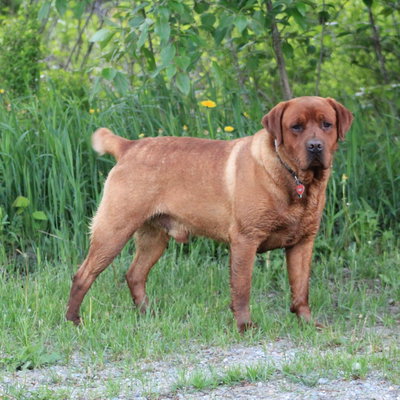
- Coat color. Solid black and solid brown are common, pale yellow to fawn happens, and white on the chest, toes and muzzle turns up often. The Boxer side contributes white markings readily. The Boxer standard permits white on up to a third of the coat and disqualifies more than that, and predominantly white Boxers are common enough that UK veterinary records were able to compare them against non-white Boxers directly, finding no difference in annual disorder counts between the two.
- Build. Some are leggy and light framed like a field-bred Labrador. Others carry the heavier bone and deeper chest of the Boxer.
Ears and tails should be left alone. The Boxer standard still describes the ears as customarily cropped and says an undocked tail should be severely penalized, but neither procedure has anything to do with a Boxador, which is not shown under that standard. The American Veterinary Medical Association opposes ear cropping and tail docking of dogs done solely for cosmetic reasons and encourages removing both from breed standards. A Boxador should have natural drop ears and a full tail. If a seller offers cropped puppies, walk.
Temperament and daily needs
Both parent breeds were bred to work, and it shows. Boxers are described in their own standard as playful with family and patient with children, alert and deliberate with strangers. Labradors were bred as retrieving gun dogs expected to work long hours in hard conditions. Cross them and you get, as a rule, a sociable, physically demanding, people-oriented dog that matures slowly and does not settle well without a job.
Plan for real exercise every day, well beyond a walk around the block, and for training that starts early. A Boxador puppy grows into a strong dog that can knock over a child by accident while being friendly. Bite inhibition, recall, loose leash walking and a reliable settle are worth more here than tricks. Both parents are food motivated, which makes reward-based training straightforward and makes free feeding a mistake.
Two honest cautions. First, this is not a low-effort dog, and under-exercised individuals chew, dig, bark and jump. Second, individual temperament varies more than any breed description implies, so meet both parents, watch how the puppies behave with each other, and be willing to leave without one.
Health: what each parent brings
This is where the crossbreed question stops being a matter of paperwork. A cross can inherit risk variants common in either parent breed. One affected parent can transmit a dominant condition; complex conditions reflect many genetic and environmental factors and cannot be predicted from one parent alone.
From the Boxer side
Cancer. The Boxer carries a notably heavy cancer burden. In a UK study of 3,219 Boxers under primary veterinary care, 14.2 percent were diagnosed with neoplasia, against 7.4 percent of Labrador Retrievers, 7.96 percent of Rottweilers and 4.82 percent of German Shepherd Dogs in comparable data. Neoplasia was the most common recorded cause of death at 12.43 percent, and median longevity was 10.46 years. Mast cell tumors are the standout: in a study of 168,636 dogs in England the overall prevalence was 0.27 percent, the Boxer’s breed prevalence was 1.95 percent, and Boxers had 10.7 times the odds of mast cell tumor compared with crossbred dogs. Lymphoma is also over-represented in Boxers across several countries.
Boxer cardiomyopathy (ARVC). Arrhythmogenic right ventricular cardiomyopathy causes ventricular arrhythmias, fainting and sudden death. A deletion in the striatin gene is associated with the disease in Boxers, and a DNA test exists. Dogs carrying two copies appear to do worse than dogs carrying one.
Aortic stenosis. Subaortic stenosis is a common congenital defect of large-breed dogs, and the Merck Veterinary Manual lists Boxers among the predisposed breeds alongside Golden Retrievers, Rottweilers, German Shepherd Dogs and Newfoundlands. Severity varies, mildly affected dogs often need no treatment, and severely affected dogs can die suddenly with no prior signs. Affected dogs should not be bred.
Degenerative myelopathy. A mutation in the SOD1 gene is associated with degenerative myelopathy in several breeds including the Boxer. It is a progressive, incurable spinal cord disease of older dogs, inherited recessively with incomplete penetrance, and there is a DNA test.
Brachycephaly, kept in proportion. The Boxer is a short-faced breed, but a mild one. In a study across fourteen brachycephalic breeds the Boxer sat in the mild risk group, with more than half of Boxers graded clinically unaffected by brachycephalic obstructive airway syndrome, far better than Pekingese or Japanese Chin. Within Boxers, a shorter muzzle relative to skull length was associated with disease, as were a higher body condition score and narrowed nostrils. For a Boxador this cuts both ways: a puppy that inherits a longer muzzle is likely better off than its Boxer parent, and a puppy that inherits a very short one is not automatically fine because it is a cross. Look at the individual dog’s face and listen to it breathe after exercise.
From the Labrador side
Joints. Labradors show a clear predisposition to musculoskeletal disease. UK veterinary records put Labrador odds of osteoarthritis at 2.83 times those of other dogs, with elevated odds of neoplasia (1.89) and lipoma (2.45) as well, in a study of 1,462 Labradors against 20,786 non-Labradors. Hip and elbow dysplasia are the classic developmental problems. The Merck Veterinary Manual describes hip dysplasia as multifactorial, with growth rate, exercise, nutrition and heredity all affecting whether it occurs, which is why scoring the parents’ hips matters and why keeping the puppy lean through its growth matters too.
Exercise-induced collapse. EIC produces weakness, incoordination and collapse after intense exercise, and can be fatal. It is associated with a mutation in the dynamin 1 gene, identified at the University of Minnesota, and a DNA test is available. Carrier frequency in Labradors is substantial, so this is not an exotic concern.
Eyes. Progressive retinal atrophy of the prcd type causes gradual, irreversible vision loss. It has a DNA test, and it is one of the tests the Labrador’s national breed club asks for.
Weight. Labradors are strongly predisposed to obesity, and part of that is genetic. Researchers at the University of Cambridge found a deletion in the POMC gene, at an allele frequency of about 12 percent in the Labradors studied, associated with greater weight, greater body fat and higher food motivation. The deletion is predicted to disrupt production of two neuropeptides that normally help switch off hunger after a meal. In a separate study of 33,320 Labradors under UK primary veterinary care, overweight and obesity were among the most commonly recorded problems in the breed, and the researchers behind the predisposition analysis concluded that the same population’s susceptibility to both musculoskeletal disease and obesity suggests the two are linked.
Hybrid vigor, honestly
The idea that crossing two breeds produces a healthier dog is the main thing Boxadors are sold on, and the evidence for it is much weaker than the pitch.
The largest direct comparison of common designer crosses against their own parent breeds surveyed 9,402 UK owners, covering 3,424 Cockapoos, Labradoodles and Cavapoos and 5,978 Poodles, Cocker Spaniels, Labrador Retrievers and Cavalier King Charles Spaniels. Across 342 disorder comparisons, the odds did not differ significantly in 86.6 percent of cases. The crosses had higher odds in 7.0 percent and lower odds in 6.4 percent. The authors concluded that the findings suggest limited differences in overall health status between the crosses and their purebred progenitors, challenging widespread beliefs in positive hybrid vigor effects. Those are Poodle crosses rather than Boxer crosses, so read it as the closest available evidence rather than a direct measurement of Boxadors.
A separate American analysis of 27,254 dogs with inherited disorders reached a compatible conclusion. Of 24 genetic disorders examined, 13 showed no difference in prevalence between purebred and mixed-breed dogs once age, sex and bodyweight were matched, 10 were more common in purebreds, and one, ruptured cranial cruciate ligament, was more common in mixed breeds. The UC Davis team’s reading of the pattern was that disorders shared equally across both groups tend to come from ancient mutations spread widely through the dog population, while disorders concentrated in purebreds reflect more recent shared ancestry.
The fair summary: crossing does help against recessive diseases that are common in one breed and absent from the other, because a puppy needs two copies to be affected. It does not help against dominantly inherited disease. Crossing also does not reliably protect against complex, polygenic conditions such as cancer or hip dysplasia. Risks associated with both parent populations remain relevant, so screen both parents rather than assuming hybrid vigor. Discuss anything specific to your own dog with your veterinarian rather than with a puppy advertisement.

The health tests to ask a breeder for
This is the part that changes outcomes. Since no organization sets a screening scheme for Boxadors, use the ones the two parent breeds’ national clubs already publish, and ask to see certificates for the actual parents rather than for a grandparent or a kennel.
For the Boxer parent, the AKC lists the national breed club’s recommended tests as a hip evaluation, an elbow evaluation, a thyroid evaluation, aortic and subaortic stenosis cardiac screening, aortic valve disease screening, an ARVC DNA test, annual Holter monitor testing for Boxer cardiomyopathy, and a degenerative myelopathy DNA test.
For the Labrador parent, the AKC lists the breed club’s recommended tests as a hip evaluation, an elbow evaluation, an ophthalmologist evaluation, and DNA tests for exercise-induced collapse, progressive retinal atrophy of the prcd type, centronuclear myopathy and the D locus.
Two rules make that list usable:
- Ask for documents, not descriptions. “Both parents are health tested” means nothing. A hip score, an elbow grade, a cardiologist’s report, a dated eye certificate and named DNA results mean something. Photograph or download them and keep them.
- Match the test to the risk the puppy actually inherits. A dominantly inherited or complex condition in one parent is a live risk for the puppy. For the recessive DNA-tested conditions, a puppy is only affected if it inherits a copy from both sides, so knowing both parents’ status tells you whether that is even possible.
A breeder who cannot produce this, or who tells you crossbreeding makes it unnecessary, is telling you what they did not do. Whatever you are shown, keep it. A Boxador arrives with no herdbook behind it, so the record you build is the only record that will ever exist for that dog. You can start a free animal profile and store the parents’ results, the microchip number and the puppy contract in one place from day one, and the walkthrough is in adding an animal to Creatures.
Weight is the thing you can actually control
Most of the health picture above is decided before the puppy is born. Bodyweight is not, and it interacts with almost everything else on the list.
A Labrador’s genetic pull toward food, joint disease driven partly by growth rate and body condition, and a brachycephalic breathing risk that worsens with a higher body condition score all converge on the same daily habit. Weigh the food rather than eyeballing it, keep treats inside the day’s ration, and learn to body condition score by hand so you notice a change of a pound or two rather than ten. Ask your veterinarian what target weight suits your dog’s frame, and reweigh at every visit.
Logging it makes the difference, because weight gain is slow enough to be invisible day to day. A weight entry every month on the same scales turns a vague impression into a line you can see. The same log is where vaccinations, parasite treatment, and any lameness or breathing episode belong, which matters enormously in a dog with this particular pair of parents. Add a record to try it out, and see health and medical records for what belongs where.
Cost, paperwork, and what you are buying
There is no reliable published price for a Boxador, and any single number you see quoted is somebody’s guess. Prices track local demand rather than any standard, and they are set by individual sellers rather than by a market with published records. What can be said honestly is that a Boxador puppy from a seller who has screened both parents costs more than one from a seller who has not, and that the difference is the cheapest insurance available in this transaction. A cardiac workup, a Holter, hip and elbow scoring and a handful of DNA tests are real costs that a serious breeder passes on.
Be clear-eyed about what a premium does and does not buy. It should buy documented parent screening, a puppy raised in the house, an honest conversation about what varies in the litter, and a breeder who will take the dog back. It should not buy a certificate from a paid crossbreed registry, a claim of “hybrid vigor”, or a rare-color markup. Color in this cross is a lottery, as described above, and paying extra for it makes no sense.
Rescue is worth a genuine look. Boxer crosses and Labrador crosses turn up regularly in shelters and in breed rescue, and an adult dog has the advantage of showing you the size, coat and temperament it actually grew into rather than the range it might land in.
Is a Boxador right for you?
A good fit looks like this: an active household that walks or runs daily in most weather, someone home often enough that a sociable dog is not alone for long stretches, space for a strong medium to large dog, a willingness to train consistently through a slow adolescence, and a budget that can absorb a cancer or cardiac diagnosis in a dog that may not reach a great age.
A poor fit is a household buying on the promise of predictability. If you need a known adult size, a known coat, or a known temperament, buy a recognized breed from a breeder who screens, or adopt an adult whose traits are already settled. If you like the look of the working crossbreeds generally, the Gull Terrier page covers another dog whose identity depends more on regional usage than on any formal standard, and the Nureongi page covers a landrace type frequently mislabeled as a breed, which is the same category confusion from a different direction.
Frequently asked questions
Is a Boxador a purebred dog?
No. It is a cross between two purebred breeds, which makes the puppies crossbred. Breeding two registered purebreds of different breeds does not produce a purebred, and no major kennel club recognizes the Boxador as a breed. The AKC will not register it as a purebred and the FCI nomenclature does not list it.
Can I register a Boxador?
Not as a purebred with a kennel club. In the United States a Boxador can be enrolled in the AKC Canine Partners program, which lets mixed-breed dogs compete in AKC sports and earn titles. Several commercial designer registries will also issue paperwork for a fee, but that paperwork records what the applicant wrote on a form and certifies nothing about health or ancestry.
Are Boxadors healthier than purebred dogs?
Not reliably. Crossing helps against recessive conditions that are common in one parent breed and absent in the other. It does not help against dominantly inherited disease, and it does not reliably protect against complex, polygenic disease. The largest survey comparing designer crosses with their own parent breeds found no significant difference in the great majority of disorder comparisons.
How big does a Boxador get?
Usually somewhere in the range the two parent breeds occupy, roughly 21 to 25 inches at the withers and roughly 55 to 80 pounds, with individuals falling outside that. Because littermates vary, ask the breeder about the adult size of previous litters rather than assuming a midpoint.
Why is my Boxador black when neither parent was?
Because coat color is inherited as discrete genes rather than blended. Labradors carry the dominant black variant that switches off patterned coats, so a Boxer’s fawn or brindle pattern often cannot show in the puppies, and a yellow Labrador bred to a fawn Boxer can produce a litter of black puppies.
How long do Boxadors live?
There is no breed-specific figure, because the cross has no population being tracked. UK primary care records give a median longevity of about 10.5 years for Boxers and about 12 years for Labradors, so somewhere in that region is a reasonable expectation rather than a prediction.
Should a Boxador have cropped ears or a docked tail?
No. Both are cosmetic procedures, the AVMA opposes them when done solely for appearance, and neither serves any purpose in a dog that is not being shown under the Boxer standard. Natural drop ears and a full tail are correct for this cross.
Do this next on Creatures
Whether you are researching the cross, looking for a puppy from a breeder who screens both parents, or already living with a Boxador, Creatures is the records, marketplace and directory layer for it.
Compare the parent breeds. Read the recognized breeds behind this cross on the Creatures dog species page, where each one carries the standard a Boxador does not have.
Look for a dog. Browse Boxadors on the marketplace and search trusted breeders and rescues in the Creatures directory. New to it? See saving searches and using your watchlist.
Get told when one appears. Crossbred litters are advertised unpredictably, so set a free Boxador listing alert and we will tell you when one is posted. No account needed to start.
Build the record this dog has no herdbook for. Create a free animal profile and store the parents’ hip, cardiac, eye and DNA results with the microchip number and contract. The walkthrough is in adding an animal to Creatures. No account needed to start.
Track weight and health. Log weight, vaccinations and vet visits. The record sheet opens for any visitor to look around, and a free account saves what you enter. See adding a record and health and medical records.
Stay ahead of the calendar. Set parasite treatment, vaccination and weight check reminders so nothing slips. See reminders and upcoming care.
Breeding or rehoming these dogs? List your operation so buyers can find you, and read getting listed in the breeder directory. If you publish parent screening results on your profile, say so. Buyers looking for this cross are usually looking for exactly that.