

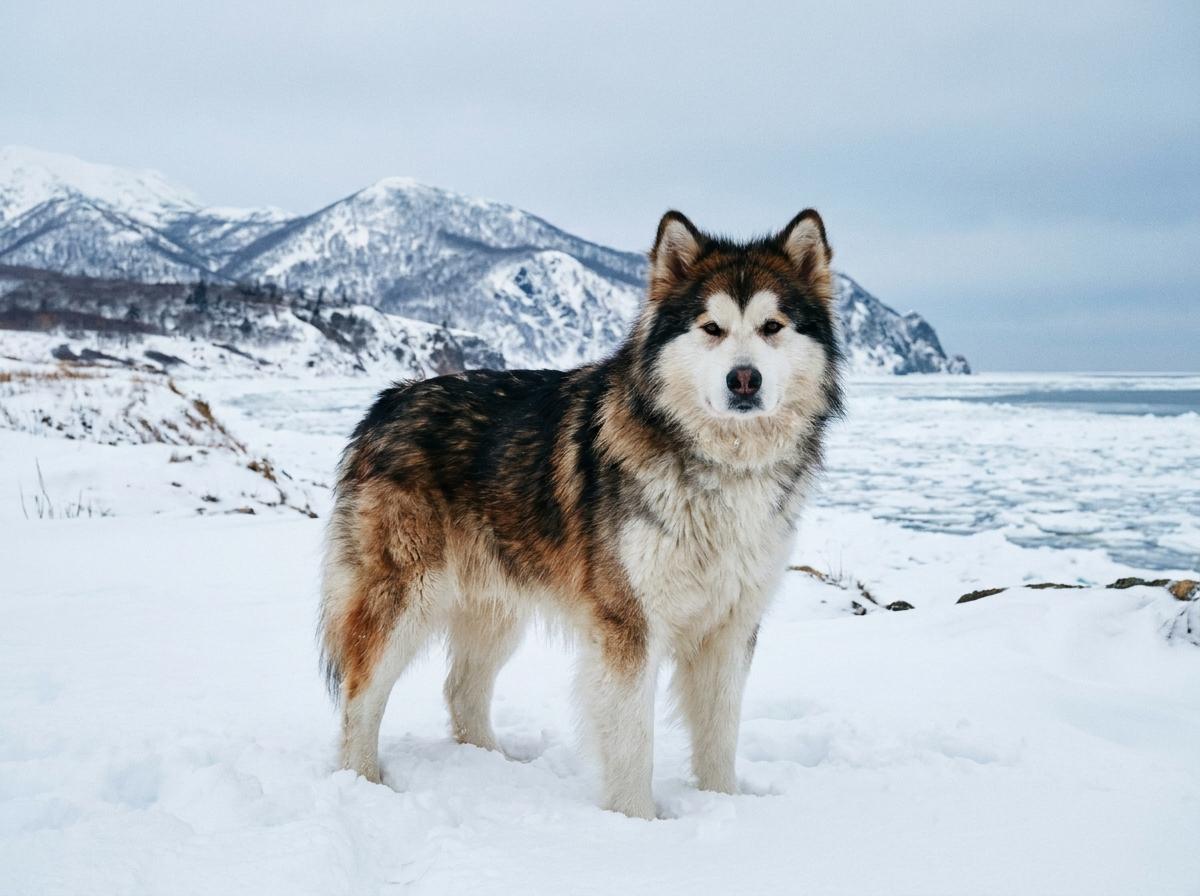
Sakhalin Husky
The Sakhalin Husky, or Karafuto Ken, is a historic northern sled dog associated with Sakhalin, Hokkaido, and Japan’s early Antarctic expeditions. Its best documented representatives are Taro and Jiro, not a modern catalog of puppies or a current show standard. Explore the wider Creatures dog hub, and use the breeder directory only to investigate evidence. A listing or familiar husky-like face would not prove Karafuto ancestry.

Browse listings, public profiles, breeders, or add your animal.
What was the Sakhalin Husky?
Karafuto is the Japanese name historically used for southern Sakhalin, and ken means dog. English sources often render Karafuto Ken as Sakhalin Husky. The word husky can invite comparison with familiar standardized breeds, but the historical record here describes a regional working dog population selected for sled work.
The National Institute of Polar Research educational sheet says Karafuto dogs were developed in Sakhalin and the Kuril Islands. It shows that their coats varied across white, black, brown, and patched dogs. That variation matters: one modern Siberian Husky-like color pattern is not a reliable reconstruction of the population.
The page should also be read with respect for the northern communities and working context from which the dogs came. A short breed label cannot replace the human histories of Sakhalin, Indigenous dog use, migration, or Japanese polar exploration.
Built for work, not a modern show ring
Available official material emphasizes function and historical photographs more than a current conformation standard. The dogs were substantial, densely coated workers capable of pulling loads in snow. Historical individuals differed in color, markings, ear carriage, build, and tail carriage. Treat any exact height, weight, or temperament chart circulating online with caution unless it identifies a primary measurement source.
The first reconstruction above shows one plausible black-and-white working dog, not an ideal specimen. It cannot establish a mandatory color, head, tail, or ear shape. A museum photograph tied to a named dog is evidence about that individual, while a generated illustration is only a transparent interpretive aid.
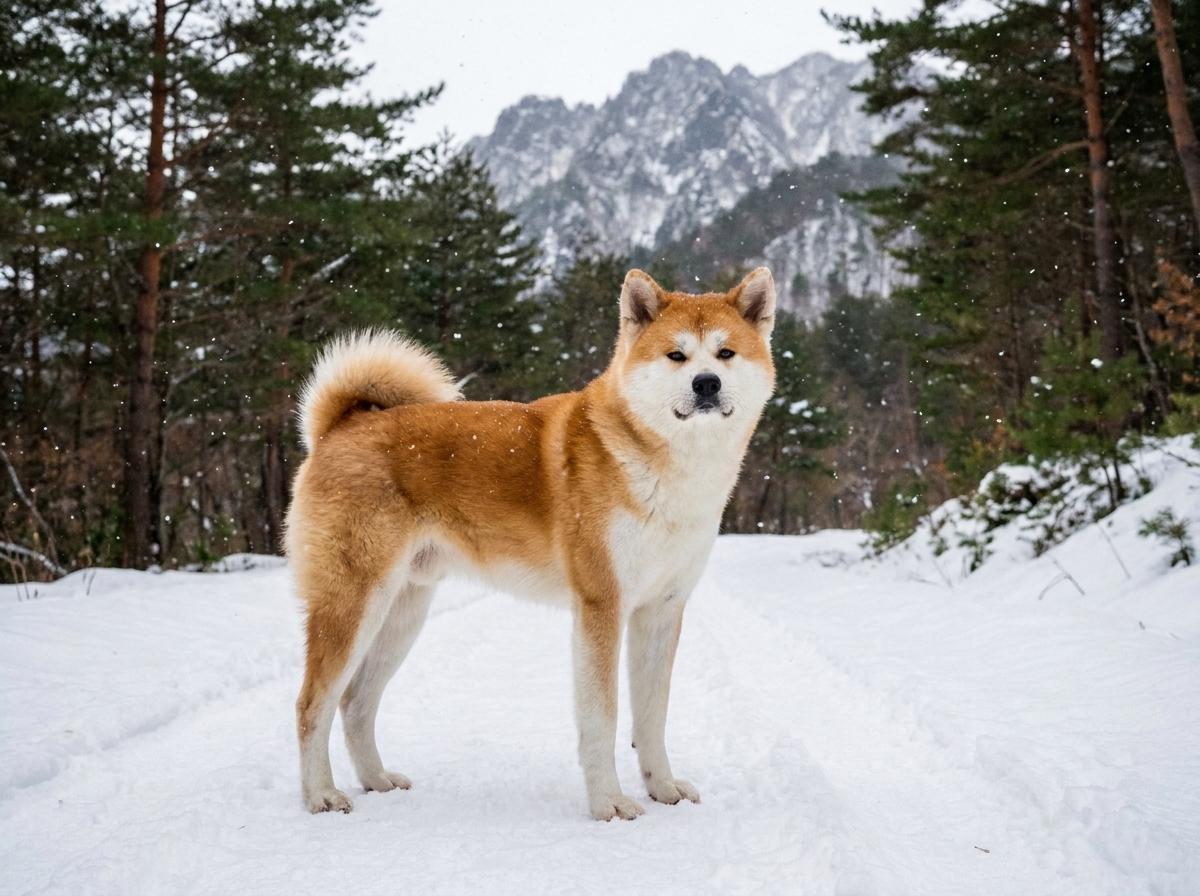
Do not identify a living dog as Sakhalin Husky from appearance alone. Siberian Huskies, Hokkaido dogs, Akitas, mixed northern dogs, and other spitz-type populations can share a thick coat, upright ears, or curled tail. Provenance would require traceable records linking the animal to a documented breeding population.
Japanese Antarctic expedition history
Japan established Syowa Station during the first Japanese Antarctic Research Expedition in 1957. Dogs supplied transport in an era when expedition logistics depended more heavily on sled teams.

The reconstruction shows varied dogs in working harness and a low supply sled. It is not a photograph of a specific expedition, team, harness layout, or moment. It should help readers picture the job without being mistaken for archival evidence.
In a first-person account preserved in the Smithsonian volume Science Diplomacy: Antarctica, Science, and the Governance of International Spaces, expedition member Yoshio Yoshida writes that poor sea-ice conditions forced the second expedition team to leave 15 Sakhalin sled dogs at the unmanned station in February 1958. When the third team arrived on January 14, 1959, Taro and Jiro were alive.
The Museum of Maritime Science account confirms the rediscovery date and preserves a photograph of expedition member Takeshi Ono with the two dogs. The event became a major story in Japan. It is fair to remember the survival of Taro and Jiro, but not to turn it into a claim that every Sakhalin dog could endure deprivation or that leaving dogs in polar conditions was safe.

This scene is an original reconstruction honoring the two dogs. It does not reproduce their exact markings, equipment, bodies, or the museum photograph.
What is the breed’s status now?
This is where confident web summaries run beyond the evidence. Some call the Sakhalin Husky extinct. Others call it critically endangered and cite a tiny number of survivors. The authoritative polar institute, museum, government, and city sources used for this guide document historical dogs and commemoration, but they do not publish an active studbook, audited present-day census, or verifiable breeding directory.
That leaves a deliberately narrow conclusion: the historical population is well documented, while a current purebred breeding population is not established by these sources. This guide neither declares extinction nor suggests puppies are available. A dated statement from a breeder or a photo of a northern dog would not settle the issue without independent pedigree and population evidence.
The City of Wakkanai’s official northern guide documents the city’s connection to Karafuto dogs and their museum interpretation. Commemoration is valuable evidence of history, but it is not evidence of living breeding stock.
Evaluating a modern ancestry claim
A seller, owner, or preservation group making a present-day Sakhalin Husky claim should be able to provide more than resemblance. Ask for:
- A complete, named pedigree with records that predate the current seller.
- The registry or archive holding those records and a way to verify them independently.
- The documented founding population and how relatedness is managed.
- DNA data interpreted against relevant reference samples, including the limits of that comparison.
- Current population counts with a date, method, and distinction between living dogs and breeding animals.
- Health testing, welfare plans, and a clear reason for every proposed mating.
Genetic testing cannot conjure a reliable reference population if none has been established. A commercial breed estimate should never be presented as proof of descent from historical Karafuto dogs without explaining its reference data.
Anyone preserving records should keep original documents, scans, translations, photographs with provenance, sample identifiers, and corrections. Historical uncertainty is not a reason to manufacture certainty.
Frequently asked questions
Is Sakhalin Husky the same as Karafuto Ken?
Yes. Sakhalin Husky is the common English label; Karafuto Ken is the Japanese name used in the cited polar-research material.
Was Taro a Sakhalin Husky?
Yes. Taro and his brother Jiro were Karafuto sled dogs used in Japan’s Antarctic program. Both were found alive at Syowa Station on January 14, 1959.
Is the Sakhalin Husky extinct?
The cited authoritative sources do not provide a current audited census or active registry, so this guide does not make a definitive extinction claim. It also does not claim that verified breeding stock is available.
What did Sakhalin Huskies look like?
Historical material shows dense-coated, sturdy sled dogs with considerable variation, including white, black, brown, and patched coats. There is no current standard cited here that makes one internet image the mandatory type.
Can I buy a Sakhalin Husky puppy?
This guide cannot verify a current source of purebred puppies. Treat any advertisement as an ancestry claim requiring independent documentary and population evidence.
Do this next on Creatures
Use Creatures to preserve evidence and monitor claims without converting uncertainty into availability.
Monitor claims. View the Sakhalin Husky marketplace filter or save an alert. An empty or future result proves neither extinction nor ancestry. See saving searches and using your watchlist.
Research provenance. Check the breeder directory, then require independently verifiable pedigrees, archive contacts, population methods, and health evidence.
Document only what you know. If you are responsible for a dog with supported ancestry, start a profile and attach provenance. Follow adding an animal to Creatures.
Preserve source events. Open the record sheet. Visitors can explore it, and a free account saves entries. Read adding a record and health and medical records.
Represent a preservation group. Create an organization profile, with no account needed to begin, and state exactly what the group can document.