

Dzo/Dzomo
Bos grunniens × Bos taurus
A dzo is a yak crossed with domestic cattle. The word is sex specific: strictly, dzo is the male hybrid and dzomo is the female. That distinction is not cosmetic, because the male is sterile and the female is not, and almost everything herders across the Himalaya, Tibet and Mongolia do with this animal follows from that one split.
They are real, common working animals rather than a curiosity. In Nepal alone, FAO’s yak monograph records roughly 20,000 pure yak against about 40,000 yak and cattle hybrids in the 18 alpine districts, so the cross outnumbers the parent species two to one there. Ancient DNA from the site of Bangga in Tibet dates yak and cattle hybridization on the plateau to about 2,500 years ago. If you arrived here from a game, a novel or a pub argument: yes, the dzo exists, and it has for a very long time. If you want to see each parent on its own, Creatures has a yak species page and a cattle species page.

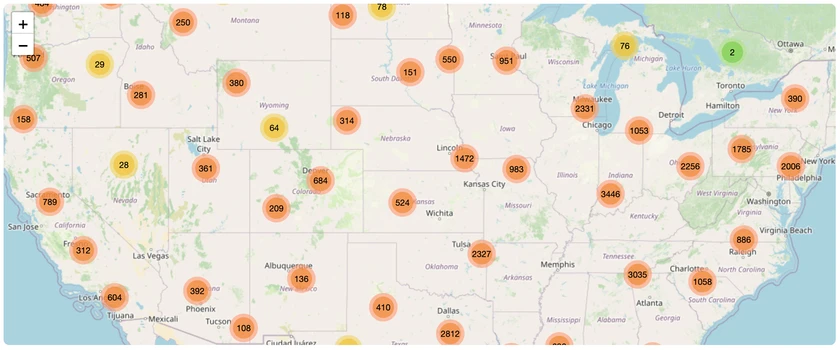
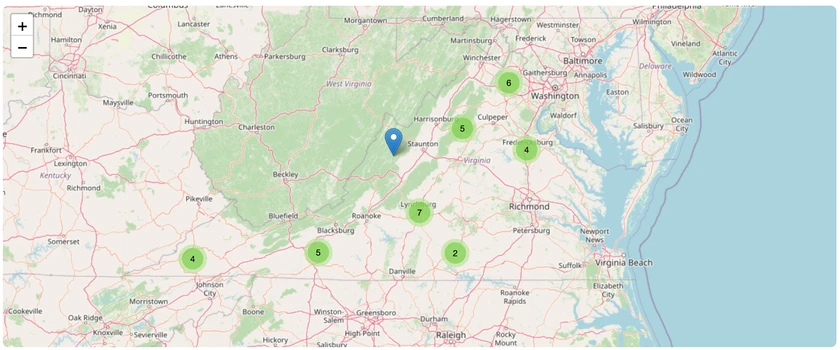
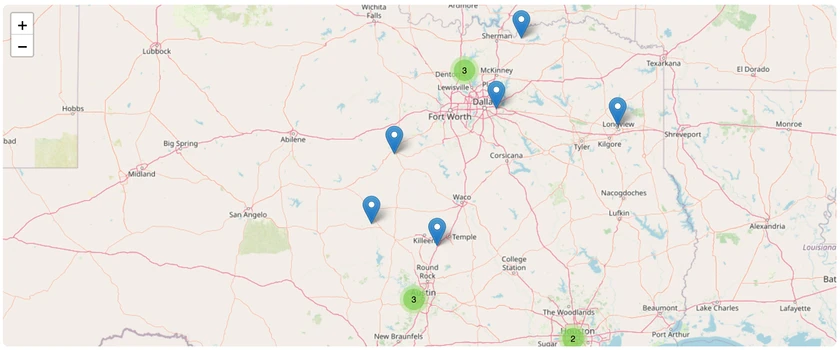
Browse listings, public profiles, breeders, or add your animal.
Dzo, dzomo, zo, zhom: one animal, many names
Sex specific naming is normal across this group of animals. FAO notes that the yak itself splits in Tibetan, yag for the bull and dri for the cow, and that “the male and the female are generally known by different names” throughout the region. The research literature follows the same rule: a 2025 study of hybrid male infertility defines dzo as “the male F1 hybrid offspring of taurine cattle (Bos taurus) x domestic yak (Bos grunniens)”, while a 2024 adaptation study describes its test group as “dzomo (female dzo)”. English writing, and FAO too, also uses dzo loosely for the cross in general. Both usages are live, so be precise if you can and assume the loose sense if someone mentions a herd of dzos.
Spellings multiply because Tibetan is being transliterated by different people into different languages. You will meet zo, dzho and zho, compound forms such as dzopkyo or zopkyo, and zhom or zom for females. Be careful with the last: FAO’s Bhutan chapter lists Zom as the first cross of yak with cattle without sexing it, and the female sense comes from the monograph’s hybridization chapter. We will not gloss every variant, because the published sources do not agree on one and an invented table would be worse than saying so.
The regional names are better documented, and several encode which parent was which:
- Khainag (also hainag) is Mongolian. FAO’s Mongolia chapter splits the first cross by direction: Saran Hainag from a yak cow bred to a domestic bull, Naran Hainag from a domestic cow bred to a yak bull.
- Chauri is Nepali, and Nepal names the directions too: Dimjo (or Dim-dzo) from a cattle bull on a yak female, Urang from a yak bull on a local cow. Farmers there prefer the Dimjo, which grows larger and milks better.
- Pian niu is Chinese. A yak cow to a bull of local cattle gives the “true” pian niu; the reciprocal mating gives the “false” pian niu, used mainly for ploughing rather than milk.
- Yakow and yattle are English portmanteaus. Nobody who keeps these animals uses them.
The naming runs deeper still. A Nepali survey cited by FAO catalogued “no less than 124 different combinations” of yak with different local cattle types, each named, with the names multiplying further among the backcrosses.
Why the males are sterile and the females are not
The pattern is certain. The explanation is not, and an honest version of this says both.
Yak and cattle carry the same chromosome number, 30 pairs each, a diploid count of 60. That similarity is part of why the cross gives live, healthy, useful calves at all. It does not deliver fertile sons. FAO puts it plainly: “F1 males are sterile. Although their sexual functions are intact, their semen does not contain sperm.” Nothing about the animal looks broken. He grows normally, has normal libido, and mounts and serves a cow on heat without trouble. There is simply nothing in the ejaculate, which is why FAO calls him “a ‘natural’ teaser bull,” an animal some herders keep purely to find cows in heat.
The tissue shows where it stops. A 2022 comparison of mature yak and cattle-yak testes found the hybrid’s seminiferous tubules held reduced spermatogonia and primary spermatocytes, fewer secondary spermatocytes, no round spermatids and no sperm at all, with large vacuoles where germ cells should be. The production line starts and quits partway through. That follows Haldane’s rule, the long observation that when one sex of a hybrid is sterile it is the one carrying two different sex chromosomes, which in mammals is the male. How far the work has got is best put by a 2021 review in Biology of Reproduction: “the mechanism of sterility in the hybrid male is still not completely unravelled,” after two decades across genetics, transcriptomics and endocrinology. Chromosome structure, hormone signalling, meiotic pairing and epigenetic regulation have all been implicated, and none closes the case. Anyone telling you the cause is settled is ahead of the literature.
Nor does fertility return quickly further down the male line. Sperm production, per FAO, “does not resume until the third backcross at the earliest (15/16 yak or cattle), and often not until the fourth backcross is reached,” and even then only in the occasional individual. Since backcrosses also lose the advantages the first cross was made for, almost nobody bothers.
The female is a different animal entirely. She is fertile, cycles and calves normally, reaches sexual maturity sooner than a yak, is first mated a year earlier, and generally calves every year where a yak often does not. So the working rule never changes: you cannot breed dzo to dzomo and get more dzo. Every generation of first crosses is made fresh from a yak and a cow, and the dzomo daughters are bred back to one parent species or the other.

What the cross buys, and what it costs
Nobody makes these animals for novelty. The numbers are worth seeing rather than summarising as hybrid vigor.
Milk is the clearest gain. Chinese figures reported in FAO’s monograph give a first lactation of 714 kg for hybrids by Holstein-Friesian sires against 244 kg for pure Maiwa yak cows, and 388 kg for a plain local cross. At peak, a local yak might give 2.0 kg a day, a local hybrid 3.0 kg, an improved cross around 8.0 kg. Mongolian first cross cows average 816 kg a lactation. The catch is butterfat: yak milk is famously rich, and in FAO’s table local yak runs 6.3 percent fat against 6.0 for the local hybrid and 5.4 for the Holstein-Friesian cross. The gain is volume, not concentration, which matters where much of the milk becomes butter and cheese.
Size comes with a caveat, because the usual claim is that the cross beats both parents. The monograph’s actual wording is that first cross hybrids “generally grow faster and become larger than the yak” and are “also larger than some of the local cattle.” Chinese figures give adult hybrid females at 292 kg by local yellow cattle and 357 kg by Holstein-Friesian against 249 kg for local yak, and Mongolian first cross cows run about 80 kg above yak females and 70 kg above Mongolian cows, which is genuinely bigger than both. But Nepali on-farm data gathered where yak and hybrids are kept in the same places found female hybrids slightly lighter than the corresponding pure yak. Bigger than the local yak is well supported. Bigger than both parents everywhere is not.
The dam pays for it. Hybrid calves are born heavy, up to 50 percent above pure yak calves for crosses with yellow cattle and heavier still from improved sires, and that extra birth weight is, in FAO’s words, “responsible in large measure for the increase in calving difficulties in yak cows with hybrid calves compared to those with pure yak calves.” A yak cow carrying a hybrid is at higher risk at calving than one carrying her own species. That rarely makes it into writing about the dzo, and it should.
It is not automatically better business. FAO reproduces a Nepali budget, updated for inflation by a factor its own author suggested, not one FAO calculated, in which the annual gross margin from a lactating pure yak came out more than a third higher than from a lactating hybrid female: she cost more to buy, ate more, and her calf was worth less, which cancelled much of the extra milk. FAO’s reading is that under largely pastoral conditions the higher input hybrid is “not necessarily the most profitable” choice. This is a tool for particular conditions, not a free upgrade.
And it only works in a band. Pure yak are the specialists at the top, on ground where cattle do poorly. FAO’s altitude chapter puts them generally above 3,000 m, while its opening chapter gives a looser 2,000 to 5,000 m, so read the threshold as approximate rather than a line. Pure cattle are far more productive and fade as the air thins. FAO is careful about which way the hybrid’s advantage runs: hybrids “are less well adapted to the harsh conditions and high altitudes typical for yak and are kept at intermediate elevations.” A dzo does not replace a yak on the high rangeland. It pushes cattle grade milk and pulling power further up the slope than a cow could manage, and stays more productive than a yak down where the terraced fields and villages are. You will see the band quoted as roughly 2,500 to 3,500 m. That is a fair summary of where mixed Himalayan farming happens, but FAO does not publish it as a range, so treat it as a rule of thumb, not a specification.

What a dzo looks like
Partway between a yak and a cow, with the exact blend depending on which breeds went in and which direction the cross ran.
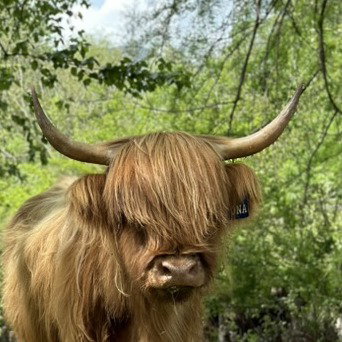
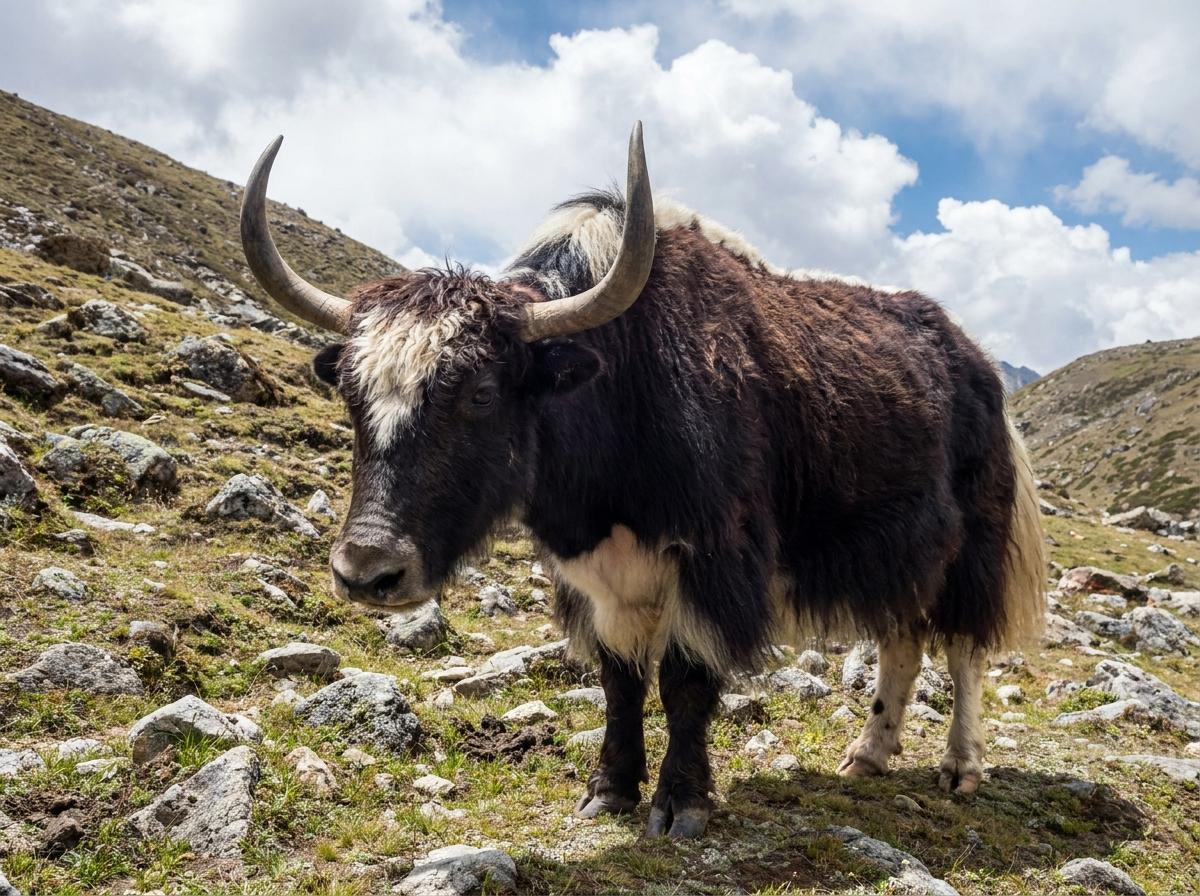
Coat is the quickest tell. A pure yak carries a long skirt of hanging guard hair down the flanks and belly, often close to the ground; a dzo carries a shorter, raggeder version that stops well up the leg, over an undercoat heavier than any cow’s. The yak’s high peaked shoulder flattens into a low rounded rise over the withers. The head broadens toward the cattle side, wider forehead and blunter muzzle, and the horns are usually smooth and moderate, curving out and up rather than sweeping back the way a yak’s do. The tail is tufted but not a full bushy plume. Colour runs dark brown to near black, very often broken by white from the cattle parent: a blaze, white on the belly, white feet.
There are no breed standard measurements to give you, and that is not an omission. This is a first cross between many yak breeds and many cattle breeds across an enormous region, so there is no registry and no single conformation. The animal in front of you reflects its particular parents.
The working life: plough, pack and pail
FAO states the division of labour in one sentence: “The hybrid females are an important source of milk and milk products, for home consumption or for sale, and the males, since they cannot be used for breeding, are used for draught purposes, or are slaughtered for meat.”
Ploughing is where the sterile male earns his keep, and his advantage is measurable. Two ordinary first cross steers, on a traditional plough cutting a 15 cm furrow, till about 0.13 hectares in a day. On maximum pull, yak steers reached around 390 kg, roughly 96 percent of their own live weight, while hybrid steers reached 550 kg, about 120 percent of theirs. Hybrids are also easily tamed and tolerate heat better than pure yak, which matters in a valley field in summer. Terraced fields are too small, steep and walled for machinery, so this is the available technology.
Packing is where a popular claim needs correcting. It is often said the dzo carries more than a yak, and FAO’s own trials do not support it. A first cross hybrid tested on grassland carried 75 kg, about 16.3 percent of its body weight, and covered 30 km in six hours, which the monograph describes as “not unlike the performance of the pure yak.” Yak in Sichuan carried the same 75 kg over the same 30 km in 6.2 hours, and yak on the Qinghai grasslands have been recorded under packs up to 300 kg. So the reason dzo do so much of the load carrying on Himalayan trails is not that they out carry a yak. It is that the trails and the villages sit in the hybrid’s altitude band, and the hybrid is more tractable and handles warm days better. One detail worth keeping: the first cross hybrid “has an excellent memory,” good enough that it “can find its own way home to the campsite, like an old horse, without anyone in attendance.”
Milk belongs to the dzomo, the household dairy animal, and her yield is the main reason the cross gets made in mixed farming country. Meat is the ordinary end of a working male, who cannot breed, so slaughter costs nobody a bloodline.
Anyone running this is managing a small pipeline: yak and cattle to make the first crosses, dzomo for milk and the next generation, dzo for work and meat. That is a lot of parentage to hold in your head. If you keep yak or crossbred stock, you can give each animal a free profile on Creatures and keep its breeding, milk, work and health records in one place.

Dzo, yakalo and beefalo are three different crosses
These get mixed up constantly, and the parent species separate them.
- Dzo and dzomo: yak crossed with domestic cattle. Kept in numbers across the Himalaya and Central Asia, for thousands of years, with a whole farming system built on them.
- Yakalo: yak crossed with American bison. Yak joined the crossing trials at Buffalo Park, Wainwright, Alberta in 1921, chasing a meat animal for open northern range. Few of the hybrids survived and the series was suspended in 1928. There is no yakalo population today.
- Beefalo, or the older cattalo: cattle crossed with bison, no yak involved at all.
Both yak crosses hit the same wall: hybrid males sterile, hybrid females fertile. Neither could be fixed as a self sustaining breed, so the difference is what people decided to do about it. Canada gave up in 1928. The Himalaya kept remaking the first cross generation after generation, because the first cross was worth remaking.
What is solid and what is thin
Solid. That the cross is yak by domestic cattle; that males are sterile and females fertile, with the male’s block sitting in spermatogenesis; that first cross females out milk pure yak, by a wide margin with improved sires; that the male out pulls a yak; that the hybrid is kept below the pure yak’s altitude range; and that yak and cattle were being crossed on the Tibetan Plateau around 2,500 years ago, which comes from genome sequencing of archaeological remains, not tradition.
Thin or variable. Exact weights, yields and dimensions, which swing enormously with the breeds used, the direction of the cross, feeding and workload. The FAO figures above are representative herd data, not a breed standard, and the Nepali and Mongolian results disagree on whether the hybrid outweighs both parents. There is no lifespan figure specific to the hybrid we would print, no international registry, and no reliable public price, because these animals are traded locally rather than pedigreed.
Unsettled. The mechanism of male sterility, which is worked on hard and not solved. And the age of the practice: the archaeological and genomic evidence points to about 2,500 years, while FAO separately reports that “ancient documents show that yak have been hybridized with ordinary cattle for at least 3,000 years.” Two different kinds of evidence, and we would rather show you the gap than average it.
Can you get one in North America?
Not as a dzo. There is no North American market for the hybrid, no registry for it and no pet trade in it, and importing live ruminants from the Himalayan region is heavily restricted on animal health grounds. Anyone quoting you a price for a dzo is selling something else.
The yak side does exist here. A FAO survey of yak outside their traditional range counted an estimated 90 breeders across the United States and Canada, perhaps fewer, holding no more than about 2,000 yak and hybrids between them, run mainly for lean meat, with a North American breed association behind them. A few of those keepers do cross yak with cattle, but they call the result a yak-cattle cross rather than a dzo, and they are not running the Himalayan system: no terraced ploughing, no household milking, no managed backcross ladder. So if the dzo caught your interest as a cold hardy, hard working bovine, the version you can actually keep is a domestic yak, or conventional cattle.
Common questions
What is the difference between a dzo and a dzomo?
Sex. Dzo is the male yak and cattle hybrid and he is sterile. Dzomo is the female and she is fertile. Dzo also gets used loosely for the cross in general, which is where most of the confusion starts.
Are dzos sterile, and can two of them breed?
The males are sterile: normal sexual function and libido, but no sperm in the semen, because spermatogenesis stops before mature sperm form. A dzomo is fertile, but only to a yak or a cattle bull, so a dzo and a dzomo cannot produce a calf between them.
Why breed them if the males are sterile?
Because you are not breeding for a bull. You are breeding for a milking female and a working male, and the first cross beats a pure yak at both at that altitude. Each generation is simply made fresh from a yak and a cow.
Is a dzo the same as a yakalo or a beefalo?
No. Dzo is yak by domestic cattle, yakalo is yak by American bison, beefalo is cattle by bison. Of the two yak crosses, only the dzo is still kept.
Are dzo real animals?
Yes. Nepal’s alpine districts hold around 40,000 yak-cattle hybrids against roughly 20,000 pure yak, and the cross is also kept across Tibet, Bhutan, northern India, Mongolia and western China.
Do this next on Creatures
These are working animals of their home region, so we have kept this honest: there is no dzo market to send you to and no dzo breeders to list. What follows is for people who keep yak or yak-cattle crosses, plus a way to follow the stock that does.
Keep a yak or a yak-cattle cross? Create a free animal profile and get the parentage down while you still remember it, which matters more than usual with a cross whose whole point is which parent went which way. No account needed to start, and adding an animal to Creatures walks through it.
Then log the working life. Add a record for plough and pack days, milk weights, matings and backcrosses, calving difficulty and vet visits. The sheet opens for any visitor to look around, and a free account is what saves it. See adding a record, and health and medical records for the veterinary side, which is where calving trouble in a yak dam carrying a hybrid calf belongs.
Watching for stock. Nobody sells dzo in North America, but domestic yak do come up here in small numbers. Set a free listing alert for yak and we will tell you when one is posted rather than leaving you to check. No account needed to start, and saving searches and using your watchlist covers the rest.
Find the people who keep them. Farms and homesteads raising yak and crossbred stock are listed in the Creatures breeder directory, the realistic place to start if you want to see one in person. The yak and cattle species pages show each side of the cross on its own, and yakalo covers the yak and bison cross that gets confused with this one.