


False Gharial
Tomistoma schlegelii
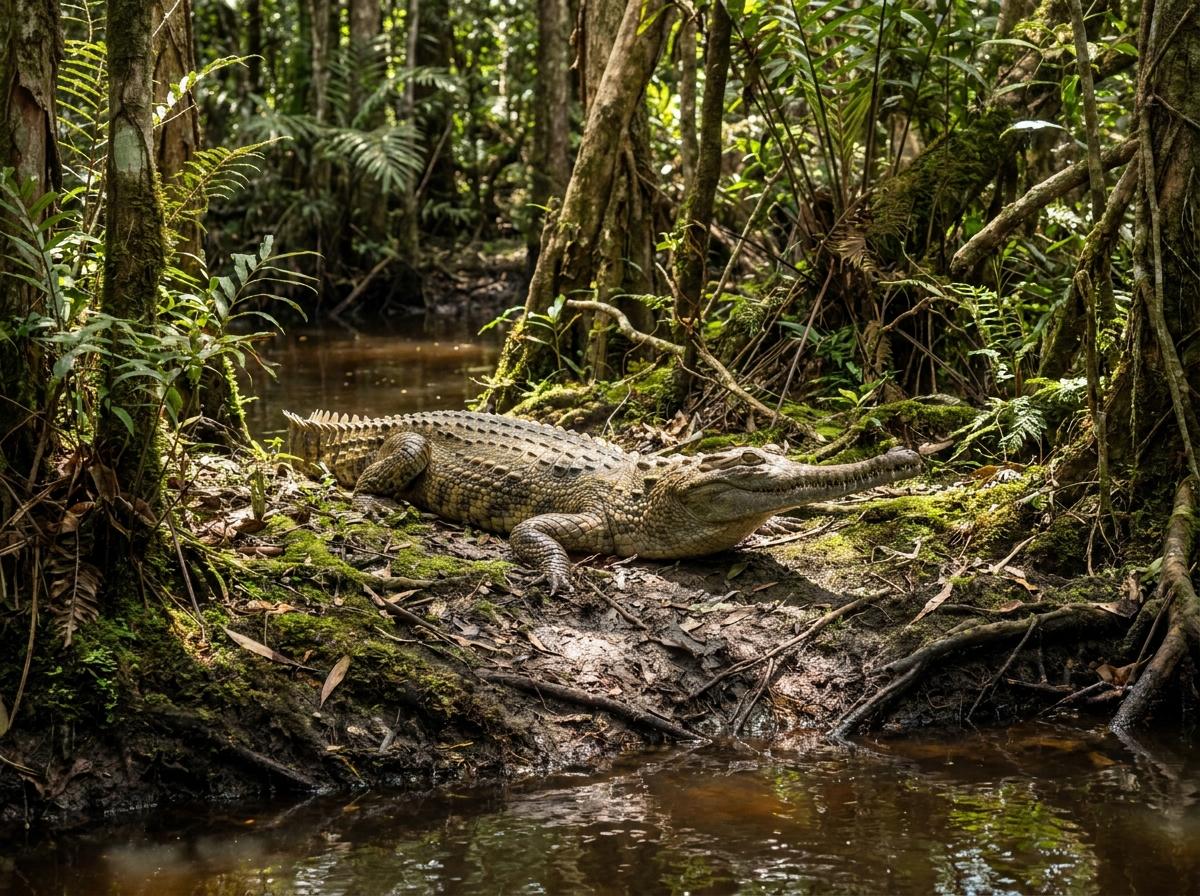
The false gharial (Tomistoma schlegelii), also called the Malayan gharial, is a long-snouted crocodilian of peat swamps, blackwater rivers, and flooded forests in parts of Southeast Asia. Its narrow jaws invite comparison with the Indian gharial, but it belongs to a separate lineage and has a heavier body, broader skull base, and a diet that can include fish, birds, mammals, and reptiles. Adults are large, secretive animals that spend much of their time in slow, vegetated water.
Human work with false gharials is mostly zoo management and conservation rather than private ownership. Facilities need deep warm pools, secure haul-out space, quiet nesting areas, and barriers designed for a large crocodilian that may be shy but still dangerous. Field programs focus on peatland protection, nest surveys, rescue of animals displaced by drainage or fishing conflict, and reducing bycatch in nets. Breeding records and careful transfers matter because captive populations are limited and wild habitat is fragmented.
Colors: Wild Type