





Black
A black gerbil is not a separate species. It is a solid black color variety of the Mongolian gerbil (Meriones unguiculatus), the same friendly desert rodent kept as a pet worldwide, carrying a recessive non-agouti mutation that turns the whole coat, belly included, a deep jet black. Many black gerbils also show a small white spot on the chin, chest, or feet. Underneath the color it is an ordinary Mongolian gerbil: a burrowing, highly social steppe animal that needs to live with other gerbils, deep bedding to dig in, and dry, low-humidity housing. If you are choosing a black gerbil, the color is the easy part. The care that actually matters is the care every gerbil needs, and it is quite different from how you would keep a Syrian hamster. This page covers what the black variety is, where the color comes from genetically, how to tell a real black gerbil from a dark agouti, and how to house and care for one correctly.

Browse listings, public profiles, breeders, or add your animal.
What is a black gerbil?
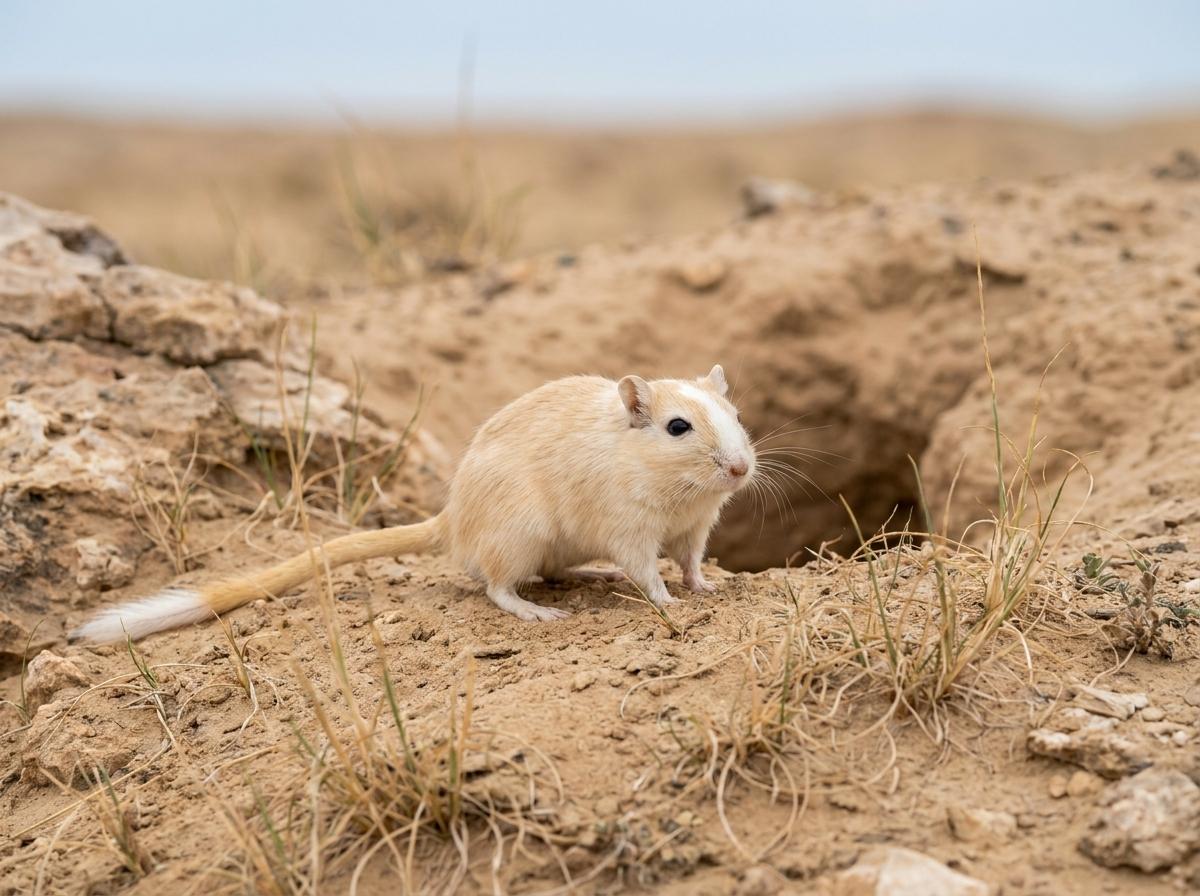
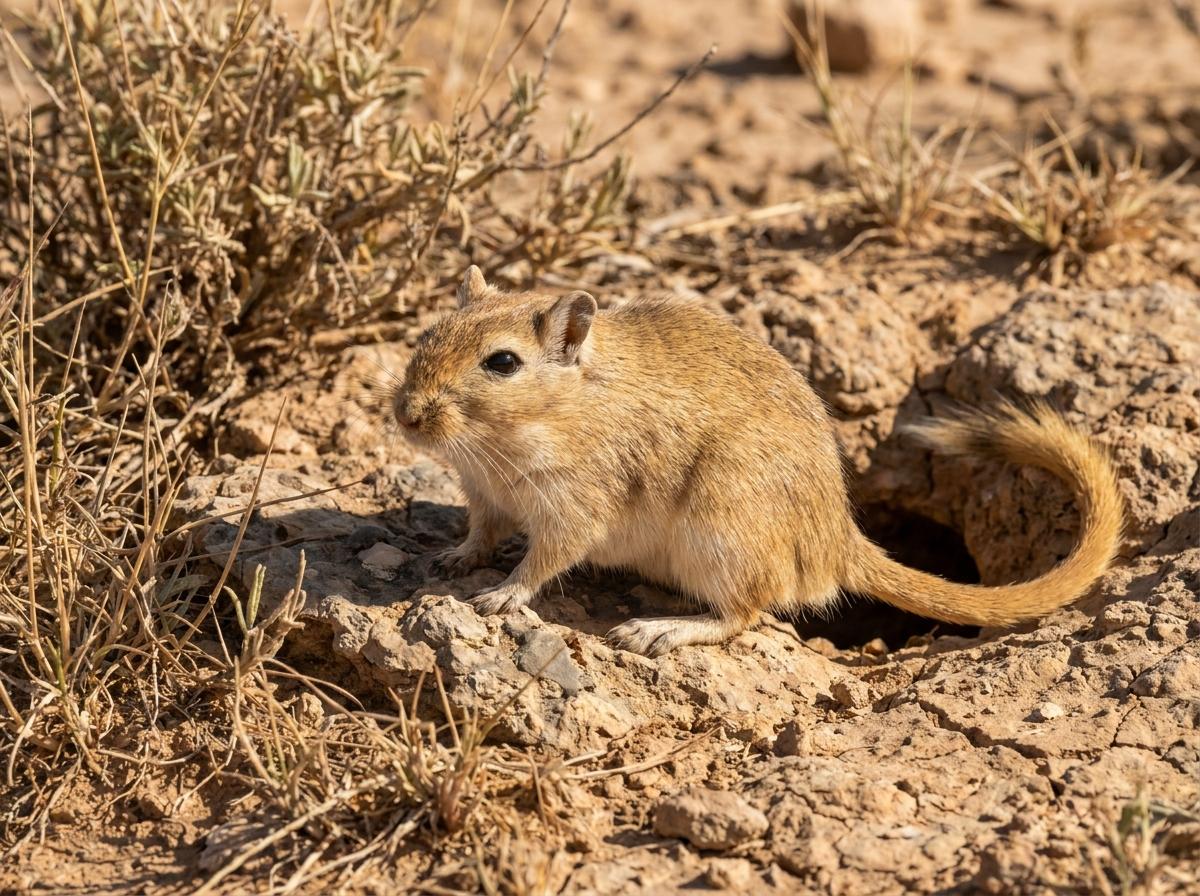
The pet gerbil almost everyone means when they say “gerbil” is the Mongolian gerbil, Meriones unguiculatus, a small rodent native to the grassland, semidesert, and steppe of Mongolia, northern China, and neighboring parts of Russia. The wild coat is agouti: a banded golden brown with a paler belly, the classic gerbil look. Because Mongolian gerbils have been bred in captivity for decades, more than twenty coat colors now exist in pet and show lines, and black is one of the most striking. The Mongolian gerbil is the species the veterinary literature and gerbil societies describe as the one that has been captive-bred the longest and carries the widest color range.
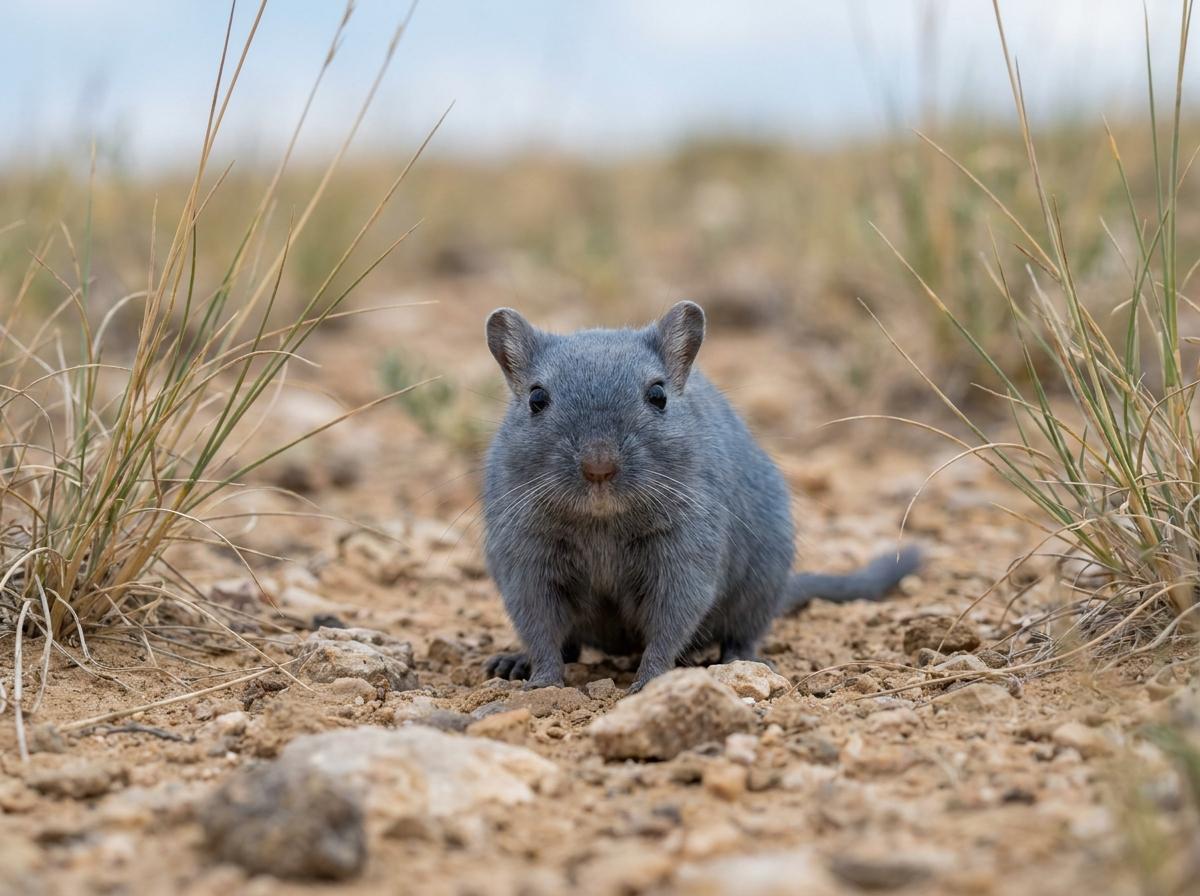
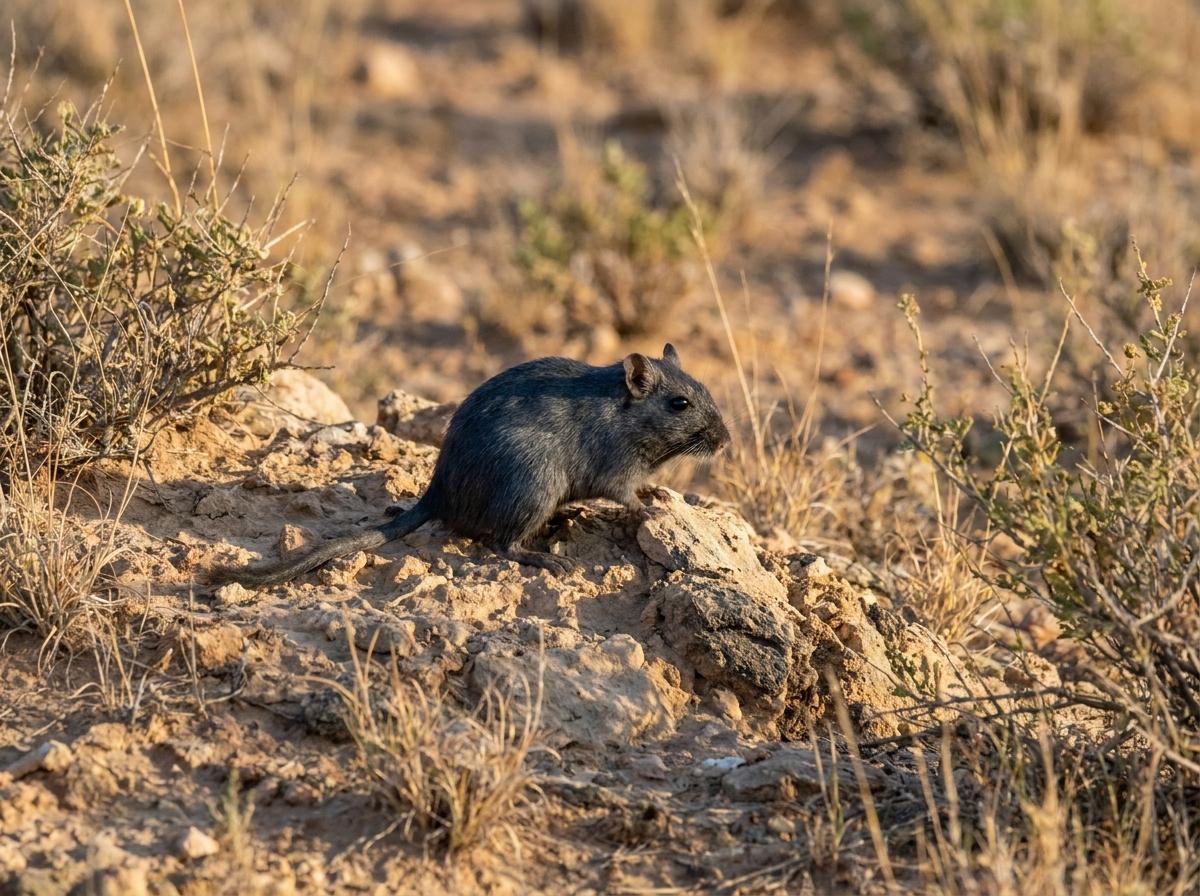
Black is what breeders call a “self” color, meaning the animal is one solid shade top to bottom instead of the banded, ticked agouti pattern. In a black gerbil the belly is black too, not the white or cream you see on a wild-type gerbil. According to the National Gerbil Society, the UK breed club founded in 1970, and the American Gerbil Society (AGS) in the United States, the recognized genotype for black is aa, and it sits in the self color class. So a black gerbil is a normal Mongolian gerbil wearing a different coat. Everything else about it, its behavior, its needs, its lifespan, is the same as any other gerbil of the species. If you want to compare it against other varieties, the Creatures gerbil species page is a good place to start.
The genetics of the black coat
The black color comes from a recessive mutation at the agouti (A) locus. In the normal wild-type gerbil, the dominant agouti gene switches pigment production back and forth as each hair grows, producing the banded hairs that read as golden brown with a light belly. The non-agouti version of the gene, written a, switches that banding off. When a gerbil inherits two copies (genotype aa), the hairs produce dark pigment along their whole length, the belly loses its pale color, and the animal comes out solid black. Because you need two copies, black is recessive: a gerbil can carry one hidden a gene while looking agouti, and two agouti-looking carriers bred together can produce black pups.
This is the same mechanism behind melanism, or all-black coats, across many mammals. In the broader biology literature, most black coats trace to a loss of function in the agouti signaling protein (ASIP) or a gain of function in the MC1R receptor. In gerbils specifically, the agouti-locus mutation is the well-documented route to a self black. Color-genetics researchers have described several other coat mutations in the Mongolian gerbil, including a recessive yellow tied to the extension (E) locus and additional dilution genes, which is why the pet gerbil color chart has grown so long. For the purposes of choosing or breeding a black gerbil, the practical rule is simple: black is aa, it is recessive, and two carriers can surprise you with black offspring.

Black, or just a dark agouti? How to tell
Not every dark gerbil is a true black, and this trips up a lot of new keepers. A few quick checks separate a genuine non-agouti black from a dark or dilute variety.
- Look at the belly. A true black gerbil is black on the underside too. If the belly is noticeably paler than the back, or cream or white, the animal is not a self black; it is likely an agouti-based color.
- Look for ticking. Agouti hairs are banded, so an agouti coat has a flecked, “ticked” look up close. A self black coat is smooth and even, without that salt-and-pepper banding.
- Expect small white spots. Many black gerbils carry tiny white spots on the chin, chest, or feet, and small white toes or nails are common. These are normal in the black variety and are not a fault in a pet. Larger, deliberate white patches on the head and belly indicate a separate spotting gene rather than the base black color.
- Watch for browning with age or wear. Black coats can pick up a slightly rusty or brownish cast over time or from sun and normal wear. A gerbil that looks near-black but distinctly warm brown may be a dark agouti or a dilute rather than a self black.
None of this changes how you care for the animal. It only matters if you are buying a specific color, entering shows judged to a standard, or planning to breed, in which case the genotype behind the coat is what counts.
Housing: social, and nothing like a hamster
This is the single most important thing to get right, and it is where gerbil care diverges sharply from hamster care. Gerbils are social animals that live in family groups in the wild, and pet gerbils should never be kept alone. Rescue and welfare organizations, including the RSPCA and humane societies, are clear that gerbils need the company of their own kind and should be kept in a same-sex pair or small group. This is the opposite of the Syrian hamster, which is solitary and must be housed alone. If you have read hamster care advice, set it aside here: a single gerbil is an under-met gerbil.
There is an important catch with introductions. Gerbils bond best when they are young, ideally paired before about eight weeks of age, or kept as same-sex littermates or an established pair from the breeder. Adult gerbils that are strangers can fight seriously, even fatally, if simply put together, so pairing adults requires a careful, gradual “split-cage” introduction rather than dropping them in together. The simplest path for a first-time keeper is to bring home an already-bonded same-sex pair. Keep same-sex to avoid breeding unless you specifically intend to breed and understand what that involves.

Because gerbils are desert burrowers, the enclosure itself matters as much as the company. Two features are non-negotiable.
- Deep bedding for burrowing. Gerbils are built to dig, and in the wild they live in elaborate tunnel systems. A pet gerbil enclosure needs a deep layer of safe bedding (a mix of paper-based bedding and something like aspen, several inches deep) so they can tunnel. A shallow tray of substrate does not let a gerbil be a gerbil. A solid-bottomed tank or a tank-and-topper style enclosure holds deep bedding far better than a shallow wire cage, and it also removes wire bars that a gerbil will gnaw and that can catch feet.
- Low humidity, moderate temperature. As desert animals, gerbils are sensitive to damp air. The Merck Veterinary Manual notes that gerbils kept at relative humidity above about 50 percent are prone to nasal dermatitis, a sore-nosed skin condition. Aim for a dry room, low humidity, and comfortable room temperatures, and keep the enclosure out of direct sun and away from damp.
Give the pair chew material and things to gnaw, since gerbils gnaw constantly, plus a sand bath for grooming and cardboard and safe wood to remodel their tunnels. A solid running wheel (no rungs or gaps that can trap the tail) is a good addition. Skip cotton-wool “fluff” nesting products, which can wrap around limbs.
Handling and the tail: a key safety point
Gerbils have a long, fully furred tail ending in a small tuft, and that tail is delicate in a specific way. Unlike many rodents, a gerbil should never be picked up by the tail, and never by the tip. The skin at the end of the tail can slip off if the animal is lifted or restrained by it, a “degloving” injury that leaves raw tissue and usually costs the gerbil the end of its tail. The Merck Veterinary Manual describes exactly this: pick a gerbil up by the tip of the tail and the skin often slips off. Scoop gerbils up in cupped hands, or cup them against your body, and if you ever must steady the tail, hold only the thick base near the body, never the middle or tip. This is worth teaching children before they handle one.
Diet and daily care
Gerbils do well on a good commercial rodent or gerbil diet. The Merck Veterinary Manual notes that gerbils thrive on pelleted rodent diets in the range of about 18 to 20 percent protein, eating on the order of 5 to 8 grams a day. A quality gerbil mix or pellet, kept fresh, plus small amounts of appropriate vegetables and the occasional seed or mealworm as a treat, covers most needs. Provide clean water at all times, usually from a bottle. Gerbils drink relatively little because they are adapted to conserve water, but fresh water must always be available. Avoid sugary or fatty treats and citrus.
Day to day, gerbils are active and curious and do not sleep in long single blocks the way a strictly nocturnal animal does. They tend to run on short cycles of activity and rest around the clock, which makes them engaging pets that are often awake and busy during the day. They are diggers and rearrangers, so expect the tunnels and bedding layout to change constantly. Spot-clean regularly, but because gerbils produce little urine and dry droppings, a well-set-up deep-bedding enclosure needs full cleaning less often than a small hamster cage, and over-cleaning can actually stress a bonded pair by erasing their scent.

Health and lifespan
Pet gerbils commonly live around two to four years, with the Merck Veterinary Manual citing a normal lifespan of two to three years; good housing, correct humidity, and a proper diet help them reach the upper end. The black color itself carries no special health burden. The health points to know are the ones that apply to all Mongolian gerbils.
- Seizures. Mongolian gerbils have a well-known, largely inherited tendency toward brief seizures, often triggered by sudden stress, rough handling, or a startling new environment. Reported rates vary widely by strain, from a minority of pet gerbils to much higher figures in certain lab colonies, but the key point for owners is that these episodes are usually short, are generally not harmful, and often diminish as a young gerbil is gently and gradually accustomed to handling. If seizures are frequent, prolonged, or worsening, ask an exotics veterinarian.
- Scent gland and tumors. Gerbils have a bare oval scent gland in the middle of the belly, which is normal. In older gerbils, growths on this ventral gland (more common in males) and ovarian or other tumors (in females) become more likely with age. Have any new lump on the belly gland or elsewhere checked.
- Tail injuries and nasal dermatitis. As above, protect the tail from tip injuries, and keep humidity low to prevent the sore-nosed skin condition gerbils get in damp air.
- Overgrown teeth. Like all rodents, gerbils have ever-growing teeth and need constant safe things to gnaw to keep them worn down.
Gerbils do not need routine vaccinations, but a check-up with a veterinarian experienced in small exotics soon after you get them, and again if anything seems off, is the right baseline. Defer any medical decision to that veterinarian, who can actually examine the animal. Keeping simple written records of weight, litters if you breed, and any health events makes it far easier to spot a problem early and to give your vet an accurate history.
Where the black gerbil fits among the color varieties
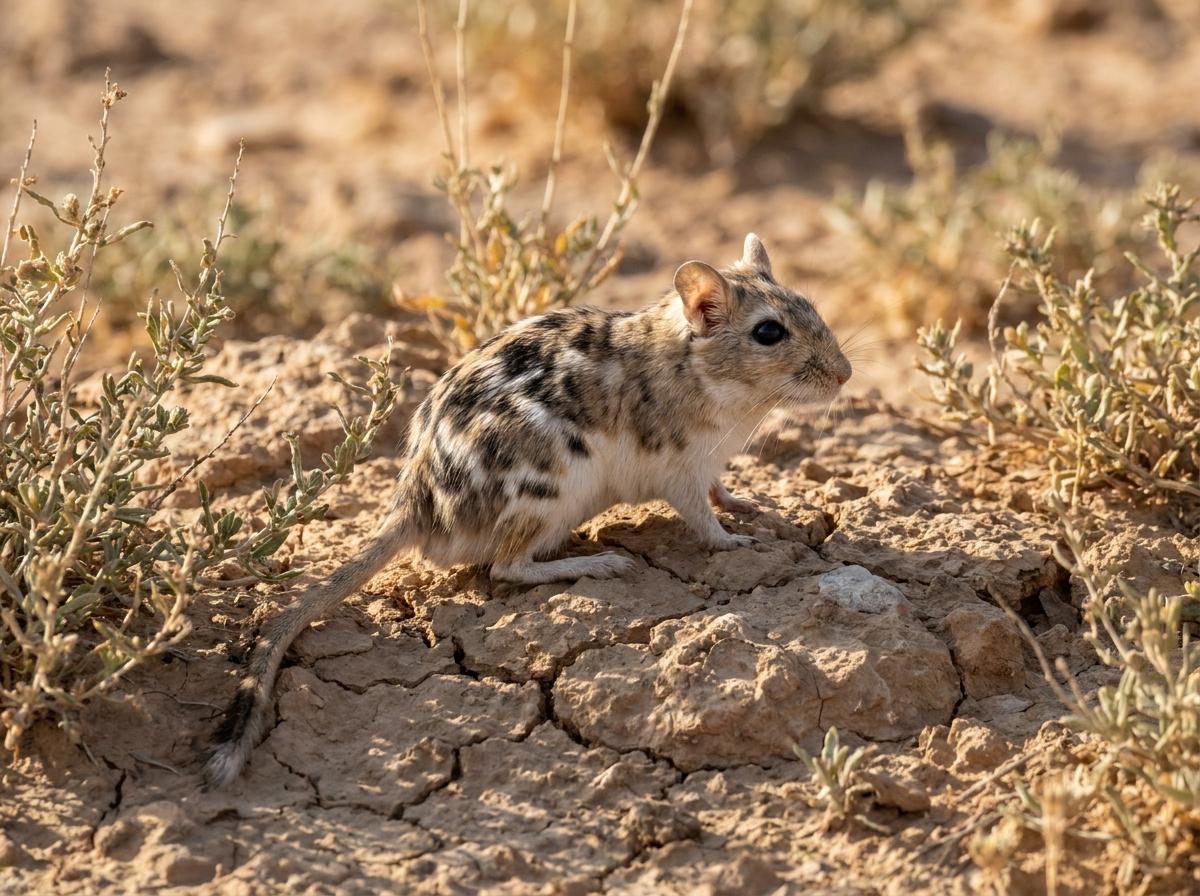
Black is one member of a large family of Mongolian gerbil colors. Because the base animal is identical, a black gerbil, an agouti, a dove, a lilac, or a spotted gerbil are all the same species with the same care needs, differing only in coat genetics. If you like the solid, dramatic look of black, you may also come across “black-eyed white,” dark-eyed self varieties, and spotted blacks, all built on the same non-agouti or dilution genes described above. For a broader look at small-pet color varieties and how recessive color genes behave, our pillars on the black Syrian hamster and the Rex mouse walk through similar territory in related species, and the Siamese mouse page covers a pointed color pattern driven by a temperature-sensitive pigment gene. The through-line across all of them: pick the animal for its care fit first, and treat the color as the final, pleasant detail.
Frequently asked questions
Is a black gerbil a different breed or species?
No. A black gerbil is a color variety of the Mongolian gerbil (Meriones unguiculatus), carrying a recessive non-agouti gene (genotype aa). Its care is identical to any other Mongolian gerbil.
Why does my black gerbil have white feet or a white chest spot?
That is normal for the black variety. Many black gerbils show small white spots on the chin, chest, or feet, and white toes or nails are common. Larger, patterned white areas come from a separate spotting gene.
Can I keep one black gerbil on its own?
No. Gerbils are social and should live in a same-sex pair or small group. A lone gerbil is under-met. This is the opposite of the Syrian hamster, which must live alone. Pair young gerbils, or start with an already-bonded pair, because adult strangers can fight.
How long do black gerbils live?
About two to four years is typical in captivity, with the Merck Veterinary Manual citing two to three years. The black color has no effect on lifespan.
Do black gerbils fade or turn brown?
They can. A black coat may take on a slightly rusty or brownish cast with age, sun, or normal wear. A distinctly warm-brown “near black” animal may actually be a dark agouti or a dilute rather than a true self black.
Are gerbils good pets for children?
They can be, with supervision. They are hardy, active, and interesting, but they must be handled gently and never picked up by the tail, and they need to live in a pair. Teach the tail rule before a child handles one.
Do this next on Creatures
Whether you are researching black gerbils, looking for a bonded pair, or already keeping gerbils, Creatures is the records, marketplace, and directory layer to do it in one place.
Add your gerbils. Already have a pair? Create a free animal profile for each in a few minutes, no account needed to start. The walkthrough is in adding an animal to Creatures, and your animal’s profile page explains each tab.
Keep health records. Track weight, vet visits, and health notes so you can catch a problem early. The record sheet opens for any visitor to look around, and you will need a free account to save what you enter. See adding a record and health and medical records for the full how-to.
Find a pair. Browse black gerbils on the marketplace and search trusted breeders in the Creatures directory. Because gerbils bond best young and should come as a same-sex pair, buying two from one litter is usually the smoothest start.
Get alerted. Not seeing a local pair yet? Set a free black gerbil listing alert and we will tell you when one is posted. No account needed to start, and saving searches and using your watchlist shows how it works.
List your gerbils. Breed gerbils? Create a breeder or organization profile so buyers searching for a bonded pair can find you.