


Rove
The Rove goat (Chevre du Rove) is a hardy French landrace goat from Provence, near Marseille, best known for one unmistakable feature: enormous, long, twisted horns that spread outward in a wide lyre or corkscrew shape, carried by both does and bucks. It is a rustic browsing goat that leads sheep flocks, clears fire-prone brush, and gives the rich milk behind Brousse du Rove, a rare Provencal fresh cheese that in 2020 became a Protected Designation of Origin. This page covers what the breed is, where it comes from, how to recognize it, how much milk it gives, its near-extinction and recovery, and what to check before you buy one.

Browse listings, public profiles, breeders, or add your animal.
What is a Rove goat?
The Rove goat, known in French as the Chevre du Rove, is a rustic landrace goat native to Provence in the south of France. It takes its name from Le Rove, a small village in the hills just west of Marseille, in the Bouches-du-Rhone department. For centuries it was a working goat of Mediterranean pastoralism rather than a specialized dairy breed, and that history still shapes what it is today: hardy, sure-footed, an excellent browser, and adapted to the dry, rocky, scrubby terrain of the Provencal garrigue.
It is a multi-purpose animal. The Slow Food Foundation, which lists the Rove in its Ark of Taste, describes it as valued for artisan cheese, for meat from dam-raised kids, as a flock-leader in sheep pastoralism, and for land clearance. That last role has become one of its most important modern uses. If you are comparing goat breeds, the broader Creatures goat species page is a good place to see where the Rove sits among dairy, meat, and brush goats.
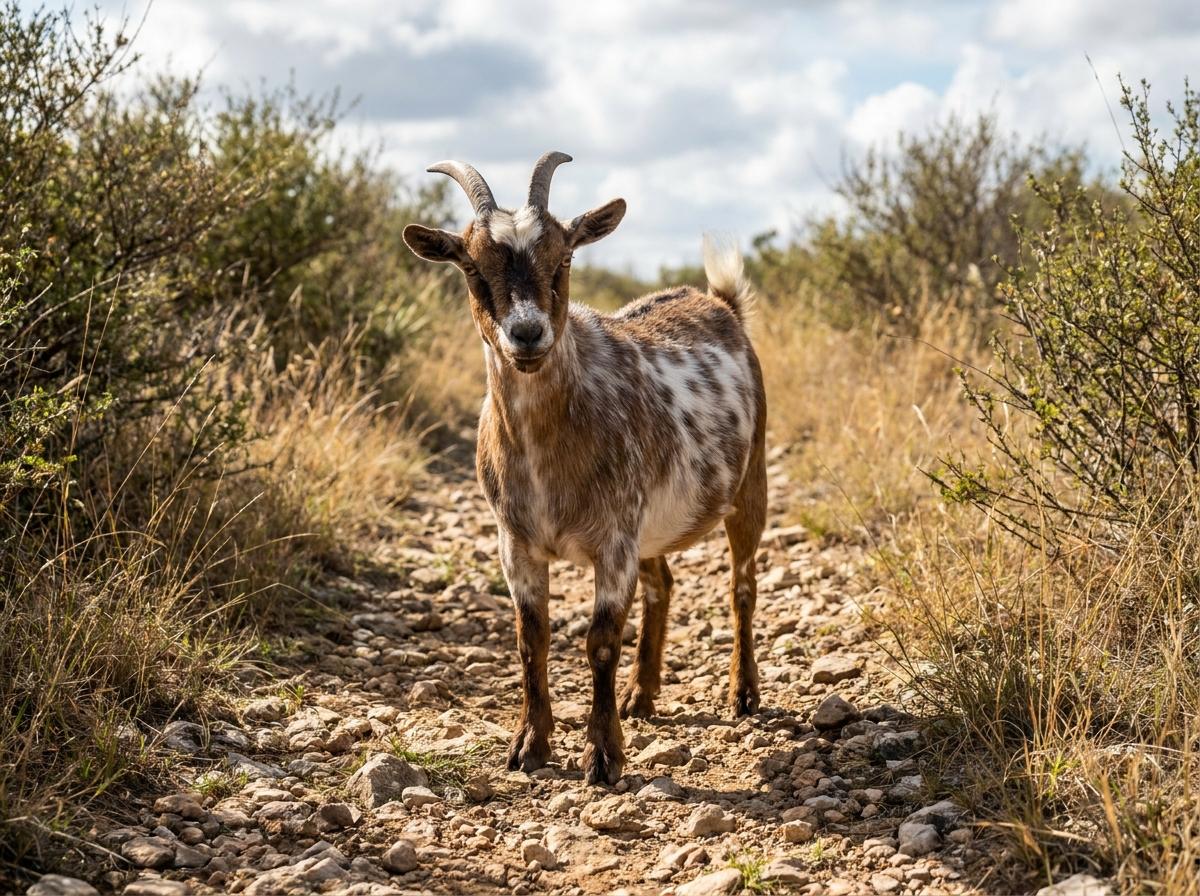
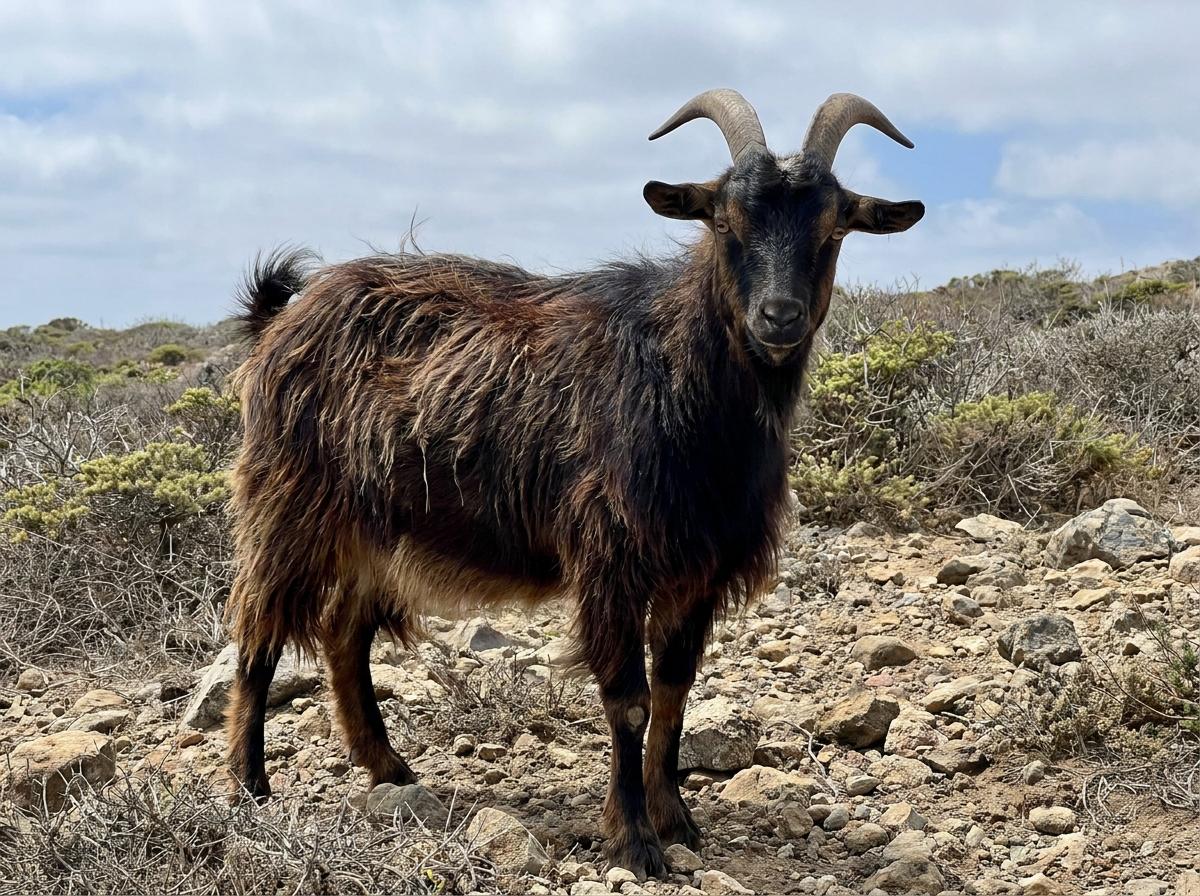
What sets the Rove apart at a glance is its head. The horns are extraordinary, and unlike many dairy breeds where hornlessness is common, in the Rove both does and bucks carry them.
The horns: the breed’s signature
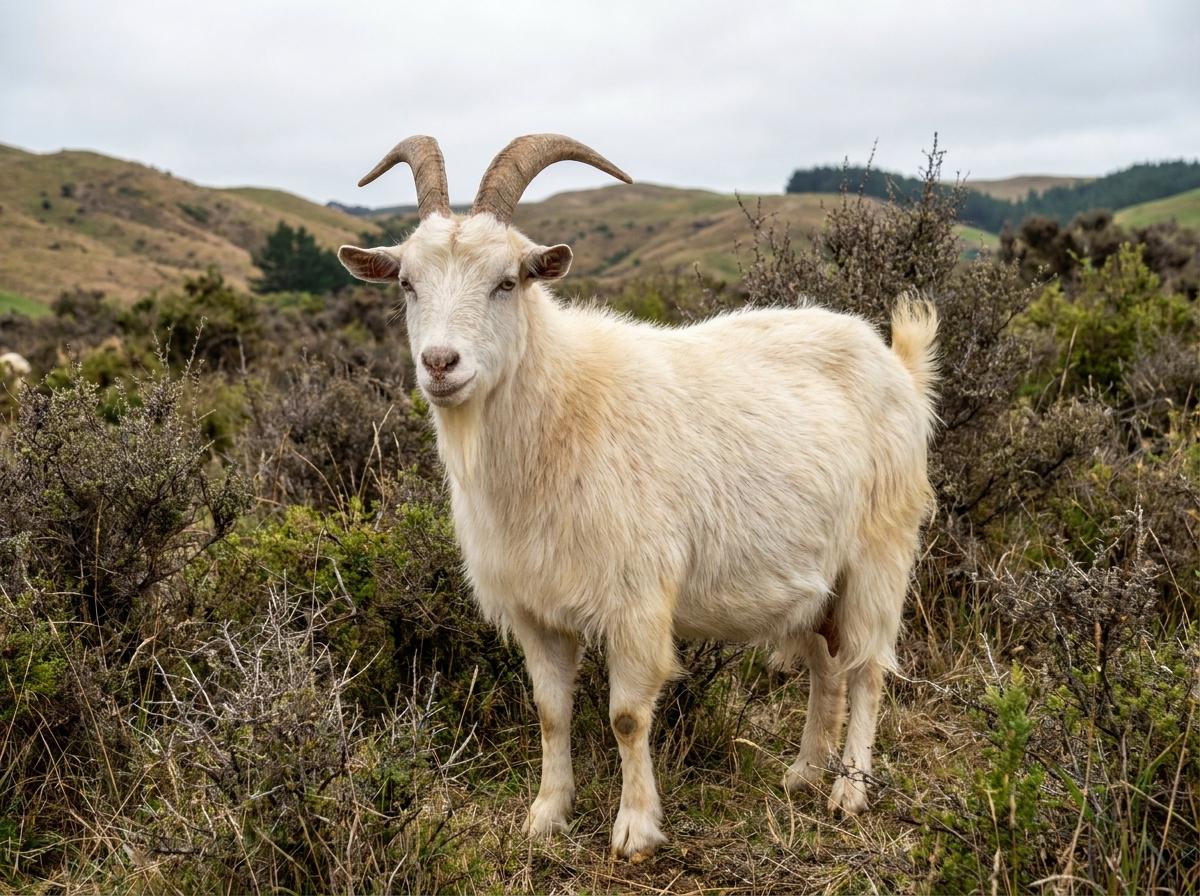
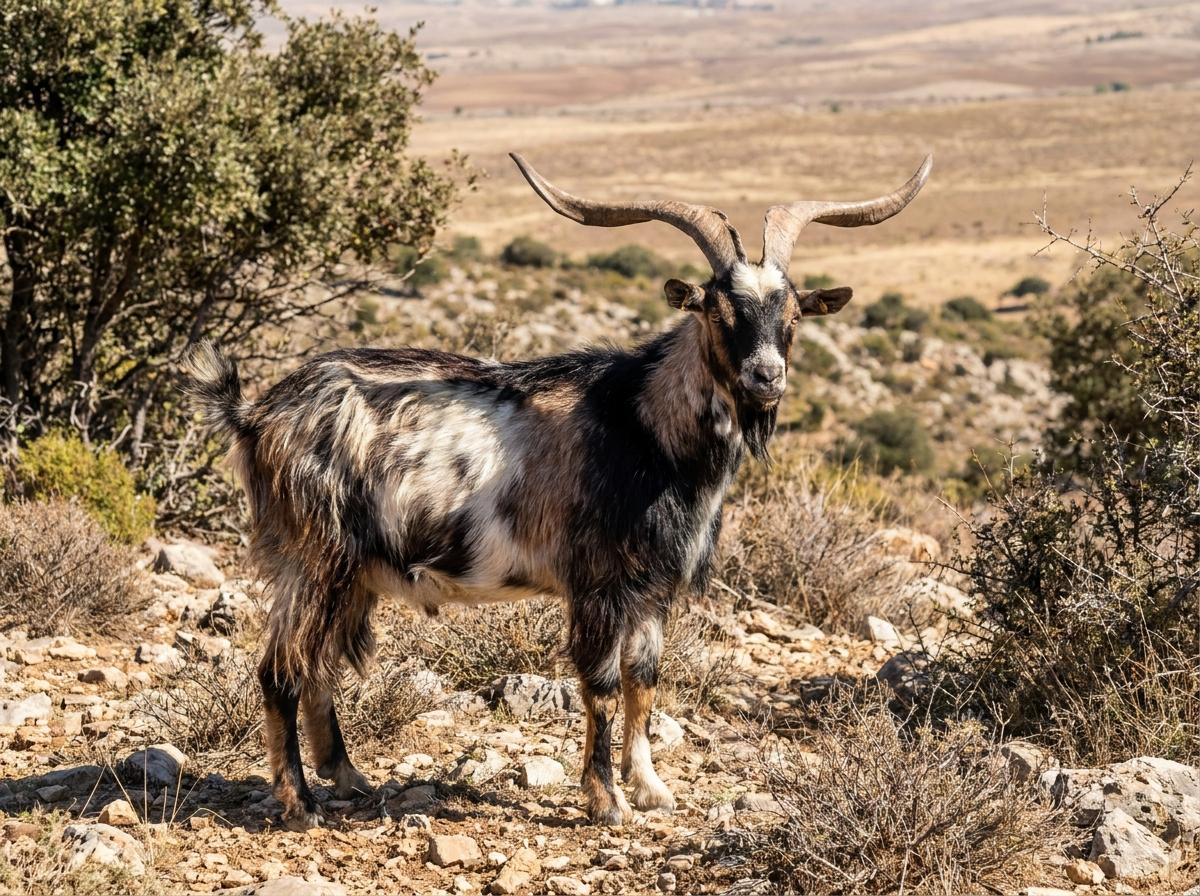
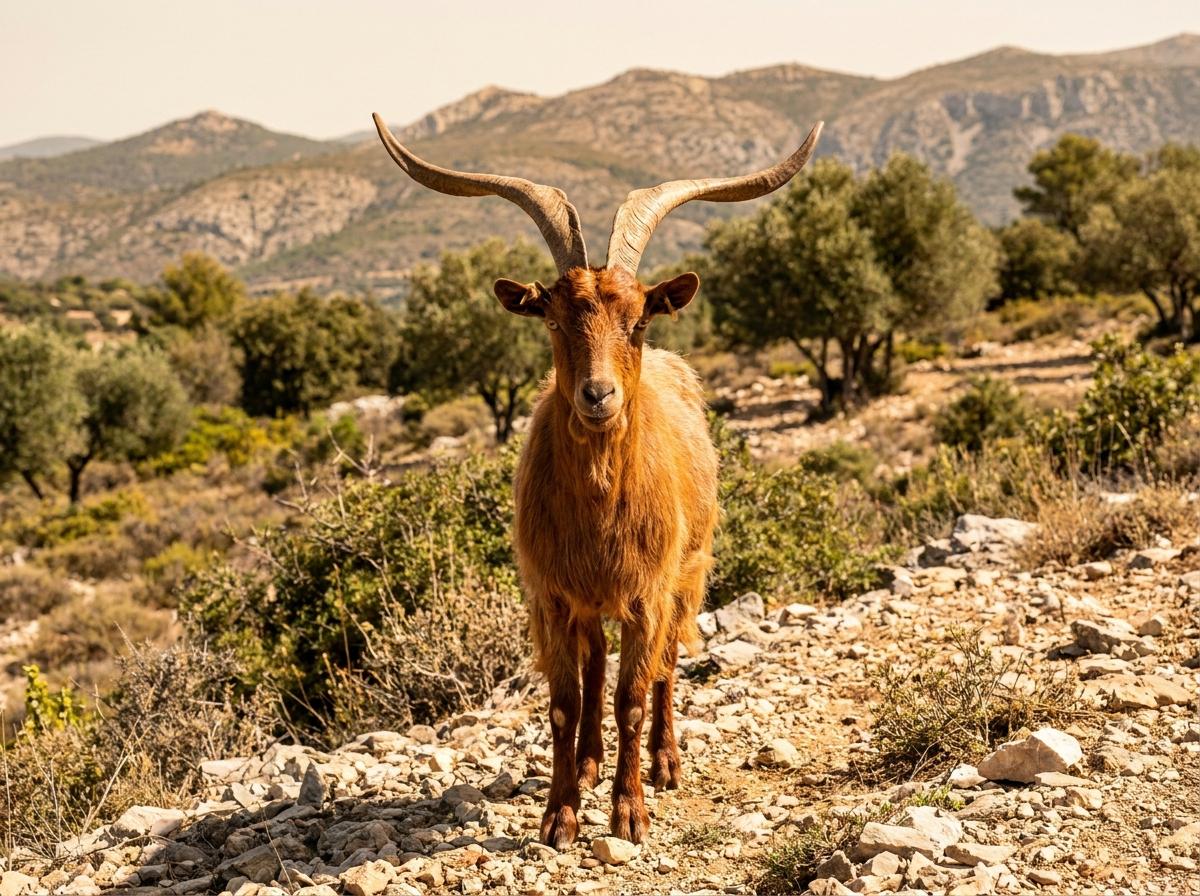
If you remember one thing about the Rove goat, it is the horns. They are long, flattened in cross-section, and twisted, rising from the head and spreading outward and upward in a wide lyre or corkscrew shape. In mature animals they can reach lengths of up to about 1.2 meters, roughly four feet, and the spread between the tips can be dramatic, giving the animal a striking, almost heraldic silhouette. The amplitude is especially pronounced in bucks.
Crucially, the horns are present in both sexes. This is one of the clearest ways to distinguish the Rove from common polled or lightly-horned dairy breeds. The horns are not a defect or a show exaggeration: they are a defining, functional feature of the landrace, and breeders select for the characteristic wide, twisting sweep.

Those big horns are also part of the breed’s history and its brush with extinction, as we cover below. When flocks shifted from walking to pasture to being trucked, large horns became an inconvenience in transport and in modern dairy handling, and that worked against the breed for a time.
What a Rove goat looks like
Beyond the horns, the Rove is a medium-sized, sturdy, well-built goat shaped by generations of hard grazing on rough ground.
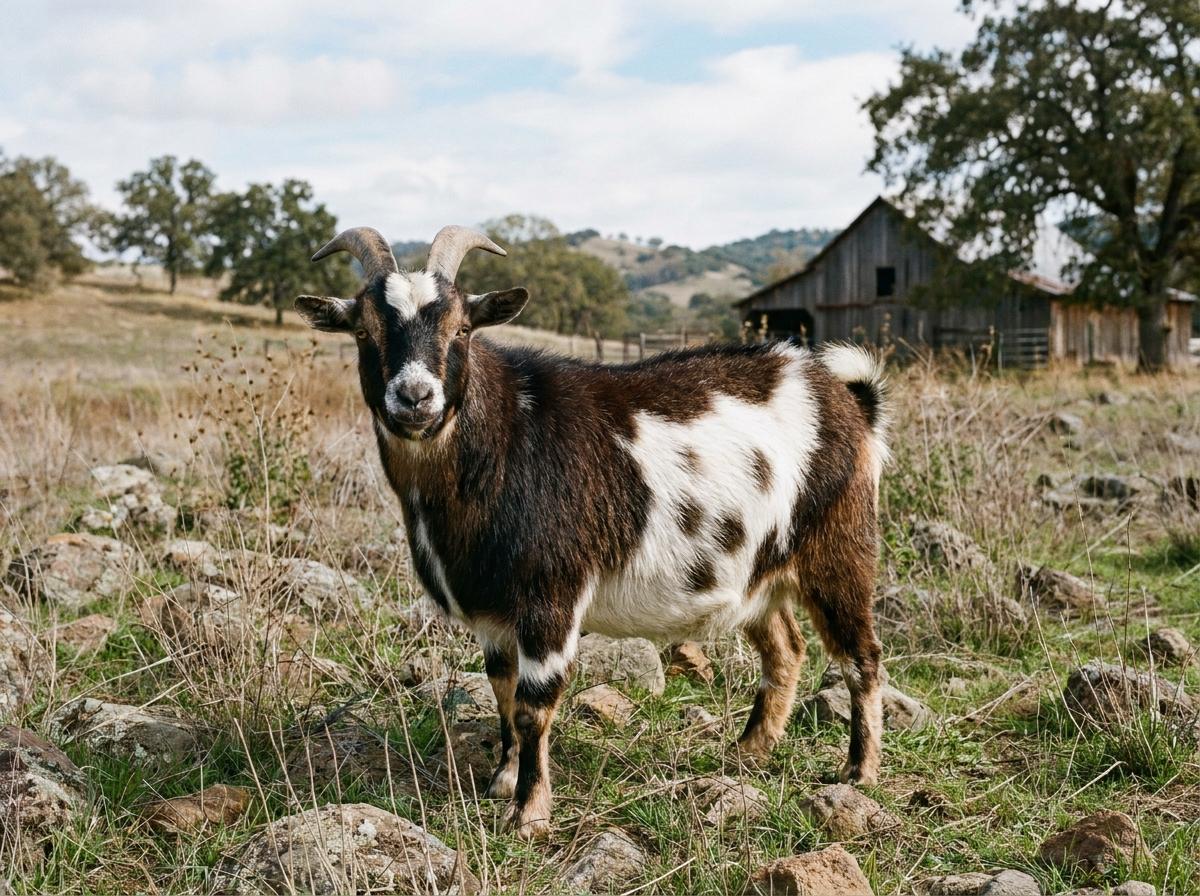
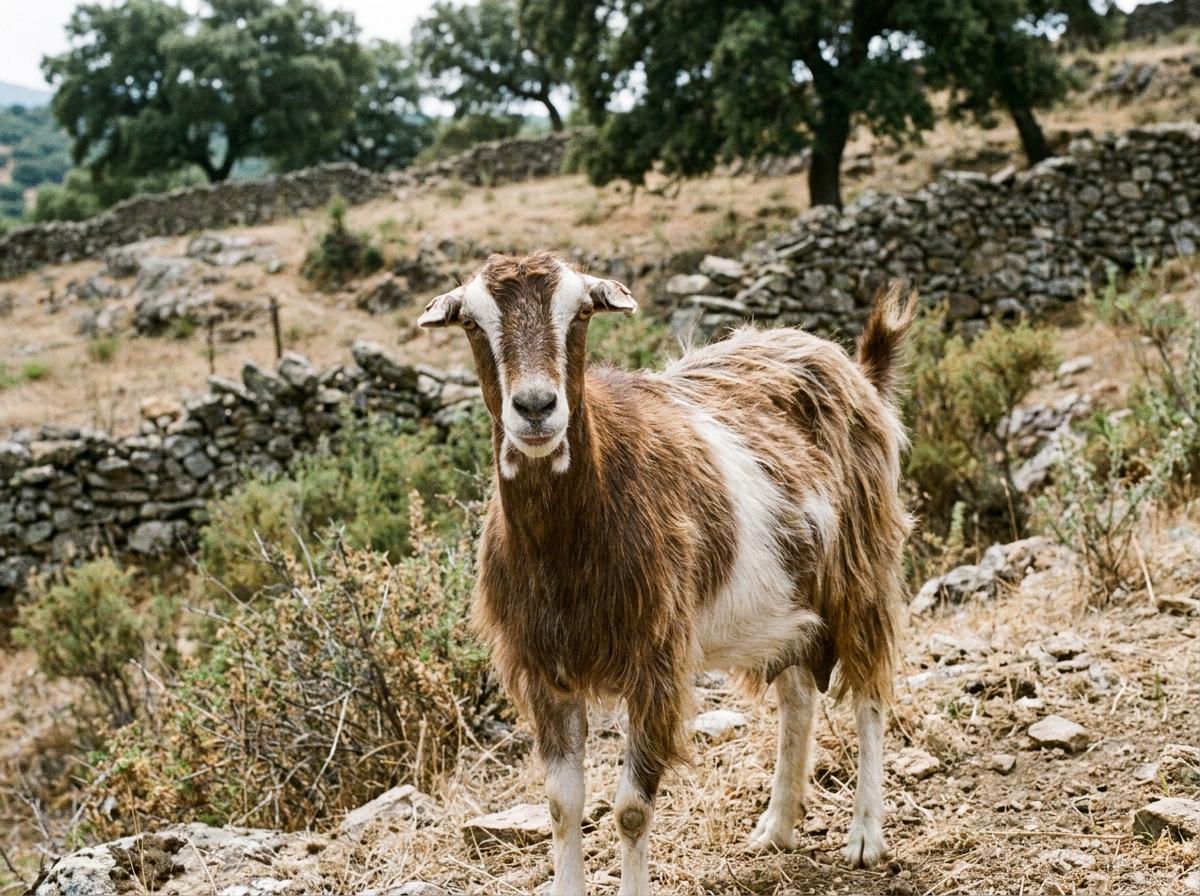
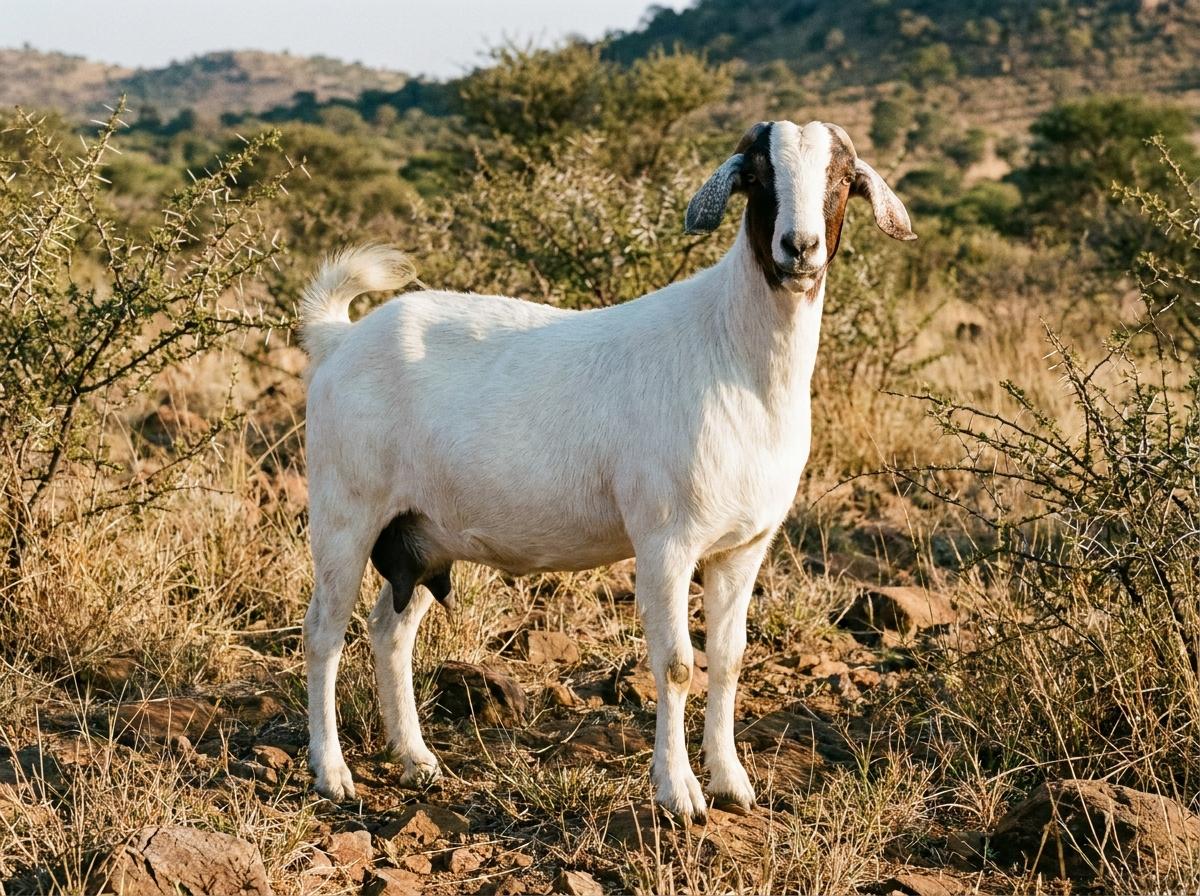
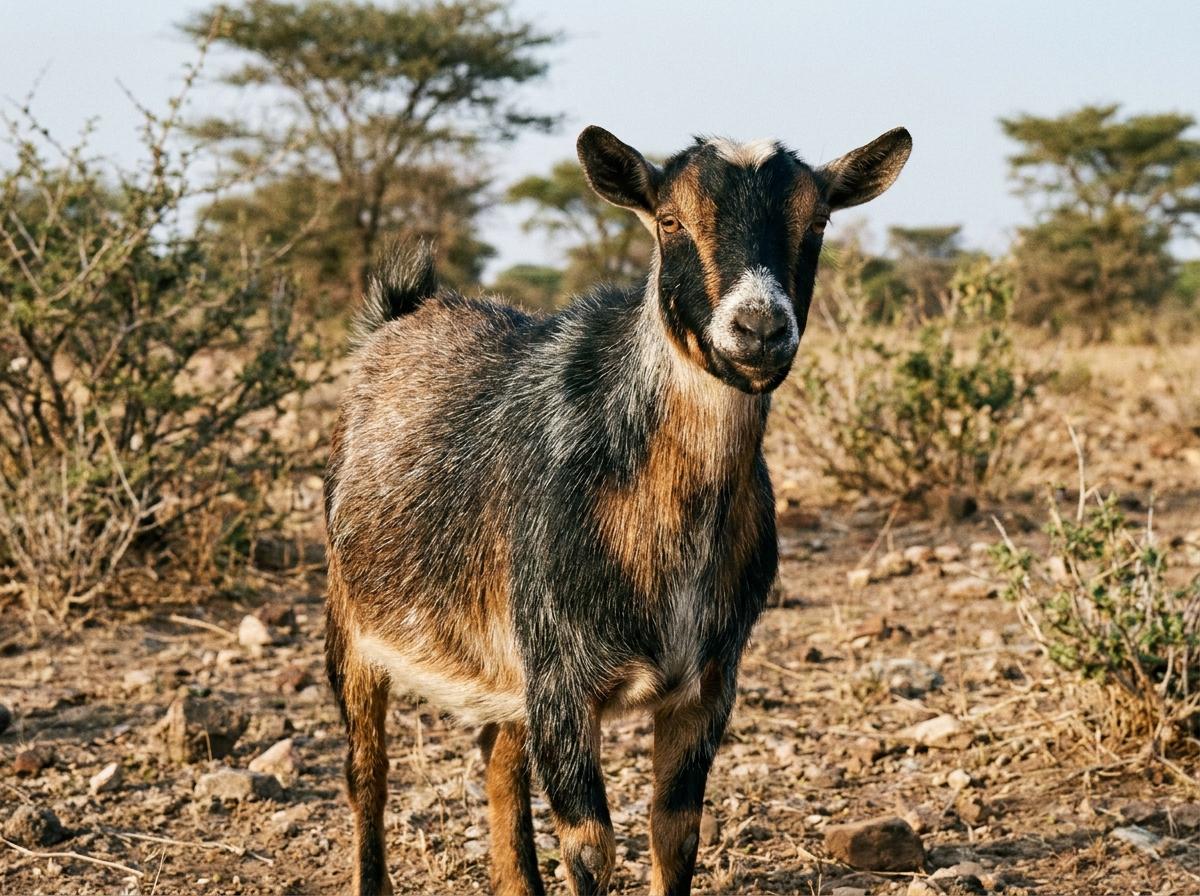
- Coat. The coat is short to medium in length. Red-brown is the preferred and predominant color among shepherds, but black and gray animals are common, and coats can be pied or speckled with white. You will also see combinations such as red mixed with gray or black with tan markings around the eyes and muzzle. It is a variable-colored landrace, not a single fixed color.
- Head and nose. The face is long with a convex (Roman-nosed) profile, and the horns rise more or less along the axis of the muzzle before twisting outward.
- Ears. The ears are large and tilt forward, a noticeable trait that, together with the horns and Roman nose, makes the head very recognizable.
- Body. The build is stocky and robust, with strong legs and large hooves suited to rocky, uneven ground, and does carry a small, well-attached udder appropriate to pastoral rather than intensive-dairy conditions.
Does weigh roughly 45 to 55 kg (about 100 to 120 lb), and bucks are considerably larger at roughly 70 to 90 kg (about 150 to 200 lb). This is a functional working frame rather than an oversized one.
Origin, history, and near-extinction
Goats have accompanied sheep flocks in the hills around Marseille for a very long time. Nineteenth-century paintings show goats resembling the modern Rove traveling with sheep, where wethers (castrated males) often led the flock and does helped raise surplus lambs. That flock-leading role is part of the breed’s identity.
The twentieth century nearly ended it. By the 1960s the Rove had no official recognition as a breed, surviving mostly as remembered local stock within mixed flocks. Two pressures pushed it toward disappearance: flocks were increasingly trucked to pasture rather than walked, which made the big horns a liability, and on dairy farms improved specialized breeds were replacing hardy local goats. The situation was severe. A 1962 estimate put the population around 15,000, but a 1980 census by the Camargue nature reserve found only about 500 Rove goats in all of France.
The revival is closely tied to one person and one association. The sheep farmer Alain Sadorge set out to win official recognition for the breed and began assembling a herd in 1962. His early efforts even ran into a brucellosis-eradication order that cost him animals. Through the 1970s, with support from the Societe d’Ethnozootechnie, the Camargue reserve, researchers, and other breeders, the alarm was raised, and in 1979 Sadorge and his allies founded the Association de Defense des Caprins du Rove (ADCR) to promote and protect the breed. Recovery has been steady since: by 2003 small dairies had overtaken shepherds as keepers of most of the gene pool, and by 2014 more than 10,000 (some sources cite 11,000 to 14,000) Rove goats were recorded. The Rove is a genuine conservation success, but it remains a regional, relatively uncommon breed rather than a widespread commercial one.
Brousse du Rove: the cheese behind the breed
Much of the Rove’s modern value comes from what its milk makes. Brousse du Rove is a fresh, unsalted farmhouse goat cheese from Provence with a soft, crumbly, delicate texture. In May 2020 it was granted Protected Designation of Origin (PDO, or AOP in French) status, and it is often described as the smallest PDO in France, tied to a small production zone across Bouches-du-Rhone and neighboring parts of Vaucluse and Var.
The cheese is unusual in how it is made. Rather than using rennet, Brousse du Rove is produced by heating the milk and adding a little vinegar so the milk flocculates into soft flakes, which is why it is often cited as the first French PDO cheese made without rennet. Its distinctive flavor comes from two things: the Rove goat itself, and what the goats eat. Rove does do not give much milk, on the order of 250 to 400 liters per goat per year in the cheese context, but they have a very good cheese yield, around 200 grams of cheese per liter. Grazing on tough Mediterranean scrub such as broom and kermes oak gives the milk, and the cheese, its particular character.
The practical takeaway for anyone weighing the breed: the Rove is not a high-volume milk goat and should not be judged as one. Its economic logic is cheese quality, hardiness, and low-input grazing, not liters in the pail.
Browsing, fire prevention, and land management
The Rove’s appetite for rough, woody vegetation has given it a valued modern job: clearing brush and reducing wildfire fuel in the fire-prone Mediterranean landscape. Most Rove herds still graze rocky hills and scrubby pastures where their browsing keeps vegetation in check. As early as 1984, Sadorge and around 150 Rove goats were commissioned to create and maintain firebreaks in the Luberon through managed browsing as a multi-year research project, an early example of using the breed for landscape and fire management.

This browsing aptitude is part of why the breed matters beyond its cheese. Hardy goats that thrive on brush other livestock will not touch are increasingly useful for conservation grazing and fire mitigation, and the Rove is one of the classic Mediterranean breeds for that work.
How productive is the breed?
Productivity for the Rove is best understood as modest milk volume paired with excellent cheese yield and low input needs, rather than headline liters.
Milk. On pasture, Rove does typically give roughly 150 to 250 liters per year, while does managed in dairy conditions can reach around 350 to 500 liters per year. In the specific context of Brousse du Rove production, figures of about 250 to 400 liters per goat per year are cited, with a strong cheese yield of roughly 200 grams of cheese per liter. These are not the numbers of a specialized high-yield dairy breed such as the Saanen or Alpine, and that is by design.
Meat and kids. The breed is also raised for meat from dam-raised kids, in keeping with its pastoral, low-input tradition. Historically it was bred for meat before the weak French goat-meat market pushed keepers toward dairying and cheese.
Because the Rove is a landrace maintained across many small herds, published breed-average figures for prolificacy and lifespan are limited. Where a precise breed-specific number is not well documented, treat general goat expectations as a guide and rely on the records of the specific herd you are dealing with rather than on a headline statistic.
Temperament
Keepers describe the Rove as a hardy, alert, active goat, well suited to leading flocks and to independent browsing across rough terrain, which fits its long history as a pastoral flock-leader. We flag this as practitioner and breed-description observation rather than a formally studied trait. As with any goat, individual temperament varies with handling, housing, and how much time the animals spend with people, and intact bucks in rut, carrying very large horns, are a different proposition from does and wethers. Those big spreading horns deserve respect and sensible handling facilities.
Husbandry and care
The Rove is a low-input, hardy breed, but low-input is not no-input. The headlines below cover the structure of good management. For medical decisions, always work with a veterinarian who can see the animal.
Housing and fencing
Rove goats need dry, draft-free shelter, clean footing, and enough space to avoid crowding. Fencing and handling equipment deserve special thought because of the horns: wide-spreading, twisted horns can catch in square fencing, feeders, and cramped gates, so smooth, horn-friendly fittings and uncrowded pens reduce the risk of injury. Plan gates and headlocks around the horn spread rather than a standard polled goat.
Feeding and grazing
The Rove earns its keep on browse. It does well on scrubby Mediterranean-type vegetation and rough pasture that would not sustain a high-yield dairy breed, which is central to its value for conservation grazing. Even so, does that are milking or in late pregnancy need adequate energy, protein, clean water, and appropriate minerals to hold condition and support kids and milk. Match the ration to the season and the animal’s job.
Breeding and health
Select breeding stock on soundness, correct horns, good feet and legs, and a functional udder, and keep the wide, twisting horn character the breed is known for. Routine goat health management applies: a parasite-control plan suited to your climate and grazing, hoof care, clean kidding and milking hygiene, and the core vaccinations your veterinarian recommends for your area. Keep clear records of kiddings, milk, treatments, and health events so breeding and culling decisions rest on evidence rather than memory. Defer all medical decisions to a veterinarian.
Cost and availability
The Rove is a regional French breed, concentrated in Provence, so availability drives everything about price and access.
Within its home region, Rove goats are bought and sold as working stock, with value tracking an animal’s conformation, horns, milk and cheese records, and breeding quality. There is no single reliable public price for an everyday Rove goat, and inventing one would mislead you.
Outside France, and especially outside Europe, the practical reality is scarcity. The Rove is uncommon internationally, and live goat imports are tightly regulated on animal-health grounds, which keeps genuine stock rare and hard to source in places like North America. If you are shopping outside France, expect a small pool of sellers, a premium for genuine registered animals, and a real need to verify exactly what you are buying. A saved listing alert (below) is often the most practical way to catch one when it appears.

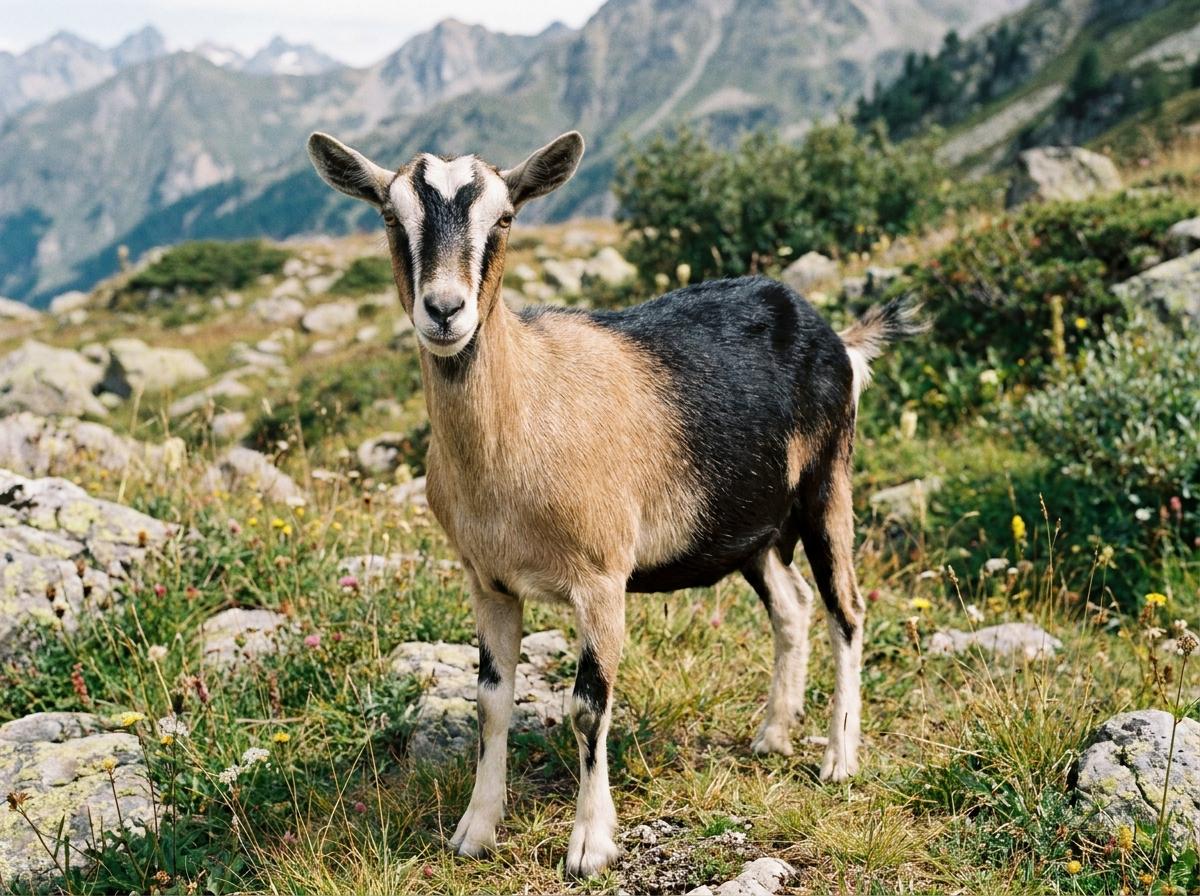
If you like the Rove’s dramatic horns and hardy, browse-loving character, two other distinctive goat pillars are worth a look: the ancient, ear-forward Damascus goat and the twist-horned Alpine Valais Blackneck goat. If your interest is really about hardy, low-input smallholding stock rather than goats specifically, the compact Belfair cattle profile covers a homestead-scale cattle option in the same spirit.
Buying considerations
Because the Rove is a landrace with a conservation story and is uncommon outside Provence, buy on evidence and provenance, not just on the wow factor of the horns.
- Confirm it is a genuine Rove. Ask about registration and the animal’s link to the recognized breed population maintained through the Association de Defense des Caprins du Rove. Landrace names get applied loosely, so verify what “Rove” means for the specific animal.
- Buy the working animal. For a productive herd, a sound doe with correct feet and legs, a functional udder, a healthy bite, and the breed’s characteristic horns is worth more than an animal chosen on looks alone.
- Ask for records. Kidding history, milk and cheese-yield notes, and health treatments tell you more than a photograph. Records matter especially for a low-volume breed whose value is quality and hardiness.
- Plan for the horns. Make sure your fencing, feeders, and handling setup suit a horned, wide-spreading goat before the animal arrives.
- Confirm provenance and paperwork, especially for any animal presented as imported or rare.
You can browse current Rove goat listings on the Creatures marketplace and look for breeders and farms in the Creatures directory. Because genuine stock is scarce outside its home region, a saved listing alert is often the most practical way to be notified when one is posted.
Frequently asked questions
Why does the Rove goat have such big horns?
The long, twisted, wide-spreading lyre-shaped horns are a defining feature of the landrace, present in both does and bucks, and can reach up to about 1.2 meters. They are a natural breed characteristic that shepherds select for, not a show exaggeration.
Do both male and female Rove goats have horns?
Yes. Unlike many dairy breeds where hornlessness is common, both sexes of the Rove carry the large twisted horns, with the widest spread typically seen in bucks.
What is the Rove goat used for?
It is a multi-purpose Mediterranean breed: milk for the fresh cheese Brousse du Rove, meat from dam-raised kids, leading sheep flocks in traditional pastoralism, and, increasingly, brush clearance and wildfire-prevention grazing.
How much milk does a Rove goat give?
Not a lot by dairy-breed standards. Roughly 150 to 250 liters per year on pasture, up to about 350 to 500 liters in dairy conditions. The breed is valued for its cheese yield and hardiness rather than milk volume.
What is Brousse du Rove?
A fresh, unsalted Provencal goat cheese made from Rove milk, granted Protected Designation of Origin status in 2020 and often called the smallest PDO in France. It is unusual for being made by flocculation with vinegar rather than with rennet.
Was the Rove goat almost extinct?
Nearly. A 1980 census found only about 500 Rove goats in all of France. Thanks to the breeder Alain Sadorge and the Association de Defense des Caprins du Rove (founded 1979), the population recovered to roughly 10,000 by 2014.
Are Rove goats good for beginners?
They are hardy, browse-hardy, and relatively low-input, which is appealing, but their large horns require thoughtful fencing and handling, and genuine stock can be hard to find outside France. A prepared beginner with good facilities and a veterinarian relationship can keep them well.
Do this next on Creatures
Whether you are researching the breed, hunting for genuine stock, or already keeping Rove goats, Creatures is the records, marketplace, and directory layer to do it in one place.
Find stock. Browse Rove goats on the marketplace and search trusted breeders and farms in the Creatures directory. New to the marketplace? See saving searches and using your watchlist.
Get alerted. Genuine Rove stock is scarce outside Provence, so set a free Rove goat listing alert and we will tell you when one is posted. No account needed to start.
Add your goat. Already keeping Rove goats? Create a free animal profile in a few minutes, no account needed to start. The walkthrough is in adding an animal to Creatures.
Track milk and health. Track milk, cheese, and health records on Creatures. The record sheet opens for any visitor to look around, and you will need a free account to save what you enter. See adding a record for the full how-to.
List your farm. Run a herd or farm? Create a free organization or breeder profile so buyers searching for this hard-to-find breed can reach you, and read getting listed in the breeder directory and creating an organization and adding your team.
Sell with confidence. Planning to sell stock? Learn how seller payout works before you list.
Keeping a hardy, browse-loving breed like the Rove pairs naturally with good records. You can create a free animal profile to track kidding, milk, and health over time, and compare the Rove against other breeds on the Creatures goat species page.