


Gray Whale
Eschrichtius robustus
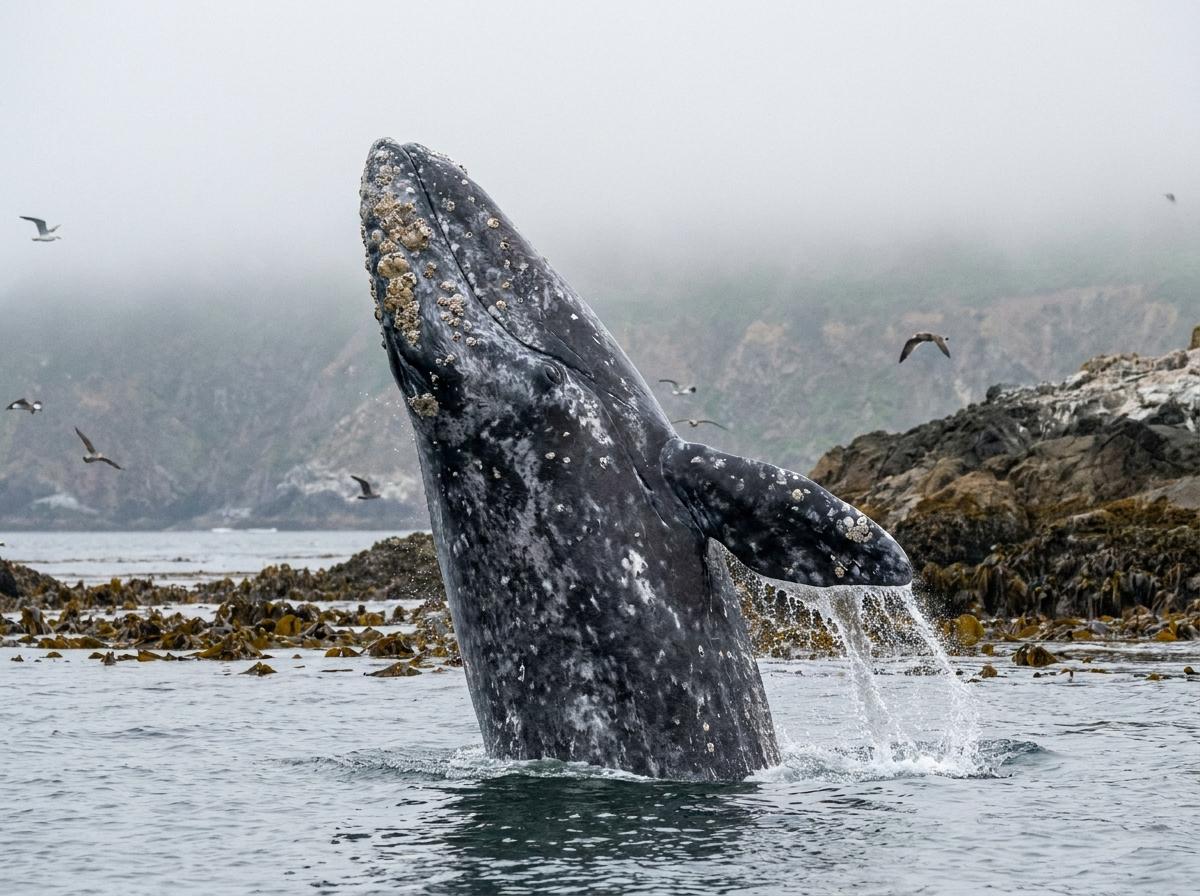
Mottled gray skin, short baleen plates, and a back without a true dorsal fin identify the gray whale, Eschrichtius robustus. Barnacles and whale lice often give older animals a rough, patchy appearance, and a series of low knuckles runs along the rear of the back. Gray whales feed mainly by turning on their sides and suctioning small crustaceans from seafloor sediment, although they also take plankton and other prey. The eastern North Pacific population makes a long migration between Arctic feeding areas and warm calving lagoons along Baja California.
Gray whales are not a captive species in any practical sense; human care centers on watching, research, and protection at sea. Whale-watching operators keep distance so mothers with calves can rest, while biologists identify individuals from scars, mottled skin patterns, and satellite tags. Management work includes disentangling whales from fishing gear, reducing vessel strikes and underwater noise, and monitoring unusual mortality events during poor feeding years. The western North Pacific group remains much smaller, so international coordination around feeding grounds, migration corridors, and coastal development matters.
Colors: Wild Type