






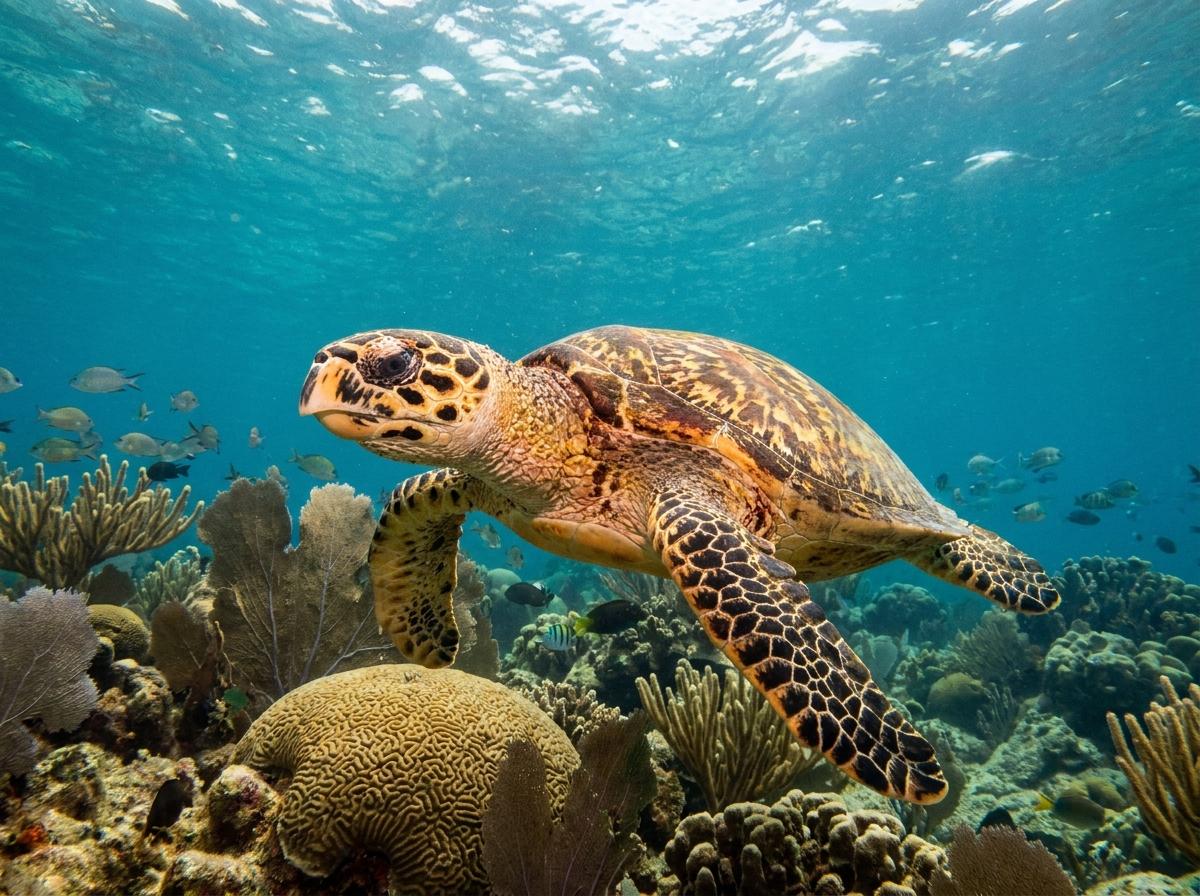
Hawksbill Sea Turtle
Eretmochelys imbricata
The hawksbill sea turtle is a small to medium-sized tropical sea turtle found around coral reefs, rocky coasts, lagoons, and seagrass edges in the Atlantic, Indian, and Pacific oceans. Its narrow head and hooked beak help it pick sponges and other reef animals from crevices, while overlapping shell scutes and a serrated rear carapace edge give adults a clear outline. The same amber and dark mottling that made hawksbill shell valuable in the tortoiseshell trade is one reason the species declined severely.
Hawksbills are protected wildlife, not pets, and any handling, rehabilitation, research, or display is normally permit-based. Conservation work includes guarding nesting beaches, reducing artificial light near hatchling routes, discouraging egg and shell trade, and changing fishing practices that catch turtles accidentally. Public aquariums and rescue centers usually work with non-releasable animals and must provide warm, clean seawater, space to swim, and a diet matched to marine-turtle nutrition. For coastal communities, stewardship often means protecting both nesting sand and the reef habitat adults depend on.
Colors: Wild Type








