


Heck Horse
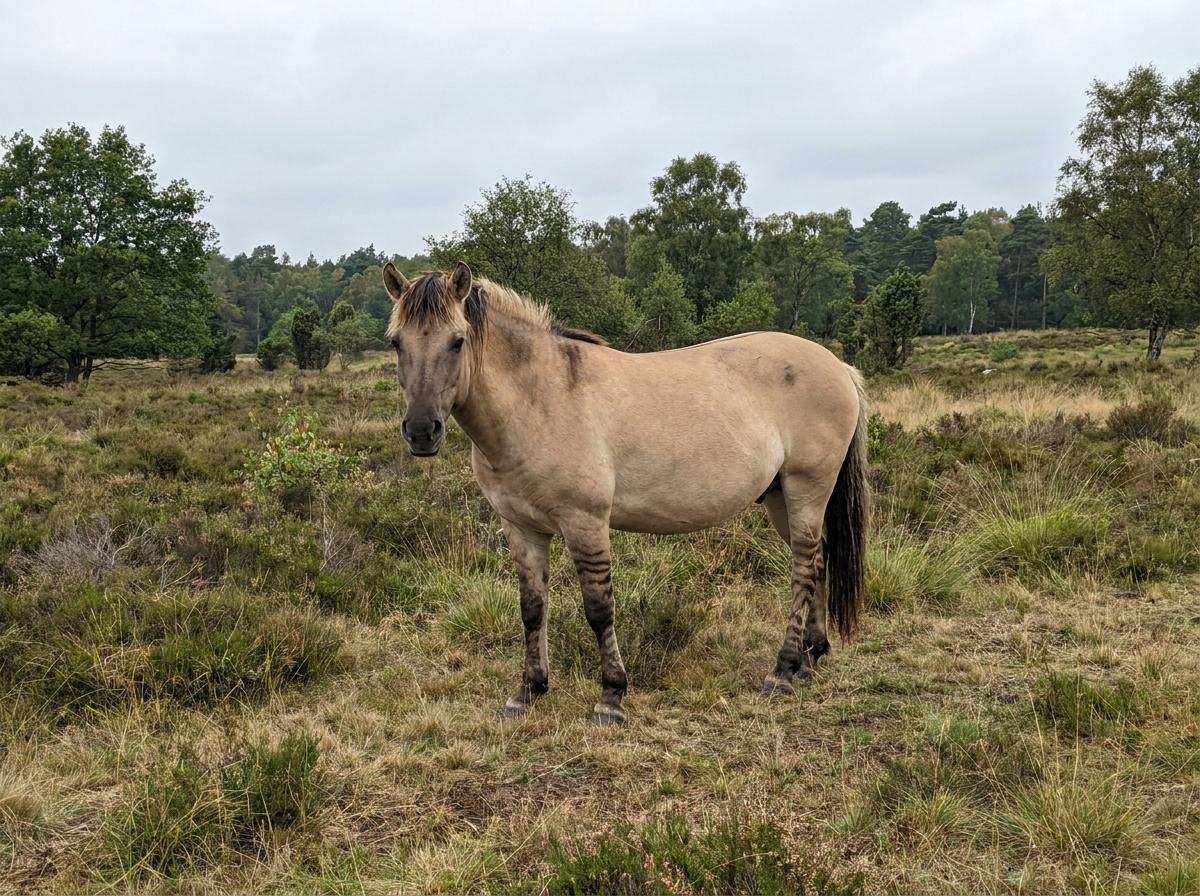
The Heck Horse is a twentieth-century German domestic horse type bred by Heinz and Lutz Heck in an attempt to resemble the extinct tarpan. It is sometimes informally called a tarpan horse, but it is not a revived wild species. The breeding used hardy European horse and pony stock selected for primitive-looking features such as a dun or grullo coat, dorsal stripe, dark legs, sturdy frame, and resilient outdoor temperament. Heck horses are generally small to medium in size and are most often discussed in the context of rewilding, conservation grazing, and zoo collections.
Herds may live with relatively little daily handling on reserves or large pastures, where they help maintain open grassland and scrub. Even in semi-feral systems, they remain domestic horses and require welfare planning: secure boundaries, water, forage in hard seasons, parasite monitoring, hoof assessment, and a way to catch or remove animals when needed. For private owners, temperament can vary with upbringing. Foals raised with minimal contact may need patient handling before routine farrier, veterinary, or transport work is safe.
Colors: Amber Champagne, Bay, Bay Dun, Bay Roan, Black, Blanket Appaloosa, Blue Roan, Brown, Buckskin, Champagne, Chestnut, Classic Champagne, Cremello, Dun, Dun Roan, Fewspot Appaloosa, Flaxen Chestnut, Frame Overo, Gold Champagne, Gray, Grey, Grullo, Leopard Appaloosa, Liver Chestnut, Overo, Palomino, Perlino, Piebald, Pinto, Rabicano, Red Dun, Red Roan, Roan, Sabino, Seal Bay, Silver Dapple, Skewbald, Smoky Black, Smoky Cream, Snowcap Appaloosa, Sorrel, Splash White, Tobiano, Tovero, Varnish Roan, White