Przewalski's Horse
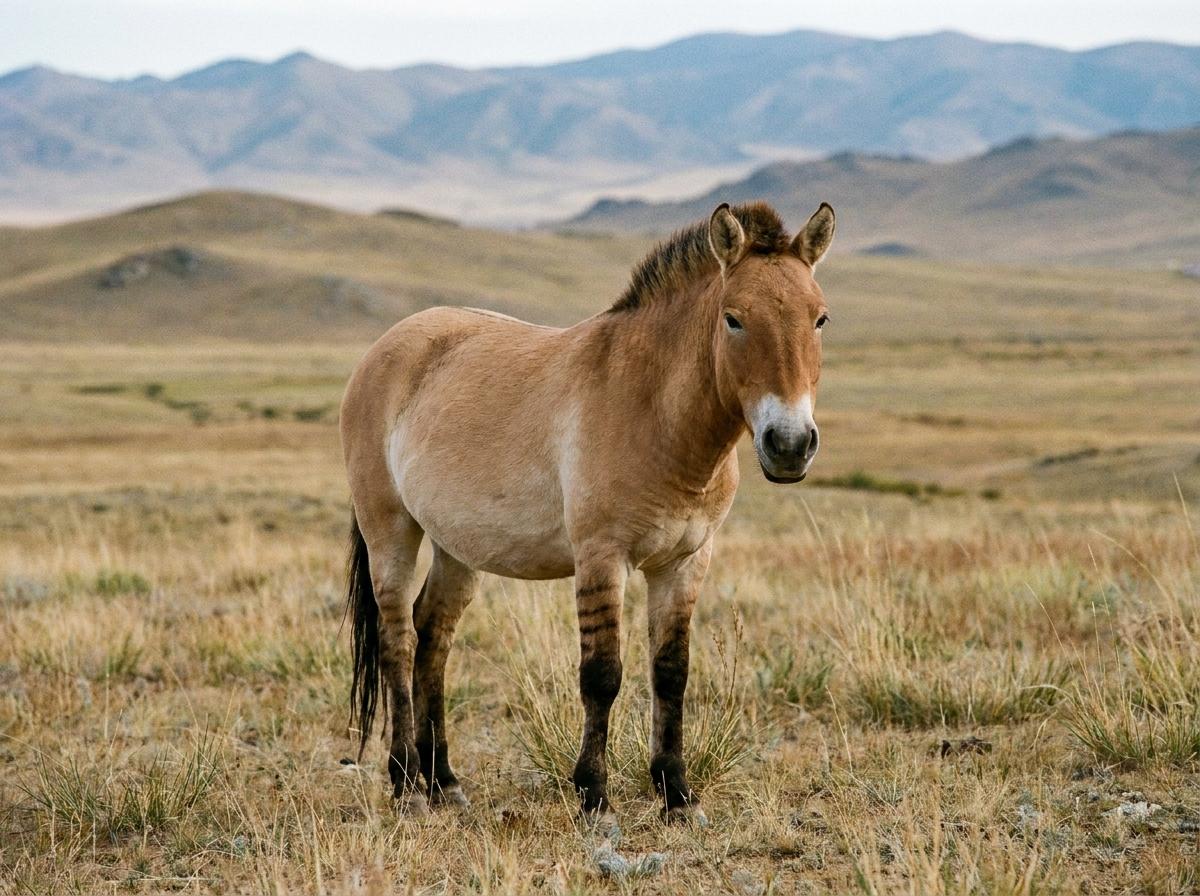
Przewalski's horse, called takhi in Mongolia, is the Central Asian wild horse often listed near domestic horse breeds even though it is not a breed of Equus caballus. Most authorities treat it as Equus ferus przewalskii or Equus przewalskii. It has a stocky body, large head, pale muzzle, dun coat, dark upright mane, dorsal stripe, and often faint leg barring. Unlike domestic horses, it carries 66 chromosomes, though hybrids with domestic horses are possible.
No one should approach Przewalski's horse as a riding, pet, or farm animal. It is managed through zoo breeding programs, international studbook coordination, and reintroduction projects in Mongolia, China, Kazakhstan, and other steppe reserves. Practical care centers on social herd structure, low-stress handling systems, quarantine, genetic planning, and access to grassland-style forage rather than domestication. The species disappeared from the wild in the twentieth century and today's free-ranging herds descend from carefully managed captive founders.
Colors: Amber Champagne, Bay, Bay Dun, Bay Roan, Black, Blanket Appaloosa, Blue Roan, Brown, Buckskin, Champagne, Chestnut, Classic Champagne, Cremello, Dun, Dun Roan, Fewspot Appaloosa, Flaxen Chestnut, Frame Overo, Gold Champagne, Gray, Grey, Grullo, Leopard Appaloosa, Liver Chestnut, Overo, Palomino, Perlino, Piebald, Pinto, Rabicano, Red Dun, Red Roan, Roan, Sabino, Seal Bay, Silver Dapple, Skewbald, Smoky Black, Smoky Cream, Snowcap Appaloosa, Sorrel, Splash White, Tobiano, Tovero, Varnish Roan, White