




Hybrid Camel
Camelus dromedarius x bactrianus
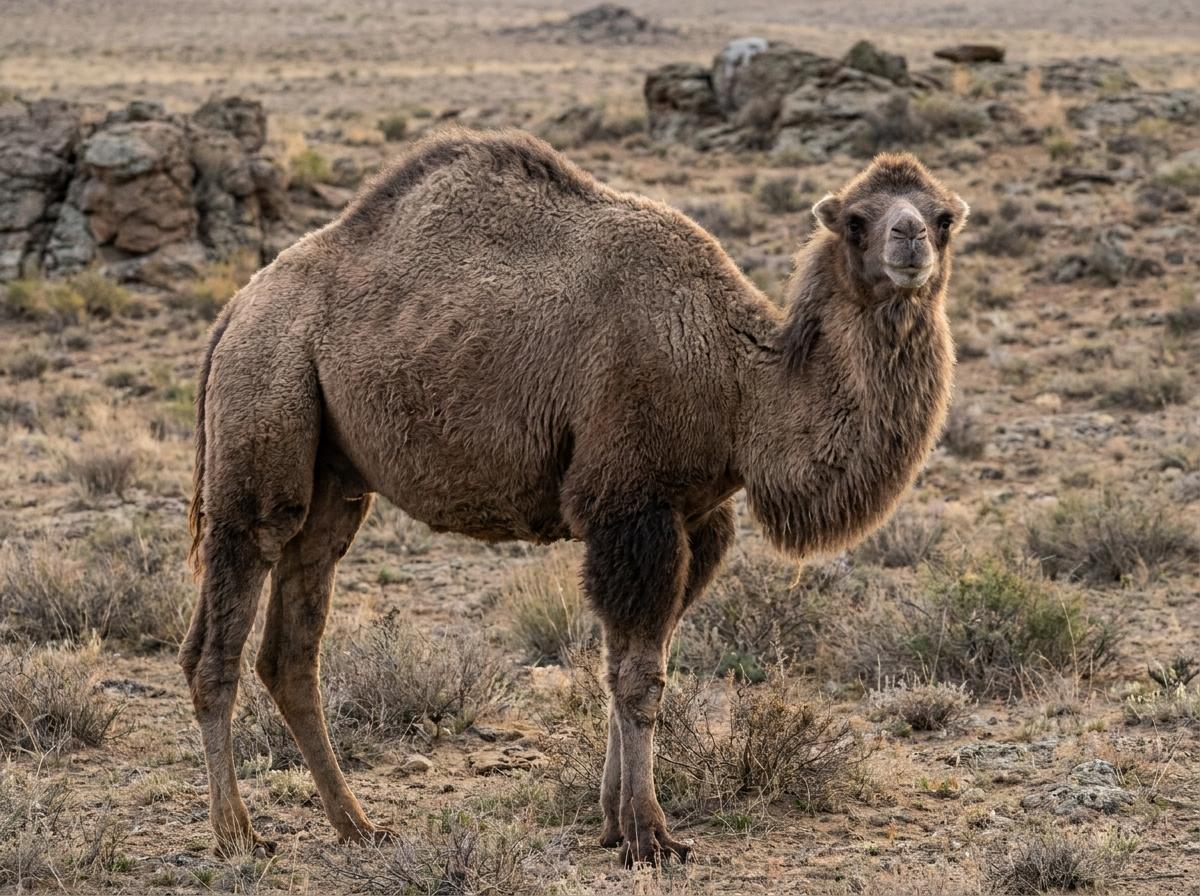
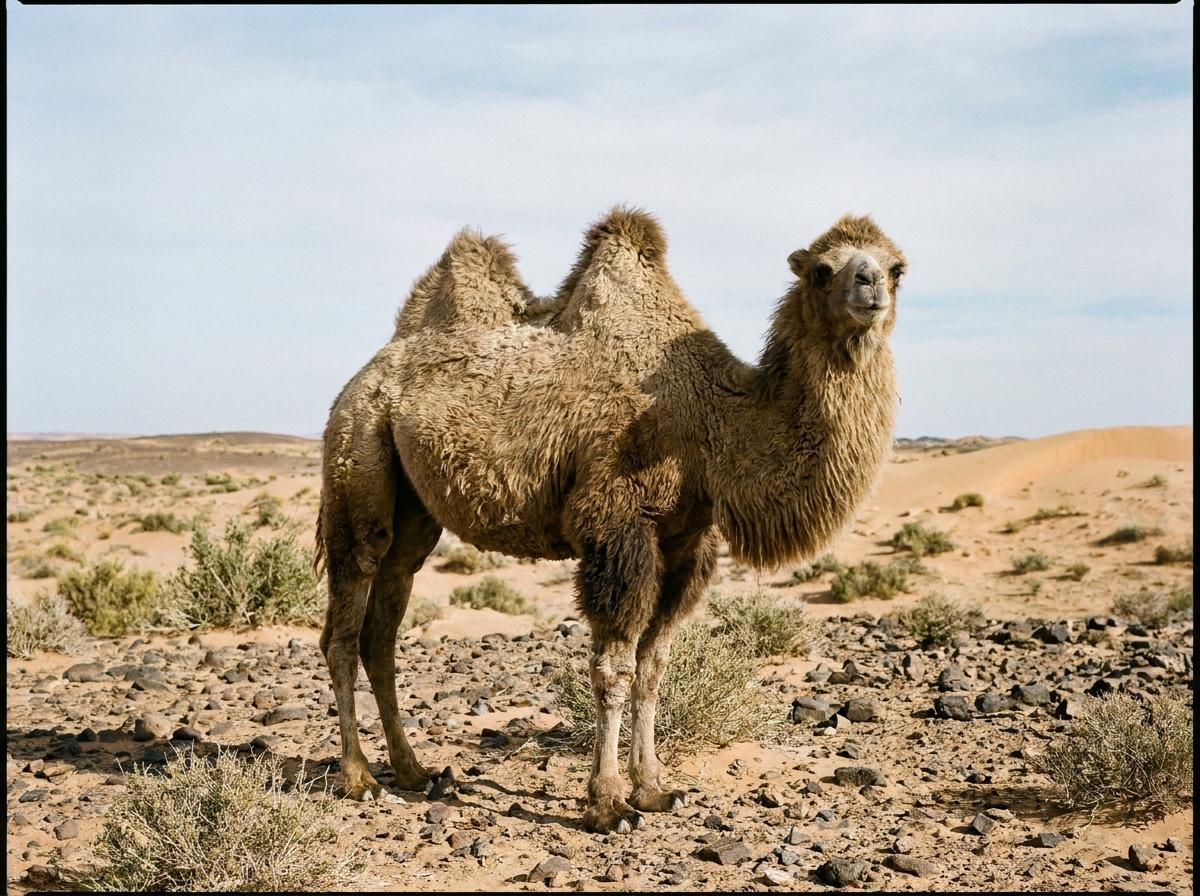
A hybrid camel is a cross between a one-humped dromedary and a two-humped Bactrian camel. Unlike mules or zebra hybrids, the first-generation hybrid is fertile. It usually has one long, very large hump with a small notch at the front, Bactrian-style hair on the neck, head and forearms, and a body 5 to 12 percent larger than either parent. Herders have made the cross since antiquity. Today it is done systematically in Turkey, where big hybrid males called tulu are bred for camel wrestling, and in Kazakhstan, where hybrids are kept for milk, wool and meat.
Breeders avoid mating two hybrids together, because the second generation loses the hybrid's size and vigor. Hybrid females are bred back to a pure dromedary or Bactrian, and most hybrid males are castrated. The wild Bactrian camel, Camelus ferus, is a separate endangered species and is not part of these crosses. The US endangered species list still names the Bactrian camel, but USFWS policy calls the Bactrian and dromedary cross the Boghdi camel and treats it as a domesticated animal that can be imported or exported without an ESA permit or Service clearance. State rules on keeping camels vary, so check yours before buying.