Leatherback Sea Turtle
Dermochelys coriacea
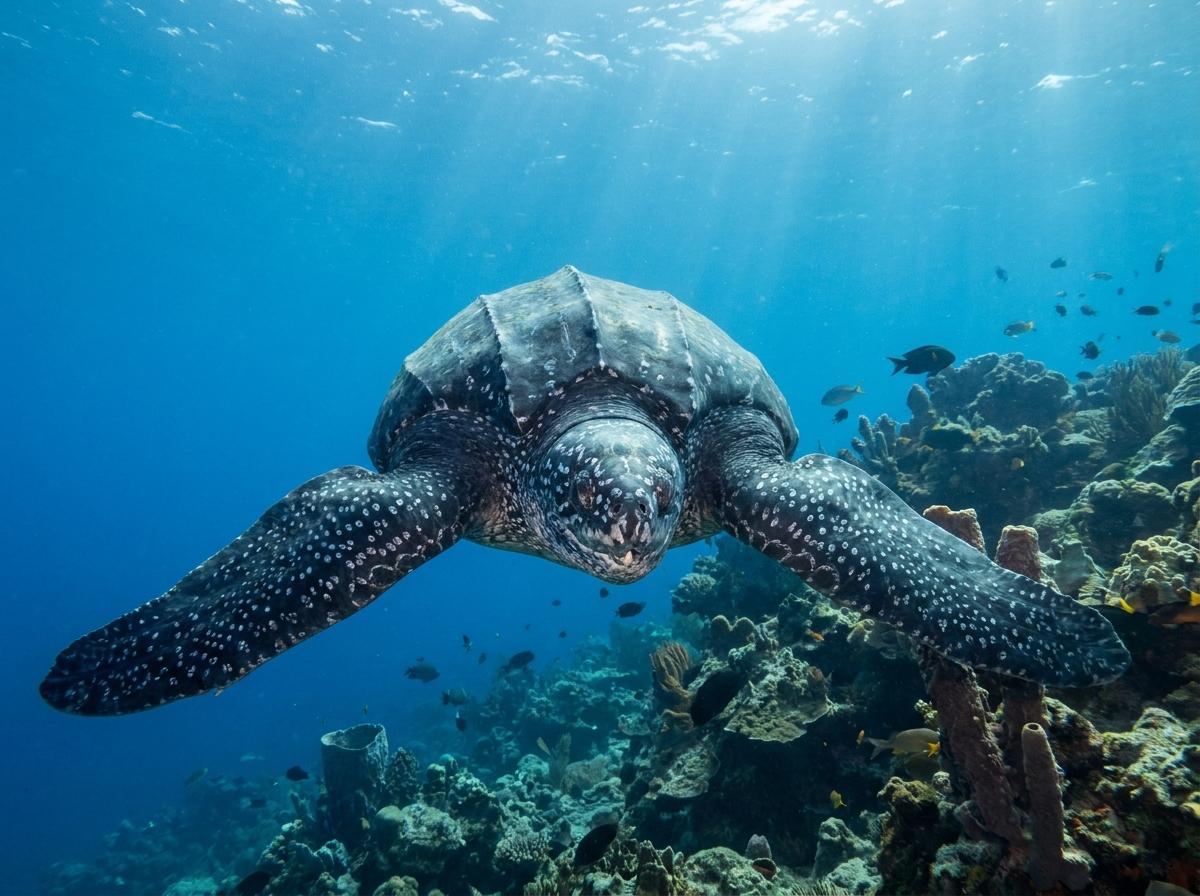
The leatherback sea turtle, Dermochelys coriacea, is the largest living turtle and the only living member of its family, Dermochelyidae. Instead of a hard scuted shell, it has a flexible, leathery carapace with seven lengthwise ridges and a dark body often speckled with white. Leatherbacks range through tropical, temperate, and even cold oceans, using unusual heat-retention abilities to follow jellyfish and other soft-bodied prey into deep water. Females return to sandy beaches to nest, while males remain at sea after hatching.
No private keeping context exists for this species; work with leatherbacks is conservation, research, rescue, or highly specialized marine rehabilitation. Nesting beach teams monitor females at night, reduce artificial light, protect nests from flooding or predation when needed, and track hatching success. At sea, the main management issues include bycatch in fishing gear, vessel strikes, plastic ingestion, egg harvest, and warming sand that can alter hatchling sex ratios. Because adults are large, pelagic, and stress-prone, public aquariums rarely maintain them. Field biologists use satellite tags, genetic sampling, and stranding response records to understand migration routes and to guide regional protection plans.
Colors: Wild Type