




Saxon Monk
The Saxon Monk is an ornamental color pigeon from Saxony, Germany, known in its homeland as the Sachsische Monchtaube. It takes its name from a single striking feature: a pure white head that sits like a monk’s hood or cowl over an otherwise fully colored body. Look closer and two more traits give it away, a smooth head with no crest and heavily feathered “muffed” feet that sweep the ground on white slippers. It belongs to the wider Saxon Colour pigeon family, a group of German show breeds that all carry feathered legs, and it is kept for exhibition and ornament rather than for flying or utility. This page covers what the breed is, where it comes from, exactly how to read its white-hood marking and colors, how it differs from the similarly named but oppositely marked Nun pigeon, and what to check before you buy one.

Browse listings, public profiles, breeders, or add your animal.
What is a Saxon Monk pigeon?
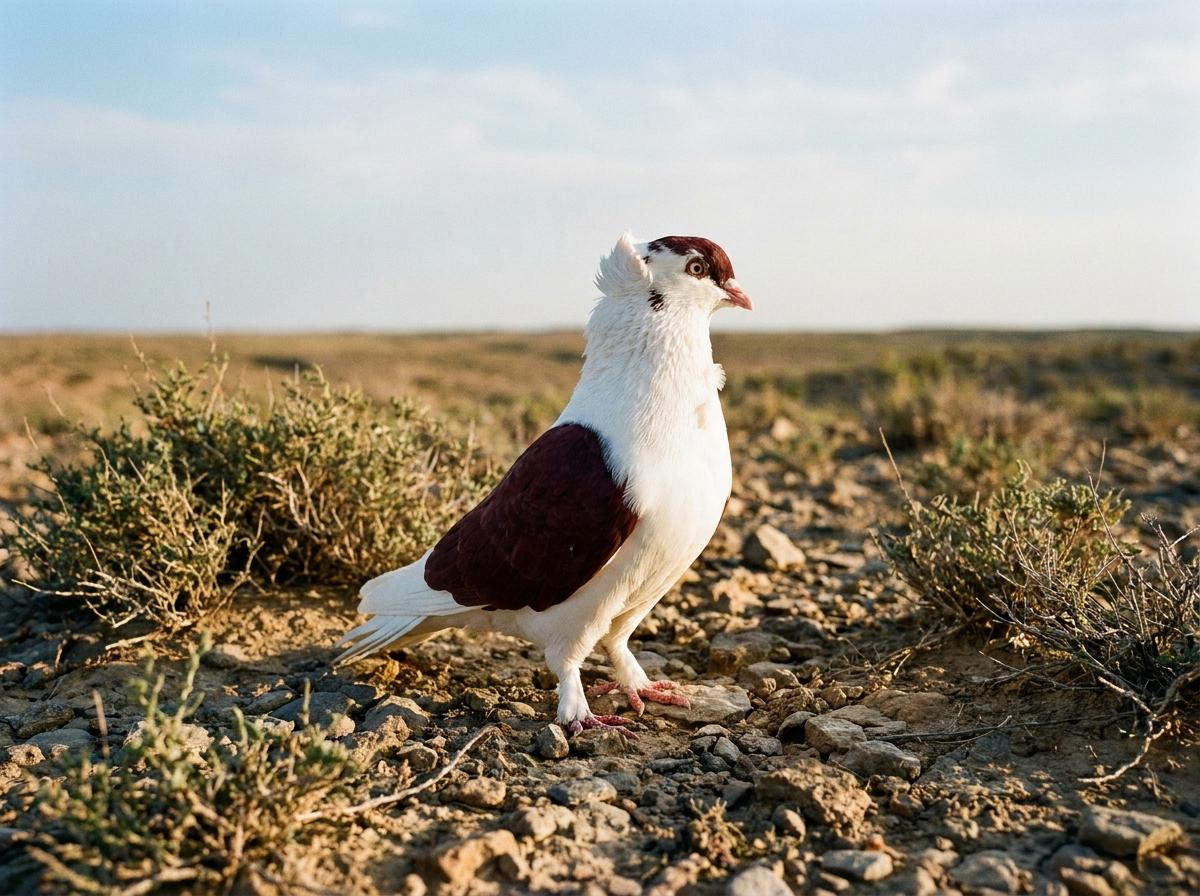
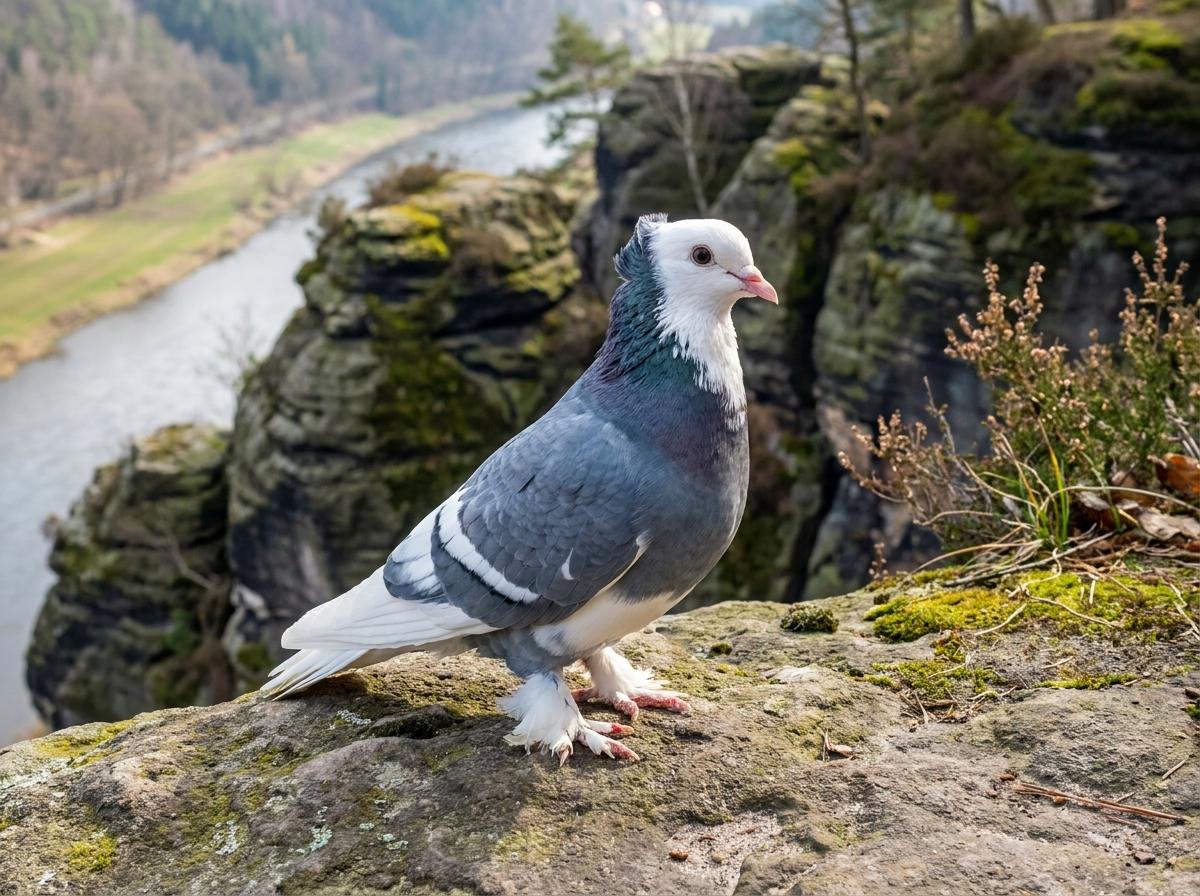
The Saxon Monk is a breed of domestic fancy pigeon (all domestic pigeons descend from the rock dove, Columba livia) that was developed in the region of Saxony in eastern Germany. Its German name, Sachsische Monchtaube, translates as “Saxon monk dove,” and the name is a direct description of the bird. A monk’s habit includes a hood or cowl that covers the head, and that is exactly what this pigeon looks like: the whole head is pure white while the body below it is a solid color, so the white head reads as a hood pulled up over a colored robe.
It belongs to the Saxon Colour pigeons (Sachsische Farbentauben), a large family of German ornamental breeds developed over many years of selective breeding in and around Saxony. According to breed references, all the members of that family are essentially the same type of bird and differ mainly in color and in where the white and colored areas fall, and one trait unites the whole group: the Saxons are all muff-legged, meaning they carry feathered feet. The Saxon Monk is one instance of that family, defined by its white-head “monk” marking. Sister breeds in the same family include the Saxon Shield, Saxon Whitetail, Saxon Priest, and Saxon Breast pigeons, each named for the part of the bird that carries the color or the white.
If you are comparing German color pigeons, the parent Creatures pigeon species page is a good place to see the Saxon Monk next to other fancy and utility pigeons, and the frilled Old German Owl page covers another German show pigeon with a different signature look.
Origin and history
The Saxon Monk comes from Saxony and the surrounding territory in Germany, where it is an old established color-pigeon breed, generally placed at around the 19th century. Like the rest of the Saxon Colour family, it was created by fanciers selecting local pigeons over a long period for a specific, clean marking pattern and for the feathered feet that mark the group. It was never a working bird in the racing or utility sense. It is an exhibition and ornamental breed, valued for how precisely it matches a marking ideal.
In the United States, the breed is recognized within the National Pigeon Association (NPA), the main governing body for exhibition pigeons in the country, where it sits in the color pigeon standards alongside the other Saxon breeds. That recognition matters if you plan to show, because it means there is a written standard that defines exactly where the white should stop and start, what the muffs should look like, and which colors and patterns are accepted. When you read the breed described as “correct” or “faulty,” it is that NPA color pigeon standard, adapted from the German original, that the description is measuring against.
What a Saxon Monk looks like
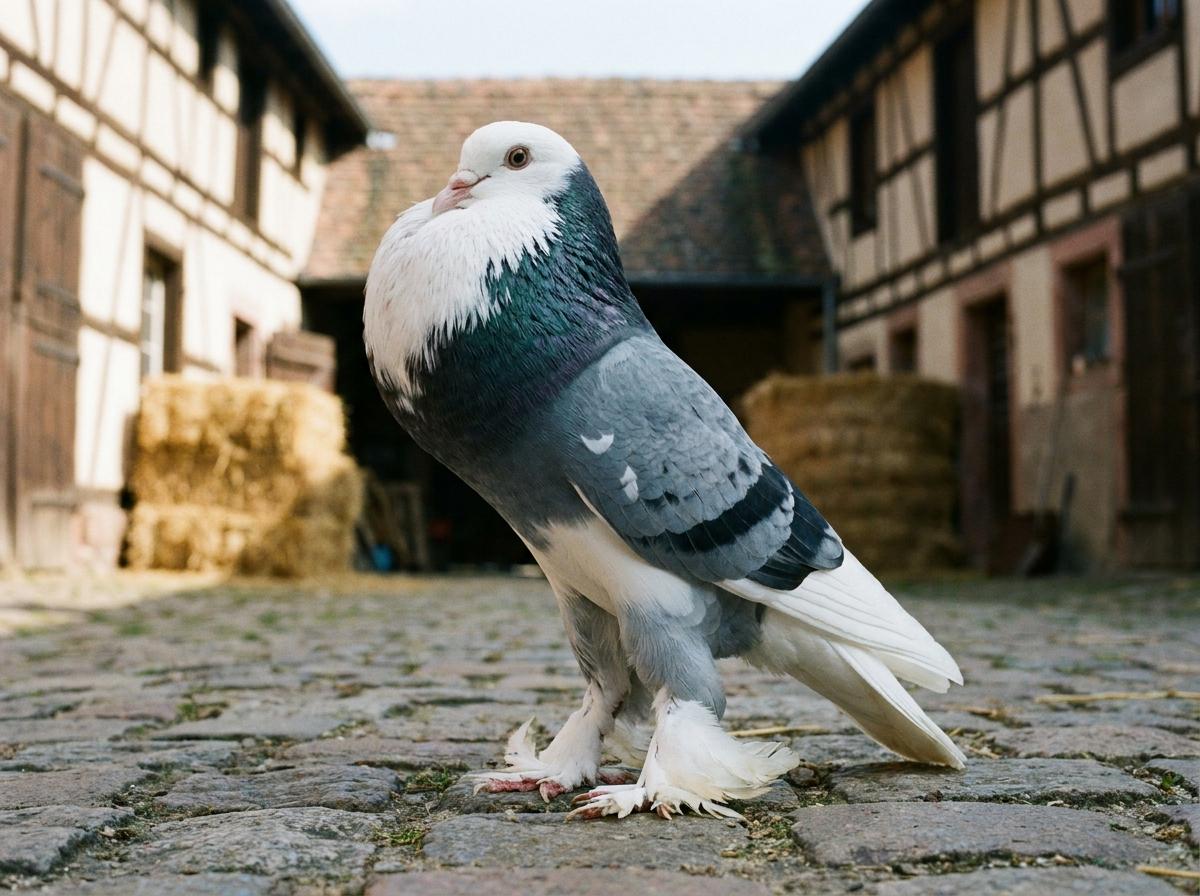
The Saxon Monk is a medium sized, robust, well-built pigeon. Its shape is fairly ordinary for a color pigeon, a broad, deep, well-rounded breast, a medium neck that is full at the shoulders, and a long closed tail. What makes it instantly recognizable is not its body shape but its markings and its feet.
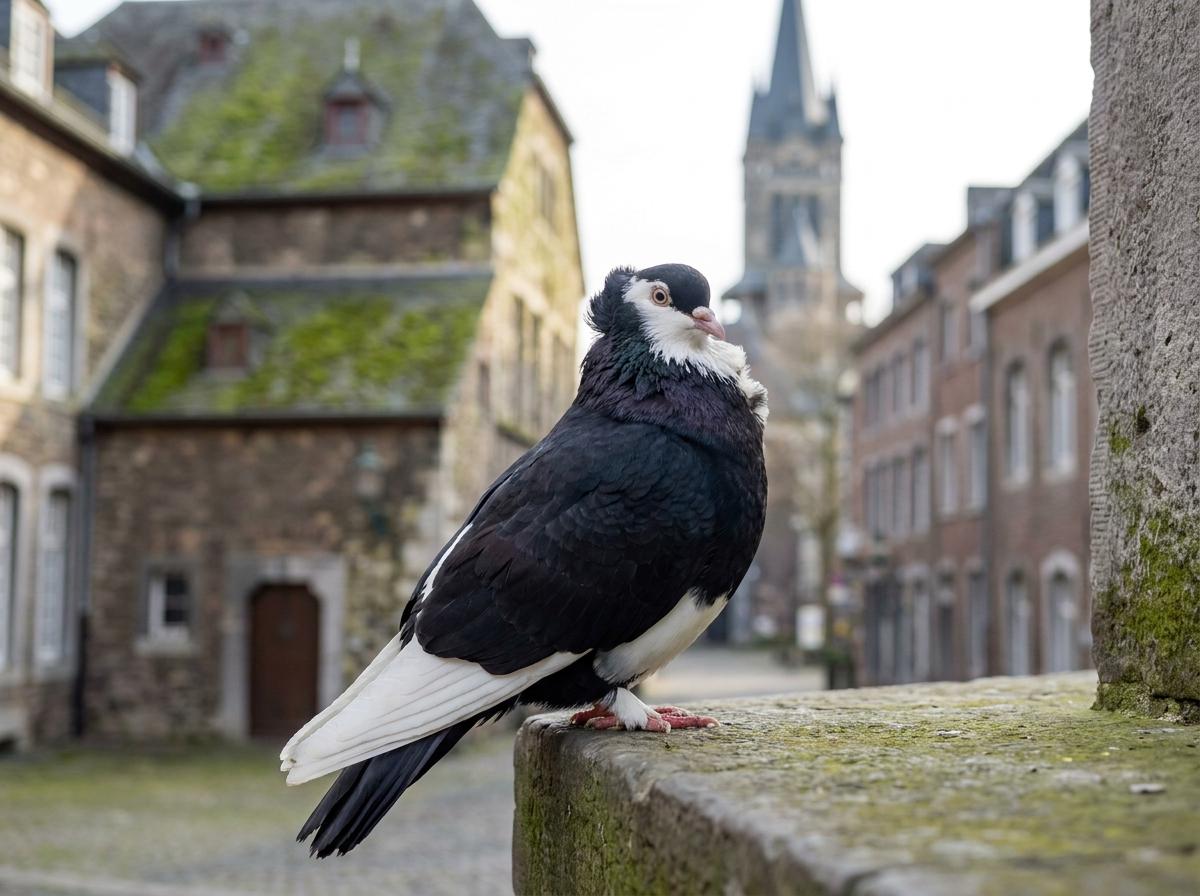
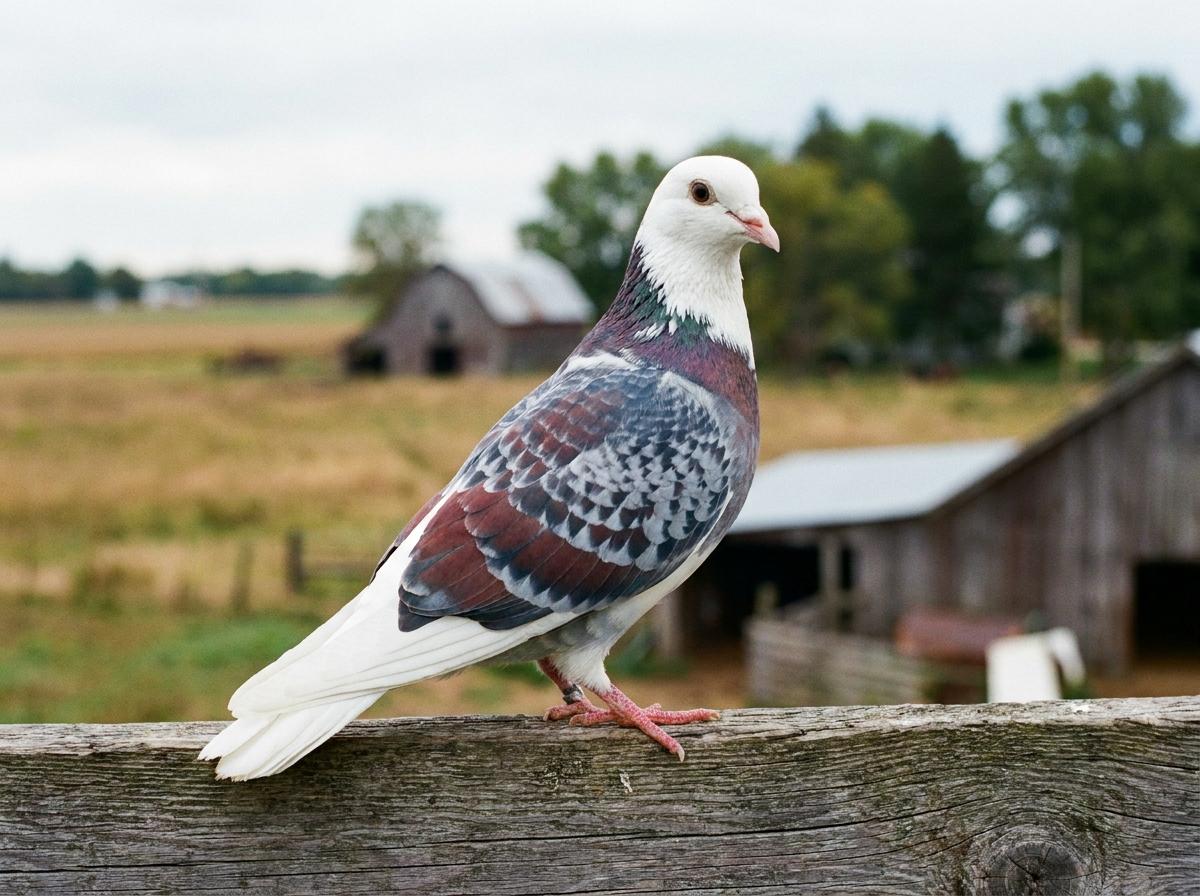
- Pure white head (the “monk cowl”). The entire head is white, and the white ends in a sharp, clean, even line just below the eyes and around the throat, where it meets the colored body. That crisp boundary is the whole point of the breed. A correct bird has a clean line, not a smudged or ragged one.
- Smooth head, no crest. Unlike some of its relatives and unlike the crested Nun pigeon, the Saxon Monk has a plain, smooth, somewhat rounded head with no crest at all. If you see a shell crest at the back of the neck, you are not looking at a Saxon Monk.
- White tail and white flights. The tail is white, and the primary flight feathers (the standard describes roughly eight to ten white flights) are white as well, so the white is not only on the head. The color begins sharply across the rump and the underside toward the tail.
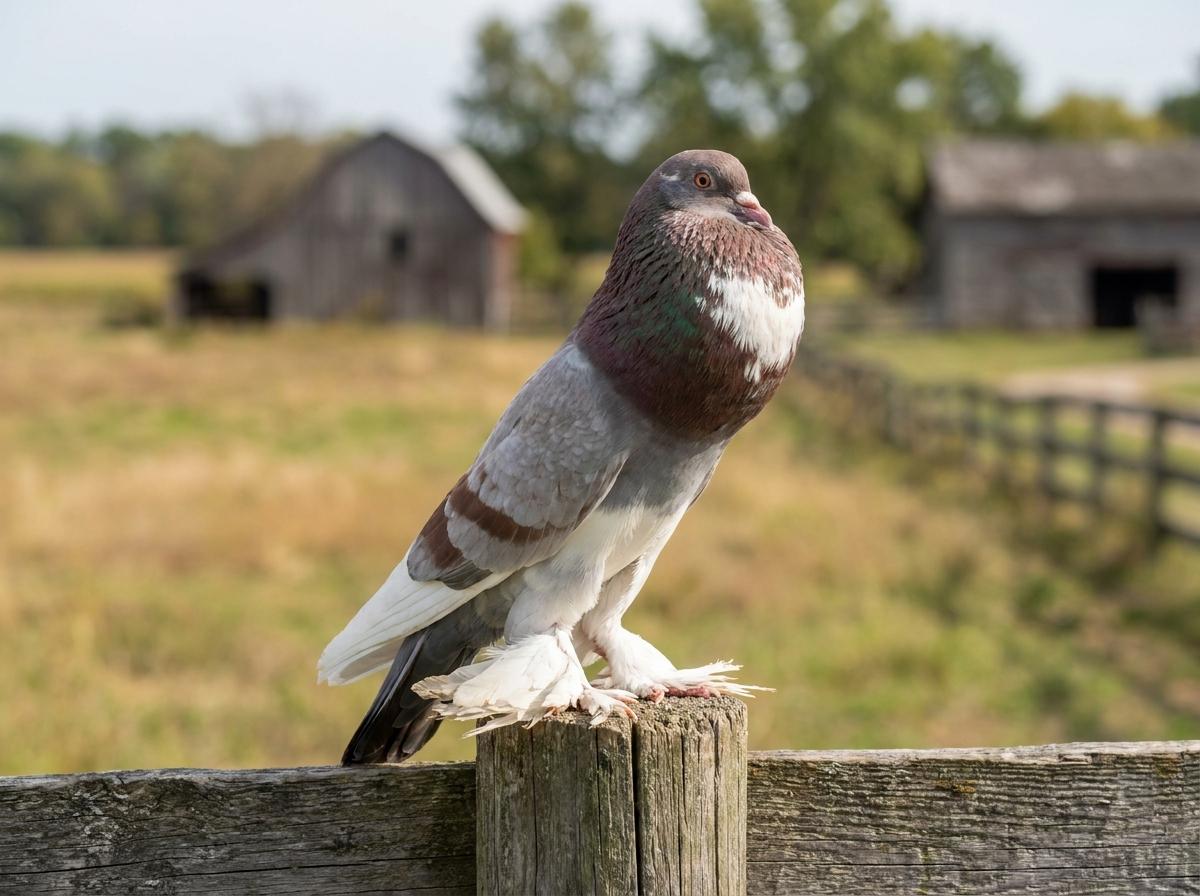
- Colored body. Between the white head at the front and the white tail at the rear, the neck, breast, back, and folded wing shield carry the solid color, which is where the breed’s color varieties live.
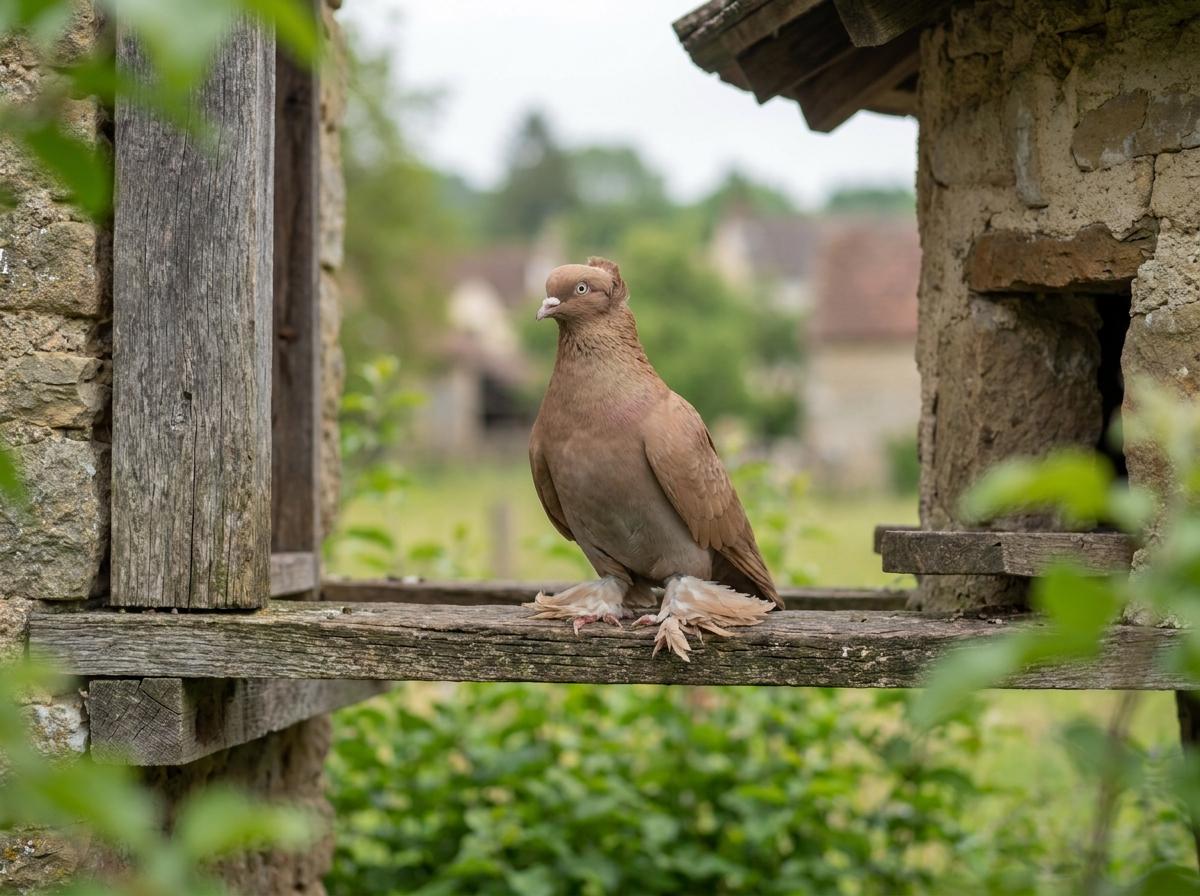
- Muffed (feathered) feet. The legs are long and thick and heavily muffed, carrying long, well-curved white feathered slippers, with colored hock feathers above them. These grouse-like feathered feet are a hallmark of the whole Saxon Colour group and separate the Saxon Monk from clean-legged marked breeds.

Colors and patterns
The color on the body comes in a defined set. Breed references list the Saxon Monk in five base colors: black, blue, red, yellow, and silver. On top of the base color, the wing shield is shown in one of two standard white patterns:
- White-barred. The wing carries clean white bars, described in the standard as long, narrow, even, and well separated, running across the folded wing.
- White-spangled. Instead of bars, the wing shield is dressed in small triangular white “spangles” (white feather tips) spread evenly over the whole shield, which gives the shimmering, speckled look you often see in photos.
So a given bird might be, for example, a black white-barred Saxon Monk or a yellow white-spangled Saxon Monk. Whatever the color and pattern, the head, tail, flights, and foot muffs stay white while the body carries the color, and judges look for crisp, even edges between the white and colored areas with no bleed or foul feathering.

Saxon Monk versus the Nun pigeon
The Saxon Monk is often mentioned in the same breath as the Nun pigeon, and the two do belong to the broad world of “marked” pigeons that carry color on some zones and white on others. But they are close to opposites, and it is worth being precise, because confusing them is easy.
- Saxon Monk. A colored body with a white head, white tail, and white flights, plus muffed (feathered) feet and a smooth, crestless head. The white is the “extra,” painted onto a colored bird.
- Nun pigeon. The reverse. The Nun is a white bird whose head, tail, and flight feathers are colored, so the color is the “extra” on a white bird. The Nun is also clean-legged (no foot feathering) and carries a distinctive shell crest of upturned feathers at the back of the neck.
Put simply, both breeds put colored and white areas in similar zones, the head and the tail, but the Saxon Monk wears white on those zones over a colored body, while the Nun wears color on those zones over a white body. Add the two structural giveaways and they are easy to separate: the Saxon Monk has feathered feet and no crest, and the Nun has clean legs and a crest. If a “monk” bird you are looking at has bare feet or a crest, check the identification again.
The name family is genuinely tangled, because pigeon breeders have long used religious names (Monk, Nun, Priest) for these hooded and marked patterns, so the words describe a marking idea more than a single breed. When you shop, go by the actual traits, colored body with a white hood and muffed feet for the Saxon Monk, rather than by the name alone.
Temperament and behavior
Saxon Monks are generally described by keepers as calm, gentle, and easy to handle, which fits a breed kept mainly for show and ornament rather than for flying performance. As a heavily feathered-footed show pigeon it is not a high-flying athlete like a homing or tumbling pigeon, so it suits a settled loft or aviary life. We flag “calm and gentle” as the common keeper and breeder description rather than a formally studied trait, because the pigeon-fancy literature focuses on the breed standard and on breeding rather than on measured behavior, and any individual bird’s tameness depends heavily on how much it is handled and how it is raised.
As with all Saxon Colour pigeons, the feathered feet ask for a little extra care in day-to-day management. Long foot muffs pick up dirt and moisture and can be damaged on rough or wet footing, so a clean, dry loft is not just about health, it is also what keeps the bird show-ready.
Housing, care, and health
A Saxon Monk needs the same fundamentals as any loft pigeon, with one breed-specific emphasis on keeping those foot muffs clean and dry.
Housing
House them in a clean, dry, draft-free loft or aviary with good ventilation but no direct drafts, ample perches, and nest boxes for breeding pairs. Give protection from predators and from wet weather, and enough space that birds are not crowded. Dry, smooth footing matters more here than for a clean-legged breed, because damp bedding, mud, and wire can foul or break the white foot feathering that is part of the breed’s whole appearance. Sound, dry litter protects both the muffs and the bird’s general condition.
Feeding
Feed a good-quality pigeon grain mix (a blend of seeds and legumes such as peas), with constant access to clean fresh water and to grit and a mineral or pigeon “pick” supplement, which pigeons need for digestion and for eggshell quality in breeding hens. Breeding and molting birds have higher demands, so plan feeding around the season. A well-fed bird also carries better feather, which matters for a breed judged so heavily on clean, complete markings and muffs.
Health
Routine pigeon health care applies: keep the loft clean and dry, control parasites (both external, such as mites and lice, and internal), and watch for the common pigeon illnesses such as canker (trichomoniasis), coccidiosis, worms, and respiratory infection. Provide the vaccinations, most importantly against paramyxovirus (PMV) where it is used, that your avian veterinarian recommends for your area, and quarantine new birds before adding them to an established loft. As with any animal, defer medical decisions to a qualified veterinarian who can examine the bird, and keep clear records of pairings, hatches, treatments, and any health events so you can make sound breeding decisions. With good management, fancy pigeons commonly live on the order of 10 to 15 years, though there is no breed-specific guarantee, so treat that as a general expectation rather than a promise.

Breeding and showing
Saxon Monks breed as ordinary pigeons do. Pairs form stable bonds, a hen typically lays two eggs per clutch, incubation runs about 17 to 19 days as in pigeons generally, and both parents feed the squabs on crop milk. Because the Saxon Monk is a normally proportioned color pigeon rather than an extreme short-faced breed, it does not carry the notorious self-feeding problems of the very short-beaked owls, so most keepers can raise chicks without routine fostering. When you pair birds, breeders aim to hold the sharp white-to-color boundary and the correct muffs generation to generation, which is the real work of keeping the breed to standard.
For show, birds are judged against the written standard: overall type and station first, then the precision of the markings (a clean, even line where the white head meets the colored body, correct white flights and tail), the color and pattern of the wing shield, and the length and quality of the foot muffs. If you plan to exhibit, get a current copy of the standard from the NPA or the relevant color-pigeon club and learn exactly what a correct hood edge and a full set of muffs are supposed to look like, because those fine points are where shows are won and lost.
Cost and availability
The Saxon Monk is a specialist show and hobby breed, not a mass-market pet, so it is bought and sold through pigeon fanciers, color-pigeon clubs, and shows rather than in pet shops. There is no single reliable public price for the breed, and what a bird costs depends heavily on its quality: how clean the hood line is, how even the wing pattern is, how complete the muffs are, and whether it is show-standard or simply pet-quality. Rather than quote a precise figure we cannot source, the honest guidance is to expect ordinary hobby-pigeon money for a pet-quality bird and a premium for proven exhibition stock, and to buy from someone who can show you the parents and the loft.
Availability follows the same pattern. The Saxon Colour breeds are kept by fanciers in Germany and by color-pigeon enthusiasts elsewhere, including North America, but the Saxon Monk is not a common backyard bird, so the practical way to find one is through color-pigeon clubs, pigeon shows, and breeder listings rather than by walking into a store. If genuine stock is scarce in your area, a saved listing alert (in the hub below) is often the most efficient way to catch a bird when one is posted. You can also browse Saxon Monks on the Creatures marketplace and look for lofts in the Creatures breeder directory.
What to check before you buy
Because almost all of the breed’s value is in fine marking and feather detail, buy on evidence and, where you can, in person.
- Check the hood line. The edge where the white head meets the colored body should be sharp, clean, and even, sitting just below the eyes and around the throat. A smudged, ragged, or uneven line is the most common fault.
- Confirm the white zones. The head, the tail, and the flights should all be clean white, and the body color should be solid, with no colored feathers bleeding into the white or white feathers (“foul”) bleeding into the color.
- Look at the feet. You want full, well-curved white foot muffs and colored hock feathers, not bare or sparse legs. Missing or broken muffs are a serious fault in a Saxon breed.
- Check for the smooth head. Remember that a true Saxon Monk has no crest. A crest points you toward a different breed (such as the Nun) or a cross.
- Ask for records. Pairings, hatch dates, and any health treatments tell you more than a single photo. A breeder who keeps records is usually a breeder worth buying from.
Frequently asked questions
What is a Saxon Monk pigeon?
It is an ornamental color pigeon from Saxony, Germany, called the Sachsische Monchtaube. Its signature is a pure white head, like a monk’s hood, on an otherwise fully colored body, along with a white tail, white flight feathers, a smooth crestless head, and heavily feathered “muffed” feet. It belongs to the Saxon Colour pigeon family and is kept for show and ornament.
Why is it called a “monk”?
Because the pure white head sits over the colored body like a monk’s hood or cowl over a robe. Pigeon breeders have long used religious names (Monk, Nun, Priest) for these hooded and marked patterns, so the name describes the marking rather than the bird’s behavior.
How is a Saxon Monk different from a Nun pigeon?
They are close to opposites. The Saxon Monk is a colored bird with a white head, white tail, and white flights, and it has feathered feet and no crest. The Nun is a white bird with a colored head, tail, and flights, and it is clean-legged with a shell crest. Both put color and white in similar zones, but the Saxon Monk wears white over a colored body while the Nun wears color over a white body.
What colors do Saxon Monks come in?
The body is shown in five base colors, black, blue, red, yellow, and silver, each in one of two wing patterns: white-barred (clean white bars) or white-spangled (small white triangular spangles across the wing shield). The head, tail, flights, and foot muffs stay white in every color.
Do Saxon Monks have crests?
No. A true Saxon Monk has a smooth, rounded, crestless head. A crest at the back of the neck indicates a different breed, such as the Nun, or a cross.
Are Saxon Monks good pets?
They are generally calm, gentle, and easy to handle, and as a settled show and ornamental breed they suit loft or aviary life rather than free flying. Their feathered feet ask for a clean, dry loft, but they are not an extreme breed and breed and rear their own young readily, which makes them a reasonable choice for a fancier who enjoys color pigeons.
Do this next on Creatures
Whether you are researching the breed, hunting for a bird, or already keeping Saxon Monks, Creatures is the records, marketplace, and directory layer to do it in one place.
Compare the breed. See how it stacks up against other pigeons on the Creatures pigeon species page, the frilled Old German Owl, the flying German Beauty Homer, and the oppositely marked Nun.
Find a bird. Browse Saxon Monks on the marketplace and search trusted lofts and breeders in the Creatures directory. New to the marketplace? See saving searches and using your watchlist.
Get alerted. Saxon Monks are uncommon, so set a free Saxon Monk listing alert and we will tell you when one is posted. No account needed to start.
Add your pigeon. Already keeping Saxon Monks? Create a free animal profile in a few minutes, no account needed to start. The walkthrough is in adding an animal to Creatures.
Track breeding and health. Track pairings, hatches, and health records on Creatures. The record sheet opens for any visitor to look around, and you will need a free account to save what you enter. See adding a record for the full how-to.
List your loft. Breed Saxon Monks? Create a free loft or breeder profile so buyers searching for this uncommon breed can reach you, and read getting listed in the breeder directory.