



Dyeing Poison Dart Frog
Dendrobates tinctorius
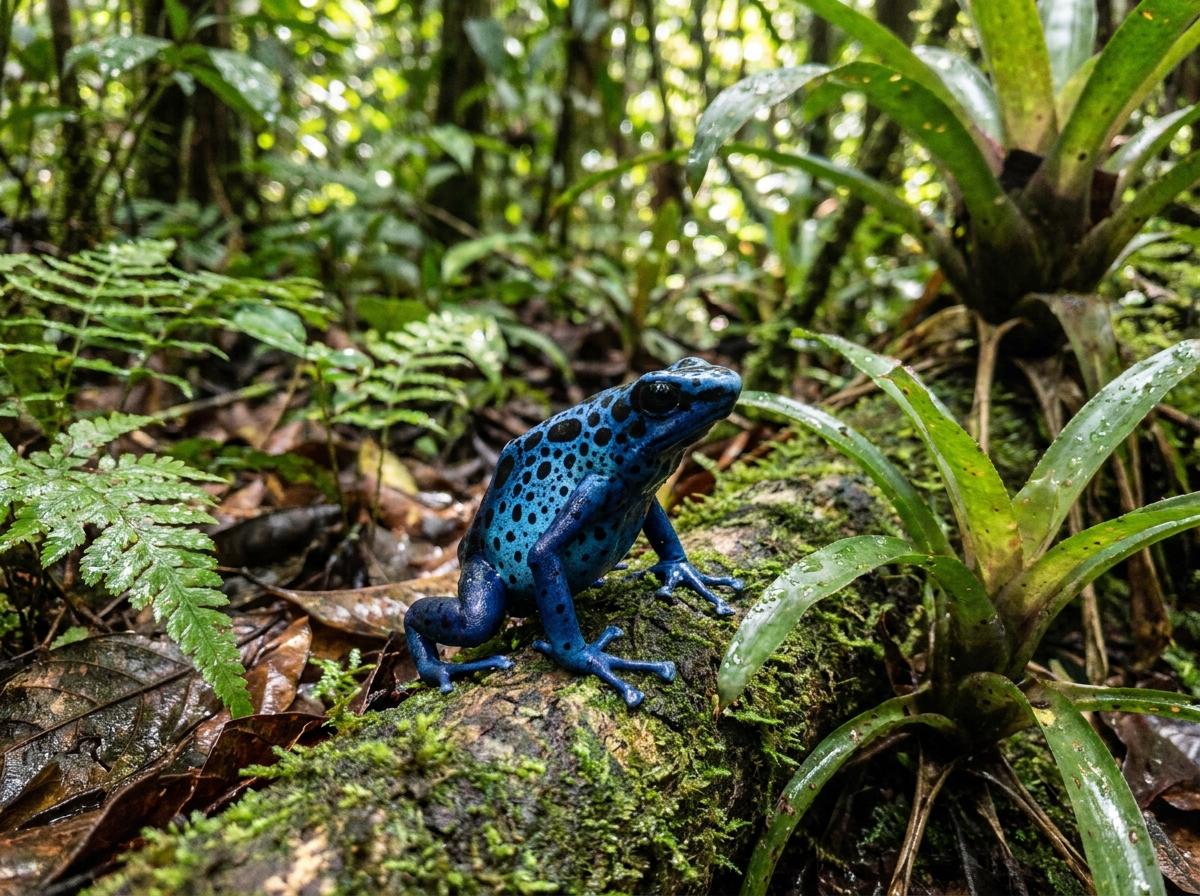
The dyeing poison dart frog (Dendrobates tinctorius) is one of the larger and most variable poison frog species from the Guiana Shield region of South America. Local forms can differ sharply in blue, yellow, black, white, or orange patterning, and many captive lines are known by locality or trade names. In the wild, skin alkaloids come from tiny arthropods in the diet, so captive-bred frogs raised on standard feeder insects do not carry the same toxin profile.
Responsible keeping centers on captive-bred animals, stable humid vivariums, and precise feeding with small foods such as fruit flies and springtails. Dendrobates tinctorius is usually kept in planted enclosures with leaf litter, film canisters or bromeliad-style deposition sites, and careful attention to ventilation so moisture does not become stagnant. Breeders should avoid mixing locality forms casually, because attractive crosses can blur line identity and reduce the value of captive populations for education or future breeding. Public displays often use these frogs to explain rainforest ecology, diet-linked toxicity, and amphibian conservation without encouraging wild collection.


