



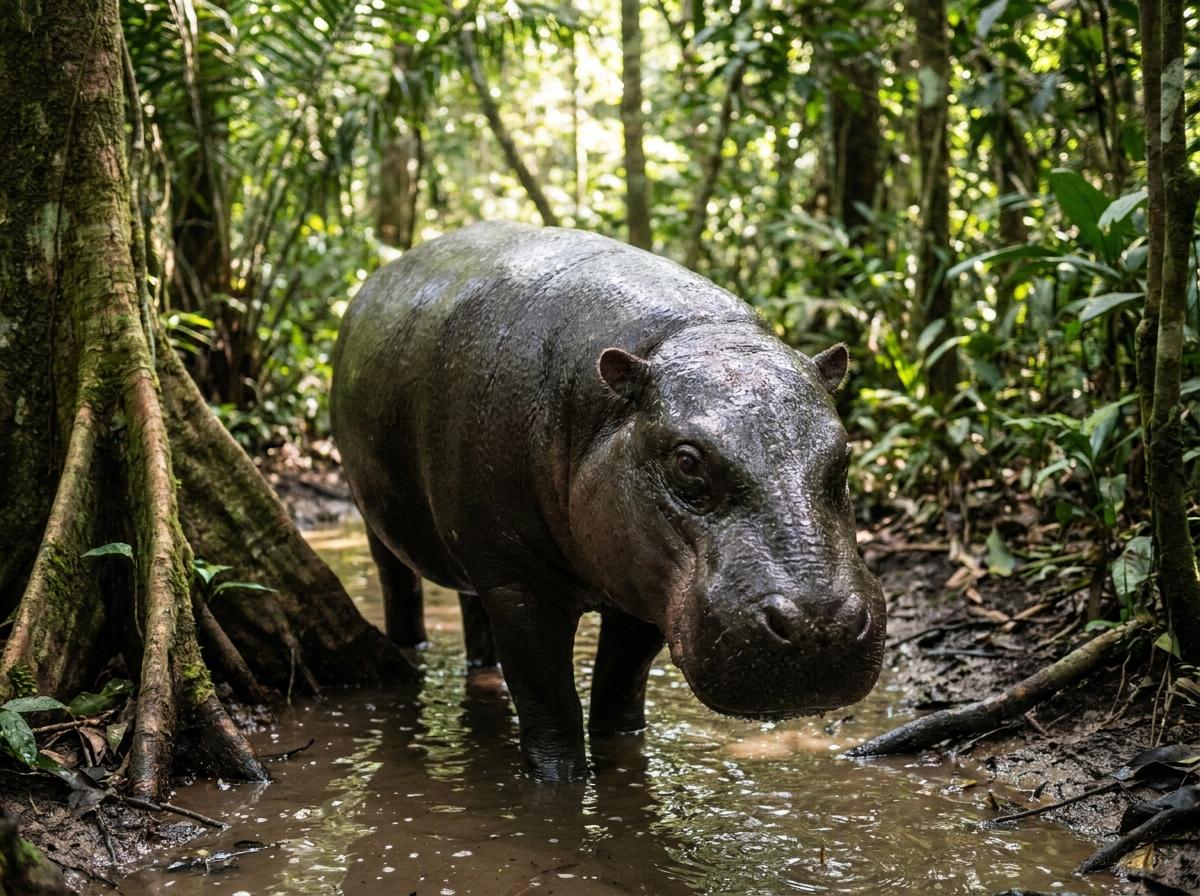
Pygmy Hippopotamus
Choeropsis liberiensis
The pygmy hippopotamus (Choeropsis liberiensis) is a small, forest-dwelling hippo from West Africa, especially Liberia and nearby regions. It is much smaller and more solitary than the common hippopotamus, with a rounded body, short legs, smooth dark skin, and a preference for forest streams, swampy cover, and shaded trails. Its secretive habits make it difficult to study in the wild, where habitat loss and fragmentation are major concerns.
Zoos and conservation centers manage pygmy hippos with a mix of warm indoor housing, pools or wallows, soft resting areas, browse, and quiet spaces that allow an animal to retreat from visitors or other hippos. Breeding work requires careful introductions because adults are often housed singly outside planned pairing periods. Keepers monitor skin condition, foot health, weight, dental wear, and water quality, while conservation partners focus on forest protection and field surveys. The species is not a petting-zoo animal or backyard exotic; its value in managed care comes from education, genetic planning, and support for range-country conservation.
Colors: Wild Type