


English Spot
Author: Elliott Garber, DVM · Published
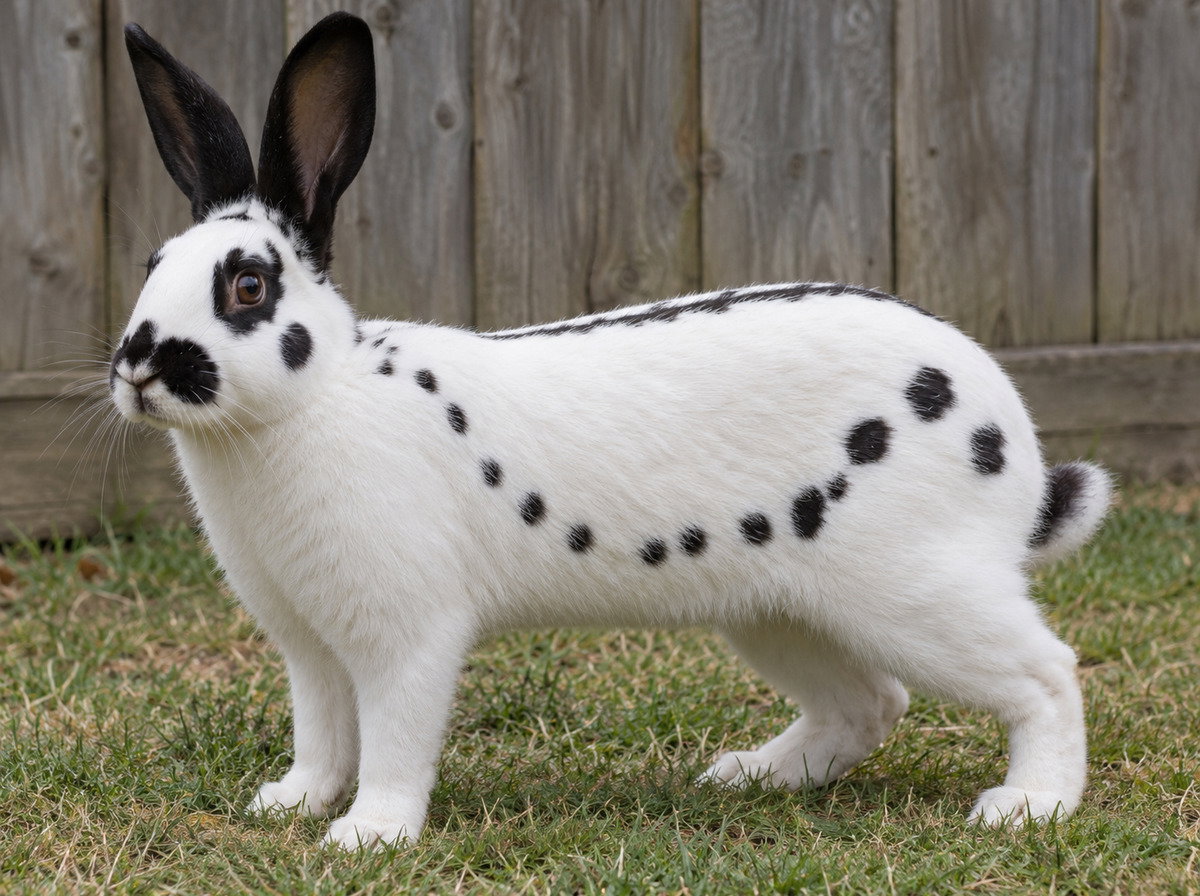
An English Spot is an athletic, arched rabbit with an organized pattern of markings on a white coat. A few dark spots do not establish the breed. The useful identification clues are the body shape, face markings, dorsal line and chain of side spots considered together.
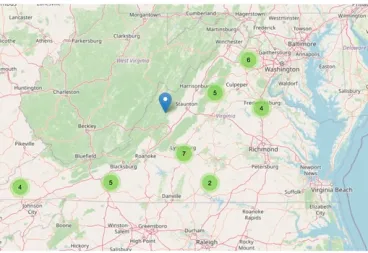
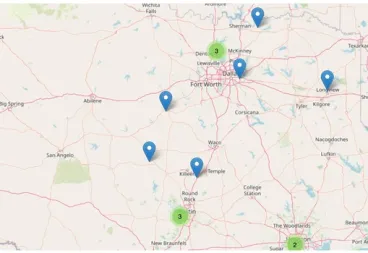
If you are researching contacts, the English Spot directory contains directory listings compiled from public sources. Confirm that each contact still works with English Spots and that its contact details are current before arranging travel or payment. A directory entry does not confirm current stock.

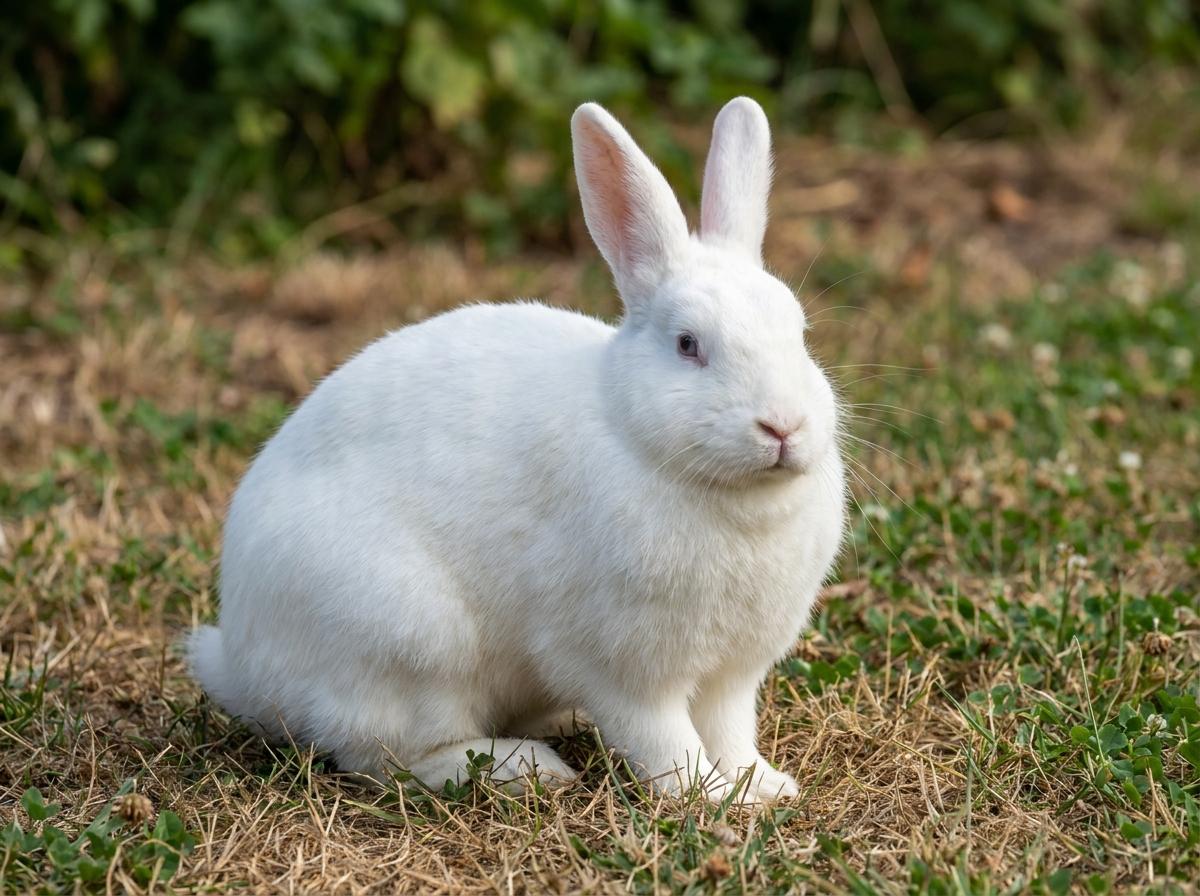
AI-generated illustration of an English Spot appearance. Marking placement is illustrative, not a show judge’s assessment.
| Identity | Established English rabbit breed |
|---|---|
| Body | Arched, athletic outline |
| Markings | Butterfly nose, eye rings, cheek spots and side chains |
| Show assessment | A running breed, evaluated in movement |
| Buying priority | Health and identity before marking symmetry |
Browse listings, public profiles, breeders, or add your animal.
Read the pattern as a whole
US ARBA usage is English Spot. The British Rabbit Council’s 2021 to 2025 standards list the breed as English. The older name English Butterfly appears in the American English Spot Rabbit Club’s breed history. Check the organization and edition when comparing show descriptions.
ARBA’s breed description traces the English Spot to nineteenth-century England and identifies its characteristic butterfly nose marking, eye circles, cheek spots, coloured ears, herringbone along the back and chain of side spots. Its US maximum show weight is 8 lb. That maximum is a standard reference, not an ideal weight for every pet.
The herringbone is the dark marking following the spine. The side pattern is more organized than a general scatter of patches. Examine both sides, because a single photograph may hide the part of the pattern being discussed. Small differences in spacing and definition matter in showing, but no marking pattern can substitute for reliable parentage when a pedigree is claimed.
A spotted crossbreed can be a good pet without being an English Spot. Similarly, the larger Checkered Giant has a different breed identity and should not be treated as an oversized English Spot. Ask for the name used on the animal’s records rather than guessing from black and white colouring.

AI-generated detail of characteristic face markings. The image cannot verify ancestry or exhibition quality.
Why movement matters
English Spots are among the rabbits assessed while moving on the show table. This helps explain why a stretched or crouched still image gives an incomplete impression of their outline. At a viewing, ask to watch the rabbit move voluntarily on a secure, nonslip surface. Look for ordinary, comfortable movement rather than trying to force an exhibition pose.
“Running breed” is a show term, not permission to let a rabbit run loose outdoors. A household setup still needs secure boundaries, room to hop and stretch, places to retreat, safe enrichment and protection from predators and weather. A carrier or display cage is not everyday accommodation.
An energetic individual may suit someone who enjoys watching and interacting at floor level. That does not make the breed universally easy to handle or unsuitable for every calm home. Ask about the particular rabbit’s response to routine care, its established companions and the environment it knows. Children need supervised interaction that allows the rabbit to withdraw.
Care and health before coat perfection
The Rabbit Welfare Association and Fund’s housing guidance emphasizes connected living and exercise space, shelter and the needs of a compatible pair. Plan companionship and introductions with suitable advice. Do not assume that two unfamiliar rabbits can simply be put together because they share a breed.
For feeding, the RSPCA recommends a hay or grass based diet, with fresh water and measured supplementary foods. Ask for the rabbit’s present ration before collection. Lack of appetite warrants prompt veterinary advice; it is not a normal adjustment to ignore until the next day.
A viewing should cover eyes, nose, feet, coat, rear end and movement, followed by questions about veterinary history. Request local vaccination advice from a rabbit-experienced vet. A photograph of excellent markings does not rule out dental problems, and a minor marking fault is not itself a health diagnosis.

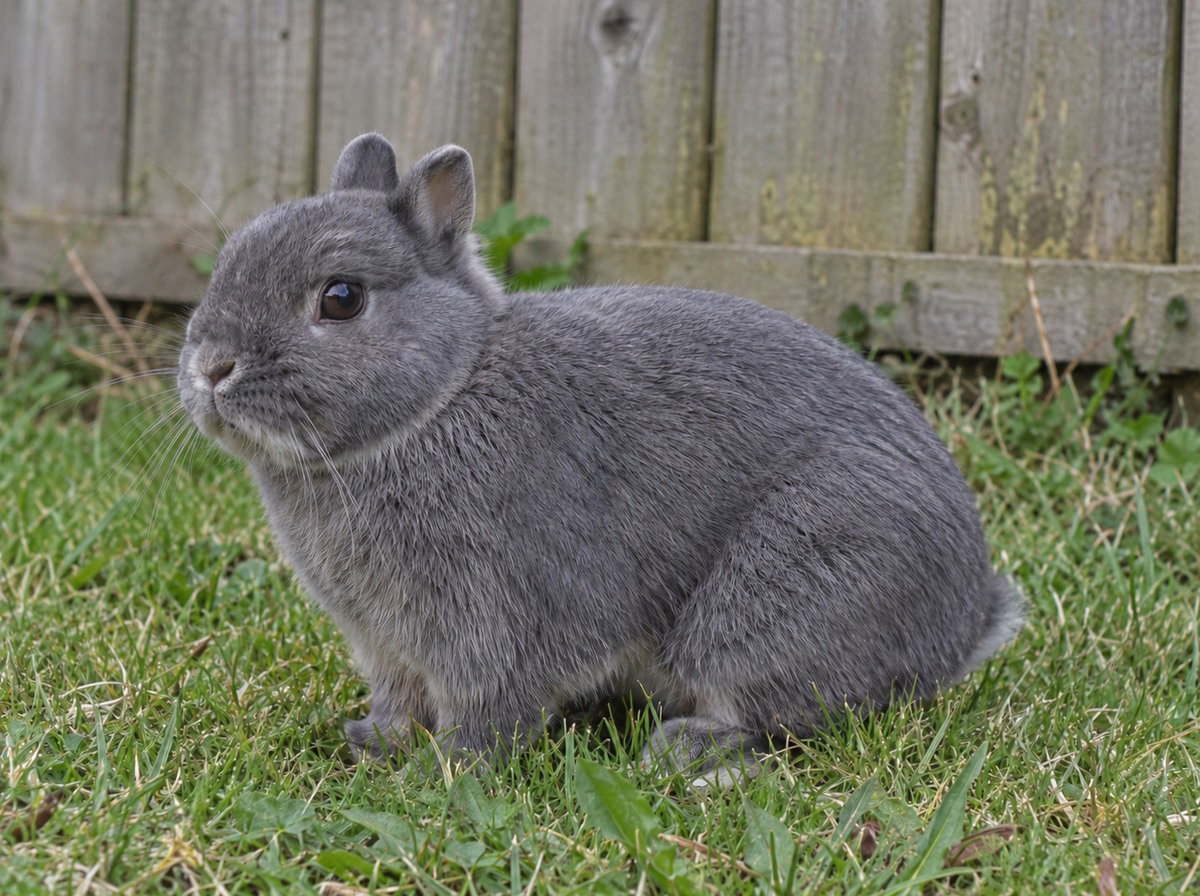
AI-generated movement portrait. The garden crop is not a complete rabbit enclosure.
Price, pedigree and expectations
Prices vary with location, age, documentation and the purpose of the sale. Ask for a current individual quote rather than relying on a universal breed price. Establish whether the rabbit is being offered as a companion, breeding prospect or exhibition prospect, and what evidence supports that description.
For a show prospect, ask which organization’s current standard applies and which faults or uncertainties the seller sees. Young animals change as they mature, so a promise of future wins is not a substitute for an honest assessment. For a companion, prioritize health, behaviour, existing bonds and a realistic care budget over perfect spots.
Before paying, agree on identification, sex, birth date or estimated age, health information, included documents and collection arrangements. Verify the actual contact independently. An older directory listing can point toward research without proving that the named person still breeds rabbits.
Common questions
Is every black-and-white spotted rabbit an English Spot?
No. The breed has a particular build and pattern, and ancestry matters when breed identity is claimed. Other breeds and mixed rabbits can also have spots.
Are all English Spots black and white?
Black markings are one familiar example. Ask which colour is being claimed and consult the relevant current standard for exhibition eligibility.
Does “running breed” mean it needs to live outside?
No. It describes show assessment. Safe, spacious indoor or outdoor accommodation should meet the individual rabbit’s needs.
Do this next on Creatures
Review the English Spot directory listings, then verify current breed focus and contact details directly. The English Spot hub and wider rabbit hub remain useful identity references.