






Sea Otter
Enhydra lutris
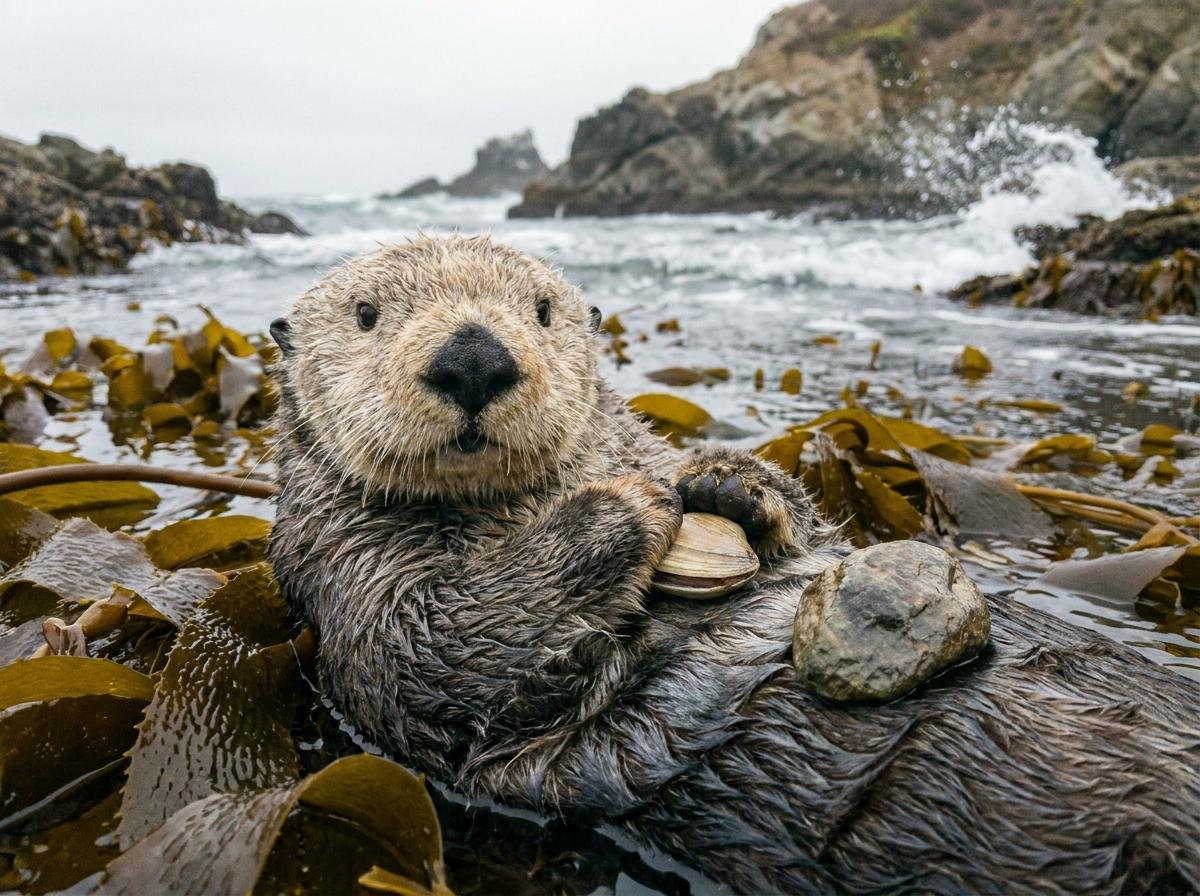
The sea otter, Enhydra lutris, is a marine mustelid of the North Pacific, ranging historically from Japan and Russia through Alaska to the west coast of North America. It is the heaviest member of the weasel family and depends on extremely dense fur rather than blubber for insulation. Sea otters float on their backs, groom constantly, and often use stones or other hard objects to open clams, mussels, crabs, urchins, and other prey. Coastal kelp forests and rocky nearshore habitats are especially important, and otter predation on sea urchins can strongly shape those ecosystems.
Sea otters are protected wildlife, not pets. Human care is limited to permitted aquariums, rehabilitation centers, and research programs with specialized saltwater pools, chilled water systems, intensive diet preparation, and staff trained to avoid imprinting releasable pups. Orphaned or oiled otters require demanding fur cleaning and feeding schedules because loss of insulation can be fatal. Conservation teams monitor populations by aerial or shoreline surveys, respond to oil spills and entanglement, and study disease, shark bite mortality, and shellfish conflicts. Reintroduction and translocation planning must consider both ecological benefits and the concerns of coastal communities that share the same prey resources.
Colors: Wild Type








