






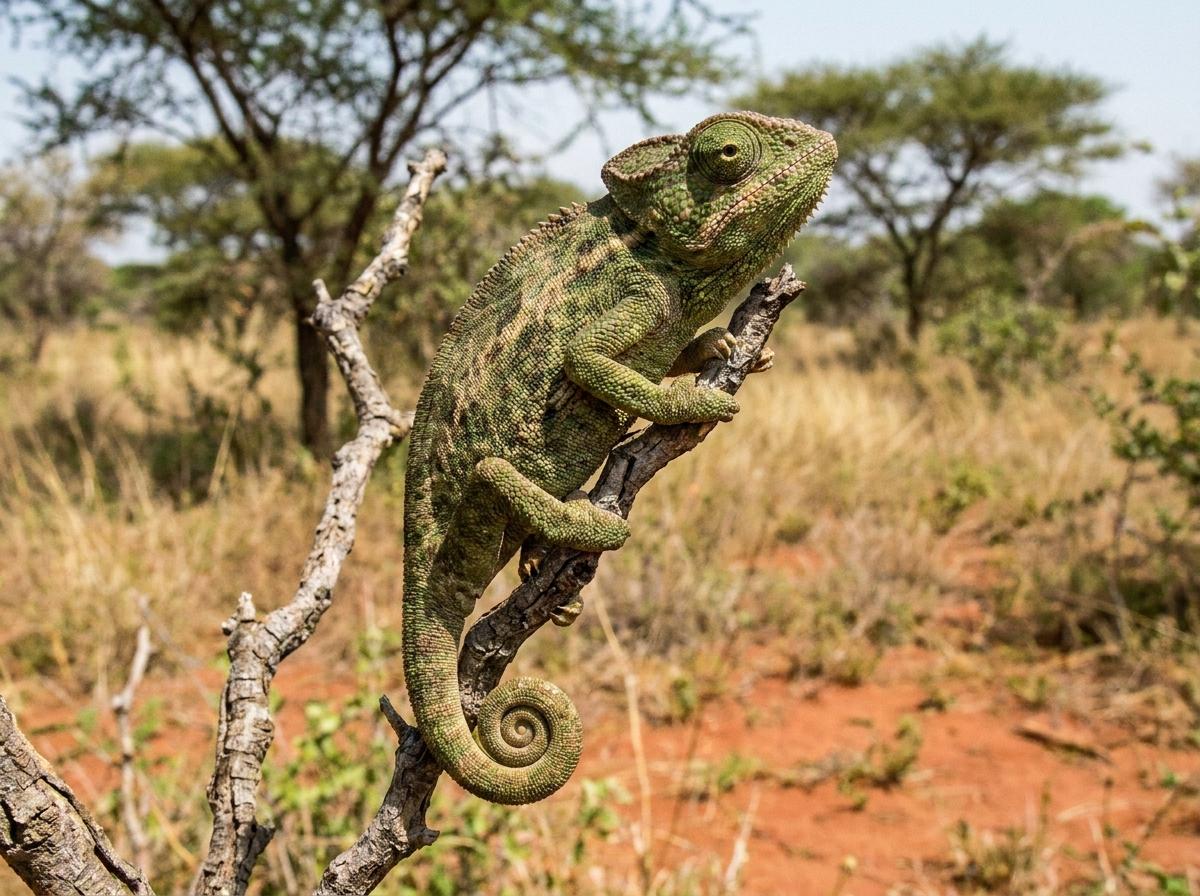
Senegal Chameleon
Chamaeleo senegalensis
The Senegal chameleon (Chamaeleo senegalensis) is a small, mostly pale green to greenish-grey chameleon from the moist savannas of West Africa. It is one of the least flashy chameleons in the pet trade, plain next to a panther or a veiled chameleon, with a low, modest casque instead of a tall helmet, turreted eyes that swivel independently, a prehensile tail, and no horns. It also has a hard reputation to be honest about. The overwhelming majority of Senegal chameleons sold are wild-caught imports, and they commonly arrive stressed, dehydrated, and carrying parasites. That combination is why the species is so often a short-lived, disappointing purchase for a first-time keeper. This page covers what the animal actually is, where it comes from, the wild-caught reality up front, and the demanding care it needs to have any real chance, sourced from reptile veterinary references rather than sales copy.

Browse listings, public profiles, breeders, or add your animal.
What is a Senegal chameleon?
The Senegal chameleon is a species of chameleon native to West Africa. Its range includes Senegal, Mali, Nigeria, and Cameroon, and it lives in moist savanna rather than deep rainforest. It is usually described as olive brown to green and ranges from about 20 to 30 cm in length, with the male usually smaller than the female. The IUCN Red List rates the species as Least Concern because of its wide range and unknown population size, while also noting that it may be threatened by the pet trade.
Compared with the chameleons most people picture, the Senegal is understated. It does not have the tall casque of a veiled chameleon, the bold color blocks of a panther chameleon, or the paired horns of a Jackson’s chameleon. What it does have is the classic chameleon toolkit: a laterally flattened body, zygodactyl (grasping) feet, a long prehensile tail, eyes set in cone-shaped turrets that move independently, and a projectile tongue for catching insects. If you are weighing it against other chameleons, the broader Creatures Senegal chameleon species page is a good place to compare it before you commit.
The honest headline for this species is not its looks. It is where it comes from and how it reaches the pet trade, which we cover next, because that single fact shapes everything about keeping one.
The wild-caught reality (read this before you buy)
This is the part most listings skip, so we will lead with it. The great majority of Senegal chameleons offered for sale are wild-caught imports, not captive-bred animals. That has consequences you need to understand before money changes hands.
Wild-caught chameleons commonly arrive stressed, dehydrated, and heavily parasitized. Reptile keepers and reptile-focused veterinary sources are consistent on this: wild-caught adults are usually full of internal parasites and tend not to live as long as captive-hatched animals. The Merck Veterinary Manual notes that flukes (trematodes) are rare in captive reptiles but more common in wild-caught animals, and that intestinal parasites are widespread in reptiles generally. On top of the parasite load, an imported chameleon has been through capture, holding, shipping, and repeated handling, all of which are severe stressors for a shy, solitary animal.
Because of that, experienced keepers steer beginners toward captive-bred or captive-hatched stock whenever it can be found, and treat wild-caught adults as animals to avoid. When only wild-caught animals are available, the more defensible choice is a wild-caught juvenile that can be treated, rehydrated, and grown on under close veterinary care, rather than a wild-caught adult with an entrenched parasite burden and an already-shortened life expectancy. Captive-bred Senegals exist but are genuinely uncommon, so expect to search, and expect a seller of true captive-bred stock to be able to tell you so plainly.
If you do bring one home, the first appointment matters more than the enclosure. General reptile veterinary guidance is that a new reptile should be seen by a reptile-experienced veterinarian within about 72 hours of purchase, examined for dehydration and malnutrition, checked for mouth infection, and given a fecal test for intestinal parasites. For wild-caught animals in particular, a fecal examination (and often follow-up testing) is standard, because the odds of parasites are high. You can find a qualified exotics veterinarian through the Association of Reptile and Amphibian Veterinarians (ARAV) “Find a Vet” directory. Do not treat parasites yourself off a forum thread; deworming protocols and doses are medical decisions for a veterinarian who has seen the fecal results and the animal.

Range, habitat, and appearance
Chamaeleo senegalensis is a West African savanna species, found across Senegal, Mali, Nigeria, Cameroon, and neighboring countries, in moist savanna and wooded grassland rather than closed rainforest. That origin is worth keeping in mind when you set up an enclosure: this is a warm, seasonally humid environment with real day-to-night temperature swings, not a static tropical hothouse.
In appearance it is a medium-small chameleon. Adults reach roughly 20 to 30 cm including the tail, and females tend to be a little larger than males. The base color is usually olive to pale green or greenish-grey, and like other chameleons it shifts shade with temperature, light, and mood rather than to blend into any color on demand. Diagnostic features to look for, and to expect in a healthy animal, include:
- A low, modest casque. The ridge over the head is small and understated, nothing like the tall helmet of a veiled chameleon.
- Turreted, independently moving eyes. Each eye sits in a cone that swivels on its own, giving near all-around vision.
- A prehensile tail and grasping feet. The tail coils to grip and the toes are fused into opposing bundles for climbing thin branches.
- No horns. Unlike Jackson’s chameleons, Senegals carry no horns, and the overall look is plain and smooth rather than ornamented.
If an animal in front of you is sunken-eyed, thin through the casque and limbs, or sitting dark and closed-eyed during the day, those are warning signs of dehydration, malnutrition, or illness rather than normal variation.
Difficulty: an honest assessment
Senegal chameleons are widely regarded as delicate, stress-prone animals suited to advanced keepers, not beginners. They are shy by nature, dislike handling, and can decline quickly when their environment is even slightly wrong. The species’ reputation as a difficult, often short-lived purchase is not a myth; it comes from the combination of a demanding care profile with a supply chain dominated by already-compromised wild-caught animals.
Under good conditions a Senegal chameleon may live around five years, and that is the number to hold in mind as a realistic ceiling for a well-kept animal, not a floor. Wild-caught adults frequently fall well short of it. None of this means the species cannot be kept well. It means it should be kept with eyes open, by someone prepared to provide a properly built enclosure, a correct diet with supplementation, an exotics-vet relationship, and a mostly hands-off routine, and who is willing to seek out captive-bred stock. If you want a first chameleon, this is not the one to learn on.
Care requirements
The care standards below follow general chameleon husbandry as described by reptile veterinary references such as the Merck Veterinary Manual, alongside exotics-vet and specialist care guidance. Ranges vary between sources and with your home, so treat these as starting targets to confirm with a reptile veterinarian, and defer all medical questions to that vet.
Enclosure
A tall, well-ventilated screen or mesh enclosure is the standard housing for arboreal chameleons. Screen sides allow the airflow chameleons need and help prevent the stagnant, damp air that drives respiratory disease. Because Senegals are arboreal and climb, height and dense cover matter more than floor space: furnish the enclosure heavily with sturdy branches at varied heights and plenty of live or artificial foliage so the animal can climb, thermoregulate, and hide. Cover is not decoration for this species; a shy chameleon that cannot get out of sight stays stressed.
Solitary housing and handling
House Senegal chameleons alone. Chameleons are solitary and do not tolerate cagemates well, and crowding is a chronic stressor. They also do not enjoy being handled, and frequent handling raises stress, which in turn suppresses the immune system. Plan for a mostly hands-off animal that you observe, feed, and maintain rather than one you hold. Keep the enclosure somewhere calm, away from loud noise and heavy foot traffic.
Temperature and light
Provide a thermal gradient with a warmer basking zone and cooler areas, plus a nighttime drop. Commonly cited targets for this species put ambient daytime temperatures in roughly the mid-70s to low-80s Fahrenheit with a basking spot around the mid-80s, and a cooler night. Because sources differ, confirm exact numbers with your veterinarian and measure with real thermometers at basking height and at the cool end, not by feel.
UVB lighting is not optional. Chameleons need UVB to make vitamin D3 and use calcium properly, and the Merck Veterinary Manual is explicit that UVB exposure (unfiltered natural sunlight in warm months, UVB bulbs otherwise) together with correct heat generally prevents the metabolic bone disease that comes from poor calcium absorption. UVB bulbs lose output over time and typically need replacing every 6 to 12 months depending on the type, even when they still glow. A UVB bulb that looks fine but has aged out is a common, preventable cause of illness.
Humidity, misting, and water
Senegals come from moist savanna and need meaningful humidity, with typical targets in the range of about 50 to 70 percent, allowed to rise and fall through the day rather than held soaking wet. Chameleons generally do not recognize standing water in a bowl; they drink droplets off leaves. Provide water the way they take it in the wild: mist the enclosure at least twice a day so droplets form on foliage, and consider a dripper running during the day to give steady access to drinking water without keeping everything permanently damp. Letting the enclosure dry out between mistings helps prevent mold and respiratory problems. Dehydration is one of the most common problems in imported chameleons, so reliable water delivery is not a detail to skip.

Diet, gutloading, and supplements
Senegal chameleons are insectivores. In captivity they eat appropriately sized live insects such as crickets, with other feeders (for example roaches, and occasional soft-bodied insects) used for variety. A common adult feeding pattern is a small number of suitably sized insects every other day, adjusted to the individual animal, its age, and its body condition; growing juveniles eat more often than adults. Never offer prey larger than the space between the chameleon’s eyes.
Two supplement practices matter as much as the insects themselves, because feeder insects alone are not nutritionally complete:
- Gutload the feeders. The Merck Veterinary Manual advises that insects be gut loaded with a nutritious diet before being offered, so the chameleon actually gets the nutrition through its prey.
- Dust with calcium and vitamins. Insects should also be dusted regularly with calcium and multivitamin powder. Getting the calcium-to-phosphorus balance and vitamin D3 right, alongside UVB and correct temperatures, is what prevents metabolic bone disease, the most common nutritional bone disorder seen in reptile practice. Follow a supplementation schedule set by your veterinarian rather than guessing, since both too little and too much can cause harm.
Health and common problems
The problems that most often affect this species are predictable from the care list above: internal parasites (especially in wild-caught animals), dehydration, stress-related decline, respiratory infection from poor ventilation or chronic damp, and metabolic bone disease from inadequate UVB, heat, or calcium. Early signs of trouble include lethargy, loss of appetite, reluctance to move, swollen or bent limbs, and a persistently dark, closed-up posture during the day. A yearly checkup with an exotics veterinarian, plus prompt fecal testing and a visit whenever something seems off, is the baseline. Because this is a fragile species that hides illness until it is advanced, keeping written records of weight, feeding, shedding, misting, bulb changes, and any symptoms helps you and your vet catch declines while they are still treatable. All diagnosis and treatment belongs with a veterinarian who can examine the animal.
Sourcing, cost, and trade
There is no single reliable public price for a Senegal chameleon, and given how variable the trade is, we will not invent one. The more useful guidance is what to weigh rather than a number.
The species is inexpensive to acquire relative to designer chameleons precisely because it is imported in volume as wild-caught stock, and that low upfront price is misleading. The real cost of keeping one well is the enclosure, lighting, misting or drip system, feeders and supplements, and above all the veterinary care that a wild-caught, parasitized animal is likely to need. A cheap chameleon that dies in months is far more expensive, in every sense, than paying more for a healthy captive-bred animal set up correctly from day one.
On trade and conservation: the Senegal chameleon is listed as Least Concern by the IUCN, but it is also included on CITES Appendix II, and it has historically been one of the most heavily traded chameleons in the world. Appendix II listing means international trade is regulated and legal export requires permits confirming the specimens were legally and sustainably obtained. If you are buying an imported animal, legitimate stock should have a clean, documented import history. This is another reason to favor captive-bred animals where you can: it sidesteps both the welfare toll of the wild-capture pipeline and the paperwork questions around imports.

Buying considerations
Because supply skews wild-caught and the species is easy to buy badly, buy on evidence and on the animal’s condition, not on price.
- Ask captive-bred or wild-caught, and believe the honest answer. A seller of genuine captive-bred stock will say so directly and should know the hatch date. Vague answers usually mean wild-caught.
- If wild-caught is the only option, prefer a juvenile over an adult, and plan for veterinary treatment, rehydration, and a fecal workup as part of the purchase, not an afterthought.
- Inspect condition in person or in clear photos and video. Look for full, rounded eyes, good body and casque condition, active climbing, and normal daytime color and posture. Avoid sunken eyes, jutting bones, closed eyes by day, or a persistently dark animal.
- Line up the vet before the animal. Have a reptile-experienced exotics veterinarian identified through ARAV, and book the first visit for within a few days of bringing the chameleon home.
- Budget for the setup, not the sticker price. The enclosure, UVB, heat, misting or drip system, feeders, supplements, and vet care dwarf the purchase price and are what actually determine whether the animal lives.
For a very different reptile-keeping comparison, our sister guide to the German Giant bearded dragon covers a hardier, ground-dwelling, far more beginner-tolerant lizard, and reading the two side by side makes the Senegal chameleon’s demands clearer. You can also browse current Senegal chameleon listings on the Creatures marketplace and look for keepers and breeders in the Creatures directory. Because captive-bred stock is scarce, a saved listing alert (below) is often the most practical way to catch a captive-bred animal when one is posted.
Frequently asked questions
Are Senegal chameleons good for beginners?
No. They are delicate, stress-prone, and best kept by experienced reptile keepers. The problem is compounded by the fact that most sold are wild-caught, which means they often arrive parasitized and dehydrated. A beginner is far better served by a hardier reptile.
Why do people say Senegal chameleons die quickly?
Mostly because of the wild-caught supply. Wild-caught adults commonly carry heavy parasite loads, arrive stressed and dehydrated, and tend to live shorter lives than captive-hatched animals. A well-kept captive-bred Senegal may live around five years; a compromised import often does not.
How big do Senegal chameleons get?
Adults reach roughly 20 to 30 cm (about 8 to 12 in) including the tail, with females usually a little larger than males. This is a medium-small chameleon.
What do Senegal chameleons eat?
They are insectivores. In captivity they eat appropriately sized live insects such as crickets and other feeders, gut loaded and dusted with calcium and vitamin supplements. Prey should be no wider than the space between the chameleon’s eyes.
Can I handle my Senegal chameleon?
Keep handling to a minimum. Chameleons are solitary and shy, do not enjoy being held, and become stressed by frequent handling, which weakens their immune system. Treat it as an animal to observe rather than to hold.
Do I really need UVB and a vet?
Yes to both. UVB plus correct heat and calcium supplementation prevents metabolic bone disease, and a fecal test and checkup from a reptile-experienced veterinarian, ideally within about 72 hours of purchase, is the standard first step for any new reptile and especially a wild-caught one.
Do this next on Creatures
Whether you are researching the species, hunting for a healthy captive-bred animal, or already keeping a Senegal chameleon, Creatures is the records, marketplace, and directory layer to do it in one place. If you are just getting oriented, start on the Senegal chameleon species page.
Get alerted to captive-bred stock. Genuine captive-bred Senegals are scarce, so set a free Senegal chameleon listing alert and we will tell you when one is posted. No account needed to start. New to this? See saving searches and using your watchlist.
Browse listings and keepers. Look through Senegal chameleons on the marketplace and search trusted keepers and breeders in the Creatures directory.
Add your chameleon. Already keeping one? Create a free animal profile in a few minutes. No account needed to start, and the walkthrough is in adding an animal to Creatures.
Track health and husbandry. Log fecal tests, weight, misting, and bulb changes. The record sheet opens for any visitor to look around, and a free account saves what you enter. See adding a record and health and medical records for the full how-to.
Never miss vet checks and bulb swaps. A fragile species rewards a schedule, so use reminders and upcoming care to stay ahead of the annual exam and UVB bulb replacement.
Keeping or placing several? Create an organization or keeper profile so people searching for captive-bred stock can find you. No account needed to start.










