

Pelibüey
The Pelibuey is a tropical hair sheep from Cuba that is now the backbone of sheep farming across the humid parts of Mexico and the Caribbean. It grows short hair instead of a fleece, so it is never sheared. It is usually polled in both sexes, most often tan to reddish brown, and it is kept for one thing above all others: meat produced on grass, in heat and humidity that punish wool breeds. If you are weighing it up against other tropical sheep, the Creatures sheep species page is the place to compare, and current Pelibuey listings show what is actually changing hands. Below is what the breed is, where it came from, how to recognise one, what it really produces, what parasite resistance does and does not mean in practice, and what to check before you buy.

Browse listings, public profiles, breeders, or add your animal.
What a Pelibuey actually is
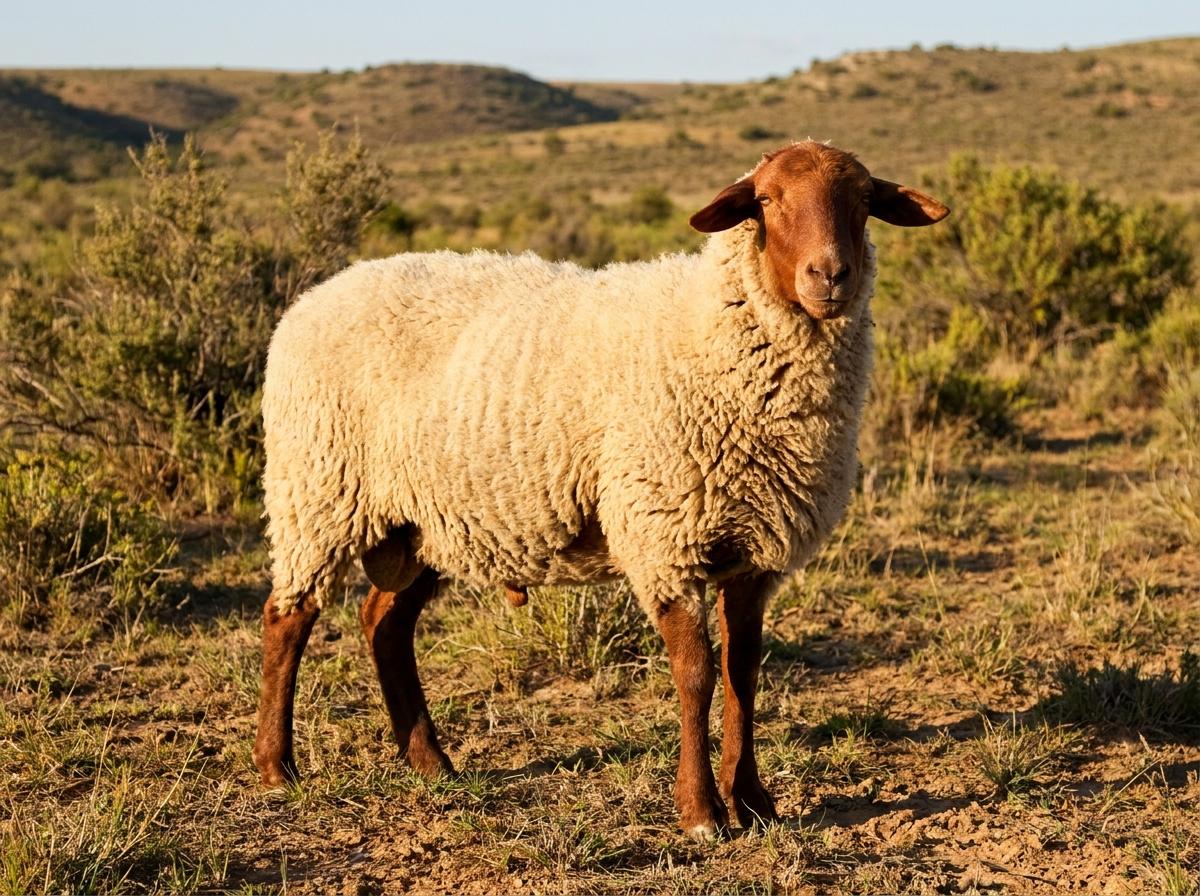
A Pelibuey is a hair sheep. That is the single fact that explains most of the rest. Instead of a fleece it grows a short coat of hair that it sheds naturally as the season turns, so nobody shears it, nobody skirts or grades a clip, and nobody has to find a shearer in a country where shearers are scarce. In a tropical meat flock that removes an annual cost and an annual labour bottleneck at a stroke.
The name is a compressed version of the Spanish description of that coat. Oklahoma State University’s Breeds of Livestock records the breed’s other names as Carnero de pelo de buey, Cuban Hairy, Cubano Rojo, Peligüey and Tabasco, the last of those being what the breed is commonly called in Mexico. “Carnero de pelo de buey” means, roughly, a sheep with the hair of an ox, which is a fair description of a coat that lies flat and slick rather than standing up in staples. You will see the spelling written both as Pelibuey and as Pelibüey, and both refer to the same animal.
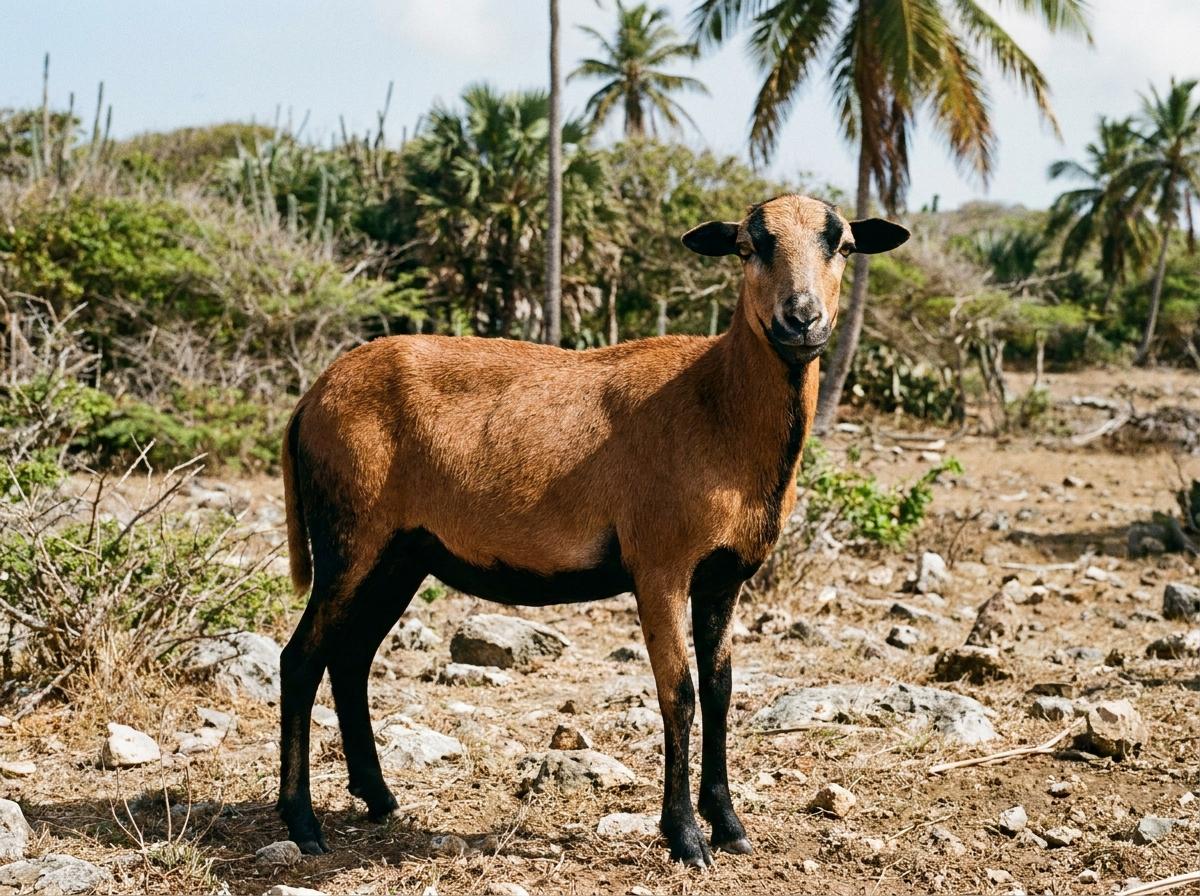
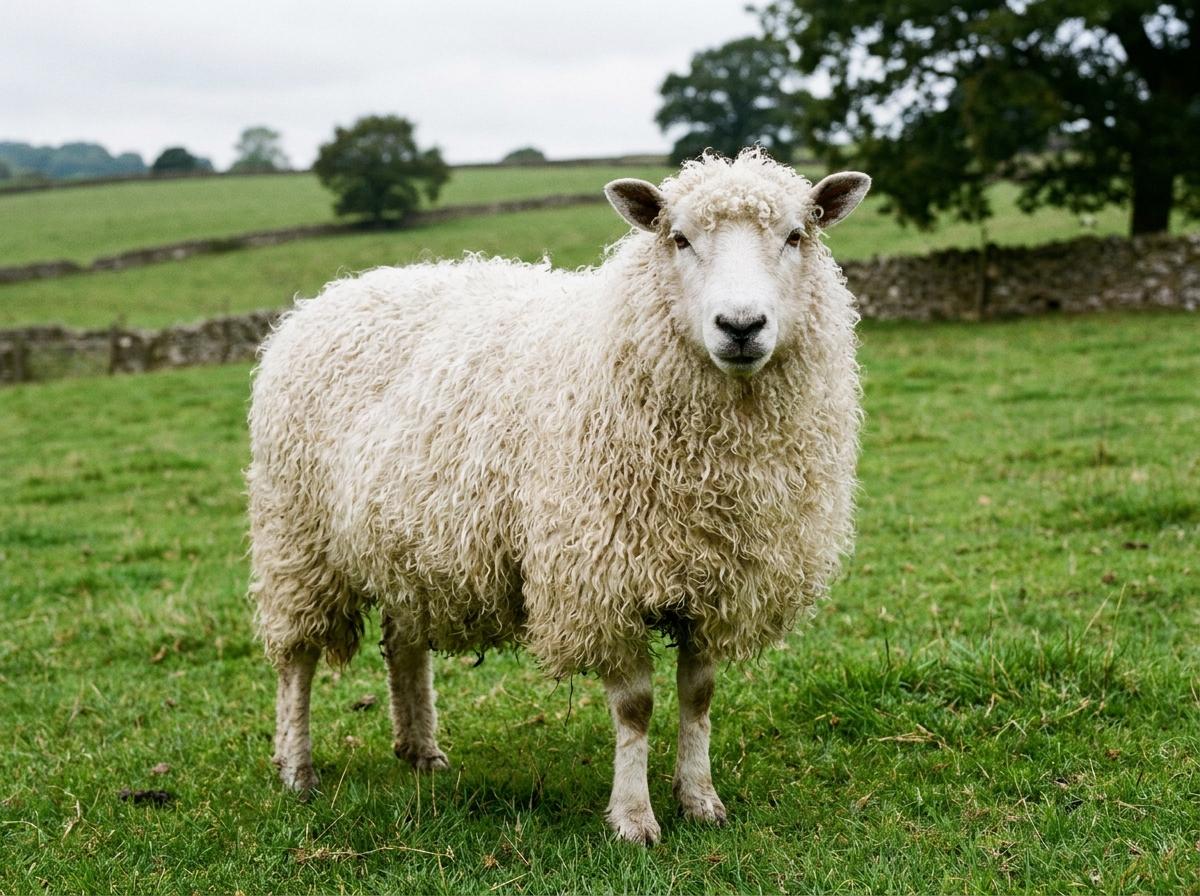
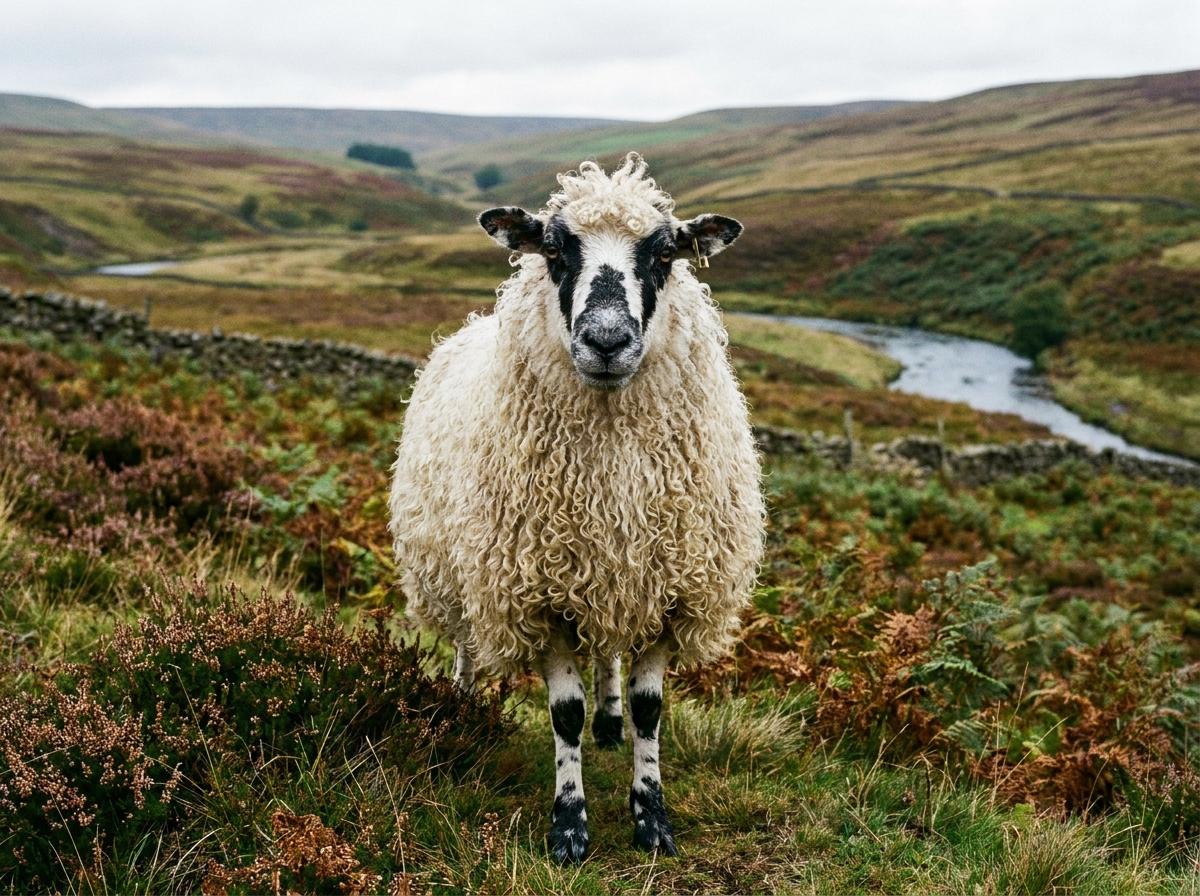
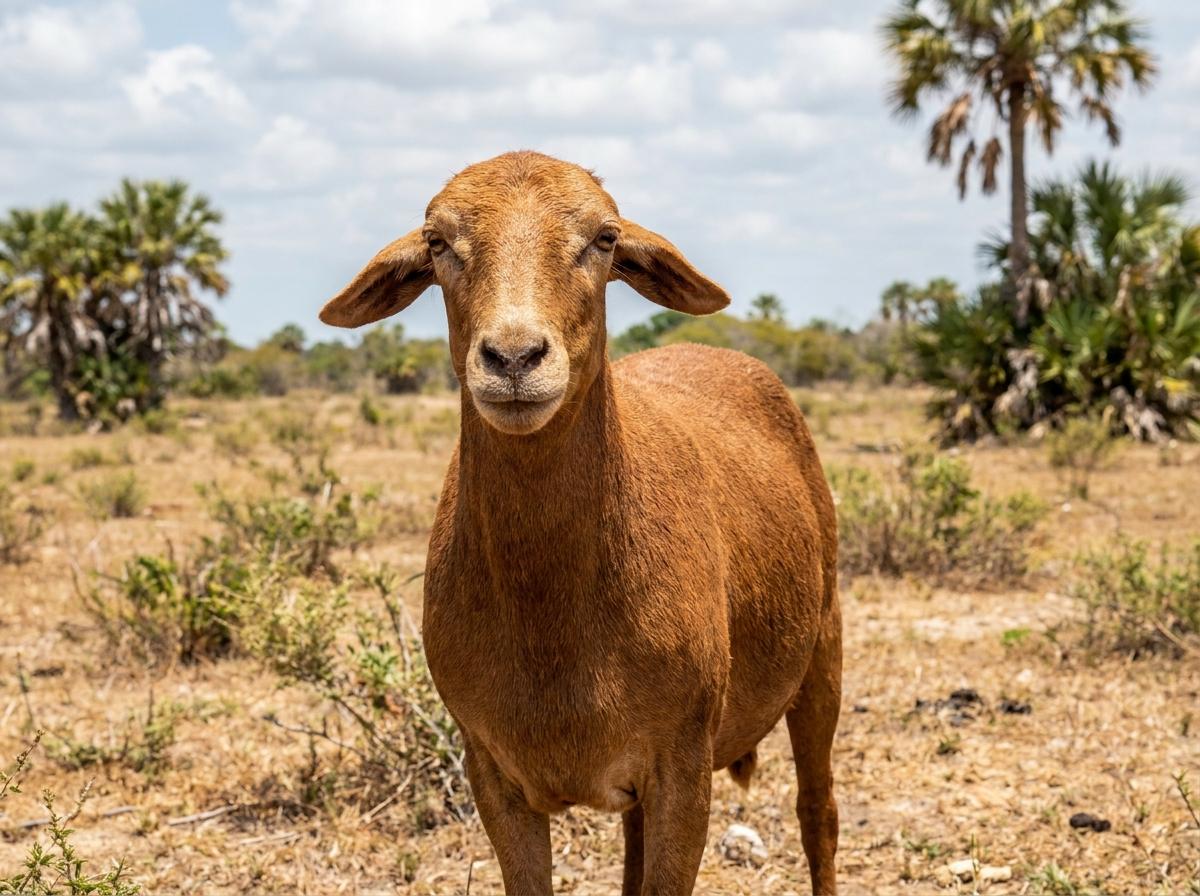
What the breed is not is a wool sheep that has been clipped. People meeting hair sheep for the first time often assume a shorn animal. Look at the ewe in the photograph above: the coat lies smooth against the body all the way down the legs, with no cut line, no crimp and no fleece boundary at the neck or the flank. That is the animal’s normal appearance in every month of the year.
Where the breed came from
The Pelibuey is Cuban by nationality and African by descent. Oklahoma State places it as a descendant of the West African Dwarf and as a close relative of the West African, Red African and Africana sheep of Colombia and Venezuela, distributed today in Cuba, in coastal areas of Mexico, and in other parts of the Caribbean.
The route those genetics took is less tidy than the one-line version suggests, and it is worth knowing because it explains why hair sheep from Barbados, Cuba, the Virgin Islands and Venezuela all resemble one another without being the same breed. In a paper published in the Food and Agriculture Organization’s Animal Genetic Resources Information series, Delgado and colleagues set out the case that the wool-less sheep of the Canary Islands were carried into the Caribbean from Columbus’s second voyage onward, and that the sub-Saharan influence arriving with the slave trade of the seventeenth and eighteenth centuries was layered on top of a hair sheep population that was already there. Their summary puts it plainly: the African influence is real, but as an additional influence on animals that reached the Caribbean from the Canaries two centuries earlier. The native Canary hair sheep itself is now gone from the islands.
Mexico is where the breed became an industry rather than a curiosity. A study of Mexican pedigree records describes the Pelibuey and Blackbelly as the first hair breeds introduced into Mexico and as the animals that currently form the basis of tropical sheep production in the country. In Mexico the herdbook is kept by the Asociación Mexicana de Criadores de Ovinos, usually shortened to AMCO, and it is AMCO pedigree data that most of the published Mexican performance figures come from.
How to tell a Pelibuey from the other hair sheep
Four features do most of the identification work.
- A short, flat, hair coat. Smooth and close to the body, shedding rather than growing into a fleece. Nothing about the outline is obscured, which is one reason breeders like judging them: you can see the shoulder, the loin and the leg without putting a hand into wool.
- Colour, and a lot of it. Oklahoma State lists beige, brown, dark brown, red, white, black and roan, appearing both as solid colours and in combination. The tan to reddish brown animal is the one most people picture, but a white or a spotted Pelibuey is not an impostor.
- A polled head. Rams as well as ewes are usually hornless, which is a real management convenience around feeders, fences and handlers.
- A throat ruff on mature rams. Oklahoma State notes that males carry a throat ruff while still usually lacking horns. It is a fringe of longer, coarser hair hanging under the jaw and down the front of the neck, and it is the clearest visual sex marker in a polled breed.

Size is worth stating carefully. Oklahoma State gives mature rams at 54 kg (about 119 lb) and mature ewes at 34 kg (about 75 lb), drawing on Mason’s World Dictionary of Livestock Breeds and on the proceedings of the 1991 Hair Sheep Research Symposium. Other compilations report somewhat different averages, which is what you would expect from a breed that is kept in village conditions and in intensive commercial units alike. All of them describe the same kind of animal: a small to medium framed sheep, noticeably lighter than a commercial wool breed, with a ewe that one person can handle and a ram that will not flatten a fence.
Two lookalikes cause most of the confusion:
- Barbados Blackbelly carries markings the Pelibuey does not. The Livestock Conservancy describes it as a reddish brown or tan body with black on the belly and legs and black facial bars. A plain tan Pelibuey has none of that patterning. Blackbelly rams also grow a thick mane down the neck and brisket, so the neck hair alone will not separate the two.
- Katahdin is a North American breed, and the two are not the same animal by another name. The Katahdin association’s own history records that the founding hair sheep came from St Croix in the Virgin Islands in November 1957 and were crossed with Suffolk, Tunis, Southdown, Hampshire, Cheviot and later Wiltshire Horn. Pelibuey does not appear in that account at all. The two breeds meet constantly in Mexican commercial flocks as a cross, which is probably where the confusion starts.
What the breed actually produces
Pelibuey performance figures move a long way depending on who is keeping the sheep, so read every number together with the system it came from.
Birth and weaning weight. In the AMCO pedigree data covering 87 registered herds, Pelibuey lambs averaged 3.05 kg at birth (SD 0.63) and 17.99 kg at weaning adjusted to 75 days (SD 3.70). Those are recorded seedstock flocks. The older breed literature collected by Oklahoma State gives a much lower figure, about 12 kg at 120 days of age. A gap that size is feeding and management, not a different animal.
Litter size. Published values run from about 1.24 lambs per lambing in the older breed literature, to 1.41 (SD 0.51) in a field study of two commercial flocks in southeastern Mexico, to roughly 1.5 in the description used by a Mexican genomics group. Under intensive management with ewes in good body condition, higher figures are reported again. The honest summary is that a Pelibuey ewe is moderately prolific rather than spectacularly so, twins are normal and singles are common, and the number you get depends heavily on how well the ewe is fed before and during breeding.
Lambing interval and age at first lambing. The same southeastern Mexico field study measured age at first lambing at 477 days (SD 85.5) and a lambing interval of 255.9 days (SD 51.8), with the shortest intervals in the rainy season. Older breed summaries quote first lambing at 16 to 19 months and intervals under 210 days, which is the accelerated pattern the breed is capable of rather than the pattern most flocks achieve. If you are budgeting, plan on the field figure and treat the shorter interval as an ambition.
What a ewe is worth over a year. That field study is useful precisely because it measured productivity as kilograms of lamb weaned per ewe rather than as a single flattering trait. It came to 18.1 kg (SD 4.42), it rose with parity, and ewes rearing two or three lambs weaned 8 kg and 14 kg more than ewes rearing one. Multiples are where the money is in this breed.
How much of that is genetic. The AMCO analysis estimated direct heritability at 0.01 for birth weight and 0.31 for weaning weight, with a maternal component of 0.21 for weaning weight. Weaning weight will respond to selection; birth weight in that dataset would barely move. The field study reached a similar practical conclusion from a different direction, reporting low repeatability across traits and concluding that management is the short term lever, not genetics. That is a useful thing to hear before paying a premium for a ram on the strength of his own birth weight.
Breeding through the year, and the trap in it
The reason tropical producers reach for this breed is that Pelibuey ewes are not locked into a narrow autumn breeding season. A Mexican research group describes the breed as being in active reproduction most of the year, which is what makes accelerated lambing systems and a steady year round supply of lambs possible at all.
There is a catch that catches new keepers, and it is worth spelling out. In a trial of 216 hair sheep ewe lambs synchronised with progestogen sponges under dry tropical conditions, Pelibuey ewe lambs were much less likely to show visible signs of heat than Dorpers, and 24.7 percent of the Pelibuey ovulated silently, against 3.4 percent of the Dorpers. Ovulation itself was not the weak link. Mean ovulation rate in that synchronised group was actually highest in the Pelibuey, at 2.4 corpora lutea against 2.0 for Dorper and 1.9 for Katahdin. The Pelibuey ewe lambs were ovulating. They were simply not showing it.
Those were young ewes on a synchronisation programme rather than mature ewes on a natural cycle, so do not read the ovulation figure as a normal flock average. The practical lesson still travels: watching a Pelibuey flock for standing heat is an unreliable way to run a breeding programme. Use a marking harness or a raddle on the ram, write down every service, and let the records rather than your eyes tell you who is bred. The same study ran across a high and a low breeding season, so “breeds year round” should be read as a broad tendency rather than a promise that every month is equally fertile.
Crossbreeding is the other half of the reproductive story. A review of hair sheep in the Americas reports that Pelibuey ewes in confinement had better reproductive efficiency, better pre weaning traits and heavier litters when crossed with Dorper and Katahdin sires than when mated to a Pelibuey sire. That is the ordinary logic of a terminal cross, and it is why so many Mexican feedlot studies are run on Katahdin cross Pelibuey or Pelibuey cross Dorper lambs. It also means a Pelibuey ewe flock keeps its value even for a producer who wants a faster growing market lamb.
Parasite resistance, honestly
Caribbean hair sheep carry a reputation for resistance to gastrointestinal worms, and the Pelibuey inherits that reputation. It is a real advantage, and it is routinely oversold. Here is what the research actually supports.
Resistance in this breed is a trait that varies enormously between individuals, and that variation is the useful part. In a controlled challenge, twenty parasite naive Pelibuey lambs were each dosed with about 7,500 infective Haemonchus contortus larvae. The eight lambs the researchers classed as high responders, meaning they mounted a strong response and passed few eggs, averaged 2,449 eggs per gram of faeces. The twelve low responders averaged 14,461. Same breed, same age, same infective dose, and close to a sixfold difference in what came out the other end. A Pelibuey is not automatically a resistant sheep. Some Pelibuey are resistant sheep, and you can find out which ones.
The thresholds are also breed specific and stage specific, which is why borrowing a target figure from another flock is a mistake. When researchers classified ewes of three hair breeds during lactation, the cutoff for calling a ewe resistant was under 1,587 eggs per gram for Blackbelly, under 912 for Katahdin and under 310 for Pelibuey. Read across breeds and you would draw exactly the wrong conclusion about a Pelibuey ewe.
Timing matters too. A study designed to find the best moment to screen ewes concluded that faecal egg counts rise through lactation and that early lactation is the optimal stage to assess resistance, with the accuracy of the classification peaking there. The same work found that ewes that had twins shed more eggs than ewes that had singles, which is a direct warning for a breed whose whole economic case rests on multiples.

What to do with all of that:
- Measure, do not assume. Faecal egg counts and FAMACHA scoring for anaemia turn a vague breed reputation into a per animal number you can cull and select on. University of Minnesota Extension has a practical walkthrough of managing barber pole worms in sheep and goats.
- Treat selectively, not on the calendar. Anthelmintic resistance is widespread, and blanket drenching the whole flock on a schedule is how a flock runs out of working drugs. Which product, at what dose, and when, is a decision for your veterinarian with your own faecal egg count reduction data in front of them.
- Watch the ewes hardest around lambing. Pressure peaks during lactation and hits twin bearing ewes hardest.
- Keep the numbers where you can see them. Selection for resistance only works if last year’s egg counts, treatments and body condition scores are attached to the individual animal rather than living in a notebook. That is what an animal profile with health and medical records is for.
Heat, humidity and shelter
This breed exists because it copes with weather that flattens wool sheep, but coping is not the same as being unaffected. A trial run on Pelibuey ram lambs in a warm subhumid Mexican environment recorded air temperatures around 37 degrees Celsius and a temperature humidity index around 85 units, which is heat stress by any standard.
That same trial produced a result worth knowing about before you build anything. Ram lambs kept in unshaded pens for ten months ended up with larger scrotal circumference and lower scrotal surface temperature than ram lambs housed under a galvanised roof, along with better sperm concentration and motility. Read that carefully, because it is easy to take the wrong lesson from it. It is one trial on eighteen ram lambs, the published abstract does not establish a mechanism, and it is not a licence to leave sheep standing in that kind of heat with nowhere to get out of the sun. What it does suggest is that the kind of shelter matters as much as its presence, and that a low metal roof over a still pen is worth questioning. Ask a veterinarian or a local extension adviser about ram housing in your own climate rather than assuming any roof is an improvement.
The uncontroversial parts of hot climate management still apply. Shade that moves air, clean water within easy reach of every animal in the paddock, handling and transport moved to the cool ends of the day, and no crowding in a hot shed.
Day to day care
Pelibuey sheep are forage animals first. They do well on tropical grass and browse, and they do noticeably better when the ewe is fed up before breeding and through late pregnancy and lactation, which is when litter size, milk and weaning weight are all decided. The field study quoted above concluded that management rather than genetics is the short term lever in this breed, and feeding the ewe at those two points is the largest piece of management a keeper actually controls.
A few points deserve their own line:
- Minerals, and the copper trap. Sheep are the species most susceptible to chronic copper poisoning, because their liver holds on to copper and excretes it into bile extremely slowly, so it accumulates silently until a stressor triggers a haemolytic crisis. The Merck Veterinary Manual sets out the mechanism in its overview of copper poisoning in animals. Never feed a mineral, block or bagged feed formulated for goats, cattle or horses to sheep. Buy a mineral labelled for sheep and read the tag.
- Feet. Wet tropical ground and sound feet are not natural allies. Check and trim on a schedule and cull animals that keep coming back lame.
- Vaccination and parasite programmes. Both are regional. Your veterinarian sets them based on what is actually circulating where you farm.
- Records. Lambing dates, litter sizes, weaning weights, faecal egg counts, treatments and culling reasons. In a breed where the published performance range is this wide, your own numbers are the only ones that describe your flock.
Every medical decision here, including drug choice, dosing and any treatment plan, belongs to a veterinarian who can examine the animals.
What Pelibuey sheep cost and where to find them
There is no single credible market price for a Pelibuey, and inventing one would not help you. Across Mexico, Cuba and the wider Caribbean the breed is an everyday commercial animal, priced the way commercial sheep are priced everywhere: by weight, condition, age, season and local demand. Registered stock carrying AMCO papers, and animals with real performance records behind them, sit well above commercial value, and rams with proven progeny sit above that again. What you should ask for is the evidence behind the asking price rather than a benchmark figure from the internet.
Availability is the bigger practical issue outside Latin America. In the United States, Canada and Europe the breed is uncommon, and a buyer searching for tropical hair sheep is far more likely to be offered Katahdin, Dorper, St Croix or Barbados Blackbelly. Live sheep also do not cross borders casually. In the United States, importation of sheep and goats is governed by federal animal health rules administered by the USDA’s Animal and Plant Health Inspection Service, and the framework was substantially revised in a 2021 final rule on the importation of sheep, goats and certain other ruminants. Check the requirements that apply on the day, and plan any import around them from the beginning rather than after you have agreed a price.
Because supply is patchy, the most practical move for a buyer outside the breed’s home range is usually a standing alert rather than a search. Set one up below and you will hear when a Pelibuey is listed instead of checking. If you are exploring other unusual sheep at the same time, the yellow sheep page is a useful contrast of a different kind: it is a name explainer rather than a breed profile, because “yellow sheep” is not a documented breed of domestic sheep at all. The phrase resolves instead to a wild Central Asian antelope, to yellow discoloration in the fleece or skin of an ordinary sheep, or to a rare Montenegrin breed whose own name contains a word meaning yellow.
What to check before you buy
- Confirm what you are actually being sold. In markets where Pelibuey, Blackbelly, Katahdin and Dorper genetics have been mixing for decades, “Pelibuey” is sometimes shorthand for a tan hair sheep. Ask for pedigree, registration or at least a straight answer about the parents.
- Ask for the ewe’s lambing history. Lambing dates, litter sizes, whether she raised them herself, and any assisted lambings. The productivity of this breed lives in the multiples.
- Ask for parasite records. Faecal egg counts, FAMACHA scores, and which drenches an animal has had. A seller who selects for resistance will have these and will enjoy being asked.
- Handle the animal. Body condition over the loin, sound feet and legs, a clean bite, clear eyes, and a healthy coat with no bare or scurfy patches.
- Check the udder on any ewe you intend to breed. Attachment and teat placement decide how long she stays productive.
- Buy for your climate, not the brochure. This is a hot humid country breed. In a cold wet winter climate it is not the obvious choice, and a locally proven hair breed usually is.
- Get the health paperwork in writing, along with vaccination and treatment dates, before the animal moves.
Frequently asked questions
Do Pelibuey sheep need shearing?
No. They grow hair rather than wool and shed naturally, so there is no clip, no shearing appointment and no wool handling. That is the main reason they are used in countries where shearing labour is expensive or unavailable.
Are Pelibuey sheep resistant to worms?
Partly, and it varies. Individual Pelibuey lambs given an identical experimental worm challenge produced faecal egg counts differing by close to sixfold, so resistance is a trait some animals in the breed carry strongly and others do not. Treat it as something to measure and select for, not as a reason to stop monitoring.
How many lambs does a Pelibuey ewe have?
Field flocks commonly average between about 1.2 and 1.5 lambs per lambing, rising with the ewe’s age and body condition. Twins are ordinary and singles are common, especially in a ewe’s first lambing.
Do Pelibuey ewes really breed all year?
They are described as being in active reproduction through most of the year, which is what makes accelerated lambing possible in the tropics. There are still better and worse months, and in one synchronised trial about a quarter of the Pelibuey ewe lambs ovulated without showing visible heat, so use a marking harness and records rather than relying on observation.
Is a Pelibuey the same thing as a Katahdin or a Barbados Blackbelly?
No. The Katahdin was developed in Maine from Virgin Islands hair sheep crossed with Suffolk, Tunis, Southdown, Hampshire, Cheviot and Wiltshire Horn, and its breed history does not include Pelibuey. Barbados Blackbelly is a distinct Caribbean breed with black belly and face markings. All three are hair sheep and they cross readily, which is exactly why the names get muddled.
Are they horned?
Usually not. Rams as well as ewes are typically polled. On a mature ram, look for the ruff of longer hair along the throat rather than for horns.
Are Pelibuey good for a small farm?
For a small farm in hot, humid country, yes. They are light to handle, hornless, need no shearing and finish on forage. In a cold climate, or where you want wool, another breed will serve you better.
Do this next on Creatures
Whether you are researching the breed, hunting for stock, or already running a Pelibuey flock, Creatures is the records, marketplace and directory layer that keeps it in one place.
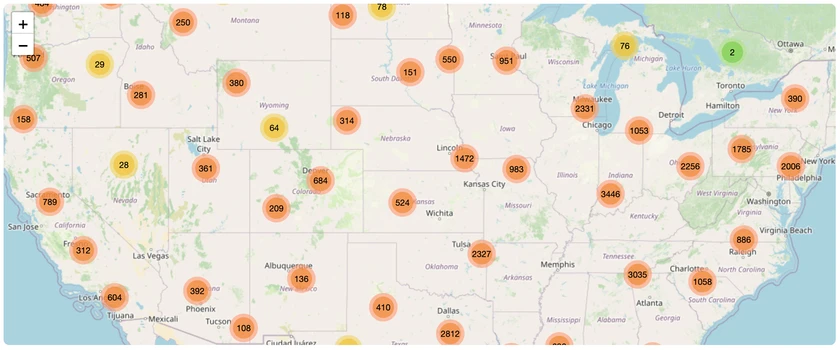
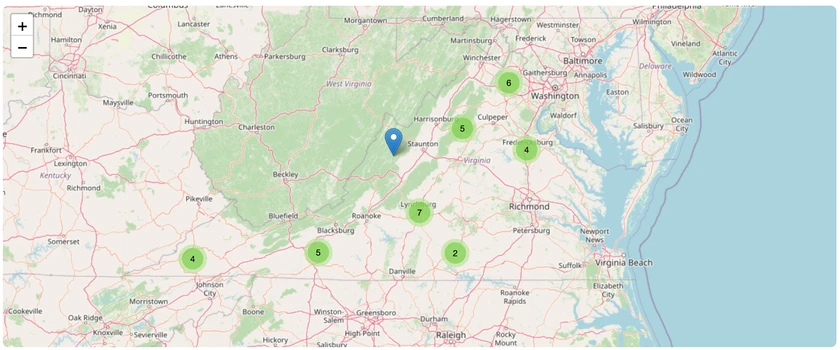
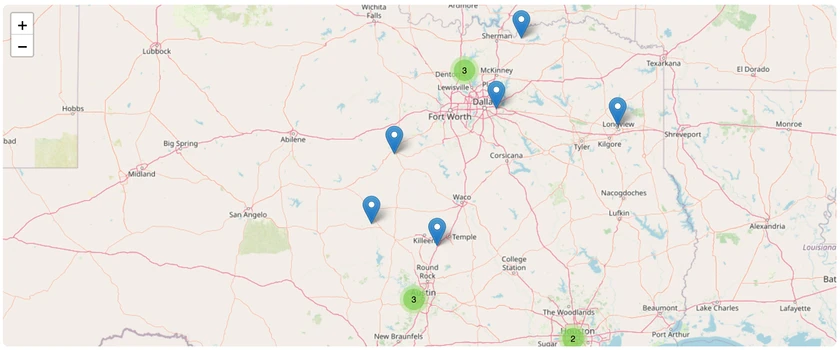
Find stock. Browse Pelibuey sheep on the marketplace and search trusted breeders and farms in the Creatures directory. New to it? Start with saving searches and using your watchlist.
Get alerted. The breed is uncommon outside Latin America, so set a free Pelibuey listing alert and we will tell you when one is posted. No account needed to start.
Add your sheep. Already keeping Pelibuey? Create a free animal profile in a few minutes. The walkthrough is in adding an animal to Creatures.
Track lambings, weights and worm counts. Add a record on Creatures. The record sheet opens for any visitor to look around, and a free account is what saves what you enter. See adding a record for the full how to, and health and medical records for treatments and faecal egg counts.
List your flock. Running a flock or a farm? Create a free organization profile, then read getting listed in the breeder directory so buyers looking for tropical hair sheep can reach you, and creating an organization and adding your team if other people work the flock with you.
Sell with confidence. Planning to sell lambs or breeding stock? Learn how seller payout works before you list.