




Sugar Glider
Petaurus breviceps
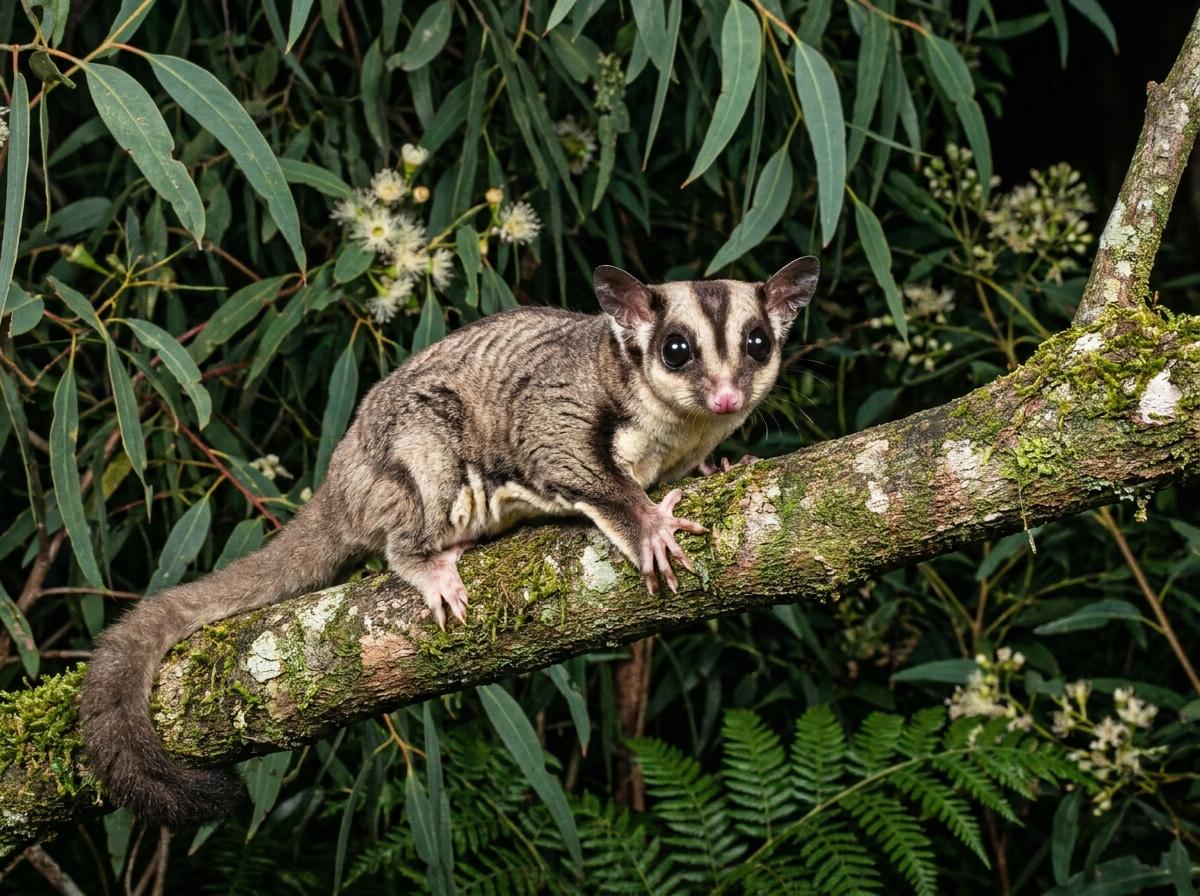
The sugar glider is a small, nocturnal, gliding marsupial native to Australia and the New Guinea region (long known under the name Petaurus breviceps, though modern taxonomy has since split that group, more on the naming below), and it is one of the most impulse-bought and most misunderstood exotic pets in the United States. It is genuinely charming: soft grey fur with a black stripe down the back, huge dark eyes built for night vision, and a flap of skin between the wrists and ankles that lets it glide from tree to tree. It is also a demanding animal that is wrong for most of the homes that buy one. Sugar gliders are colony animals that suffer when kept alone, they are awake and active when you want to sleep, they need a tall specialized cage and a carefully balanced diet, and they can live 10 to 15 years. In some states they are outright illegal. This page is the honest version: what the animal actually is, why so many end up surrendered, and how to buy or adopt one responsibly if you are truly the right owner, sourced from veterinary references rather than kiosk sales pitches.

Browse listings, public profiles, breeders, or add your animal.
What is a sugar glider?
A sugar glider is a small gliding possum, a marsupial, native to the forests of Australia and the New Guinea region. Despite looking a little like a flying squirrel, it is not a rodent at all. It is a pouched mammal, more closely related to kangaroos and koalas than to anything you would find in a pet store’s small-animal aisle. The name comes from its taste for sweet foods (nectar and tree sap) and its ability to glide. Its scientific name, Petaurus breviceps, translates roughly as “short-headed rope-dancer,” a nod to how it moves through the treetops. One caveat on the science: “sugar glider” and Petaurus breviceps are still the names in everyday pet use and older references, but recent taxonomy has split the former P. breviceps into several species, and genetic work suggests the United States pet population traces mainly to the West Papua region of Indonesia rather than to Australia. None of that changes how you keep one; it just means the tidy one-line “P. breviceps from Australia” origin story is less settled than it looks.
The signature feature is the patagium, a membrane of skin that stretches from the wrists on the front legs to the ankles on the back legs. When a glider leaps and spreads all four limbs, the patagium opens into a square, kite-like surface that lets it glide long distances between trees, steering with its legs and its long bushy tail. In appearance it is countershaded: soft pale grey to light brown on top, lighter on the belly, with a distinctive dark stripe running from between the eyes back over the head and down the spine. The eyes are large, round, and dark, set wide for the night vision a nocturnal animal depends on.
Adults are small. The Merck Veterinary Manual gives a body length of roughly 5 to 12 inches (13 to 30 cm) plus a tail of 6 to 9 inches, with males weighing about 4 to 6 ounces (110 to 170 grams) and females a little less at 3 to 5 ounces (85 to 140 grams). If you are weighing this species against other small exotics, the broader Creatures sugar glider species page is a good place to compare before you commit to anything.
The honest headline for this animal is not the gliding or the big eyes. It is that a sugar glider is a wild-type exotic with social, behavioral, and dietary needs that most households cannot easily meet, which is exactly why so many are rehomed. We will take those needs one at a time.
Why so many sugar gliders end up surrendered
Sugar gliders are sold heavily at mall kiosks, flea markets, pet expos, and trade shows, often as a bundled package: the animal, a small cage, some food, and a few toys, ready to walk out the door the same day. That sales model is built for impulse buyers, and it is the root of the problem. A cute animal handed over in five minutes, with a cage that is too small and a care sheet that oversimplifies everything, sets both the buyer and the glider up to fail.
The failures are predictable. A single glider bought as a novelty becomes depressed and starts self-mutilating. A family that did not realize the animal is nocturnal grows tired of a pet that sleeps all day and crashes around its cage at night. A diet of fruit and yogurt drops leads to metabolic bone disease. A ten-plus-year commitment collides with a move, a new baby, or a landlord. Exotic-animal rescues take in surrendered gliders constantly, and some of those animals arrive needing physical and emotional rehabilitation before they can be placed again. In one widely reported case, hundreds of gliders were surrendered at once from a single large breeding operation shut down over its conditions.
None of this means a sugar glider cannot be a wonderful animal for the right person. It means the right person is rare, and the burden is on the buyer to be honest about whether that is them before money changes hands. The rest of this page is written to help you make that call with clear eyes.

They are colony animals: never keep just one
This is the single most important welfare fact about the species, and the one kiosks most often skip. Sugar gliders are intensely social. In the wild they live in family colonies, commonly cited at around six to ten or more individuals, and they groom, sleep, forage, and communicate together constantly. Companionship is not an enrichment nicety for a glider. It is a biological need on the order of food and water.
Kept alone, a sugar glider does not simply get a little bored. Veterinary and exotic-mammal sources describe solitary gliders becoming clinically depressed, over-grooming to the point of open wounds, chewing at their own tails and limbs (self-mutilation), vocalizing excessively, refusing food, and declining physically. Single-glider ownership is increasingly treated by exotic-animal veterinarians as a genuine welfare problem, not a lifestyle choice. The practical standard among exotic-mammal veterinarians and responsible breeders is a bonded pair at minimum, and a small group is better still.
That has real consequences for what you are signing up for. You are not adopting a sugar glider; you are adopting at least two. That doubles the cage requirements, the feeding, the veterinary cost, and the noise, and it means introductions between animals have to be done carefully so a pair actually bonds rather than fights. Same-sex pairs or a neutered male with a female are common ways to keep a pair together without breeding. A human, no matter how devoted, cannot substitute for another glider, because you are asleep for the half of the day when the animal is most social. If you are not prepared to keep two or more for the next decade or more, this is not your animal.

They are nocturnal, not a daytime cuddle pet
Sugar gliders are nocturnal. They sleep through most of the day, typically curled up together in a nest pouch, and become active in the evening and through the night. That is when they want to climb, glide, forage, play, and socialize, and that is when they are loud, with a repertoire that includes a distinctive alarm call often compared to a small barking dog.
Marketing photos of a glider peeking sleepily out of a shirt pocket give the wrong impression. A glider that tolerates being carried around during the day is a glider being kept awake during its rest period, and a household hoping for an interactive daytime companion will usually be disappointed on both sides. Bonding with a glider is real and rewarding, but it happens largely on the animal’s schedule, in the evening, over weeks and months of patient handling. If you are a light sleeper who keeps the cage in the bedroom, or you wanted a pet to interact with over your morning coffee, the mismatch will wear on you fast. Plan the cage location and your expectations around an animal that comes alive after you would rather be winding down.
Housing: a tall cage, not a hamster setup
Because gliders climb and glide, vertical space matters far more than floor space. The Merck Veterinary Manual gives a minimum cage of roughly 24 inches long by 36 inches wide by 36 inches high, with narrow bar spacing (about 1 inch by half an inch) so a small animal cannot squeeze out or get its head stuck. That is a minimum for a pair; bigger and taller is genuinely better, and many keepers use large custom aviary-style enclosures.
Inside, the cage needs to function like a small slice of forest canopy. That means branches, ropes, and ladders at varied heights for climbing; a solid exercise wheel designed for gliders (one with no crossbar or exposed axle that a tail or limb can catch on); and one or more hanging fabric nest pouches where the colony sleeps together during the day. Toys and foraging opportunities matter because a bored glider is a stressed glider. The enclosure should sit somewhere calm, out of direct sun and drafts, and kept comfortably warm; gliders do best in the roughly 80 to 88 degree Fahrenheit range and should not be left cold. A tall, well-furnished cage is not a luxury upgrade for this species. It is the baseline for keeping the animal physically and psychologically sound.

Diet: the fastest way to get this wrong
Diet is where well-meaning owners do the most harm, because a sugar glider’s nutritional needs are specific and unforgiving. In the wild the diet shifts with the seasons between nectar, sap, pollen, insects, and other small prey. In captivity, a glider fed mostly on fruit, or on sugary treats and “glider food” of poor quality, slides toward serious disease.
The central danger is an imbalance of calcium and phosphorus. Diets too low in calcium and too high in phosphorus (which is what a fruit-heavy or all-insect diet delivers) drive nutritional secondary hyperparathyroidism and metabolic bone disease, in which the body pulls calcium from the bones. The result is soft bones, tremors, pathological fractures, weakness and paralysis of the hind legs, and in advanced cases seizures. It is common, it is painful, and it is almost entirely preventable with correct feeding.
A balanced captive diet, as described by exotic-mammal veterinary sources, is built around a few pillars rather than a bowl of fruit:
- A nectar or sap substitute as a large share of the diet (commonly around half). Keepers typically use a properly formulated homemade nectar mix or a quality commercial equivalent, not sugar water.
- A calcium-appropriate protein source. This includes gut-loaded or calcium-dusted insects such as crickets and mealworms, and small amounts of cooked lean poultry or cooked egg. Feeder insects are dusted or gut-loaded specifically to correct the calcium-to-phosphorus ratio.
- Only a small share of fruits and vegetables, often cited at no more than about 10 percent of the diet, offered as variety rather than the base.
Several foods should be kept away entirely, including chocolate, caffeine, candy, canned fruit, fruit pits and seeds, raw meat and raw eggs, and frequent high-fat treats. Because the details of ratios and supplementation genuinely matter and reputable diet plans differ, set your feeding plan with an exotics veterinarian rather than a forum thread, and treat any sign of weakness, tremor, or reluctance to climb as a reason to see that vet promptly. All diagnosis and treatment of suspected metabolic bone disease belongs with a veterinarian who can examine the animal and run bloodwork.
Health and veterinary care
Sugar gliders need an exotics veterinarian, not a general small-animal clinic that mainly sees cats and dogs, because relatively few vets are experienced with them. Line that relationship up before you acquire the animals, not after something goes wrong. General guidance is an annual wellness check that includes a fecal examination for parasites, plus a prompt visit any time an animal seems off.
Beyond metabolic bone disease, the problems keepers see most often trace back to husbandry: obesity and dental issues from poor diet, stress and self-trauma from loneliness or an under-furnished cage, injuries from unsafe wheels or cage escapes, and the general reality that a small prey animal hides illness until it is advanced. Because gliders mask sickness so well, written records earn their keep. Logging weight, diet, breeding, and any symptoms lets you and your vet catch a slow decline while it is still treatable, and it is exactly the kind of tracking Creatures is built for. Whatever you observe at home, medical decisions belong with the veterinarian.
Is a sugar glider legal where you live?
Legality is not a footnote for this species; it is a first question. Sugar glider ownership is regulated at the state, and sometimes city or county, level, and the rules vary widely.
As of this writing, sugar gliders are banned as pets in California, where the Department of Fish and Wildlife lists them as a prohibited species, and in Hawaii, which treats them as a potential invasive threat to its native ecosystems, and in Alaska, where they are not on the state’s list of allowed species. Several other states, cities, and counties restrict or prohibit them, while a number of states allow ownership only with a permit. Many states permit them with no permit at all. Because these laws change and because a city or county can ban an animal that the state allows, you must verify the current rules for your specific location before acquiring a glider. Check your state wildlife or agriculture agency and your local ordinances directly, and if you rent, confirm your lease allows exotic pets. Buying an animal you cannot legally keep is a fast route to a forced surrender.
Comparing beginner-friendly small pets
It is worth saying plainly: a sugar glider is not a beginner pet, and it is not a good match for most families looking for a first small animal, especially one for a child. The nocturnal schedule, the mandatory companionship, the specialized diet, the tall cage, the decade-plus commitment, and the patchy availability of exotic vets all stack up into a demanding animal.
If what you actually want is an affectionate, manageable small pet, a more forgiving species is often the better and kinder choice. A rabbit, for example, is diurnal or crepuscular (active when you are awake), eats a straightforward hay-based diet, has far more available veterinary care, and is much more tolerant of an ordinary first-time owner’s learning curve. That does not make a rabbit effortless; it too needs space, companionship, and proper feeding. But the gap between “getting it slightly wrong” and “causing real suffering” is wider and more forgiving with a rabbit than with a glider. If you are early in deciding what to bring home, our guide to where to buy a rabbit walks through sourcing a healthier, easier first pet. For a different exotic that demands the same buy-responsibly mindset as a glider, the Senegal chameleon species page is a useful companion read: another animal that is easy to buy badly and hard to keep well. Choosing a glider should be a deliberate step up in commitment, made because you specifically want this animal and can meet its needs, not because it was the cute one on the kiosk table.
Sourcing: buy captive-bred, or adopt
If, after all of that, a sugar glider is genuinely the right animal for you, source it as carefully as you would any long-lived exotic.
Buy captive-bred, from a hobby breeder or a USDA-licensed breeder who keeps their animals well, health-checks them, and will talk with you honestly about pairs, diet, and the decade ahead. A good breeder does not sell to impulse buyers and will ask you as many questions as you ask them. Avoid the venues built for impulse sales: mall kiosks, flea markets, pet expos, trade shows, and online classified ads. Those channels are where mill-bred and poorly socialized animals move, usually bundled with an undersized cage and oversimplified care advice, and buying there both risks a compromised animal and keeps that pipeline running.
Adoption is a real and often better option. Because so many gliders are surrendered, exotic and small-mammal rescues frequently have gliders (often already-bonded pairs) looking for experienced homes, sometimes at lower cost and with rehabilitation already underway. Adopting a bonded pair from a rescue solves the companionship requirement in one step and gives a surrendered animal a second chance.
Wherever the animal comes from, judge it on evidence and condition. Ask whether it is captive-bred and how old it is. Ask what it has been fed, because a glider raised on a proper diet is far ahead of one raised on fruit and sugar. Look for a bright, alert, well-fleshed animal with clean fur, clear eyes, and no bald patches or wounds that could signal stress or self-trauma. And confirm you are getting, or adding, a companion, so no glider ends up living alone. You can browse current sugar glider listings on the Creatures marketplace and look for breeders, keepers, and rescues in the Creatures directory. Because responsible, captive-bred availability is uneven, a saved listing alert (below) is often the most practical way to be notified when the right animals appear rather than buying the first ones you see.
Frequently asked questions
Are sugar gliders good pets for beginners or children?
No. They are nocturnal, must be kept in pairs or groups, need a specialized diet and a large tall cage, can live 10 to 15 years, and require an exotics veterinarian. They are an advanced exotic, and a poor fit for most first-time owners and for young children.
Can I keep just one sugar glider?
You should not. Sugar gliders are colony animals, and kept alone they commonly become depressed and can self-mutilate. Exotic-mammal veterinarians and responsible breeders treat a bonded pair as the minimum, and a human cannot substitute for another glider.
Are sugar gliders nocturnal?
Yes. They sleep through most of the day and are active, and often noisy, at night. They are not a daytime cuddle pet, and carrying one around during the day means disturbing its rest.
What do sugar gliders eat?
A balanced captive diet centers on a nectar or sap substitute, a calcium-appropriate protein source such as gut-loaded or calcium-dusted insects and small amounts of cooked poultry or egg, with only a small share of fruits and vegetables. A fruit-heavy or all-insect diet causes metabolic bone disease. Set the exact plan with an exotics vet, and avoid chocolate, caffeine, and raw meat or eggs.
How long do sugar gliders live?
With good care, commonly 10 to 15 years; the Merck Veterinary Manual cites roughly 9 to 12 years in captivity. Either way it is a long commitment for a small animal.
Are sugar gliders legal to own?
It depends on where you live. They are banned in California, Alaska, and Hawaii, restricted or permit-required in a number of other places, and legal without a permit in many states. Local city and county rules can differ from state law, so verify the current rules for your exact location before acquiring one.
Do this next on Creatures
Whether you are researching the species, deciding whether it is the right animal for you, hunting for a healthy captive-bred pair, or already keeping gliders, Creatures is the records, marketplace, and directory layer to do it in one place. If you are just getting oriented, start on the sugar glider species page.
Get alerted to responsible listings. Captive-bred pairs from good sources come and go, so set a free sugar glider listing alert and we will tell you when one is posted. No account needed to start. New to this? See saving searches and using your watchlist.
Browse listings and keepers. Look through sugar gliders on the marketplace and search trusted breeders, keepers, and rescues in the Creatures directory.
Add your gliders. Already keeping a pair? Create a free animal profile in a few minutes. No account needed to start, and the walkthrough is in adding an animal to Creatures.
Track diet, weight, and health. Log weight, diet, and vet visits. The record sheet opens for any visitor to look around, and a free account saves what you enter. See adding a record and health and medical records for the full how-to.
Never miss a checkup. A small animal that hides illness rewards a schedule, so use reminders and upcoming care to stay ahead of the annual exotics-vet exam and fecal test.
Breeding or placing gliders? Create an organization or keeper profile so people searching for captive-bred, well-raised gliders can find you. No account needed to start.