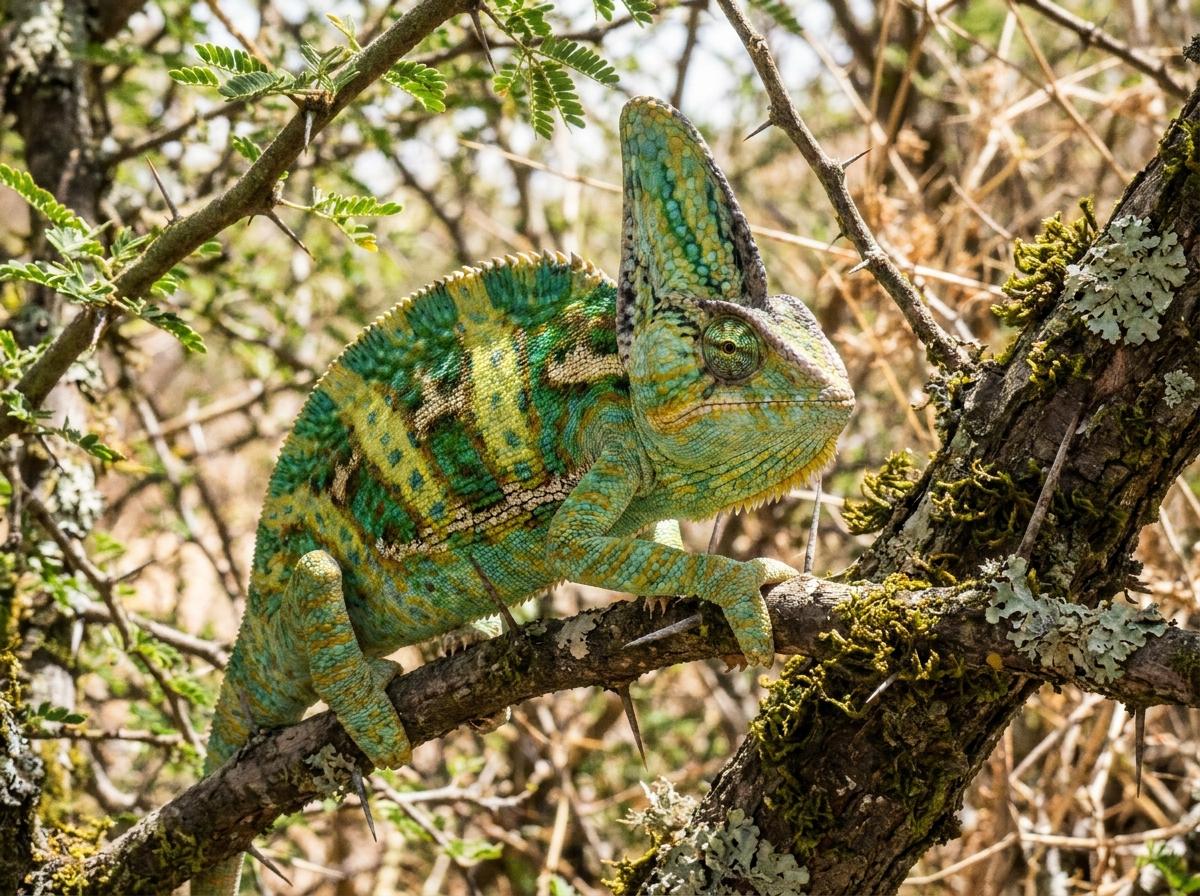
Veiled Chameleon
Chamaeleo calyptratus
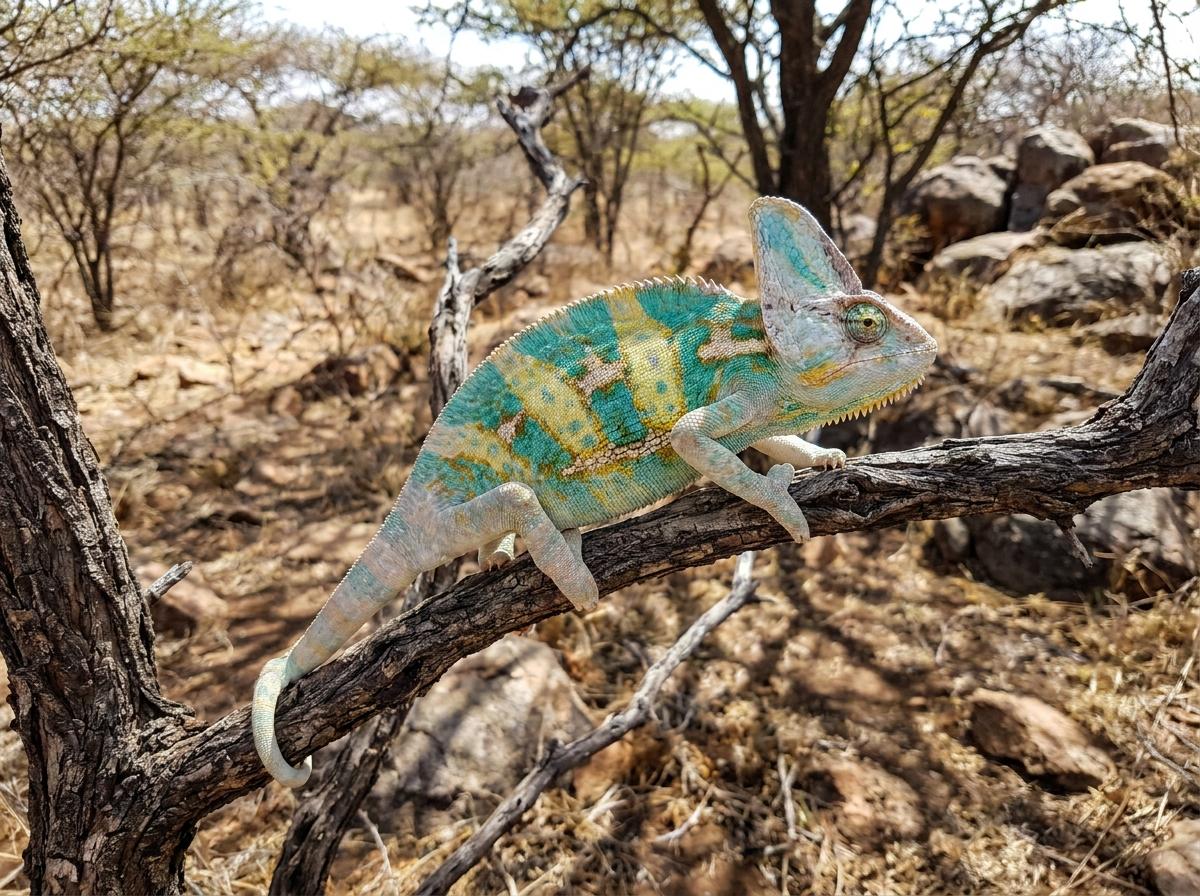
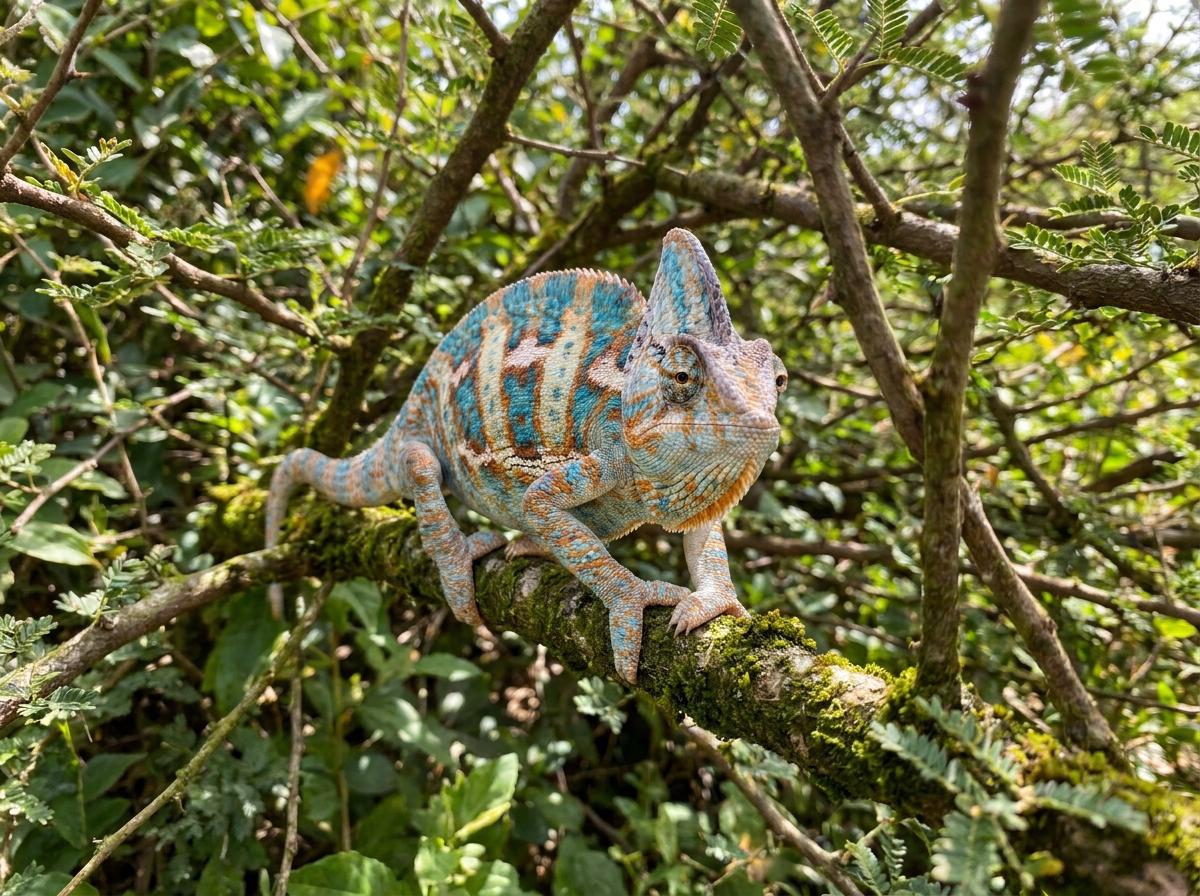
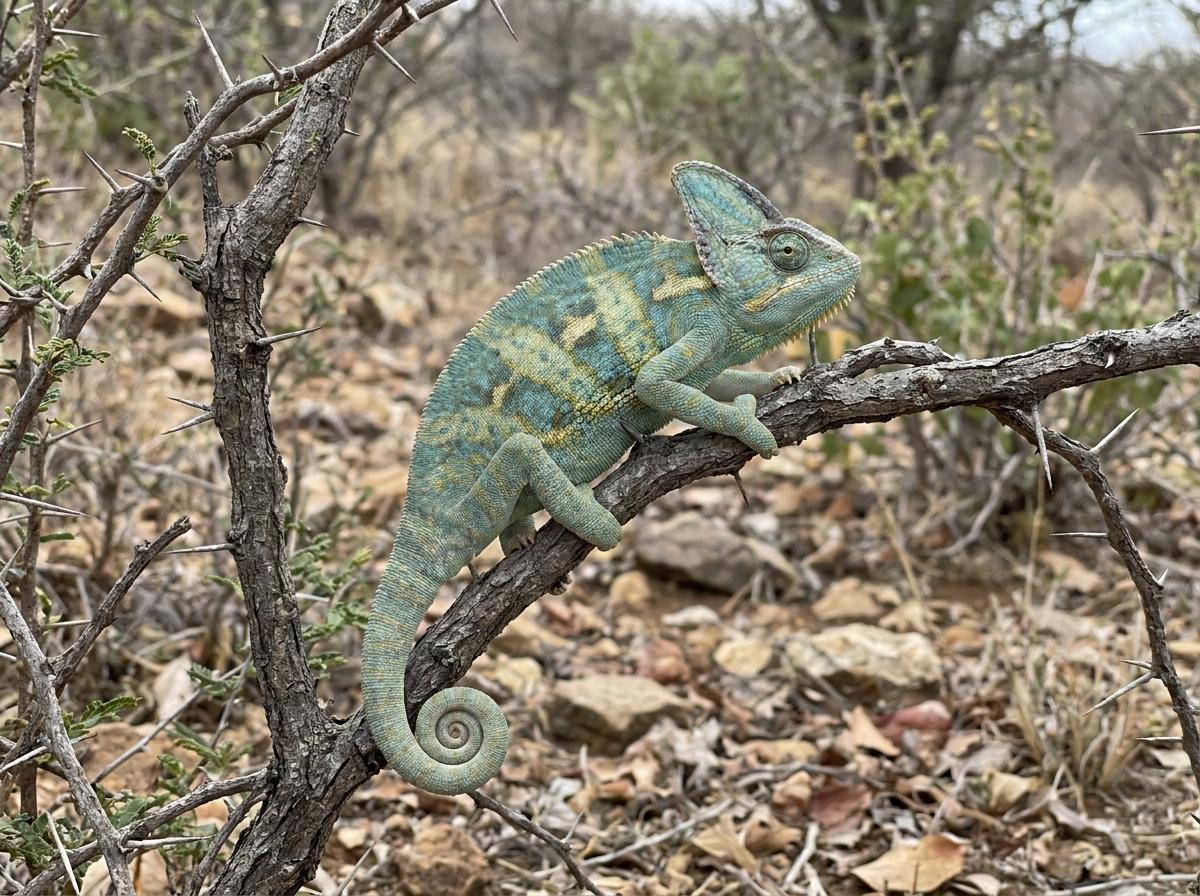
Native to Yemen and southwestern Saudi Arabia, the veiled chameleon, Chamaeleo calyptratus, is a hardy arboreal lizard that uses trees and shrubs in wadis, farms, and upland habitats. It is also called the Yemen chameleon. A tall helmet-like casque on the head, independently moving eyes, zygodactyl feet, and a long tongue make it easy to recognize. Males are larger and usually show stronger banding and tarsal spurs, while females remain smaller and may display green, blue, yellow, or dark stress and breeding colors. Captive-bred veiled chameleons are common in the reptile trade, and feral populations exist in a few warm places.
Care is more demanding than the species' availability suggests. Veiled chameleons are usually housed singly in tall, well-ventilated enclosures with live or sturdy plants, ultraviolet B lighting, a basking area, and regular misting or drip water because many will not drink from bowls. Their diet is based on gut-loaded insects with calcium and vitamin supplementation. Females can produce infertile clutches, so a laying bin is needed even without a male. Frequent handling, glass reflections, dehydration, and chronic under-supplementation are common causes of problems for new keepers.