

Yakalo
Bos grunniens × Bison bison
A yakalo is the offspring of a domestic yak (Bos grunniens) crossed with an American bison (Bison bison). The name blends “yak” and “buffalo,” the everyday North American word for bison. It is not the dzo or dzomo, which is a yak crossed with domestic cattle, and it is not a beefalo, which is cattle crossed with bison. Those three crosses get confused constantly, and telling them apart is most of what a yakalo search actually needs.
The harder answer is that little else can be said with confidence. There is no breeding population, no price, no registry and no care standard, because the yakalo was a short-lived government breeding experiment in 1920s Canada that was abandoned nearly a century ago. Nearly everything written about it since traces back to one technical report.
So this page separates what is documented from what is merely repeated, and says so where the record is silent. It also drops a claim the earlier version made, because the source turned out to describe a different cross in a different country. If it is the living version of the idea you are after, the yak listings on Creatures are the place to start.

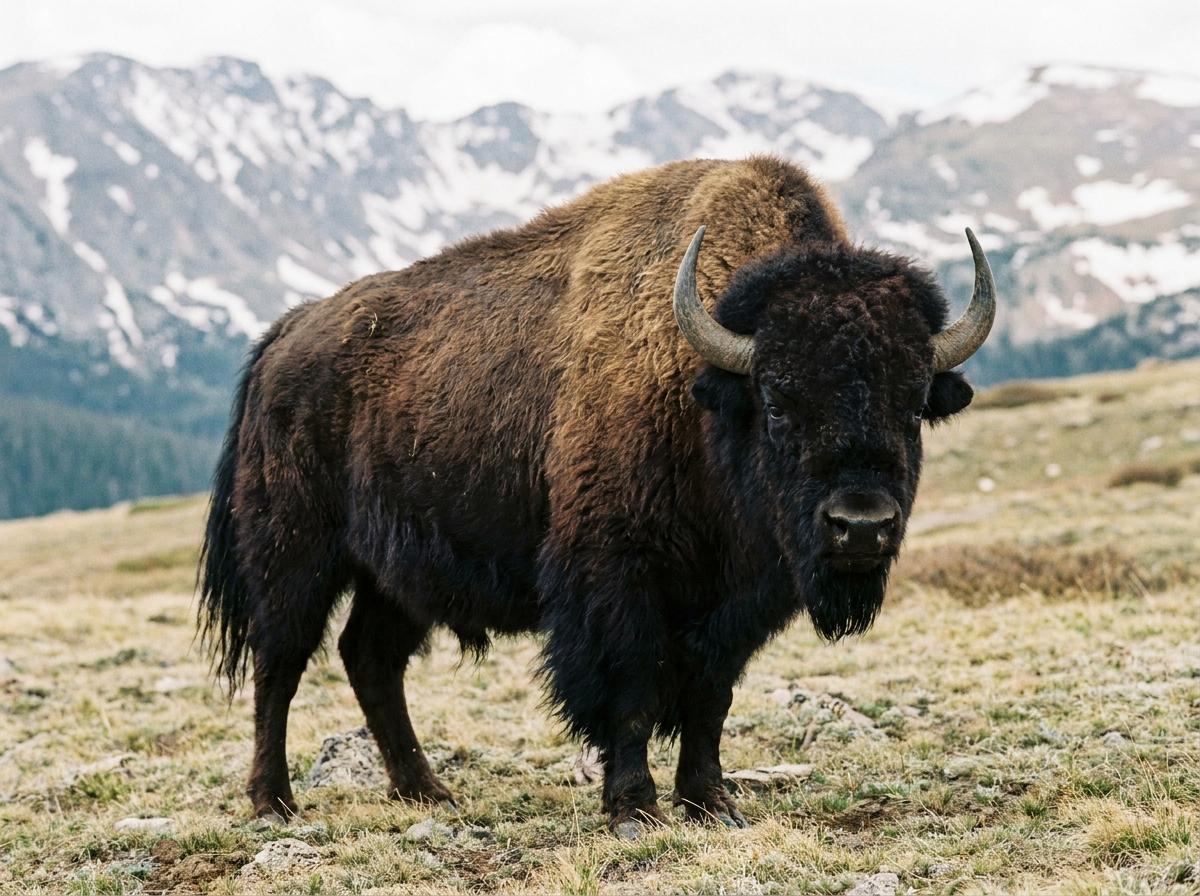
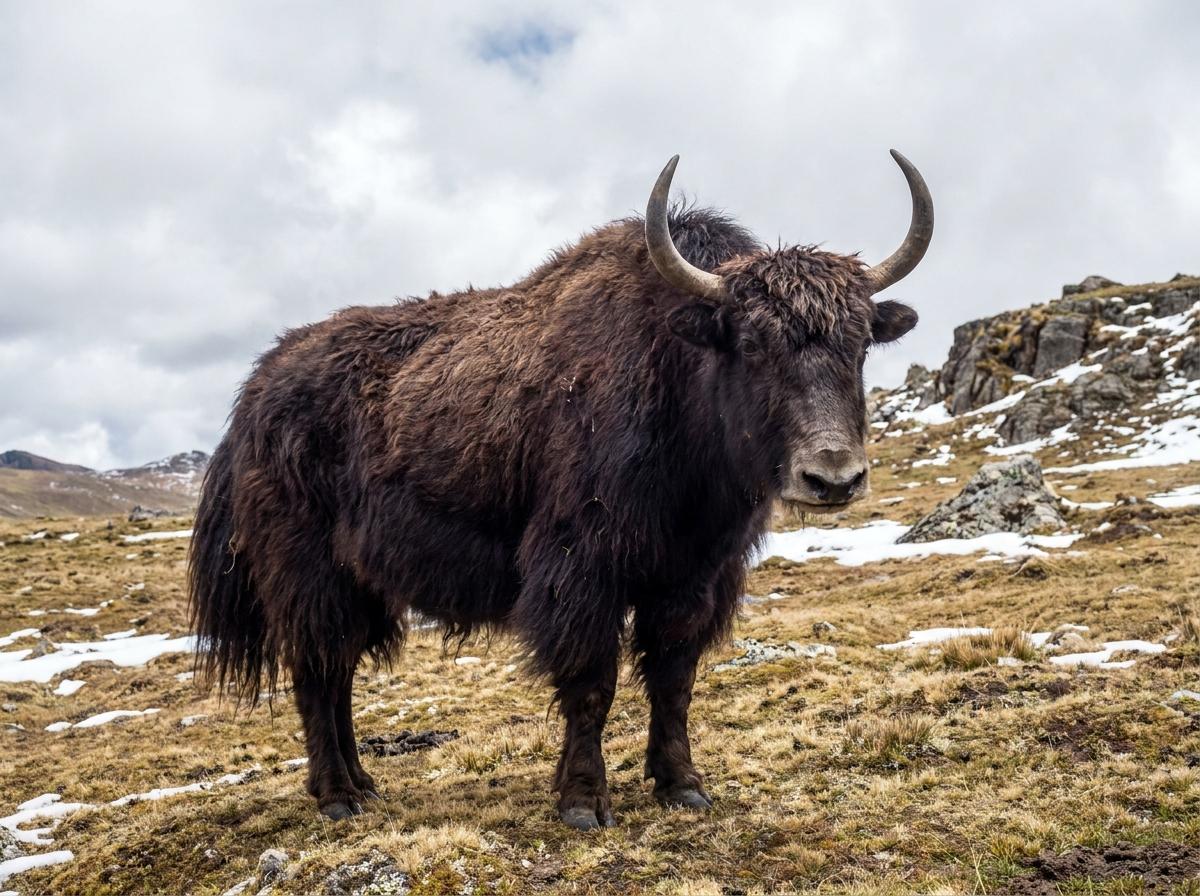
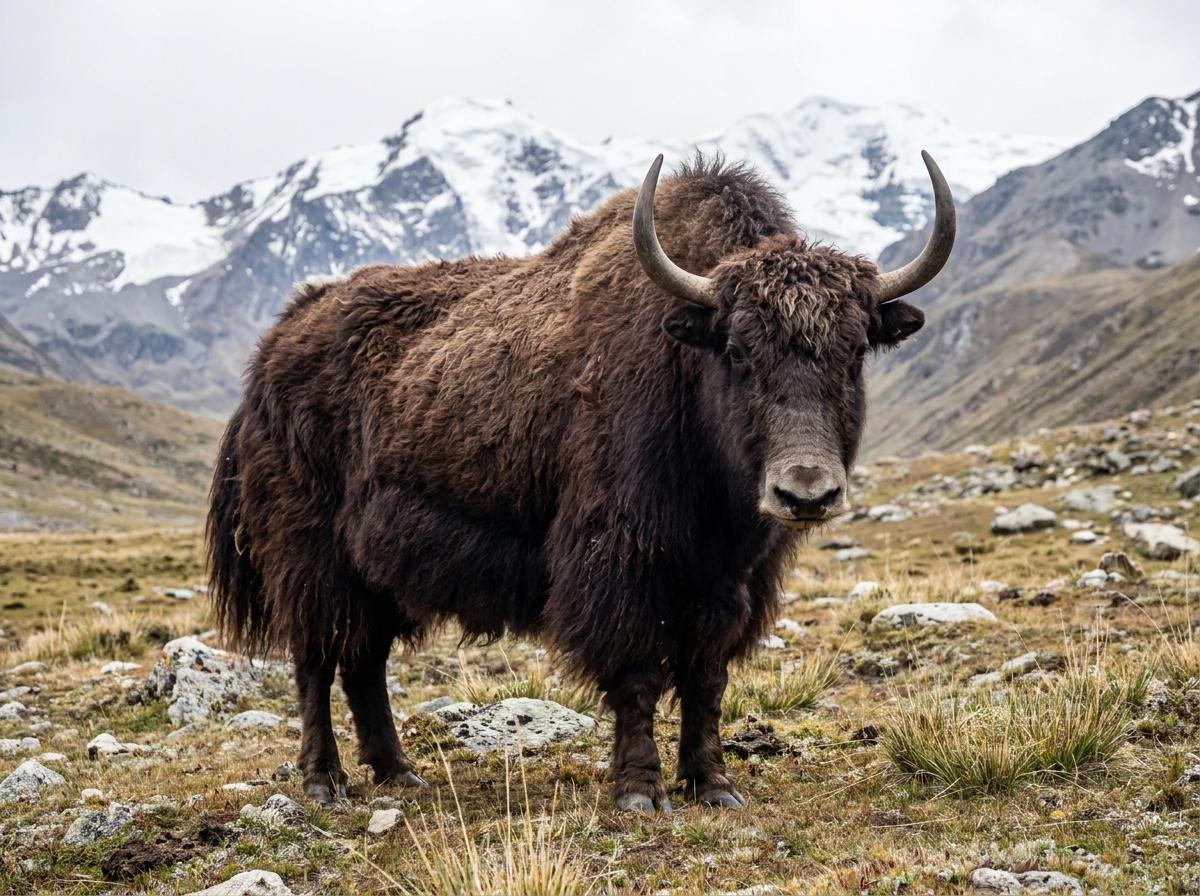
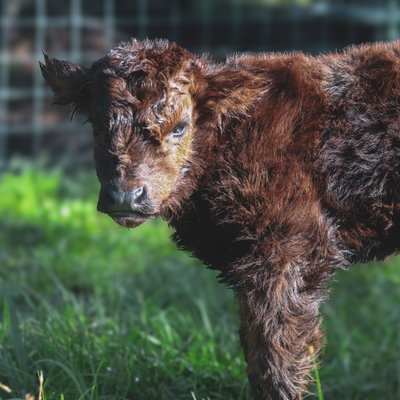
Illustration, not a photograph. Nobody has a verified photograph of a documented yakalo, so the images of the hybrid on this page are drawn reconstructions built from the two parent species.
Browse listings, public profiles, breeders, or add your animal.
Yakalo, dzo and beefalo are three different animals
Three crosses come out of the same corner of the cattle family, and the names get swapped freely online. They are not interchangeable.
- Yakalo. Yak crossed with American bison. Documented once, in Canada, in the 1920s, though not under that name. Gone.
- Dzo and dzomo. Yak crossed with domestic cattle. A living, working animal across the Himalaya and the Tibetan Plateau. Dzo is the male, dzomo the female.
- Beefalo, or the older term cattalo. Domestic cattle crossed with American bison. Still bred in North America, with fertile bulls and a real market.
The yakalo is the rarest corner of that triangle: yak put directly to bison, with cattle left out.
The naming has a second layer of confusion. The “alo” in yakalo comes from “buffalo,” which in North America means the American bison. Strictly, the bison is not a buffalo at all: the true buffalo are the African (Cape) buffalo and the Asian water buffalo, on different branches of the family. The loose usage stuck, and the hybrid’s name inherited it.
There is a third layer, and it is the one nobody mentions. The people who actually made these animals never called them yakalos. The word does not appear anywhere in the 1935 Canadian bulletin that is the primary record of the experiment, and the bulletin says outright that the animals were left unnamed. Having noted that Asian yak and cattle hybrids carry distinct names, “the hybrid male is called ‘dzo’ and the female hybrid a ‘dzomo’,” it goes on: “This terminology has not been applied to the Wainwright yak hybrids nor has any other distinctive name been given them.” So “yakalo” is a later label attached from outside. The bulletin is the source for the crosses, not for the name.
Yak and bison are not the same animal

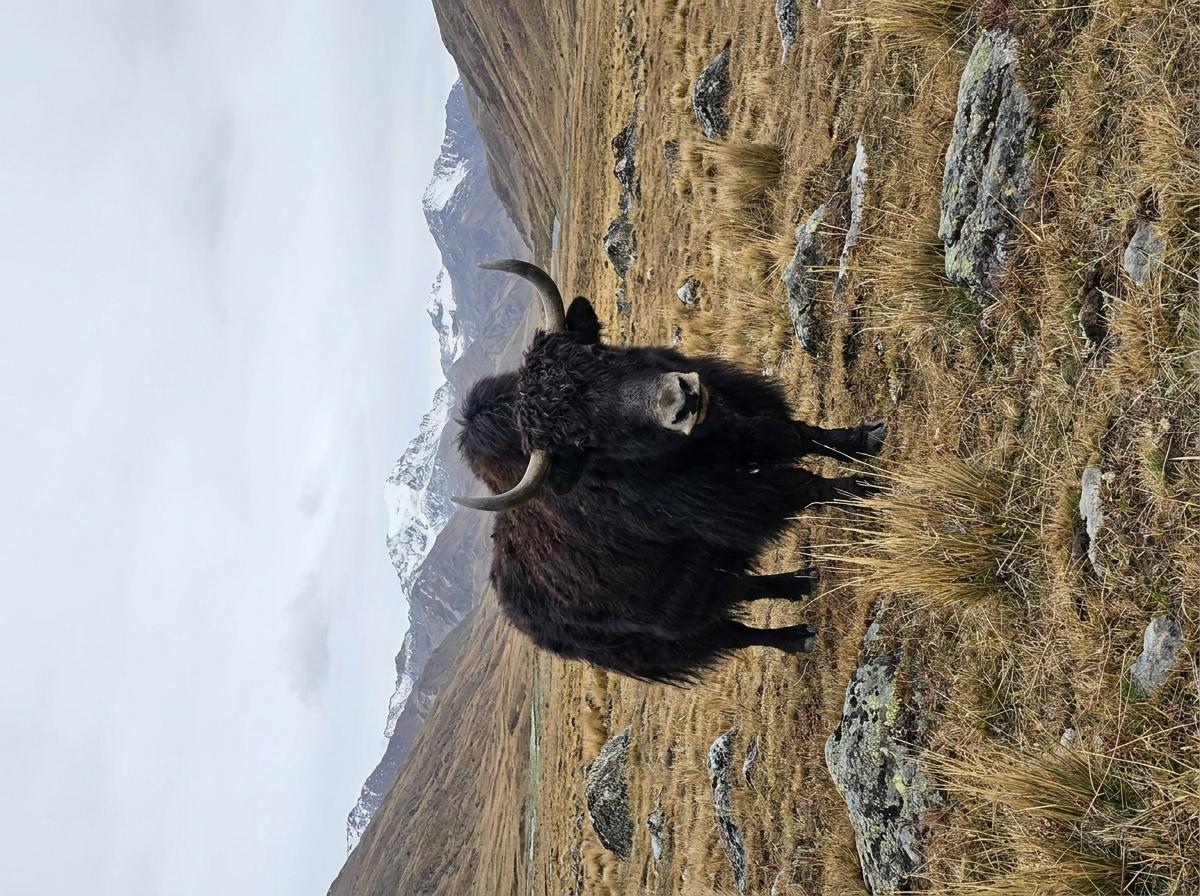
They are different genera on different continents. The yak is a Central Asian high-altitude animal, at home on the Qinghai-Tibetan Plateau, and its obvious feature is the curtain of long coarse hair hanging from its flanks and belly, often close to the ground, finished with a bushy horse-like tail. The American bison is a North American plains animal, taller and heavier, with an enormous shoulder hump, a massive head carried low, and a woolly cape over the forequarters that stops abruptly at short hair on the hindquarters.
Both are cold-climate specialists, which is exactly why someone thought crossing them was worth a try.
The dzo is the cross people actually keep

If what you actually want is the yak hybrid that exists in numbers and does daily work, that is the dzo. Peer-reviewed work on the cross defines the terms without ambiguity: the male F1 offspring of taurine cattle and domestic yak is the dzo, and the female is the dzomo. Fertility is the interesting part, and it is the same wall the yakalo hit: males sterile, females fertile and bred on.
That cross earns its keep. Hybrids grow faster and become larger than pure yak, first cross females out milk pure yak by a wide margin where the sire is an improved dairy breed, and they are widely used for ploughing and as pack animals, though they are kept at lower elevations because they do not handle the highest ground as well as yak. Bigger and more productive than the local yak is well supported. Bigger than both parents everywhere is not: the headline milk figures come from crosses sired by high-yielding dairy cattle, which out-produce the hybrid comfortably, and Nepali on-farm data found female hybrids running slightly lighter than the pure yak kept alongside them. Our full write-up is on the dzo and dzomo page.
It is also old. Ancient DNA from the site of Bangga on the Tibetan Plateau dates yak and cattle hybridization there to about 2,500 years ago, from genome sequencing of archaeological remains rather than from tradition, with the paper narrowing it to 2670 to 2360 calibrated years before present. FAO puts it further back still, reporting that “ancient documents show that yak have been hybridized with ordinary cattle (Bos taurus) for at least 3 000 years.” Two different kinds of evidence, and the gap between them is worth showing rather than averaging. Either way, the working yak hybrid is thousands of years old, and the yakalo lasted seven.
What is actually documented: the Wainwright experiment
The yak arrived by an odd route. Six Chinese yak were sent to Canada in 1909 as a gift from the Duke of Bedford. Within a year only one male and three females were left, and they failed to breed for two years, which the FAO’s review of yak outside their traditional range attributes to the low altitude where they were held. They bred once moved to higher ground near Banff, and in 1919 most were transferred to Buffalo Park at Wainwright, Alberta.
Wainwright already had a crossing program running. Canada was breeding domestic cattle with American bison there, chasing a meat animal that could handle open northern range. In 1921 the yak were folded into those trials, with the same goal.
The results were poor. Few of the hybrids survived, and the series was suspended in 1928. The Dominion of Canada’s Department of Agriculture published the findings in 1935 as Publication 479, Technical Bulletin 2, “Hybridization of domestic cattle, bison and yak: Report of the Wainwright experiment,” by Deakin, Muir and Smith.
That bulletin is very nearly the whole record, and the encyclopedia entries, wiki mirrors and blog posts about the yakalo all cite it and copy one another rather than reading it. It does not need to be taken on trust. The full text is scanned, free and login-free, in two public archives: HathiTrust, where the bulletin begins at sequence 39 of the departmental volume, and the Internet Archive, which holds it as a standalone scan. Everything quoted below comes from that text.
The yak and bison pairing was a small part of a larger trial and it is described briefly. On offspring, the bulletin records that “Yak sire X bison dam gave 1 dark brown with a grey nose.” It thought well of the result: “A yak-bison hybrid has both stamina and speed to a remarkable degree,” and the cross “resulted in a fine specimen of a wild animal, being very fleet and agile and much less cumbersome in appearance than the bison.” Its summary records that “One yak-domestic fertile hybrid male was obtained. The experiment with yak was largely discontinued in 1928,” and that “Since 1928 hybridization with yak, with the exception of a few hybrid females which were reserved, has been discontinued at Wainwright.”
The verdict is the part the secondary summaries leave out, and it is blunter than anything written about the yakalo since: “The one-fourth yak hybrids make fair beef animals, but they have not proven to be especially hardy and, therefore, offer no special value.”
A cold-hardiness claim we had to take down
An earlier version of this page said the Wainwright hybrids did not over-winter as well as pure yak, and treated that as the key documented finding. We checked the source. It does not say that.
The sentence being quoted is real. The FAO review does say that hybrids “did not appear to withstand the extremely low temperatures of winter” as successfully as the pure yak. It is describing a different experiment: yak crossed with Galloway cattle at the Fairbanks Experiment Station in Alaska, using yak that had been born in Canada and shipped north in 1919, 1923 and 1930. Those trials were suspended in the early 1930s. The sentence has nothing to do with the yak and bison hybrids at Wainwright.
So we no longer make that claim, and we cannot make the opposite one either. The popular line that yakalos shrugged off Canadian winters has no source behind it. What the record supports is narrow: few hybrids survived, and the trials stopped in 1928. It does not say cold was the reason.
The Alaska work is worth keeping on its own terms. Those yak and Galloway hybrids were heavier at slaughter than either parent, which is real measured heterosis. It just belongs to yak crossed with cattle, not to the yakalo.
Biology: why the cross happens, and why it stops

Yak, cattle and American bison all sit in the same corner of the family, and their chromosomes line up. Yak carry thirty pairs, the same count as cattle, and a 2025 cytogenetic study of European bison, American bison and domestic cattle takes as established background that all three share a conserved karyotype of 2n equals 60. That count is long-settled rather than a new finding, and the 1935 Canadian work reached the same conclusion from breeding results alone: “Owing to the fertility of female hybrids of bison, cattle and yak, it is extremely doubtful if there is any difference in chromosome number between these three species.” A matching chromosome count removes one basic barrier, which is why yak, cattle and bison can be crossed in various combinations at all.
Matching counts do not deliver a usable hybrid. The wall is hybrid male sterility, and it is well characterised in the yak and cattle cross because that cross exists in large numbers. Males are sterile while females are fertile, and the sterility is a failure of sperm production rather than of mating behaviour. A 2022 comparison of mature yak and hybrid testes found the hybrid’s seminiferous tubules held reduced spermatogonia and primary spermatocytes, fewer secondary spermatocytes, no round spermatids and no sperm. The production line starts and then quits partway through. Older sources, including FAO’s 2003 monograph, describe no spermatogonia at all in the first hybrids; the modern histology finds them reduced rather than absent, so take the newer work. Either way the pattern follows Haldane’s rule, with sterility confined to the male.
Bison crosses show the same one-sided pattern. A population-genetics review of cattle ancestry in North American bison herds repeats the older literature’s report that only bison bull to domestic cow crosses succeeded, and that all the surviving offspring were female. That is bison crossed with cattle, and the Wainwright pairing ran the other way, yak bulls to bison cows, so read it as a parallel rather than as evidence about this cross. For the yak and bison cross itself the 1935 bulletin is direct: no first cross hybrid males were fertile, and the female hybrids were.
The consequence decides everything. If every hybrid bull is sterile, no herd can sustain itself. Each generation has to be remade by crossing the parent species again, which is slow and expensive and yields the same fragile animal, and it means the useful traits of these crosses can never be locked in as a breed. Add poor calf survival and the Wainwright planners had little reason to keep going. They did not.
What a yakalo probably looked like
There is a description, and it is short. The 1935 bulletin records one yak sire and bison dam calf as “dark brown with a grey nose,” and says of the cross that it “resulted in a fine specimen of a wild animal, being very fleet and agile and much less cumbersome in appearance than the bison,” with “both stamina and speed to a remarkable degree.” So the primary record does tell us the animal read as lighter and quicker than a bison, which is the yak side showing through.
What it does not give is a photograph or a single measurement. Beyond those few lines the rest is inference from the parents, and worth labelling as such. Both parents are large, shaggy cold-climate animals, so a yakalo would have been big, dark and woolly. From the bison side you would expect a shoulder hump, a heavy head carried low and a dense woolly cape over the forequarters. From the yak side, a fringe of long hanging hair along the flanks and belly, the lighter frame the bulletin describes, and the yak’s own long outswept horn. That is as far as the evidence goes, and it is exactly how the illustrations here were drawn, which is why they are labelled as reconstructions rather than offered as photographs.
Is there a yakalo anywhere today?
For practical purposes, no. The program ended in 1928, the sterile males meant the hybrids could not perpetuate themselves, and no documented breeding line runs from those animals to any modern herd. Where today’s North American yak came from is less settled than it sounds: FAO allows that “in theory, it is feasible that the entire North American yak population could be derived from the single, documented, importation to Canada, but this seems improbable,” and points to unconfirmed reports of an 1890 Bronx Zoo import for which “documented evidence of that has not been found.” Later imports are the likelier source. Nobody has traced the pedigree.
An occasional cross is not impossible in principle, since both parent species are kept on this continent. But we found no documented modern case, no herd, no registry and no market. A “yakalo for sale” listing deserves heavy skepticism on two counts: the word is used loosely for anything shaggy and crossbred, and a hybrid whose bulls are all sterile is not something a serious operation can build a program around.
If the appeal is the cold-hardy crossbred idea itself, the living version is the beefalo and the cattle and bison crosses, which have fertile bulls and are genuinely traded. If the appeal is the yak, domestic yaks are raised in North America for meat, fibre and as hardy smallholding stock.
What this page will not tell you
Several things that circulate about the yakalo are left out here, and it is worth saying what “left out” means. Nothing is dismissed because we did not find it in a hurry. Each item below names what we checked, because “no source exists” is a claim in its own right and deserves the same evidence as any other.
- Weights, heights, lifespans and prices. The bulletin reports the yak crosses in words rather than numbers and gives no measurements of them, and there is no market to price. Printing figures would mean inventing them.
- A birth year for the first hybrid calves. An earlier version of this page said around 1926. The bulletin dates the arrival in 1909, the transfer to Wainwright in 1919, the entry into the trials in 1921 and the end in 1928, and we have not found the 1926 date in it or in anything citing it. If it is buried in the tables we have not seen it, so we do not print it.
- That the hybrids handled cold better, or worse, than pure yak. Covered above. The quotation behind the “worse” version describes a yak and cattle cross in Alaska, not these animals.
- That yak and bison crosses are kept by farmers in any named region today. This circulates without a source, and no herd, registry or trade record turns up behind it.
- Anything about the yakalo as a named breed. It never was one. The name post-dates the animals, and the programme that made them ran for seven years and stopped.
Where the record is genuinely thin, saying so is more useful than filling the gap with confident detail. Where it is not thin, the honest move is to go and read it.
Frequently asked questions
Is a yakalo a real animal?
Yes, as a documented historical hybrid. Yak and bison crosses were produced in Canadian government experiments in the 1920s. There is no breeding population today.
Is a yakalo the same as a dzo?
No, and this is the most common mix-up. A yakalo is yak crossed with American bison. A dzo is yak crossed with domestic cattle, and the female of that cross is a dzomo. Different parent species, different continents, completely different fates: the dzo is a working animal today, the yakalo is a closed experiment.
What is the difference between a yak and a bison?
Different genera and different continents. Yak are Central Asian high-altitude animals with a long curtain of hanging hair and a bushy tail. American bison are larger North American plains animals with a huge shoulder hump and a woolly cape over the forequarters. Neither is a true buffalo, despite the North American habit of calling bison one.
Can a yak and a bison actually interbreed?
Yes. Both sit in the same subfamily and both carry 2n equals 60 chromosomes, so the cross is biologically possible. The catch is that hybrid males are sterile, so it cannot easily perpetuate itself.
How big was a yakalo, and how much would one cost?
Neither has an honest answer. The 1935 bulletin describes the cross without measuring it, calling the animals fleet, agile and “much less cumbersome in appearance than the bison,” and with no market there is no price. A bison is considerably larger than a domestic yak, so a first cross would have fallen between the two, but that is reasoning, not data.
Do this next on Creatures
The yakalo itself is a dead end, but the interest behind it is not. Here is where to take it:
- Follow the animals you can actually get. Yak and hardy crossbred stock come up irregularly. A free listing alert emails you when one is posted, with no account needed to start, and the same tools let you save searches and build a watchlist.
- Talk to people who keep these animals. The Creatures breeder and farm directory lists trusted operations raising yak, bison and crossbred cattle, which is a faster route to real answers than another article about a hybrid nobody has seen since 1928.
- Get found, if you raise them. Yak and bison farms are thin on the ground and hard to locate. Here is how to get listed in the breeder directory, and how to create an organization and add your team if you run yours with other people.