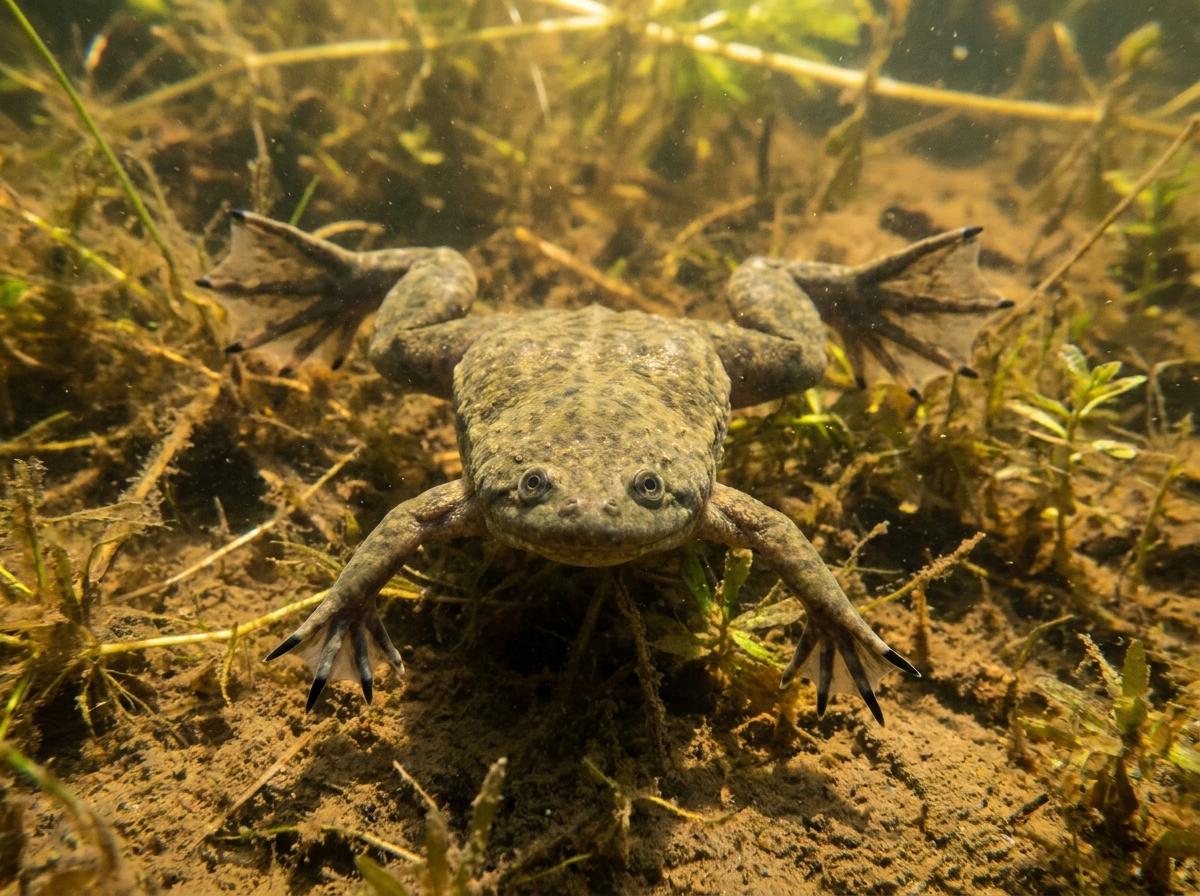
African Clawed Frog
Xenopus laevis
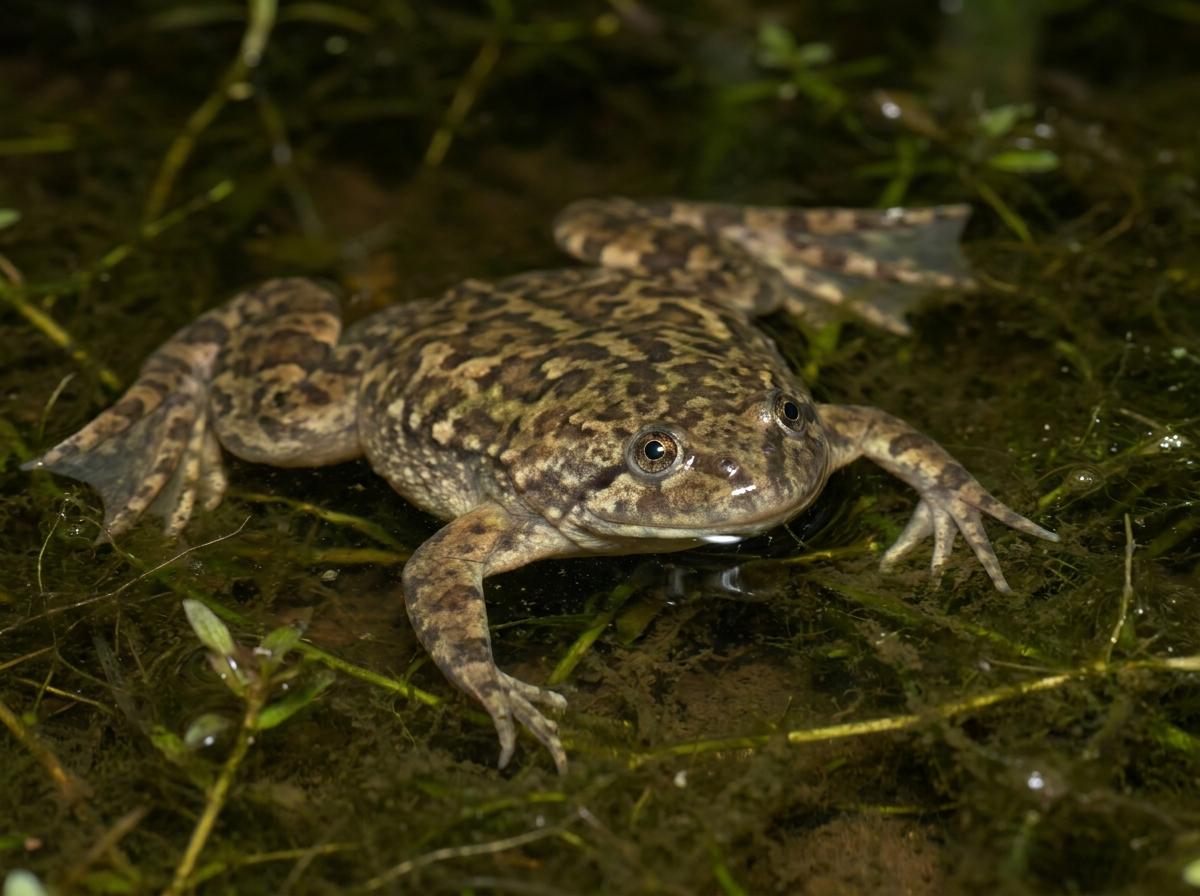
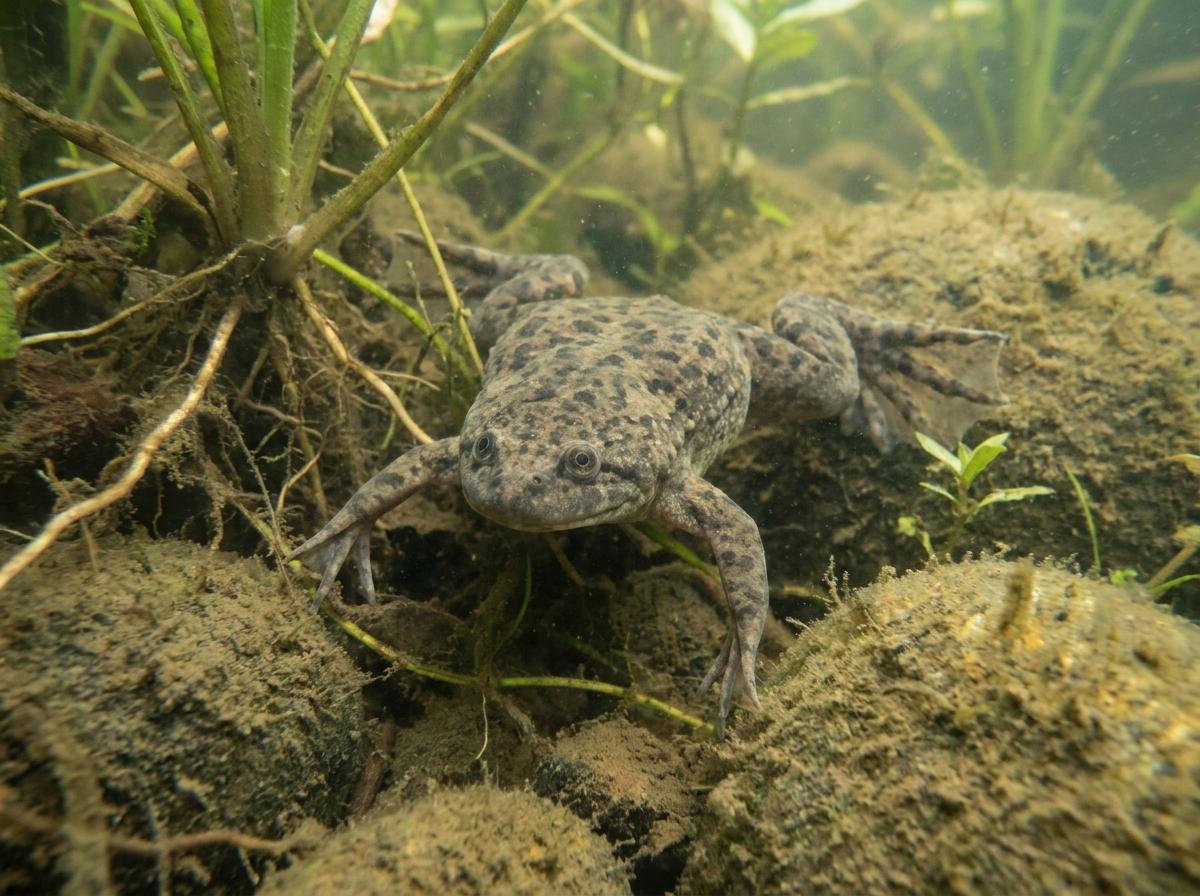
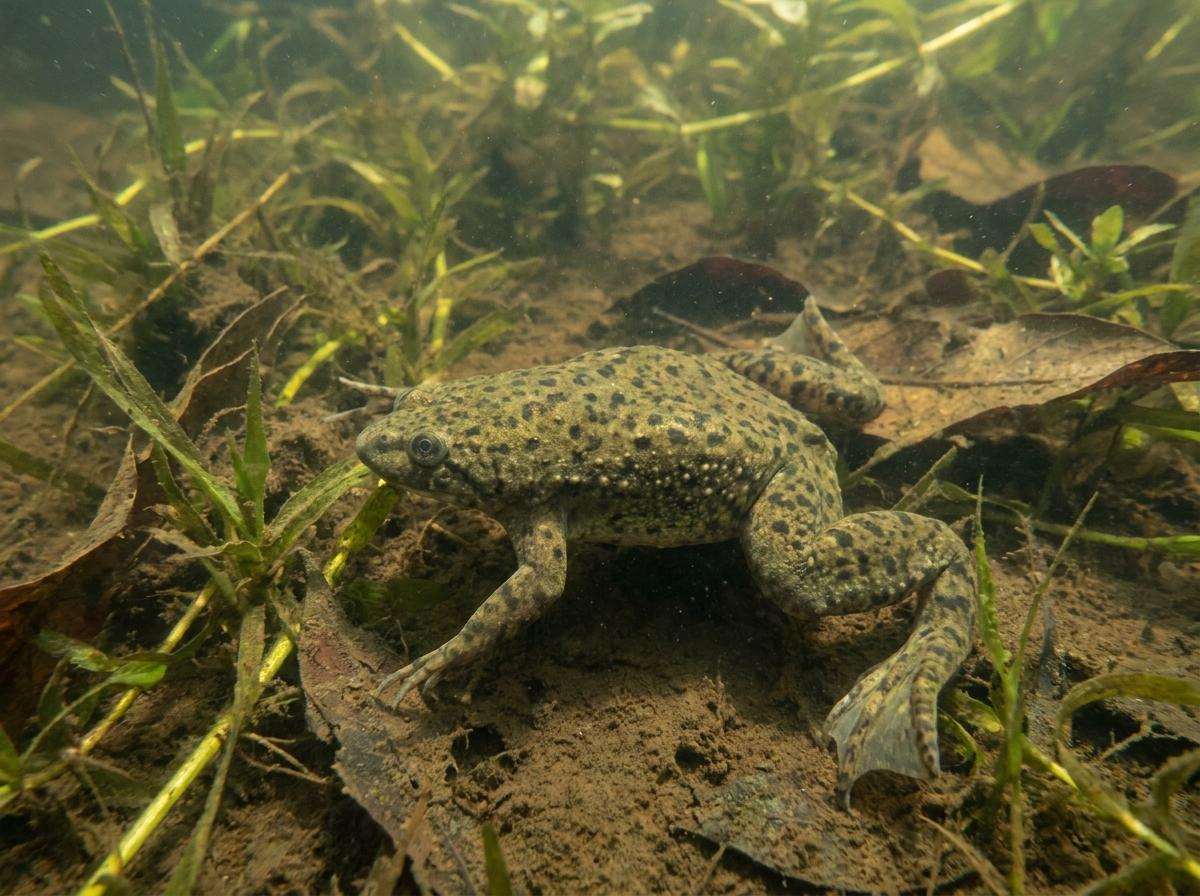
The African clawed frog (Xenopus laevis) is a fully aquatic frog native to ponds, streams, and temporary waters in southern and parts of eastern Africa. It has a flattened body, small upward-facing eyes, no external tongue, and dark claws on the inner toes of the hind feet. Instead of leaping on land, it swims with strong hind legs and uses lateral-line organs to detect movement in the water. Albino and wild-type forms are common in laboratories and the aquarium trade, and the species has a major history in pregnancy testing and developmental biology.
Captive African clawed frogs need an aquarium set up for amphibians, not a mixed community fish tank. Smooth decor, a secure lid, dechlorinated water, and foods that sink suit their feeding style; small gravel is risky because it can be swallowed. They are long-lived and tolerant, which is one reason unwanted pets have become invasive after release in several regions. Some jurisdictions restrict ownership, transport, or breeding, so keepers should check local rules and source animals responsibly. Research colonies add pathogen screening and line tracking, especially for embryology or genetics work.