Australian Friesian Sahiwal
The Australian Friesian Sahiwal (AFS) is a composite tropical dairy cow bred in Australia to do one hard job: give real milk in hot, humid, tick-heavy country where a pure Holstein-Friesian struggles. It is roughly a half-and-half cross of the Holstein-Friesian (for dairy output) and the Sahiwal, a Bos indicus zebu from the Punjab prized for heat, tick, and parasite tolerance. The result looks mostly like a dairy cow, black-and-white or red-and-white patched, but carries subtle zebu signatures: a slight shoulder hump, a loose dewlap, and softly drooping ears. It is above all a tropical and export breed, developed by the Queensland government from the 1960s and shipped to smallholder dairy systems across Asia, Latin America, and the tropics, with very little presence in North America. Below is what the breed is, where it came from, how it looks, how much it milks, and what to check before you buy one.

Browse listings, public profiles, breeders, or add your animal.
What is an Australian Friesian Sahiwal?
The Australian Friesian Sahiwal is a purpose-built tropical dairy breed. It combines two very different kinds of cattle. The Holstein-Friesian is the world’s dominant dairy cow, a Bos taurus breed selected for very high milk volume, but one that loses condition and fertility fast in heat, humidity, and heavy tick pressure. The Sahiwal is a Bos indicus zebu from the Sahiwal district of the Punjab (in present-day Pakistan), one of the best dairy zebus, noted for heat tolerance, tick resistance, and hardiness on rough feed. The AFS blends the two at roughly a 50:50 ratio to keep useful milk yield while adding tropical toughness.
The point of the breed is straightforward. In the wet tropics, a full Holstein-Friesian is a high-maintenance animal that underperforms and burns out. A pure zebu tolerates the climate but does not milk like a specialist dairy cow. The AFS was bred to sit between those two, a cow that can actually produce commercial quantities of milk while coping with the environment. If you are comparing tropical and heat-tolerant cattle generally, the broader Creatures cattle species page is a good place to line the AFS up against other breeds.
It is worth being clear up front: this is largely a tropical working and export breed, not a common companion or hobby-farm animal, and it has very little presence in North America. Most of the animals and most of the demand sit in tropical smallholder dairy systems overseas.
Origin and history
The AFS came out of a deliberate, long-running Australian effort to solve tropical dairying. Development commenced in the 1960s under the Queensland government, specifically the state Department of Primary Industries, with early crossing and evaluation work carried out at northern Queensland research stations including the Kairi Research Station near the Atherton Tableland. The core idea was to cross Holstein-Friesian dairy genetics onto the Sahiwal zebu and then select, within a closed half-bred population, for cows that milked well and still handled heat, humidity, and ticks.
This sits inside a wider mid-century Australian program to build tropically adapted cattle. The Commonwealth Scientific and Industrial Research Organisation (CSIRO) ran parallel tropical-cattle research from the 1950s onward, and produced a related but separate dairy composite, the Australian Milking Zebu (AMZ), which crossed Sahiwal and Red Sindhi zebus mainly with Jersey rather than Friesian. The AMZ and the AFS are often mentioned together because both used the Sahiwal to bring Bos indicus hardiness into a dairy cow, but they are distinct breeds from different programs: the AMZ leaned on Jersey and CSIRO, the AFS on Holstein-Friesian and the Queensland Department of Primary Industries. If you see the two conflated online, that is the reason.
The AFS breeding program ran for decades, into the 1990s, and included advanced reproductive tools such as embryo transfer to multiply the best genetics. The formal Australian program has since wound down, but the breed’s genetics live on where they are most useful, in the tropics abroad.
What an Australian Friesian Sahiwal looks like
Because it is a composite, the AFS reads as a dairy cow first, with zebu detailing.
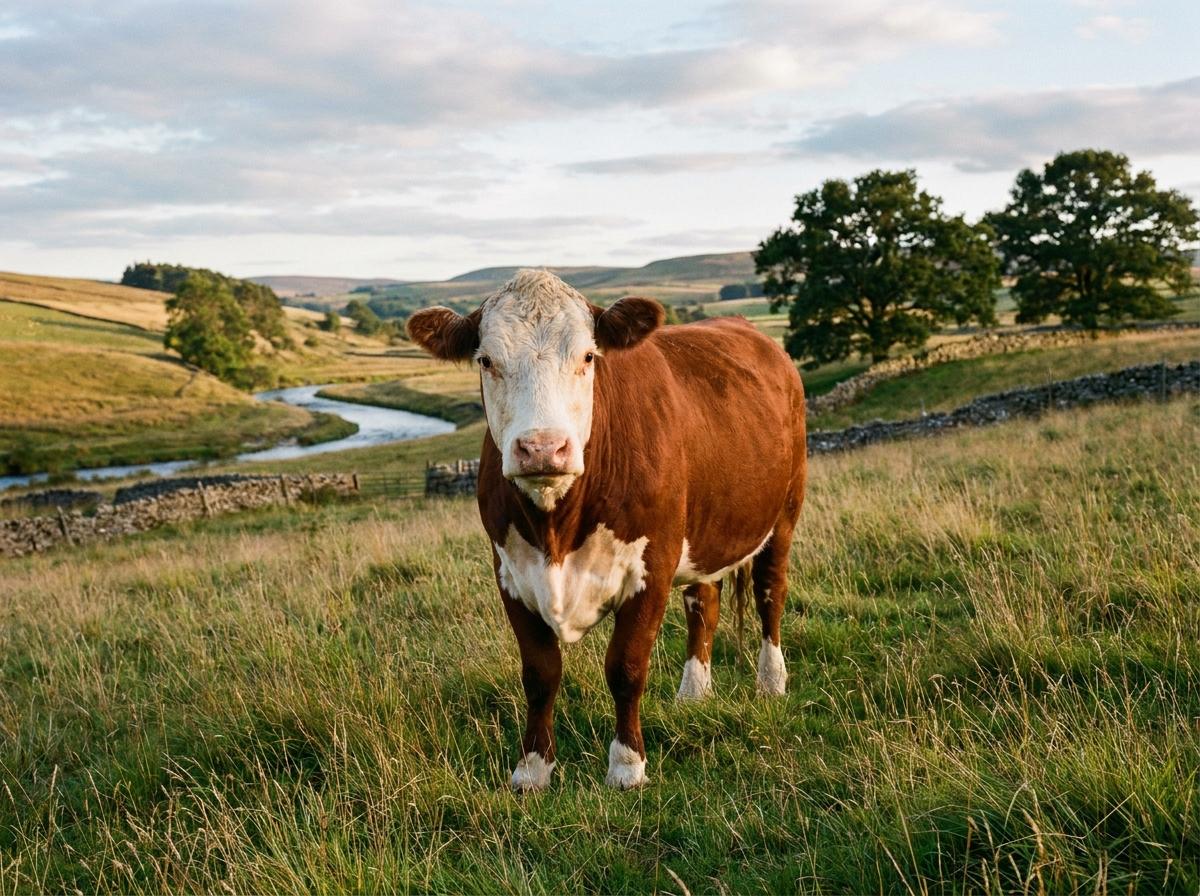
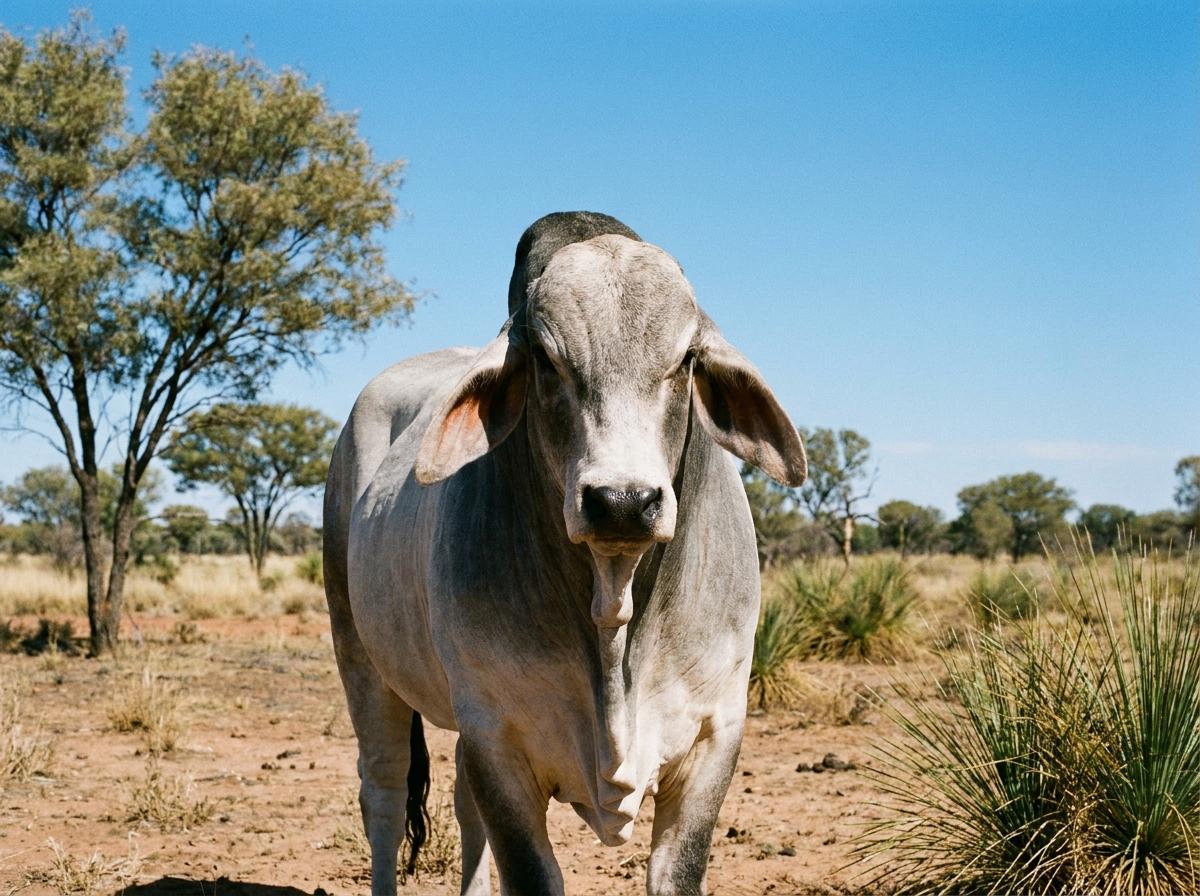
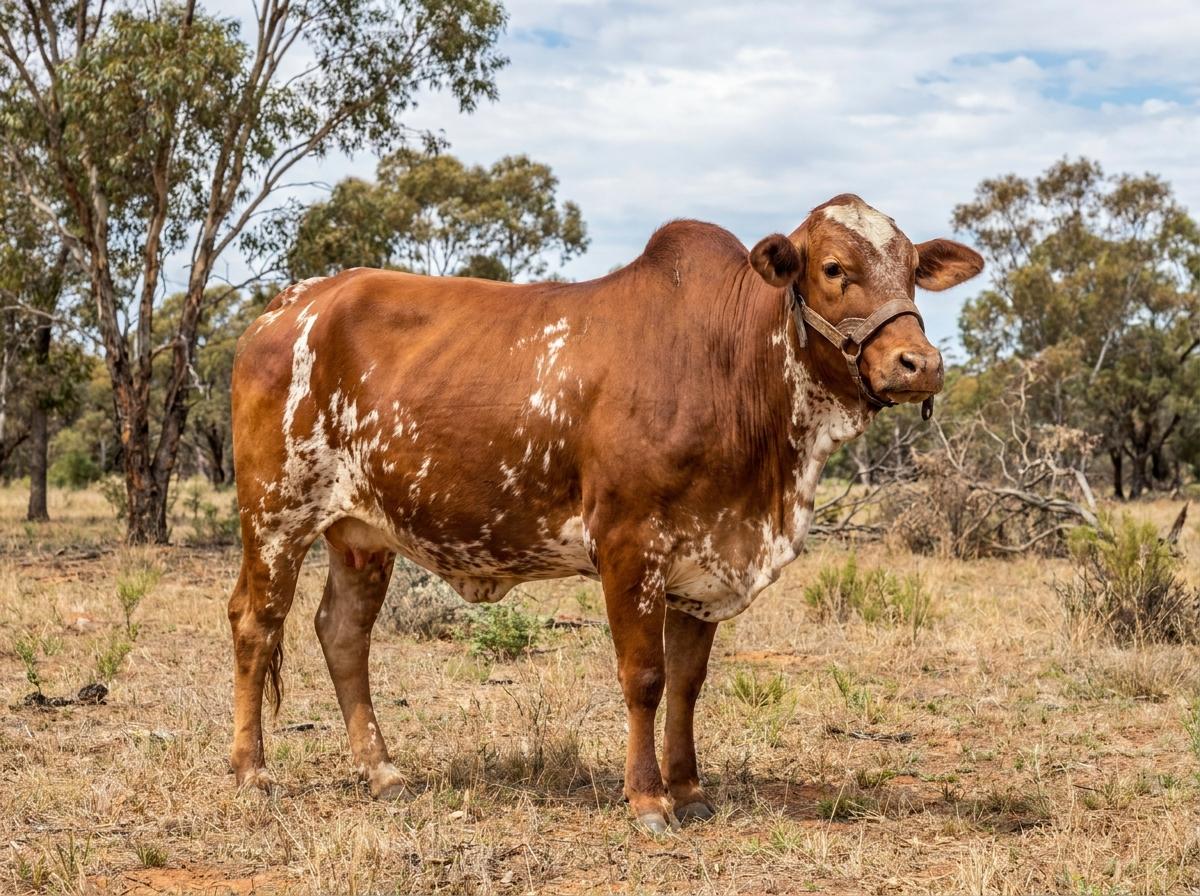
- Dairy-type coat and markings. Most animals show Holstein-Friesian style patching. Some are the familiar black-and-white, others carry red-and-white or red-and-black colouring, reflecting the Friesian and Sahiwal inputs. The coat itself is sleek and short, a heat-adapted hide rather than the denser coat of a temperate breed.
- A slight zebu hump. The Bos indicus heritage shows as a modest muscular hump over the shoulders. It is generally far less pronounced than on a purebred zebu bull, but it is visible and marks the animal as part indicus.
- A loose dewlap. A pendulous fold of loose skin hangs under the neck and chest. That extra surface area helps the animal shed heat, and it is one of the clearest zebu signatures the breed keeps.
- Drooping ears and loose skin. Softly drooping ears and generally loose, mobile skin are part of the zebu heat-management package the Sahiwal contributes.
- A functional dairy frame. Underneath, this is a moderate-sized dairy animal with a working udder, bred for milk rather than beef bulk.

The overall impression is a dairy cow that has borrowed the tropics-survival kit from a zebu. That is exactly the design intent: keep the milk cow silhouette, add the hump, dewlap, ears, and sleek coat that let it live and produce where a pure Friesian cannot.
How much milk does the breed give?
Milk is the whole reason the AFS exists, so the figures matter, and they need to be read in context.
Under tropical pasture conditions, AFS cows produce approximately 3,000 litres of milk per lactation. That is well below what a top Holstein-Friesian gives in a cool, high-input temperate dairy, and it is meant to be. The comparison that matters is not “AFS versus a Friesian in Australia’s south,” it is “AFS versus a Friesian in the wet tropics,” and in that setting the AFS has been reported to outproduce the Holstein-Friesian by roughly 15 percent while staying healthier and more fertile. The breed’s value is delivering a reliable commercial yield in an environment that punishes a specialist temperate dairy cow.
The milk quality is solid for a dairy breed. Protein sits around 3.4 percent and butterfat around 4 percent, which is respectable and makes the milk useful for both fluid sale and processing.
Two honest caveats. First, 3,000 litres is a representative tropical-pasture figure, not a fixed guarantee; real output swings with feed, management, climate, and the specific line, and early in the program only a minority of cows hit the target milk levels, which is why sustained selection was needed. Second, this is not a breed you buy for record-book yields. You buy it because it keeps milking, breeding, and staying healthy in heat and tick country where the higher-ceiling breeds fall over.

Heat, tick, and parasite tolerance
This is the breed’s headline strength and the reason it was created. From the Sahiwal side, the AFS inherits genuine Bos indicus adaptations: high tolerance of heat and humidity, strong resistance to cattle ticks, and better resistance to the parasites and tick-borne diseases that plague European cattle in the tropics. The loose skin, dewlap, drooping ears, and short sleek coat are not just cosmetic; they are part of how zebu-influenced cattle regulate temperature and resist external parasites.
Practically, that means an AFS herd in the tropics can hold condition, keep cycling, and keep milking on basic forage under conditions that would run a Holstein-Friesian into heat stress, tick burden, poor fertility, and lost production. It is a hardiness-first dairy cow. That said, “tolerant” is not “immune.” Ticks, heat, and tropical disease still need active management, clean water, shade, and a veterinary parasite-control plan suited to your region. Defer any health and treatment decisions to a veterinarian who knows your local disease pressure.
Fertility, calving, and temperament
Reliable reproduction was a core breeding goal, not an afterthought, because a dairy cow only earns when it calves and lactates on schedule. The AFS is selected for dependable fertility in tropical conditions, an area where imported temperate dairy cattle frequently fail. The zebu contribution also tends to produce calves with relatively low birth weights, which supports easier calving. Combined with the breed’s hardiness, that makes it well suited to smallholder systems where intensive calving assistance is not always available.
On temperament, the AFS is kept and milked as a working dairy cow, so it needs to be manageable at milking. As with any cattle, disposition varies with line, handling, and how much quiet daily contact the animals get, and bulls should always be treated with more caution than cows. Treat behaviour claims as general dairy-cattle guidance rather than a precise measured breed trait.
Where the breed lives today
The AFS is a tropical and export breed above all. After the Australian program matured, the breed’s real market became tropical dairying overseas. AFS genetics have been exported to tropical countries across Southeast Asia, the Indian subcontinent, and Central and South America, where they suit smallholder dairy systems that need a cow to milk on modest feed in a hot climate. Bangladesh is one country where AFS cattle were taken up specifically for tropical milk production.
For a buyer in North America, the practical reality is scarcity. This is not an established North American dairy breed, imports of live cattle are tightly regulated on animal-health grounds, and the breed’s centre of gravity is firmly overseas. If you are researching the AFS from the United States or Canada, expect that genuine animals are uncommon and that most useful activity is abroad or at the genetics level rather than a local sale barn. Because supply is thin, a saved listing alert (below) is often the most realistic way to catch one if it ever appears near you.

How it compares to related breeds
The AFS is easiest to place alongside its cousins and its parents.
- Versus the Holstein-Friesian. The Friesian wins on raw milk ceiling in a cool, high-input dairy. The AFS wins in the tropics, where it stays healthier, more fertile, and more productive under heat and tick pressure. Different tools for different climates.
- Versus the pure Sahiwal. The Sahiwal brings the hardiness but milks like a good zebu, not a specialist dairy cow. The AFS trades a little of that toughness for a meaningful lift in dairy output.
- Versus the Australian Milking Zebu. A parallel Australian tropical dairy composite that used Jersey rather than Friesian, from CSIRO rather than the Queensland Department of Primary Industries. Same problem, slightly different recipe.
If your interest is heat-hardy or unusual cattle more broadly, it is worth also looking at other tropically and Alpine-adapted breeds. In this collection you can compare the AFS with the Swiss dual-purpose Braunvieh, and if you are curious about heat and parasite tolerance in a completely different dairy species, the water buffalo world has its own tropical dairy specialists such as the Jafarabadi. For a hardy, cold-climate contrast, the Highland sits at the opposite end of the environment spectrum.
Buying considerations
Because the AFS is uncommon outside the tropics and easy to confuse with other composites, buy on evidence, not on the label alone.
- Confirm what “AFS” actually means for this animal. The name covers a stabilised Friesian-Sahiwal composite. Ask about the breeding behind the specific animal and whether it traces to the recognised program, rather than trusting an approximate crossbred sold under the name.
- Match the breed to your climate. The AFS earns its keep in genuine heat, humidity, and tick country. In a cool temperate dairy, a conventional dairy breed will usually out-milk it, so buying an AFS only makes sense where its hardiness is actually needed.
- Ask for production and health records. Milk yields, calving history, and any tropical-disease and parasite treatments tell you far more than appearance. A working dairy animal should come with data.
- Check udder, feet, and legs in person. As with any milker, udder attachment, teat placement, and sound feet and legs decide how long the cow stays productive.
- Verify import and health paperwork. For any animal presented as imported or rare, confirm provenance and that all animal-health and import requirements have been met. Live-cattle imports are heavily regulated for disease control.
You can browse current cattle listings on the Creatures marketplace and look for farms and breeders in the Creatures directory. Given how thin supply is outside the tropics, a saved alert is usually the most practical tool.
Frequently asked questions
What is an Australian Friesian Sahiwal?
It is a composite tropical dairy breed developed in Queensland, Australia, from roughly a 50:50 cross of the Holstein-Friesian dairy cow and the Sahiwal zebu. It was bred to give commercial milk yields in hot, humid, tick-prone climates where pure Holstein-Friesians struggle.
How much milk does an AFS cow give?
About 3,000 litres per lactation under tropical pasture conditions, with milk around 3.4 percent protein and roughly 4 percent butterfat. That is lower than a top temperate Holstein-Friesian, but in the tropics the AFS has been reported to outproduce the Friesian by around 15 percent while staying healthier.
Why was the breed created?
To solve tropical dairying. Holstein-Friesians milk heavily but suffer in heat, humidity, and tick pressure. Crossing in the heat-tolerant, tick-resistant Sahiwal zebu produced a cow that keeps milking, breeding, and staying healthy in tropical conditions.
Is the AFS common in the United States?
No. It is largely a tropical and export breed, developed in Australia and taken up across tropical Asia, Latin America, and the Indian subcontinent. It has very little presence in North America, and live-cattle imports are tightly regulated, so genuine animals are hard to find there.
How do you tell an AFS from a plain Holstein-Friesian?
Look for the zebu signatures: a slight shoulder hump, a loose hanging dewlap under the neck, softly drooping ears, and a sleek short heat-adapted coat, on an otherwise Friesian-style black-and-white or red-and-white dairy body.
Is it the same as the Australian Milking Zebu?
No. Both are Australian tropical dairy composites that used the Sahiwal, but the Australian Milking Zebu came from CSIRO and used mainly Jersey, while the AFS came from the Queensland Department of Primary Industries and used the Holstein-Friesian.
Do this next on Creatures
Whether you are researching tropical dairy breeds, tracking down genuine AFS genetics, or already keeping cattle, Creatures is the records, marketplace, and directory layer to do it in one place.
Compare the breed. Line the AFS up against other cattle on the Creatures cattle species page, or look at related tropical and hardy breeds like the Braunvieh and the water buffalo Jafarabadi.
Find stock. Browse cattle on the marketplace and search trusted farms and breeders in the Creatures directory. New to the marketplace? See saving searches and using your watchlist.
Get alerted. Genuine AFS cattle are scarce outside the tropics, so set a free cattle listing alert and we will tell you when matching stock is posted. No account needed to start.
Add your cattle. Already keeping AFS or other tropical dairy cattle? Create a free animal profile in a few minutes, no account needed to start. The walkthrough is in adding an animal to Creatures.
Track milk and health. Track milk, calving, and health records on Creatures. The record sheet opens for any visitor to look around, and you will need a free account to save what you enter. See adding a record for the full how-to.
List your operation. Run a dairy or farm? Add your farm or organisation so buyers searching for tropical dairy cattle can reach you, and read creating an organization and adding your team if you manage your operation with others.
List and sell. Planning to sell stock? Get listed in the breeder directory and learn how seller payout works before you list.