

Braunvieh
The Braunvieh is the original brown cattle of the Alps, a solid brown to grey-brown breed from Switzerland whose name is simply German for “brown cattle.” It is one of the oldest documented cattle breeds in the world, and it sits at the root of a family tree that confuses a lot of people: the American Brown Swiss was developed from Braunvieh imports but selected purely for dairy, while the Braunvieh raised in the United States today is a beef and maternal breed. This page explains what a Braunvieh actually is, how to tell it apart from Brown Swiss, how it looks, what it produces, and what to check before you buy one.

Browse listings, public profiles, breeders, or add your animal.
What is a Braunvieh?
Braunvieh means “brown cattle” in German, and that is exactly what the breed is: the traditional solid-brown cattle of the Swiss Alps. It descends from the grey-brown mountain cattle kept for centuries in the canton of Schwyz in central Switzerland, and it is often cited as one of the oldest documented cattle breeds anywhere. The first known herd-book kept for any cattle breed was maintained for the Braunvieh at a Swiss monastery in the 1770s, according to Oklahoma State University’s breeds database.
For most of its history the Braunvieh was a dual-purpose or even triple-purpose animal: it gave milk, it produced beef, and it worked as a draft ox in the mountains. In its Swiss homeland the modern registered animal has become predominantly a dairy breed, while a separate conservation line called the Original Braunvieh preserves the older dual-purpose type. In the United States the picture is different again, and that difference is the single most important thing to understand about the breed, so it gets its own section below.
If you are comparing brown and dual-purpose cattle, the broader Creatures cattle species page is a good place to see Braunvieh alongside other breeds.
Braunvieh versus Brown Swiss, explained
This is where almost everyone gets tangled up, so it is worth being precise. Braunvieh and Brown Swiss are related, but they are not the same breed, and the split happened well over a century ago.
Between roughly 1869 and 1880, about 130 head of Braunvieh were imported from Switzerland into the United States, according to Oklahoma State University. Those animals became the foundation of a new American breed. In 1890 that American population was declared a dairy breed, and from that point it was selected exclusively for milk. Over generations of single-trait dairy selection it became the tall, angular, high-yielding animal known today as the American Brown Swiss. In other words, Brown Swiss is a dairy specialist bred out of Braunvieh stock.
The Braunvieh, meanwhile, stayed a dual-purpose brown cow in Europe. It came to the United States again much later: Original Swiss Braunvieh were imported directly from Switzerland in 1983, the first such imports since 1880, and the Braunvieh Association of America was organized the following year, in 1984. The animals brought over in that later wave, and the European stock behind them, had been selected with far more emphasis on beef and structure than the dairy-only Brown Swiss. That is why the modern US Braunvieh is registered and marketed as a beef and maternal breed, not a dairy breed.
So the short version is this. Start with the old Swiss brown cattle. One branch, imported in the 1800s and pushed hard toward milk, became the American Brown Swiss. The other branch, imported in the 1980s and kept dual-purpose with a beef and maternal emphasis, is the Braunvieh you will find registered with the Braunvieh Association of America today. Same brown roots, two different destinations.

What a Braunvieh looks like
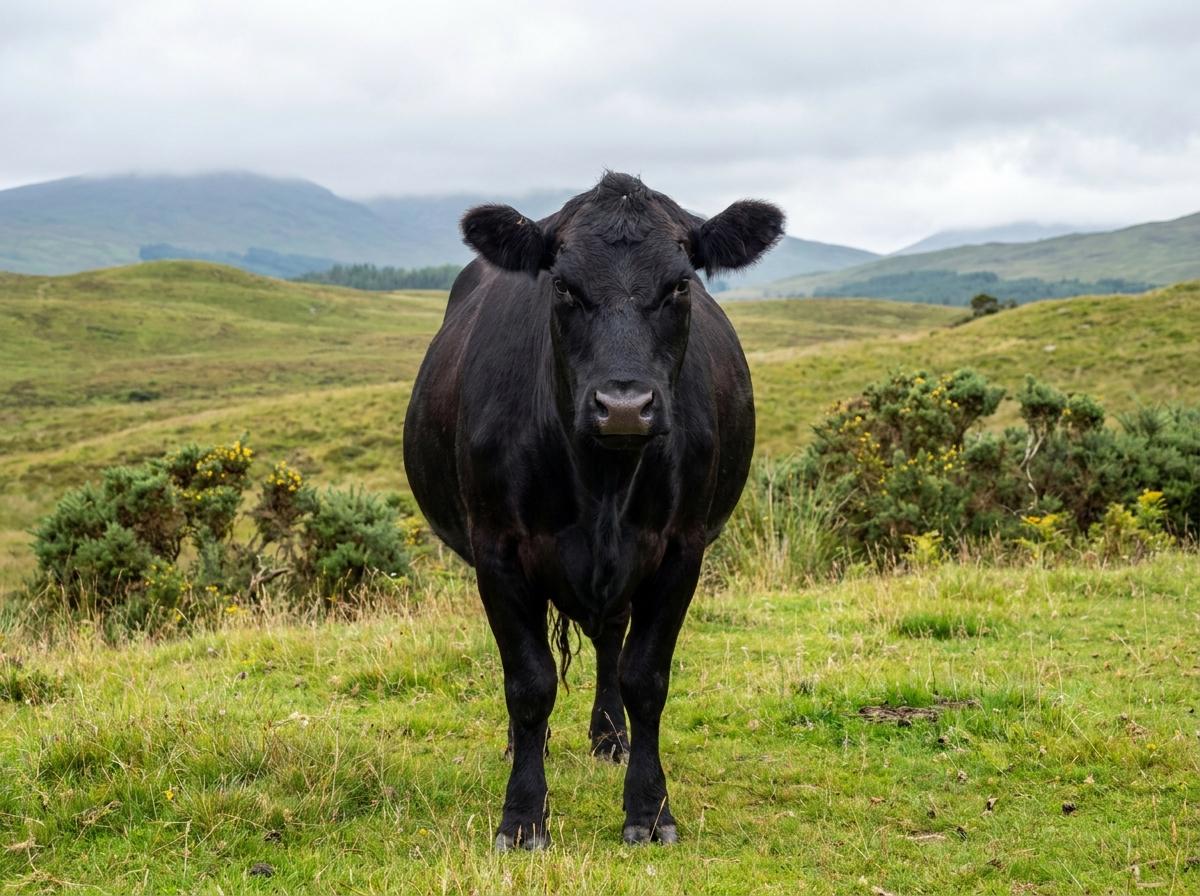
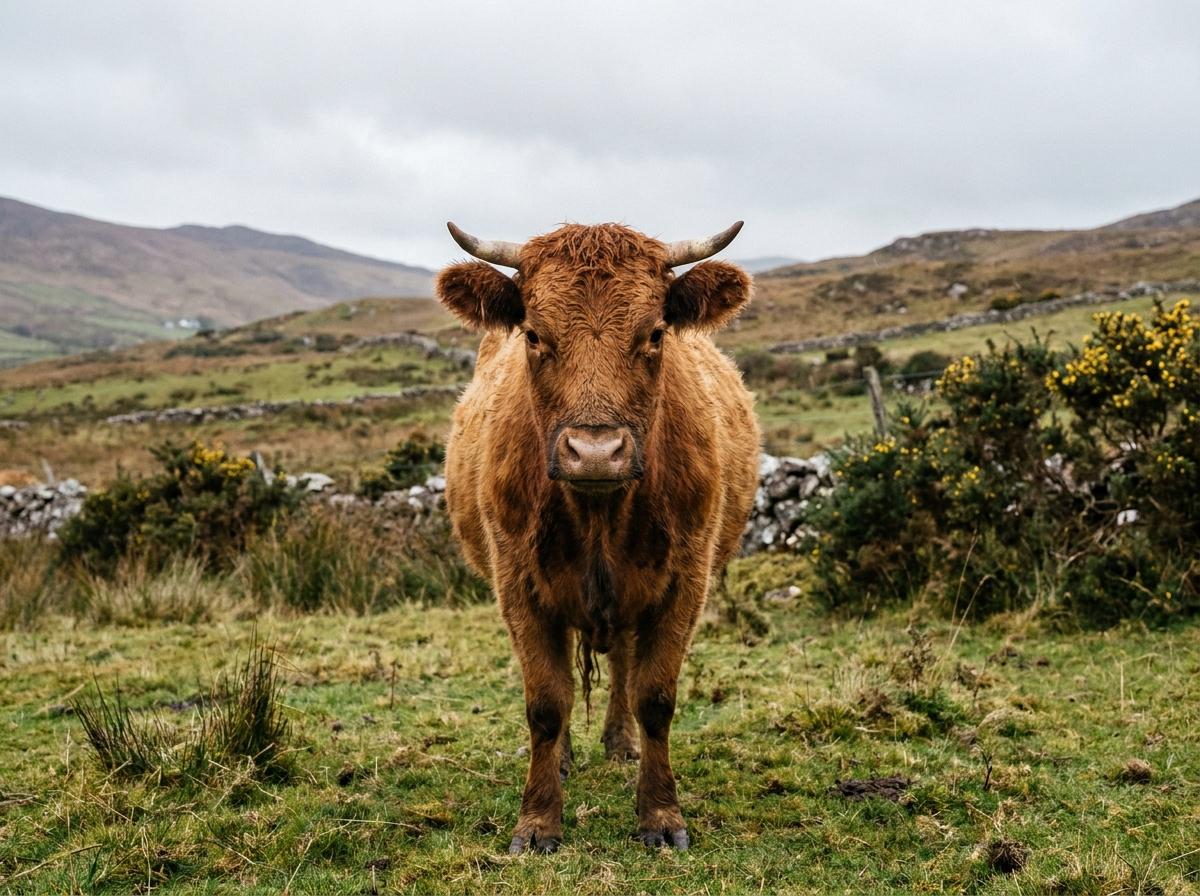
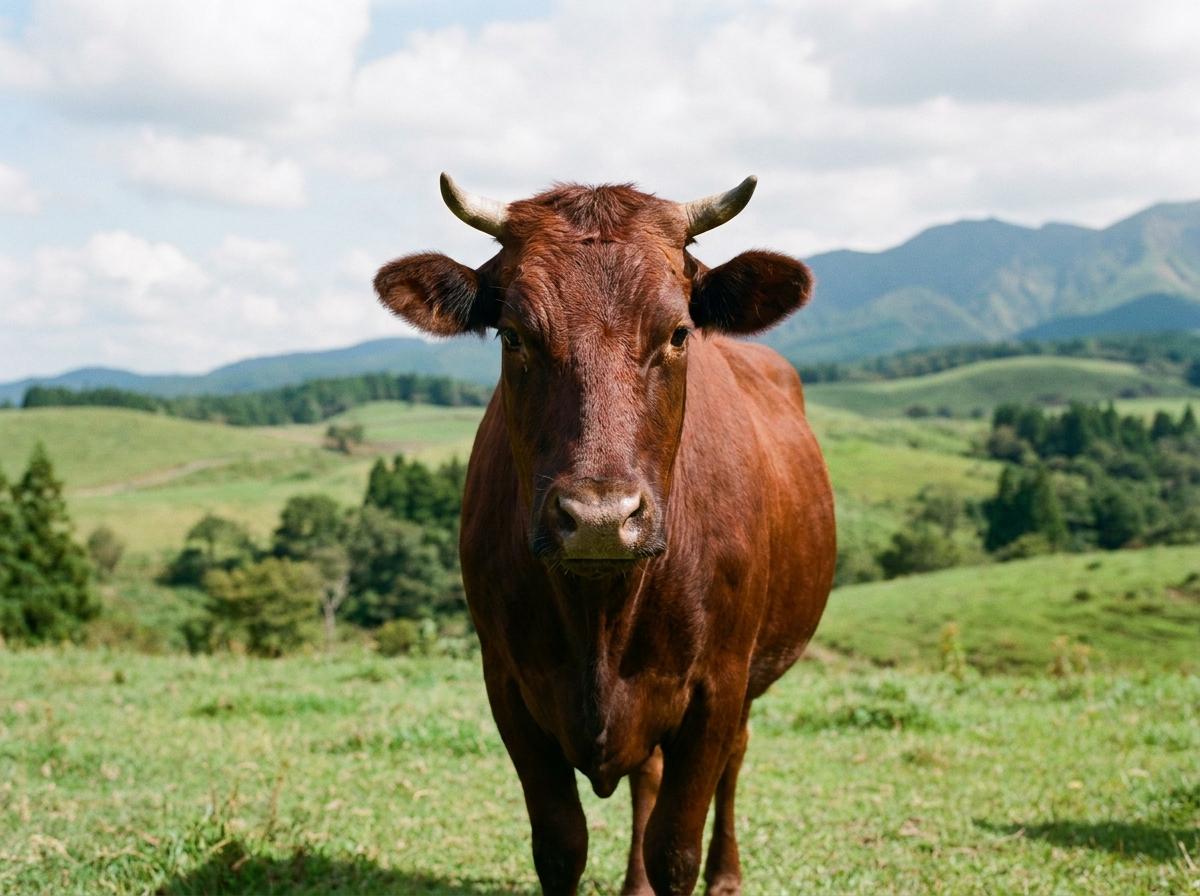
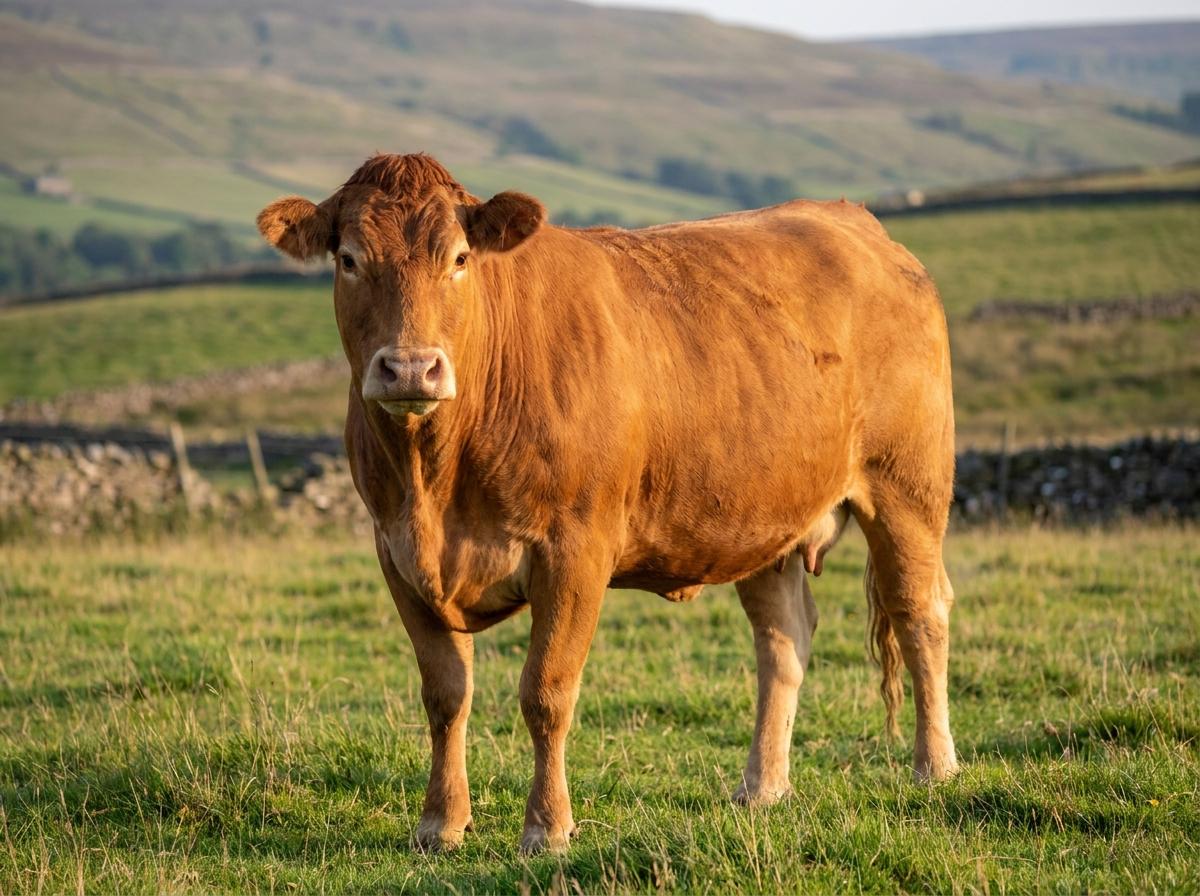
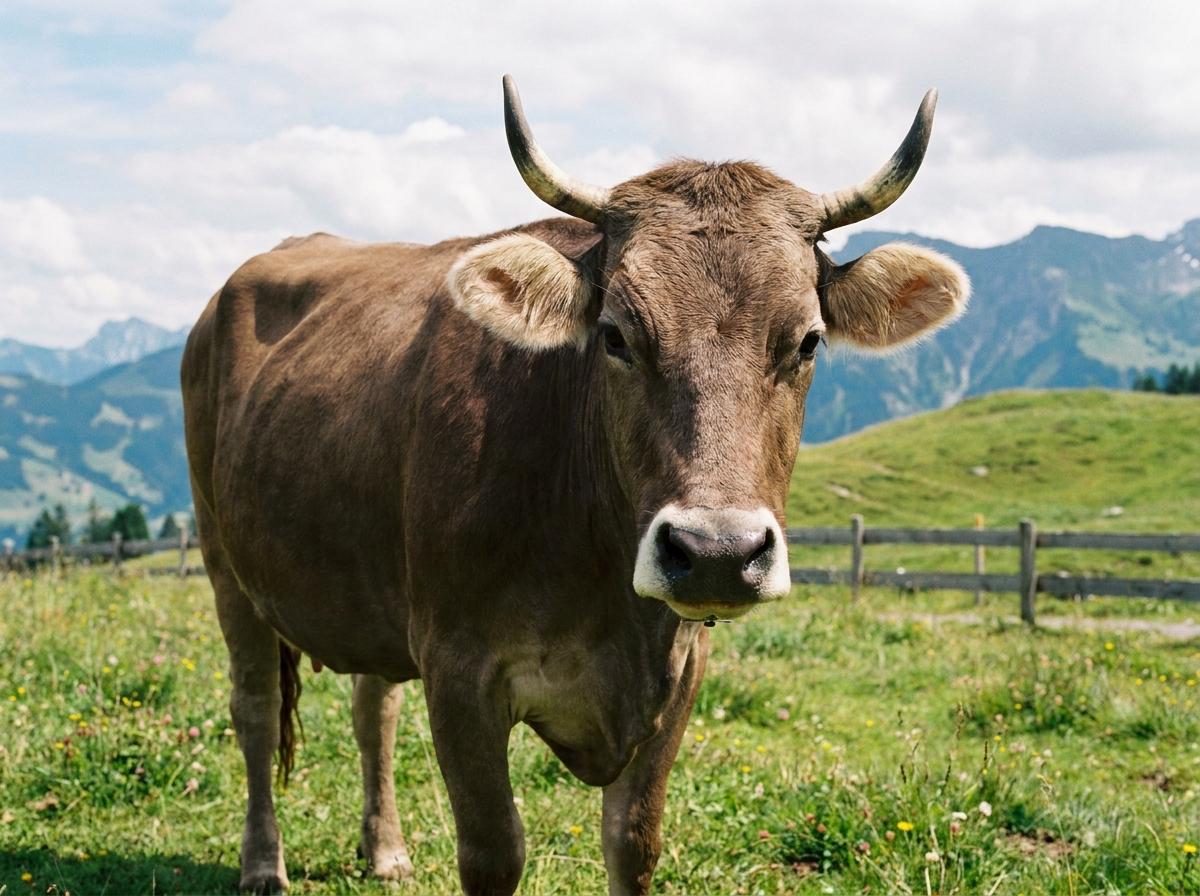
A Braunvieh is a solid-colored brown animal, and the color runs across a range. Oklahoma State University describes the breed as various shades of brown, predominantly a mousy brown, but ranging from a light brown with grey through to a very dark brown. There are a few diagnostic details worth learning to spot.
- A pale muzzle ring. The border of the muzzle is very light, forming a distinct pale ring around an otherwise dark nose. This light ring is one of the clearest field markers of the breed and shows up in the close-up above.
- Dark points and a light poll. The lower legs, the switch of the tail, and the area around the eyes tend to be darker, while the poll (the top of the head) is often lighter. Many animals also show a faint lighter stripe running along the spine, called a dorsal stripe.
- A solid, uniform coat. This is not a spotted or broken-colored breed. A correct Braunvieh is one even shade of brown with no large white patches.
- A sturdy, medium-large frame. The animal is deep-bodied and well-muscled without being coarse, built on the strong, correct feet and legs the breed is known for.
Adult cows weigh roughly 1,200 to 1,500 pounds and bulls roughly 2,100 to 2,500 pounds, as commonly cited. That places the Braunvieh as a moderate to medium-large beef animal rather than one of the very largest continental breeds. Both horned and polled (naturally hornless) animals occur, and many US breeders now select for polled genetics.
Uses and what the breed is known for
In the United States the Braunvieh earns its keep as a maternal and beef breed, and its reputation rests on a handful of practical strengths.
Sound structure. Generations of natural selection in the Swiss Alps produced an animal with correct feet and legs and, in the females, sound udder structure and capacity. In a beef cow that has to walk, graze, and raise a calf every year, feet and udders are exactly the traits that determine how long she stays in the herd, and the breed is specifically noted for both.
Maternal ability and fertility. Braunvieh females are early maturing and fertile, and the breed is valued for calving ease, milking ability, and mothering. Those milk-behind-them dairy roots translate into cows that raise heavy calves. Bulls are described as fertile, capable breeders from around 12 to 14 months of age.
Moderate size and feed efficiency. In US commercial settings the Braunvieh is often valued for a moderate mature size, feed efficiency, and calm, easy handling. A cow that stays a sensible size and converts feed well is cheaper to keep, which matters as much as raw growth.
Crossbreeding value. The breed is used heavily as a crossing sire and dam line to add structure, bone, muscling, and hybrid vigor (heterosis) to commercial and purebred herds. This is one of the main ways US producers use Braunvieh genetics, and the Braunvieh Association of America positions the breed squarely around this contribution to the wider beef industry.
If you are weighing hardy, forage-efficient cattle, it is worth comparing the Braunvieh against other rugged breeds. The Highland cattle pillar covers a very different kind of hardy mountain animal, and the Maine-Anjou pillar covers a larger continental maternal and terminal breed, so the two make useful points of comparison.

Temperament
Braunvieh are widely described by breeders and handlers as calm and docile, which fits a breed with a long history of close management and dairy handling. We flag that as practitioner observation rather than a formally measured trait. As with any cattle, disposition varies with genetics, handling, and how much low-stress stockmanship the animals are used to, and a bull in breeding season is a different animal from a quiet cow. Calm temperament is a real selling point of the breed, but always judge the individual animal in front of you rather than assuming it from the breed name.
Husbandry and care
A moderate-sized, hardy beef and maternal breed is a relatively manageable animal to keep, but “hardy” is not the same as “no management.” The headlines below cover the structure of good care. For medical decisions, always defer to a veterinarian who can see the animals and knows your region.
Grazing and feeding
The Braunvieh’s reputation for feed efficiency and moderate size makes it well suited to forage-based systems, but cattle still need enough quantity and quality of feed to hold body condition, breed back on time, and raise a calf. Cows have the highest nutritional demands in late pregnancy and early lactation, and a cow that loses too much condition will breed back late or not at all. Provide adequate forage or supplementation for the stage of production, constant clean water, and appropriate minerals for your soils and forages.
Shelter and handling
These are cold-tolerant mountain-origin cattle, so the priority in most climates is shade and water in heat rather than heavy housing in cold. Dry footing and clean handling facilities protect the sound feet the breed is prized for. The breed’s calm disposition makes low-stress handling straightforward, which is easier on both the cattle and the people.
Breeding and herd health
Take advantage of the breed’s fertility and calving ease by keeping a defined breeding season and culling on real records rather than impressions. A working herd-health program (parasite control suited to your climate and grazing, a vaccination schedule your veterinarian recommends, and attention to feet and udders) keeps a maternal herd productive. Keeping clear records of calvings, weights, treatments, and breeding lets you make selection and culling decisions on evidence. Creatures is built to hold exactly those records, and the “Do this next” section below shows how to start.
Size, weight, and lifespan
Adult Braunvieh cows weigh roughly 1,200 to 1,500 pounds and bulls roughly 2,100 to 2,500 pounds, according to Oklahoma State University, which makes the breed moderate to medium-large among beef cattle. There is no reliable breed-specific published lifespan figure, so treat productive life the way you would for any well-managed beef cow: a good, sound maternal cow can stay productive in the herd for many years and multiple calves before age, feet, udder, or fertility retire her. Longevity is in fact one of the practical arguments for the breed, since sound feet and udders are what let a cow keep producing calves rather than being culled early.
Cost and availability
Braunvieh is an established but relatively uncommon beef breed in North America, so pricing behaves like it does for any registered seedstock: it tracks the individual animal rather than a fixed breed rate. Commercial and crossbred Braunvieh-influenced calves sell into the ordinary feeder and commercial cattle market at prices set by weight and current market conditions. Registered breeding stock, and especially proven bulls and cows with real performance and structural data behind them, command more, and a genetics-quality animal will cost well above a commercial one.
Because there is no single public “Braunvieh price,” be skeptical of any source that quotes one flat figure for the breed. The honest answer is that a commercial Braunvieh-cross animal prices like other commercial cattle of the same weight and quality, while registered seedstock is priced individually on its records and pedigree. The practical move is to see current listings and talk to breeders directly, both of which you can do below.

Buying considerations
Because Braunvieh sits next to the dairy Brown Swiss in so many people’s minds, the first job when buying is to be clear about what you are actually buying and why.
- Confirm it is beef Braunvieh, not Brown Swiss. If you want a maternal beef animal, make sure the pedigree traces to Braunvieh Association of America beef and dual-purpose lines, not to dairy Brown Swiss. Ask what the herd selects for.
- Buy on feet, udder, and records. The breed’s whole case rests on structural soundness and maternal traits, so inspect feet and legs, udder attachment and teat placement, and ask for calving history, weaning weights, and any performance data. A breed known for soundness should come with evidence of it.
- Match the animal to your system. For a commercial crossing program, hybrid vigor and structure matter most. For a purebred or seedstock herd, registration status and documented performance matter most. Decide which you are before you shop.
- Verify registration and health status. For registered stock, confirm the paperwork with the Braunvieh Association of America. Confirm the herd’s health protocols and any testing relevant to your region.
- Check temperament in person. Calm handling is a breed strength, but individual animals vary, so watch how the cattle move and handle before you commit.
You can browse current Braunvieh listings on the Creatures marketplace and look for breeders and farms in the Creatures directory.
Frequently asked questions
Is Braunvieh the same as Brown Swiss?
No. They share the same Swiss brown roots, but they diverged over a century ago. Braunvieh imported into the United States between 1869 and 1880 was declared a dairy breed in 1890 and selected purely for milk, becoming the American Brown Swiss. The Braunvieh registered in the United States today comes from later imports (starting in 1983) and is a beef and maternal breed.
What is Braunvieh cattle used for?
In the United States the Braunvieh is used as a maternal and beef breed and as a crossing line to add structural soundness, muscling, and hybrid vigor to commercial and purebred herds. In parts of Europe the breed is still dual-purpose or predominantly dairy.
What color are Braunvieh cattle?
Solid brown, ranging from a light mousy grey-brown through to dark brown, with a distinctive pale ring around a dark muzzle, darker points on the legs and eyes, and often a faint lighter dorsal stripe. It is not a spotted or broken-colored breed.
How big do Braunvieh get?
Cows weigh roughly 1,200 to 1,500 pounds and bulls roughly 2,100 to 2,500 pounds, which makes them a moderate to medium-large beef animal.
Are Braunvieh cattle good for crossbreeding?
Yes, crossbreeding is one of the breed’s main uses in the United States. Braunvieh genetics are used to add bone, structural soundness, muscling, and hybrid vigor to commercial and purebred herds, and the breed’s maternal and fertility traits make it useful on the female side as well.
Are Braunvieh a rare breed?
They are established but relatively uncommon in North America compared with mainstream beef breeds. The Braunvieh Association of America (organized in 1984) registers the breed in the United States. Worldwide the brown-cattle family the breed belongs to is very large, but the beef Braunvieh you find at a North American farm gate is a smaller, more specialized pool.
Do this next on Creatures
Whether you are researching the breed, shopping for beef Braunvieh or crossbreeding genetics, or already running a herd, Creatures is the records, marketplace, and directory layer to do it in one place.
Find stock. Browse Braunvieh cattle on the marketplace and search trusted breeders and farms in the Creatures directory. New to buying online? See making an offer on a listing.
Get alerted. Beef Braunvieh can be uncommon, so set a free Braunvieh listing alert and we will tell you when one is posted. No account needed to start, and you can read more in saving searches and using your watchlist.
Add your cattle. Already running Braunvieh? Create a free animal profile in a few minutes, no account needed to start. The walkthrough is in adding an animal to Creatures.
Track weights and health. Track calving, weights, and health records on Creatures. The record sheet opens for any visitor to look around, and you will need a free account to save what you enter. See adding a record for the full how-to.
List your operation. Run a herd or ranch? Add your breeder or ranch profile (no account needed to start) and get listed in the breeder directory so buyers looking for beef Braunvieh can reach you. If you manage the operation with others, see creating an organization and adding your team.
Sell with confidence. Planning to sell stock? Learn how seller payout works before you list.
Still comparing breeds? See how the Braunvieh stacks up against other rugged, forage-efficient cattle on the Australian Friesian Sahiwal pillar and the Miniature Texas Longhorn pillar, or step back to the full Creatures cattle species page.