

Rhodebar
The Rhodebar is a rare British autosexing chicken, a red-gold, barred version of the Rhode Island Red whose day-old chicks can be told apart by sex on sight. That single trick is the reason most people search the breed: cockerels hatch as paler, yellowish chicks with a large diffuse head spot, while pullets hatch darker and more chipmunk-striped, so a keeper can sort them at the brooder instead of guessing for weeks. Beyond that party piece, the Rhodebar is a medium, dual-purpose utility fowl that lays a respectable number of light brown eggs and carries the calm, workmanlike character of its Rhode Island Red ancestry. It is also genuinely scarce today and sits as a priority breed on the UK conservation watchlist. Below is what the breed is, where it came from, exactly how the autosexing works, what it looks like and lays, and what to check before you take one on.

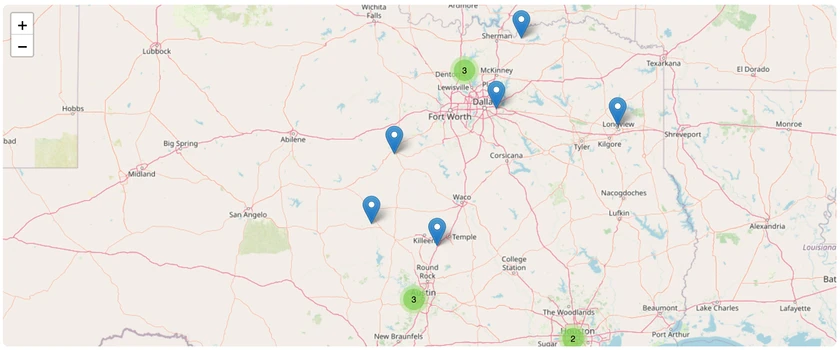
Browse listings, public profiles, breeders, or add your animal.
What is a Rhodebar chicken?
The Rhodebar is an autosexing breed built to carry the useful qualities of the Rhode Island Red, the barnyard workhorse that was arguably the most commercially important chicken of the mid twentieth century, in a package where the chicks announce their own sex the day they hatch. The Rare Breeds Survival Trust (RBST), the UK charity that monitors native livestock and poultry, describes it plainly as “an auto-sexing breed” and “a medium sized breed similar in proportions to a utility Rhode Island Red.”
“Autosexing” is the whole point of the name. The Rhodebar belongs to a family of British breeds whose names end in “-bar” (Legbar, Welbar, Brussbar, Wybar, and so on), all of which share one engineered feature: the sex of a newly hatched chick can be read from the color and markings of its down. That is a real practical advantage. Ordinary chicks cannot be reliably sexed by eye at hatch, so keepers normally wait weeks for combs, feathering, and behavior to give the game away, or pay for a trained chick sexer. An autosexing breed lets you sort cockerels from pullets at the brooder on day one, with no wing-tipping, vent-sexing skill, or waiting.
If you are still comparing options, the broader Creatures chicken species page is a good place to weigh the Rhodebar against other breeds, and two useful points of contrast in the same rare-and-heritage space are the Egyptian Fayoumi, an ancient, self-reliant Egyptian landrace, and the Azteca Bantam, a small ornamental fowl. The Rhodebar sits apart from both as a utility layer bred for a genetic convenience rather than for looks or landrace hardiness.
Origin and history
The story starts earlier than the Rhodebar itself, with the science that made every “-bar” breed possible. Working at the Genetical Institute of Cambridge University, the geneticist Reginald Punnett (the same Punnett of the Punnett square) and the poultry breeder Michael Pease created the first autosexing chicken, the Cambar, in the late 1920s, by crossing Golden Campines with Barred Plymouth Rocks. They had found that when the sex-linked barring gene was bred into a colored (non-black) plumage, the resulting chicks could be sexed at hatch by down pattern. That Cambridge program produced a run of autosexing breeds over the following decades and established the recipe that the Rhodebar would later follow.
The Rhodebar’s own first cross, though, was made outside Cambridge. According to the RBST, the earliest autosexing Rhode Island Red type was developed in the early 1940s at the University of British Columbia in Canada, using a crossing program of Barred Plymouth Rocks and Rhode Island Reds. The motive was straightforward: the Rhode Island Red was the dominant commercial layer of the era, so an autosexing version promised the same productivity plus day-old sexing.
The British Rhodebar, the bird behind the standard most keepers mean today, came a little later. The RBST records that the UK version was created in the late 1940s by crossing a Danish strain of Rhode Island Red with the Gold Brussbar, itself one of the Cambridge autosexing breeds (a Brown Sussex and Barred Rock derived fowl developed by Punnett and Pease). The Poultry Club of Great Britain attributes an early British strain to a Mr B. de H. Pickard of Sussex, whose birds were shown to the Club for standardisation in 1951. The breed was standardised in 1952.
So the accurate lineage is a two-part one. The autosexing principle and one of the Rhodebar’s British parent breeds came out of Punnett and Pease’s Cambridge program, while the first Rhode Island Red autosexing cross was Canadian, and the standardised British Rhodebar was assembled from a Danish Rhode Island Red line and the Gold Brussbar at the end of the 1940s. It is worth being precise about that, because a lot of casual write-ups collapse it into a single “developed at Cambridge” line, which is not quite what the breed records say.
How the autosexing works
This is the section most Rhodebar searchers actually want, so it is worth doing properly rather than hand-waving.
Autosexing runs on the sex-linked barring gene, written B. In birds the sex chromosomes are the reverse of mammals: males carry two Z chromosomes (ZZ) and females carry one Z and one W (ZW). The barring gene sits on the Z chromosome. That asymmetry is the entire mechanism. A male chick, with two Z chromosomes, can carry two doses of barring (B/B). A female chick, with a single Z, can carry only one (B/-). The gene is dosage sensitive, so two doses lighten and pattern the down more strongly than one.
The visible result at hatch is a clear split. In the Rhodebar, as the RBST puts it, “males are yellow and females have dark stripes.” In more detail, and consistent with how sex-linked barring behaves across barred breeds, the double-dose males hatch paler and more washed out, with broader, more diffuse markings and a large, blurry pale spot on the top of the head. The single-dose females hatch darker, with a more defined chipmunk striping down the back, a visible eye line, and a smaller, sharper head spot. The head spot difference alone (big and diffuse on cockerels, small and crisp on pullets) is one of the most reliable tells.

A couple of honest caveats belong here. Autosexing is not the same as sex-linking. A one-off sex-linked hybrid (crossing two specific parent breeds) also gives sexable chicks, but only in that first generation; autosexing breeds like the Rhodebar breed true, so two Rhodebars produce autosexing Rhodebar chicks generation after generation, which is what makes them useful to a small breeder rather than a hatchery. And accuracy is high but not automatically perfect. The early Canadian Rhodebar work reportedly left around a fifth of chicks hard to call at day-old, and reading down color is a skill that improves with a trained eye and good light. Treat autosexing as a strong, practical head start, not an infallible guarantee on every single chick.
What a Rhodebar looks like
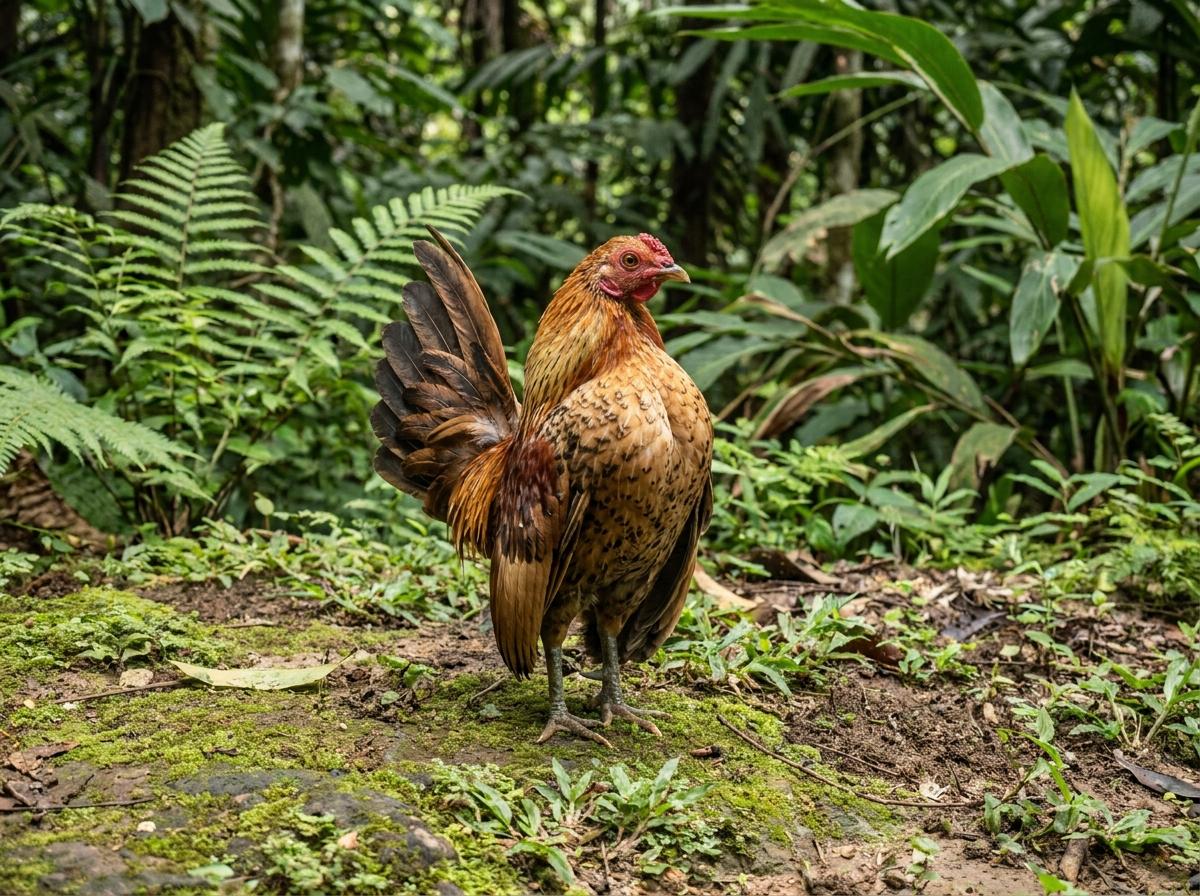
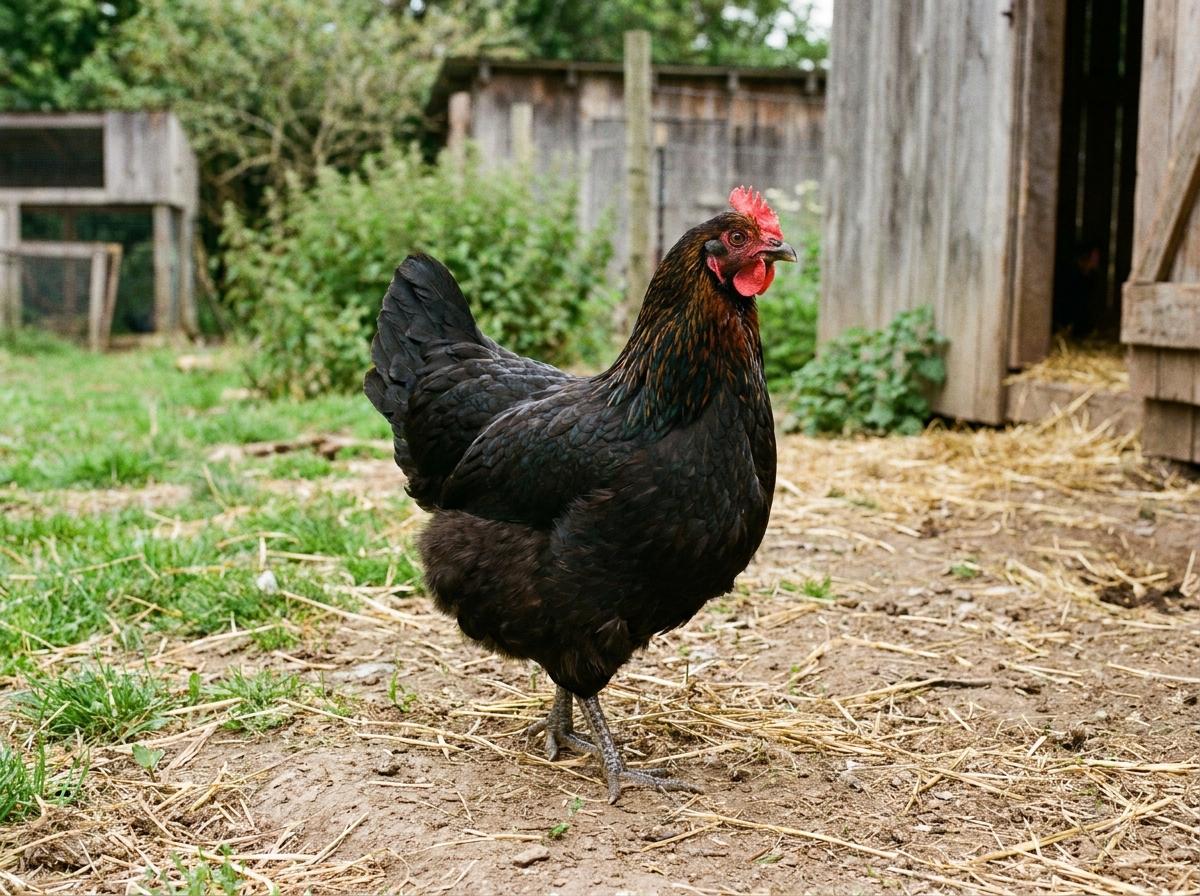
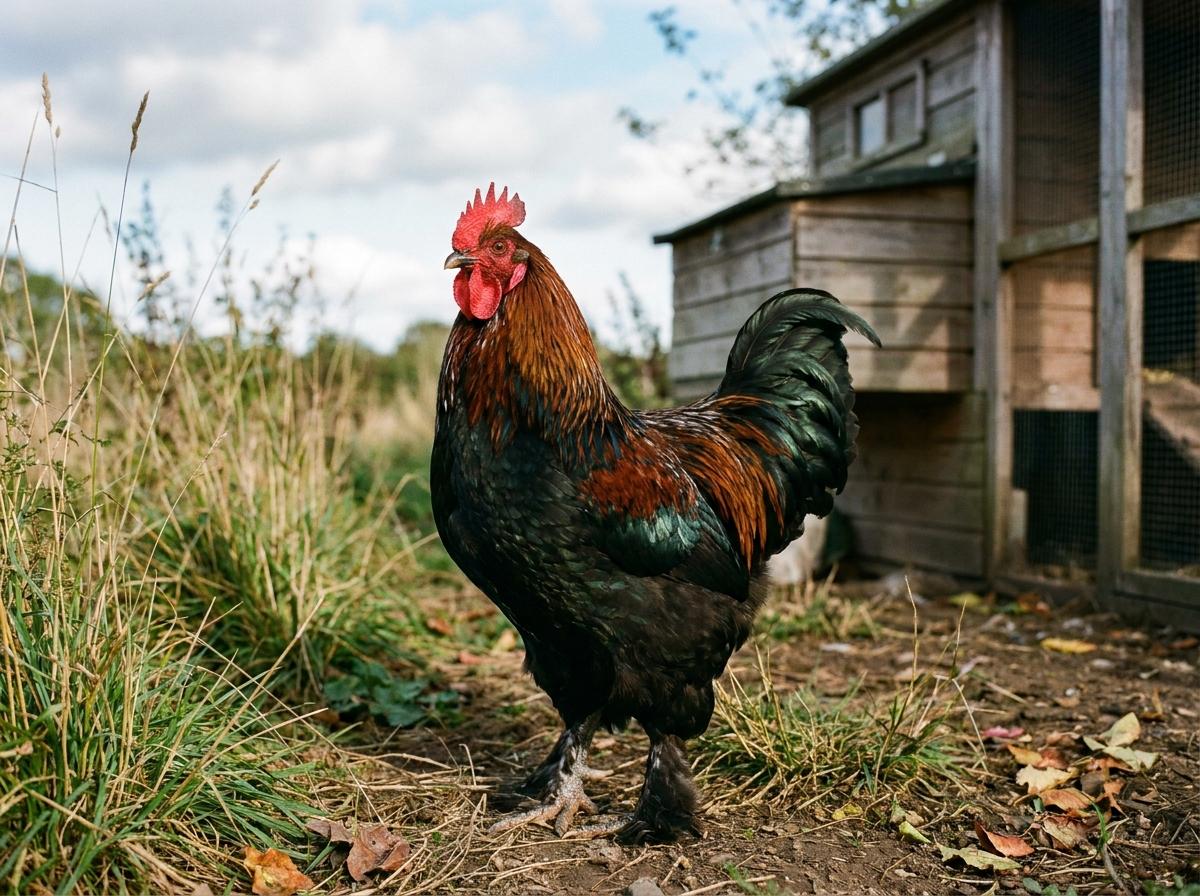
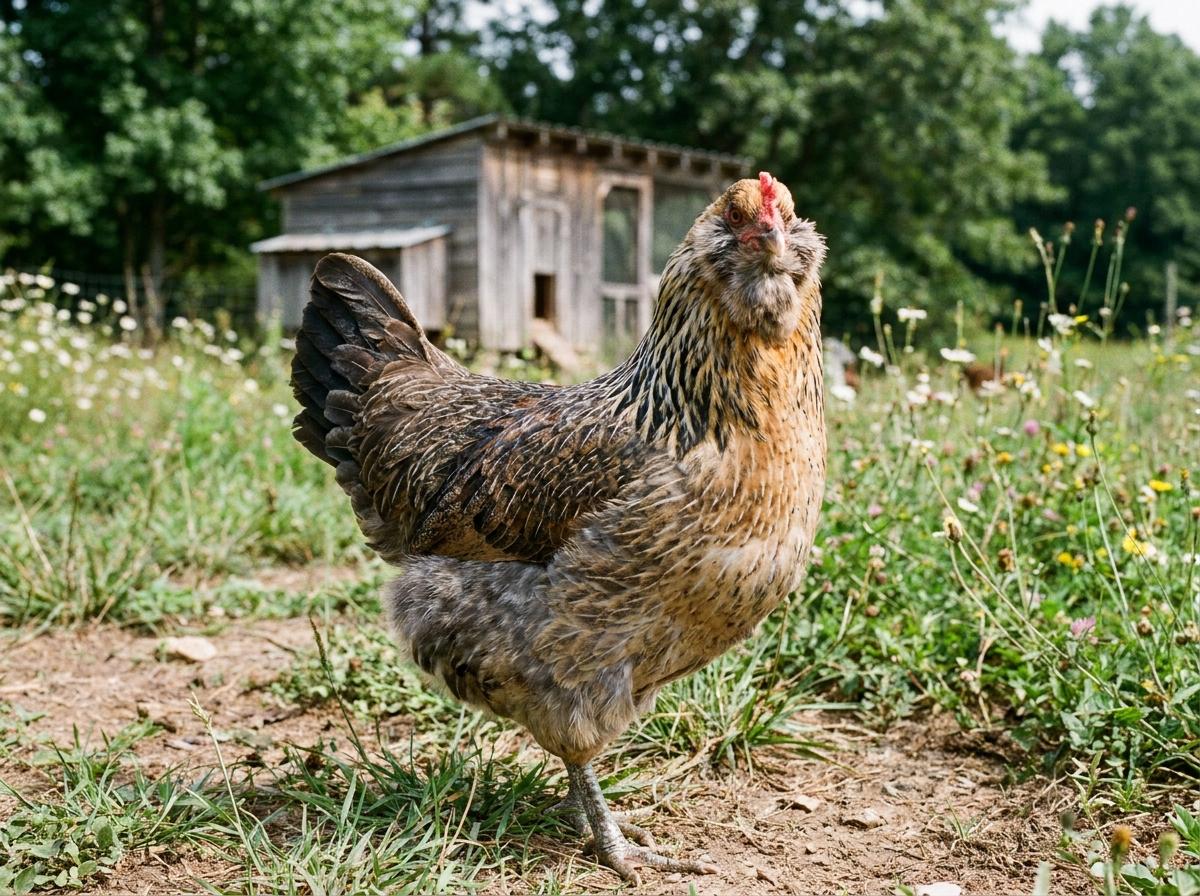
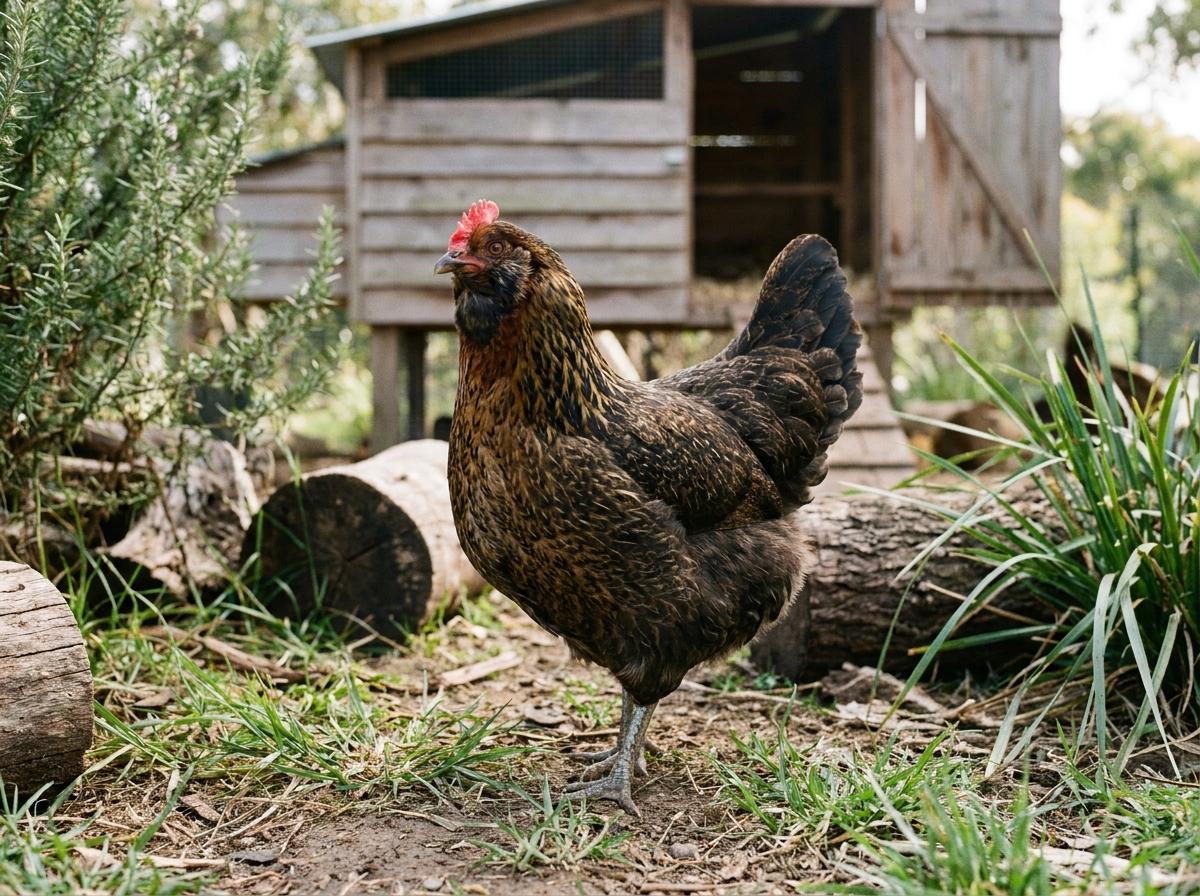
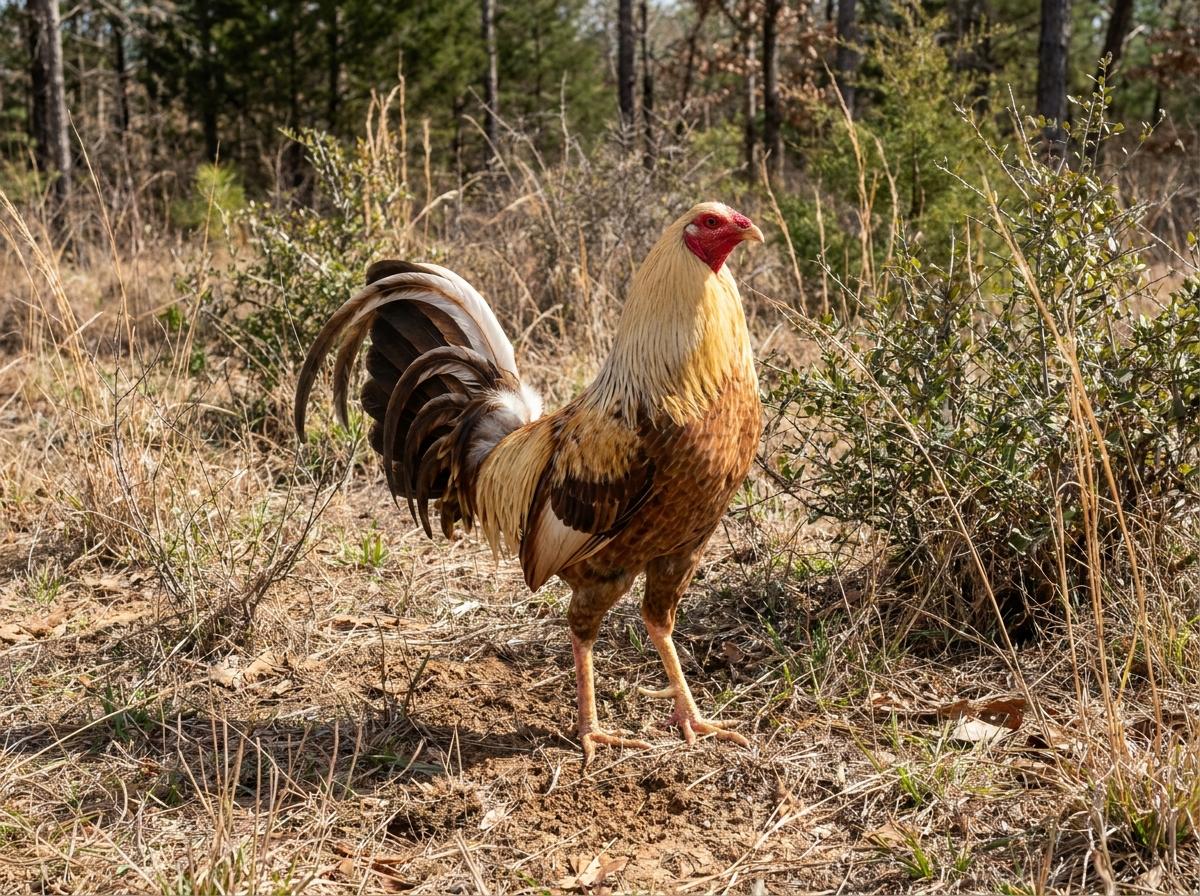
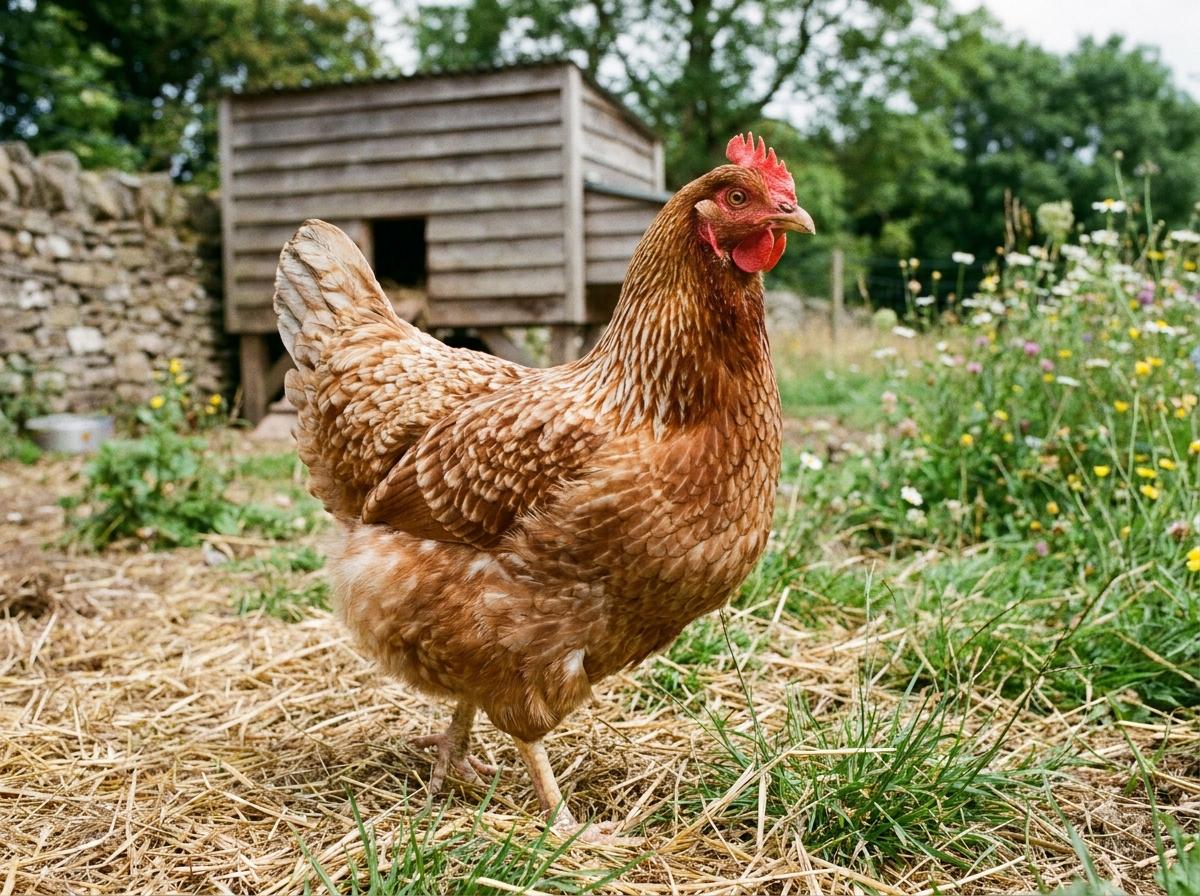
The adult Rhodebar reads at a glance as a red-gold chicken with barring laid over the top, a genuinely handsome and slightly unusual combination.
- Reddish-buff, red-gold ground color. The base plumage is the warm red-gold you would expect from the Rhode Island Red side of the family, rather than the brick-red of a modern show Rhode Island Red.
- Barring throughout. Over that red-gold base runs the characteristic sex-linked barring, giving a soft, flecked, banded pattern across the body. The RBST describes the plumage as “red with characteristic barring throughout.”
- Barred tail. The tail is barred black and silver, the most obviously “barred” part of the bird.
- Utility body and single comb. It is a medium, deep-bodied dual-purpose fowl in the proportions of a working Rhode Island Red, with a single upright red comb, red wattles and earlobes, and clean (unfeathered) yellow legs.
On size, the British standard puts a Rhodebar cock at around 3.85 kg (about 8.5 lb) and a hen at around 2.9 kg (about 6.4 lb). A bantam Rhodebar exists but is, in the RBST’s words, “very rare”; standard bantam weights run near 1,020 g for the male and 790 g for the female.

Eggs and production
The Rhodebar was bred as a utility layer, and it still earns that description. The RBST states the breed lays roughly 180 to 200 light brown eggs a year. That is a solid, dependable output for a heritage dual-purpose fowl, well short of a purpose-built commercial hybrid but very reasonable for a traditional breed you can also breed true at home.
Two things are worth setting expectations on. First, egg color is light brown, not the blue or green that the better-known autosexing Cream Legbar produces, so if colored eggs are your goal the Rhodebar is not that bird. Second, as with any breed, real-world laying depends on the individual line, feeding, day length, age, and how heavily a particular strain has been kept for looks versus production. Take 180 to 200 as a healthy typical range for well-kept utility stock rather than a promise for every hen.
As a dual-purpose breed, surplus cockerels also carry enough frame to be raised for the table in the traditional way, which is part of why an autosexing utility fowl was attractive in the first place: you can direct cockerels and pullets to their best use from day one.
Temperament
Rhodebars are generally reported by keepers as calm, hardy, and manageable birds, in keeping with the steady Rhode Island Red character behind them, and they tend to be active foragers that do well with space to range. We flag this as the consistent practitioner and breed-club impression rather than a formally studied trait, because there is little scientific literature on the behavior of a breed this rare. As always, individual temperament varies with hatching source, handling, space, and how much time the birds get with people, and a mature cockerel in breeding condition is a different proposition from the hens.
Keeping Rhodebars
A Rhodebar is, in day-to-day terms, a standard traditional dual-purpose chicken, and it needs what any such bird needs rather than anything exotic. The headlines below cover the shape of good management; defer any medical decision to a veterinarian who can see the bird.
- Housing. Dry, draft-free, predator-proof housing with good ventilation, clean dry bedding, perches, and nest boxes, plus enough space to avoid crowding and feather picking. As active foragers, Rhodebars appreciate room to range where it is safe to give it.
- Feeding. A complete age-appropriate feed (chick starter, then grower, then a layer ration for hens in lay) with constant access to clean water, plus grit and, for layers, a calcium source such as oyster shell. Treats and kitchen scraps should stay a small share of the diet so the balanced feed does the real work.
- Health. Routine backyard-poultry care applies: a parasite plan suited to your setup (worms, plus red mite and lice checks), clean feet and vent, and the biosecurity and any vaccination or notifiable-disease rules that apply where you live. Keep clear records of hatches, lay, treatments, and any health events so decisions rest on evidence rather than memory. You can keep those records, set worming and vaccination reminders, and store a hatch and breeding history for each bird on a free Creatures animal profile.
Because the breed is scarce, anyone keeping Rhodebars is also, in a small way, a custodian of the genetics, so keeping good breeding and hatch records matters more than it would for a common backyard hybrid.
Rarity and conservation status
The Rhodebar is genuinely rare. It never became a mass commercial success (the arrival of specialized modern laying hybrids sidelined the traditional autosexing utility breeds), and it survives today through a relatively small circle of enthusiasts and heritage breeders.
Its conservation standing is formal. The Rhodebar is listed by the Rare Breeds Survival Trust, and the RBST now classes it as a priority breed on its Watchlist. Since April 2024 the RBST has treated all native British chicken breeds as priority breeds, reflecting how thin the population base for traditional poultry has become. In practical terms that means genuine, standard-bred Rhodebars are not something you will casually find at every sale; sourcing takes a little effort and patience.

Cost and finding stock
Because the breed is rare, there is no single reliable published price for a Rhodebar, and we will not invent one. In practice, expect availability rather than headline price to be the real constraint: the number of breeders keeping standard-bred stock is small, hatching eggs and chicks appear seasonally, and you may need to join a waiting list or travel to a specialist heritage breeder rather than buy locally on demand. Prices for heritage and conservation-listed poultry generally run above commercial hybrids, and point-of-lay pullets cost more than day-old chicks or hatching eggs, but the exact figure depends heavily on your country, the breeder, and whether you are buying eggs, chicks, or grown birds.
A few things to check when you do find stock:
- Confirm it is a true, standard-bred Rhodebar, not a random red barred crossbred sold under the name. Genuine autosexing behavior in the chicks and correct red-gold barred adult plumage are the signals.
- Buy from someone who keeps records. Hatch dates, lay figures, and any health history tell you far more than a photo.
- Ask about the line and the autosexing accuracy they actually see at hatch, since strains vary.
- Sort out biosecurity and any local disease or movement rules before the birds arrive.
You can browse current listings on the Creatures marketplace and look for breeders and farms in the Creatures directory. Because standard-bred stock is scarce and often seasonal, a saved listing alert (below) is usually the most practical way to catch one when it appears.
Frequently asked questions
What does “autosexing” mean in a Rhodebar?
It means the sex of a chick can be told from its down color and markings at one day old. Rhodebar cockerels hatch paler and yellower with a large diffuse head spot, while pullets hatch darker with clearer striping and a smaller, sharper head spot. Unlike a one-off sex-linked hybrid, autosexing breeds like the Rhodebar breed true, so the trait carries on generation after generation.
Why do Rhodebar cockerels and pullets look different at hatch?
Because the sex-linked barring gene sits on the Z chromosome and its effect depends on dose. Males (ZZ) can carry two copies of barring and hatch lighter; females (ZW) carry one and hatch darker. The difference in the pale head spot is one of the easiest tells.
What color eggs do Rhodebars lay, and how many?
Light brown eggs, roughly 180 to 200 a year for well-kept utility stock. They are not a blue or green egg breed.
Is the Rhodebar a rare breed?
Yes. It is genuinely uncommon and is listed as a priority breed on the Rare Breeds Survival Trust Watchlist, so finding true standard-bred stock takes some effort.
Is the Rhodebar the same as a Rhode Island Red?
No, but it is closely related. The Rhodebar was bred to carry the Rhode Island Red’s utility qualities while adding autosexing, using barred stock (Barred Plymouth Rock and the Gold Brussbar) in the cross. It shows red-gold plumage with barring rather than the solid deep red of a Rhode Island Red.
Are Rhodebars good for beginners?
They are calm, hardy, dual-purpose birds that are straightforward to keep, so the day-to-day care suits beginners. The catch is scarcity, not difficulty: sourcing genuine stock and, if you breed them, taking on a small conservation responsibility are the parts to go in with your eyes open.
Do this next on Creatures
Whether you are researching the breed, hunting for genuine stock, or already keeping Rhodebars, Creatures is the records, marketplace, and directory layer to do it in one place.
Find stock. Browse Rhodebars on the marketplace and search trusted breeders and farms in the Creatures directory. New to searching? See saving searches and using your watchlist.
Get alerted. Standard-bred Rhodebars are scarce and often seasonal, so set a free Rhodebar listing alert and we will tell you when one is posted. No account needed to start.
Add your bird. Already keeping Rhodebars? Create a free animal profile in a few minutes. The walkthrough is in adding an animal to Creatures. No account needed to start.
Track lay, hatches, and health. Track laying, hatch, and health records on Creatures. The record sheet opens for any visitor to look around, and you will need a free account to save what you enter. See adding a record, and set worming and vaccination nudges with reminders and upcoming care.
List your flock. Keep a heritage flock? Create a free breeder or farm profile so buyers searching for this hard-to-find breed can reach you, and read getting listed in the breeder directory. No account needed to start.
Sell with confidence. Planning to sell chicks, hatching eggs, or grown birds? Learn how seller payout works before you list.
If you keep a flock or farm, you can also list your operation in the Creatures directory so buyers searching for this hard-to-find breed can reach you.