Sebright
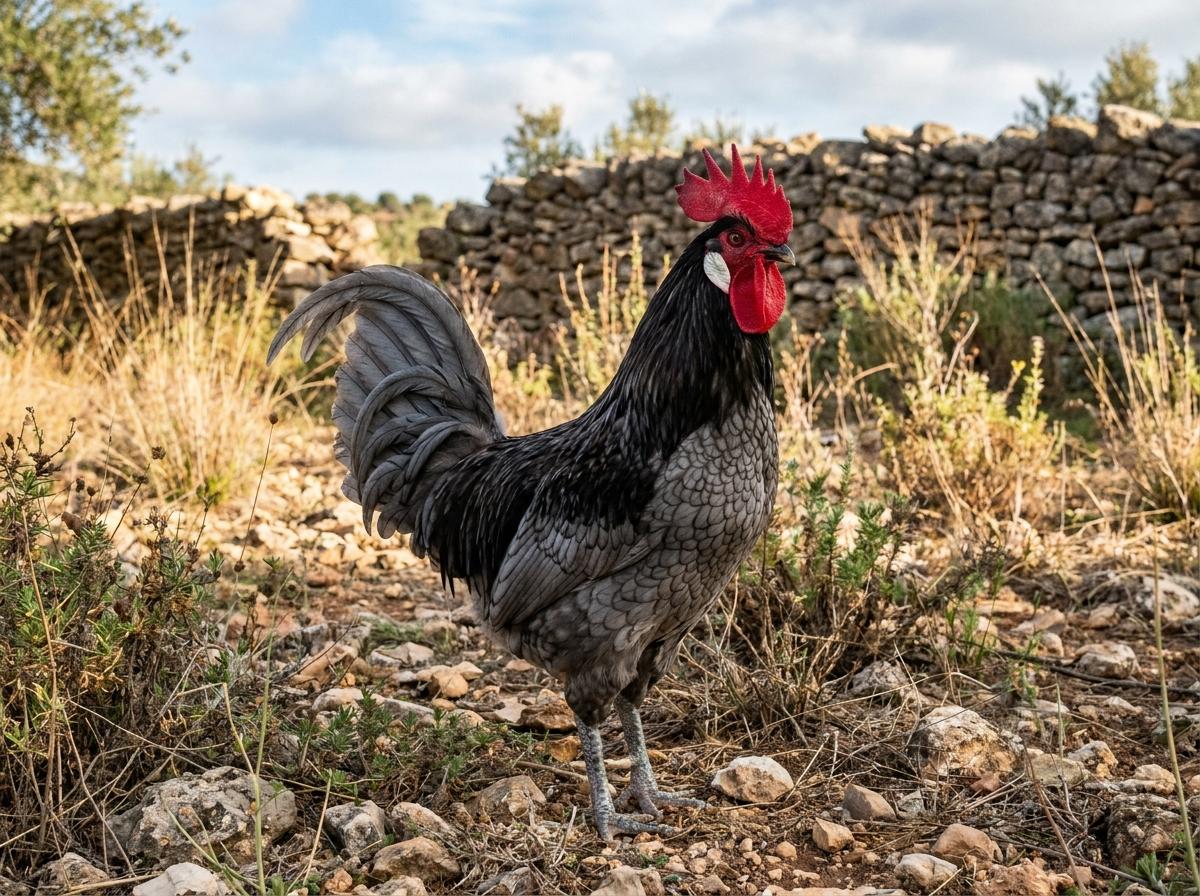
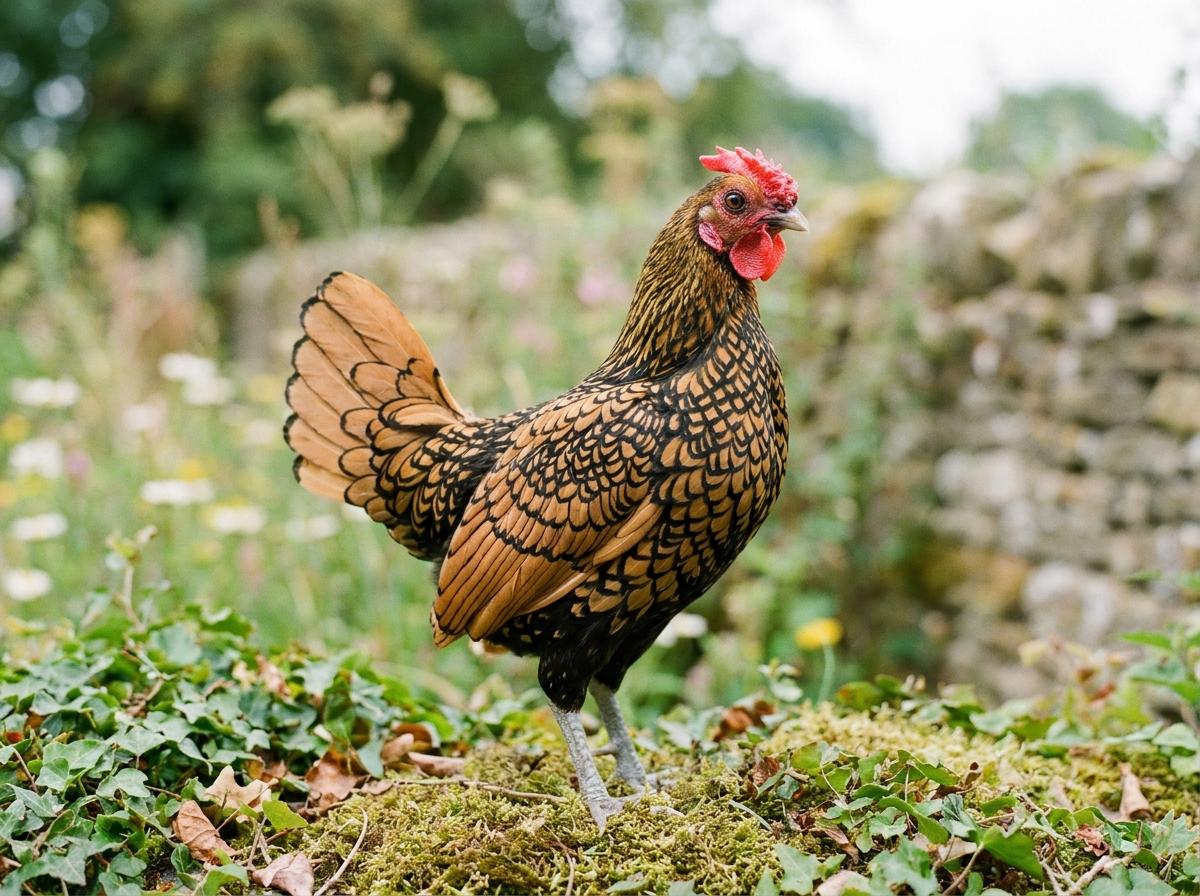
The Sebright is a true bantam chicken, meaning it has no large-fowl counterpart, developed in England by Sir John Sebright in the early nineteenth century. It is one of the classic exhibition bantams, recognized for tight rose combs, slate-blue legs, and crisp lacing around each feather. Gold and silver are the traditional varieties, with the ground color edged in black. Males are henny-feathered, lacking the long pointed hackle, saddle, and sickle feathers expected on most roosters, so both sexes have a rounded, finely patterned outline.
Sebrights are kept mainly for exhibition and ornamental flocks, not for meat or serious egg production. Their small size makes secure housing important: they fly well, slip through gaps, and are vulnerable to predators and rough larger chickens. Hens lay small white or cream eggs and are often unreliable sitters, so breeders commonly use incubators or broody hens of another breed. Producing good lacing and type takes patient selection, and some lines have fertility challenges linked to the henny-feathering trait. They do best with careful, dry management and a pen that accommodates their active nature.
Colors: Barred, Birchen, Black, Blue, Brown, Buff, Columbian, Crele, Cuckoo, Duckwing, Gold, Golden, Gold Laced, Laced, Lavender, Mille Fleur, Mottled, Partridge, Penciled, Porcelain, Red, Silver, Silver Laced, Spangled, Splash, Wheaten, White