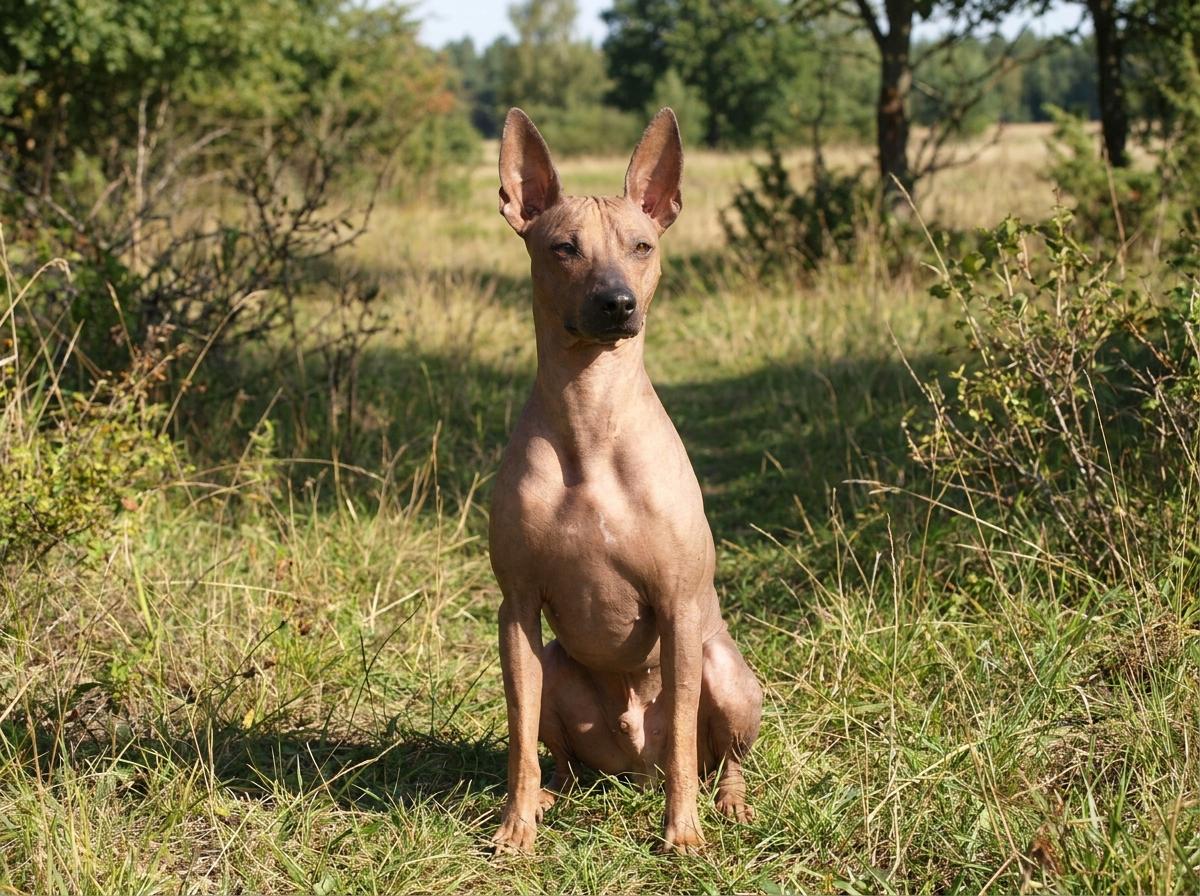
American Hairless Terrier
The American hairless terrier began as a hairless puppy born into a Rat Terrier litter in Louisiana in the 1970s. Selective breeding established a small, lively terrier with both hairless and coated varieties; unlike many hairless dog breeds, the hairless form is linked to a recessive gene and typically retains a normal set of teeth. The breed has a smooth outline, alert ears that may stand or tip, and the busy, ground-focused character of its ratting ancestry.
For people attracted to low-shedding dogs, the American hairless terrier can be easier to live with than many coated breeds, but it is not a guaranteed answer for allergies. The hairless skin needs protection from sun, cold, scrapes, and harsh bathing products; sweaters, veterinary-approved sun protection, and soft bedding are practical tools rather than decoration. Coated dogs require only light grooming. Like other terriers, these dogs benefit from training, chase outlets, and careful introductions to small pets. Responsible breeders monitor patellas, hips, cardiac health, and inherited eye issues such as primary lens luxation.
Colors: Apricot, Bicolor, Black, Black and Tan, Black and White, Black Mask, Blue, Blue and Tan, Blue Merle, Blue Roan, Blue Tick, Brindle, Brown, Brown and Tan, Brown and White, Chocolate, Cream, Dapple, Domino, Fawn, Fawn and White, Gold, Gray, Harlequin, Irish Marked, Liver, Liver Mask, Mantle, Mask, Merle, Mottled, Parti-Color, Piebald, Pink, Red, Red and White, Red Merle, Red Roan, Red Tick, Reverse Brindle, Roan, Sable, Saddle, Silver, Slate, Speckled, Spotted, Tan, Ticked, Tricolor, Tuxedo, White, Yellow