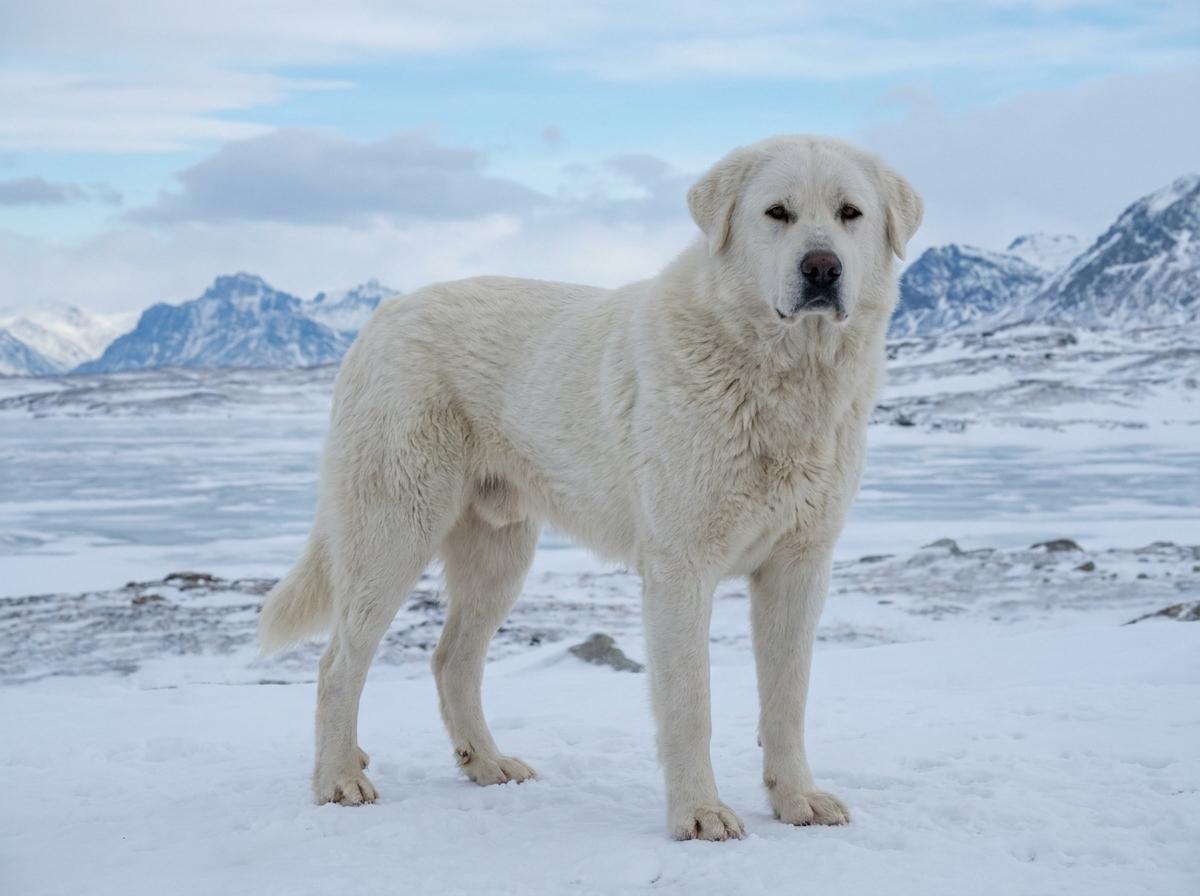
Argentine Polar Dog
The Argentine polar dog was a sled and freight dog developed by the Argentine Army for work at Antarctic bases. It was formed from northern sled breeds such as the Siberian husky, Alaskan malamute, Greenland dog, and related spitz-type stock, selected for pulling power, cold tolerance, and endurance on ice. These dogs hauled supplies, helped field parties travel between stations, and became part of Argentina's Antarctic logistics during the mid to late twentieth century.
The breed is considered extinct. Antarctic environmental rules required non-native dogs to be removed, partly to protect wildlife from disease and disturbance, and the remaining dogs did not establish a lasting mainland population after their return. There are no responsible puppy sources for an Argentine polar dog today; claims usually refer to historical animals or modern sled-dog crosses. For researchers and breed historians, the line is useful as a case study in purpose-built working dogs, polar exploration, quarantine limits, and how quickly a closed working population can disappear.
Colors: Albino, Apricot, Bicolor, Black, Black and Tan, Black and White, Black Mask, Blue, Blue and Tan, Blue Merle, Blue Roan, Blue Tick, Brindle, Brown, Brown and Tan, Brown and White, Chocolate, Cream, Dapple, Domino, Fawn, Fawn and White, Gold, Gray, Grey, Harlequin, Irish Marked, Leucistic, Liver, Liver Mask, Mantle, Mask, Melanistic, Merle, Mottled, Parti-Color, Piebald, Red, Red and White, Red Merle, Red Roan, Red Tick, Reverse Brindle, Roan, Sable, Saddle, Silver, Speckled, Spotted, Tan, Ticked, Tricolor, Tuxedo, White, Yellow