


Calupoh
The Calupoh is a large Mexican wolfdog standardized from a breeding project that the Federacion Canofila Mexicana says began in the mid-1990s. It is not best described as an ancient breed preserved unchanged for two thousand years. Archaeologists have identified older dog and wolf hybrid remains in Mexico, but that cultural history and the pedigree of a living Calupoh are two different claims. If you are comparing unusual working companions, start with the broader dog hub on Creatures and the breeder directory, then use this guide to check what the Calupoh standard actually says.

Browse listings, public profiles, breeders, or add your animal.
What is a Calupoh?
The Calupoh is the Mexican Wolfdog recognized in the breed system of the Federacion Canofila Mexicana, or FCM. The FCM Calupoh standard describes a strong, agile, balanced dog intended to resemble the North American wolf in outline. It specifies a powerful wolf-like head, upright ears, a weather-protective double coat, and a body slightly taller than long.
That description does not make every black, upright-eared dog a Calupoh. Breed identity depends on a documented line and the registry framework, not on a silhouette or a consumer DNA result alone. A prospective buyer should ask for the registered names of the parents, the issuing registry, and a pedigree that can be checked with that registry.
The word wolfdog also deserves care. It describes ancestry and breed history, not a license to keep or handle the dog as wildlife. The FCM standard evaluates a domestic dog for stable behavior, manageability, and suitability for family life. Local ownership rules can still vary, so check the law where you live before committing.
Modern breed, older inspiration
The cleanest timeline starts in the present. The FCM standard says formal genetic work on the Calupoh has been conducted since the middle of the 1990s. That is the supported date for the modern breeding project and the standard used today.
Mexico also has genuine archaeological evidence for relationships among people, dogs, and wolves long before that project. A UNAM archaeological study reported canid remains from Teotihuacan that the authors identified morphologically as dog and wolf hybrids. Other research has discussed hybrid remains in ritual contexts from the beginning of the common era onward.
Those findings are important, but they do not by themselves prove that living Calupoh pedigrees descend continuously from those excavated animals. Establishing that would require direct genetic continuity evidence, not a resemblance, a shared cultural theme, or a registry narrative. The responsible wording is that the modern Calupoh project draws on an older Mexican history of dogs, wolves, and possible hybrids.
This distinction protects the breed from two opposite errors. It avoids dismissing real archaeology, and it avoids turning archaeology into a sales claim about a puppy.
Appearance under the FCM standard
The official standard gives unusually useful visual checkpoints.
Size and balance. Adult males stand 62 to 75 cm at the withers, while females stand 58 to 70 cm. The standard does not give a fixed weight range. It says weight should remain proportional to height and should not create obesity or underweight. That is more useful than repeating an unsourced number.
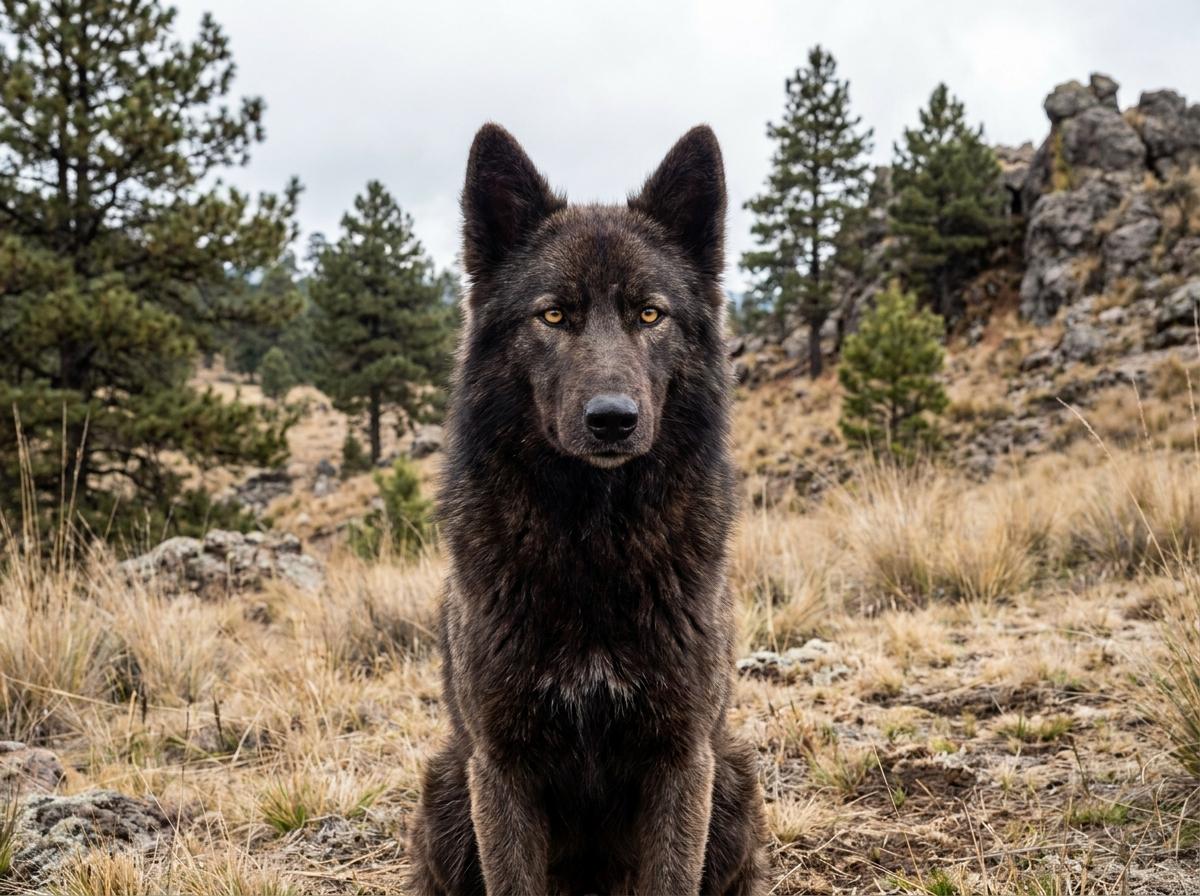
Head and ears. The skull and muzzle are similar in length when young. With maturity, the skull becomes visibly broader than the muzzle. The stop is defined, the nose is black, and the large triangular ears remain erect. Eyes are almond shaped, with yellow shades preferred, although darker eyes can occur.
Coat and color. The coat is double, medium in length, harsh outside, and soft underneath. Black and smoky black are preferred. The standard also accepts some white or sable dogs, although those are not the desired colors, and allows limited white on the chest and feet plus brown socks. A dog does not become more authentic because someone advertises a dramatic color outside those words.
Tail and movement. The tail should be carried below the topline at rest. It may rise when the dog is alert, but it should not curl over the back. Movement should be fluid and efficient enough for sustained trotting.

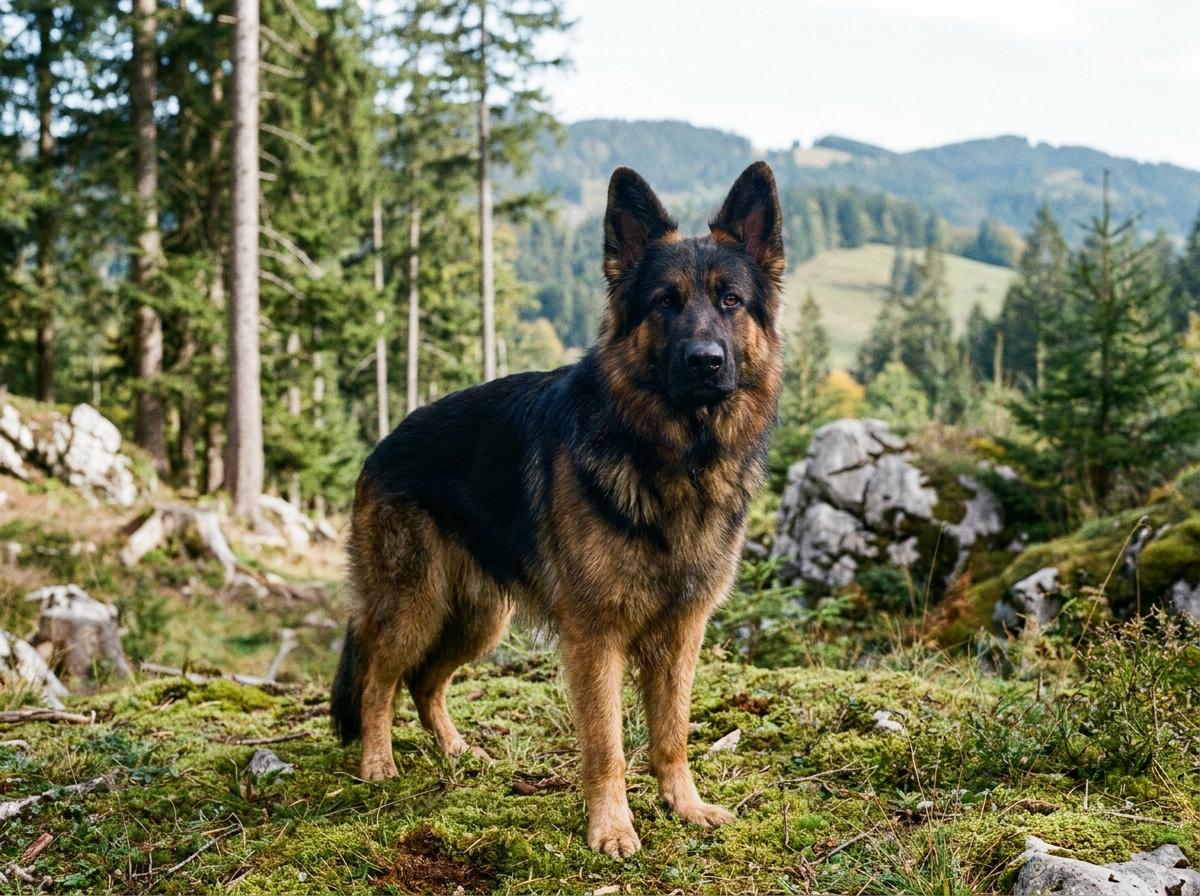
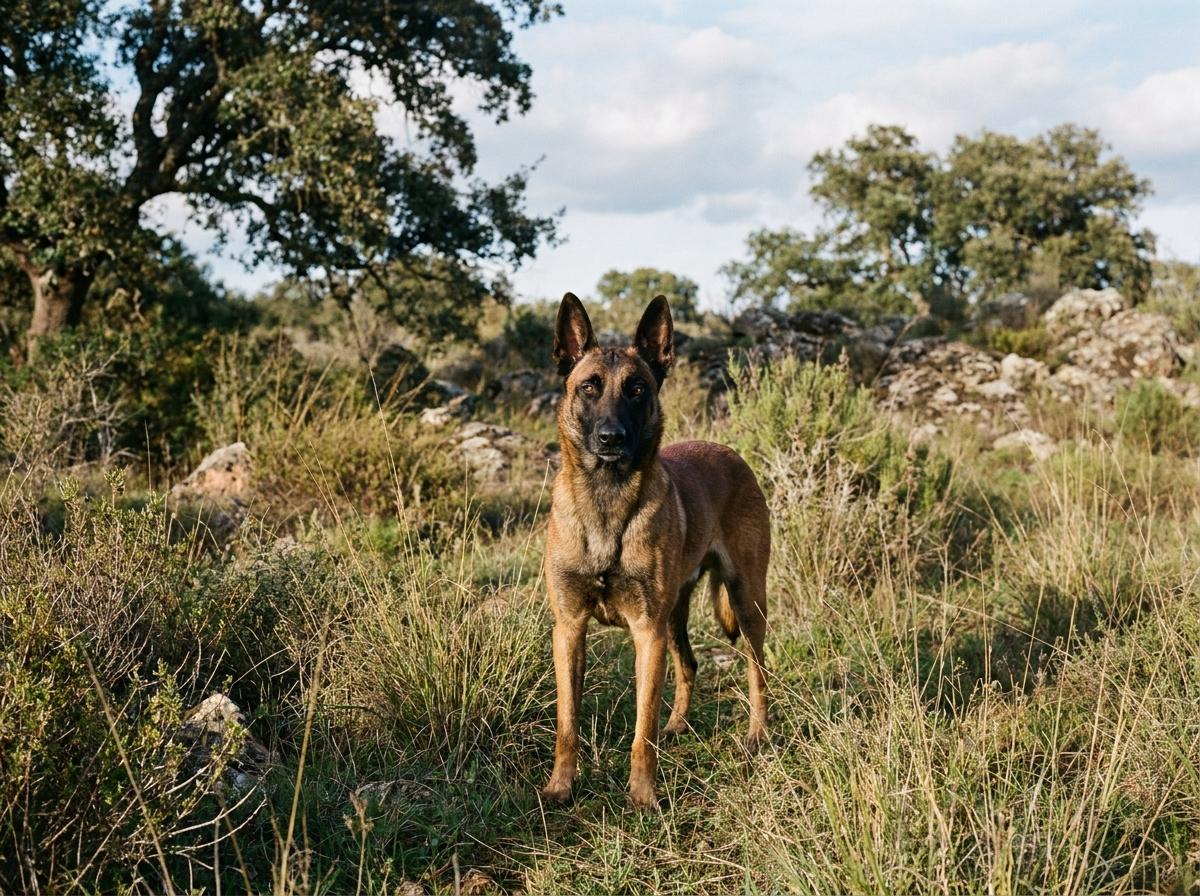
The images on this page show a plausible standard-aligned black Calupoh, not proof of pedigree. Phenotype can guide questions, but papers and parentage establish identity.
Temperament and daily life
The FCM describes the Calupoh as agile, dynamic, stable, loyal with family, able to live with other dogs, willing to please, and potentially reserved with strangers. Those are standard ideals. They are not a promise about every puppy or a substitute for early handling.
A large, active dog with reserve needs structured socialization that builds calm neutrality. The goal is not to force greetings. It is to teach the dog to move through ordinary life without fear, frantic arousal, or inappropriate guarding. Reward-based training, predictable routines, and careful exposure to people, surfaces, transport, veterinary handling, and household sounds matter more than a dramatic wolf-like appearance.
Exercise should combine physical movement with thinking work. Long walks, tracking games, scent searches, controlled hiking, and short training sessions fit the standard’s active working outline. Repetitive high-impact exercise is a poor choice for a growing large-breed puppy. Ask your veterinarian when the individual dog is ready for harder conditioning.
The double coat needs regular brushing, especially when the undercoat sheds. It is a weather coat, not a reason to leave the dog outside without companionship, shade, water, or shelter. Check ears, nails, teeth, skin, and body condition on a routine schedule.

Health and responsible breeding
There is not enough open breed-specific health research to justify a neat list of Calupoh disease rates. Treat anyone quoting precise prevalence without a study population and method cautiously.
A responsible breeder should still be able to show useful evidence. Ask how the parents were selected for orthopedic soundness, stable behavior, functional movement, and freedom from disqualifying physical abnormalities. Ask for the actual reports, not only the phrase “health checked.” The Spanish edition of the FCM standard adds that only functionally and clinically healthy dogs with typical conformation should be used for breeding.
Your veterinarian should plan preventive care for the dog in front of them. Keep vaccination, parasite prevention, weight, injuries, medications, and behavior changes in one record. For a rare population, pedigree and litter information also help owners and breeders avoid making decisions from memory.
Is the Calupoh right for you?
The best home wants the dog, not the story attached to the dog. A Calupoh is a serious commitment for someone who enjoys training, can manage a large athletic companion, and accepts that reserve around strangers needs thoughtful handling. A small household can work if exercise and management are excellent. A large property does not compensate for isolation or missing training.
Before paying a deposit:
- Verify both parents and the litter with the claimed registry.
- Meet the dam when practical and observe recovery after ordinary novelty.
- Ask what the breeder does to prepare puppies for handling, transport, household life, and other dogs.
- Review written health evidence and the contract before money changes hands.
- Confirm local wolfdog rules, housing rules, insurance terms, and veterinary access yourself.
- Walk away from a seller whose main pitch is danger, percentage, rarity, or ancient purity.
Readers interested in other regional working dogs can compare the same evidence-first questions on the Hmong Bobtail Dog and Greek Shepherd pages. Those dogs have different histories and functions, so the comparison is about research discipline, not shared ancestry.
Frequently asked questions
Is the Calupoh an ancient Aztec breed?
Not in the simple sense often implied online. Archaeological researchers have identified dog and wolf hybrid remains in pre-Hispanic Mexico. The modern Calupoh program described by the FCM dates from the mid-1990s. No primary source reviewed for this guide establishes an unbroken pedigree between the excavated animals and today’s registered dogs.
Is a Calupoh the same as a Mexican gray wolf?
No. The Calupoh is handled and standardized as a domestic dog breed. A Mexican gray wolf is wildlife. Similar coloring or head shape does not erase that distinction.
How big is a Calupoh?
The FCM standard gives 62 to 75 cm at the withers for males and 58 to 70 cm for females. It deliberately leaves weight proportional rather than prescribing a single range.
Are all Calupohs black?
Black or smoky black is preferred. The standard also accepts white or sable dogs, although it says those colors are not desirable, plus limited white on the chest and feet and brown socks.
Are Calupohs easy family dogs?
The standard calls for a stable, loyal, manageable dog that may be reserved with strangers. That still describes a large active breed requiring skilled socialization, training, and daily engagement. Evaluate the individual dog and the breeder’s work rather than relying on a short temperament label.
Do this next on Creatures
Use Creatures to research patiently, verify what a seller is claiming, and preserve the records that matter after a dog comes home.
Watch for a listing. Browse the Calupoh marketplace filter or save a Calupoh search. A saved search is a lead, not proof of pedigree. Learn how alerts work in saving searches and using your watchlist.
Research people, not slogans. Search trusted breeders and organizations in the Creatures breeder directory, then verify registry and health documents directly.
Build the dog’s record. Start a Calupoh profile, with no account needed to begin. The animal profile guide shows each step.
Keep evidence over time. Open the record sheet to review it as a visitor. A free account is required to save. See adding a record and health and medical records.
Represent a responsible program. Create a dog organization profile, with no account needed to start, and keep public claims tied to checkable records.