


Cantabrian Water Dog
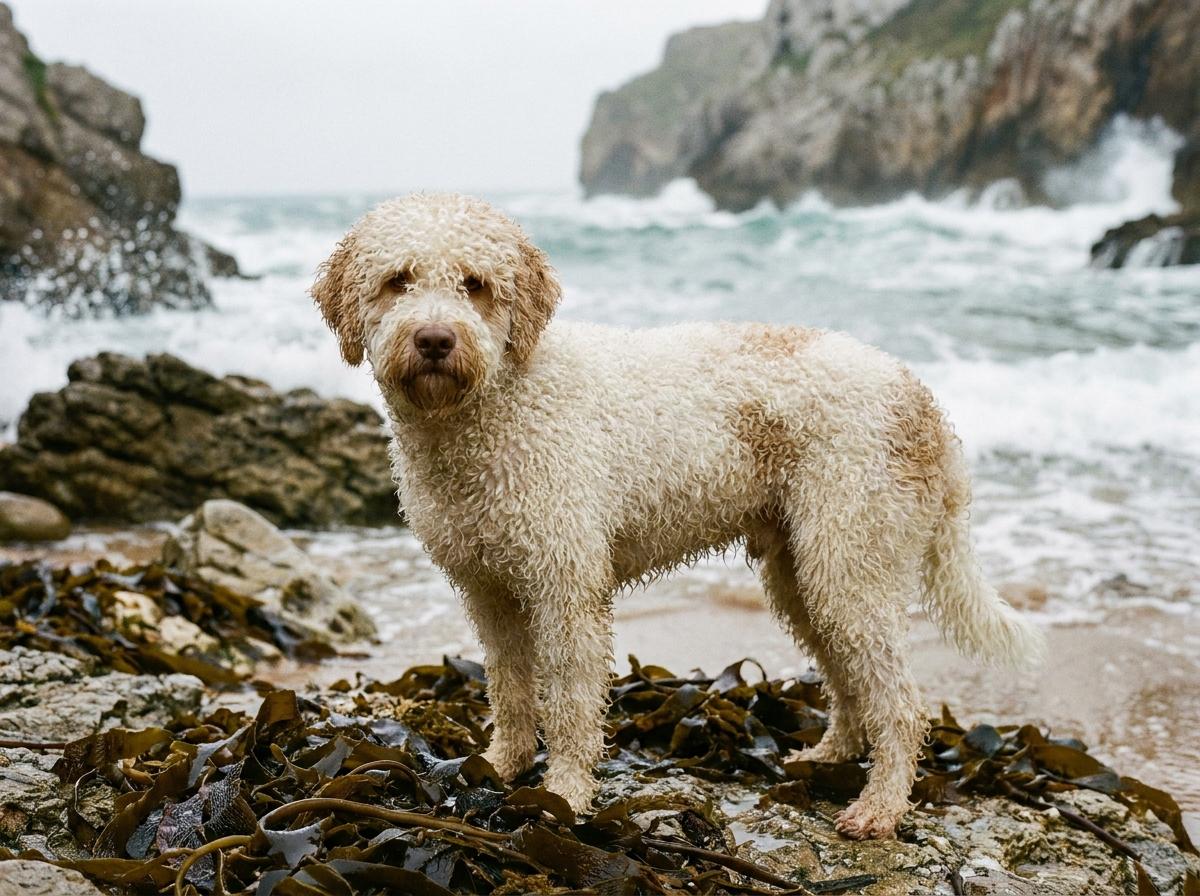
The Cantabrian water dog, or Perro de Agua Cantábrico, is a local Spanish water dog from the Cantabrian coast of northern Spain. It developed around fishing villages and small farms, where curly-coated dogs helped with boat work, carried lines, retrieved floating gear, and guarded homes or catch. It is generally considered related to the broader Iberian water-dog family but is maintained as a regional type with its own history. Typical dogs are medium sized, sturdy, and active, with a woolly coat that may form curls or cords when allowed to grow.
Care is shaped by that working background. These dogs usually enjoy water, close human contact, and varied jobs, so swimming, retrieving games, scent work, and polite obedience help keep them manageable. The coat is not brushed like a long silky coat; many owners keep it clipped or separate cords by hand to prevent matting. Ears need attention after frequent swimming, and early socialization helps prevent excessive suspicion in a watchful dog. The breed is rare outside northern Spain, so buyers should confirm the source and understand whether a dog is registered as Cantabrian or simply described as a Spanish water dog type.
Colors: Albino, Apricot, Bicolor, Black, Black and Tan, Black and White, Black Mask, Blue, Blue and Tan, Blue Merle, Blue Roan, Blue Tick, Brindle, Brown, Brown and Tan, Brown and White, Chocolate, Cream, Dapple, Domino, Fawn, Fawn and White, Gold, Gray, Grey, Harlequin, Irish Marked, Leucistic, Liver, Liver Mask, Mantle, Mask, Melanistic, Merle, Mottled, Parti-Color, Piebald, Red, Red and White, Red Merle, Red Roan, Red Tick, Reverse Brindle, Roan, Sable, Saddle, Silver, Speckled, Spotted, Tan, Ticked, Tricolor, Tuxedo, White, Yellow